Furniture Removalist
SOC 53-7062.00 · ESCO 8332 · OSCA 712131
Role snapshot
Overview
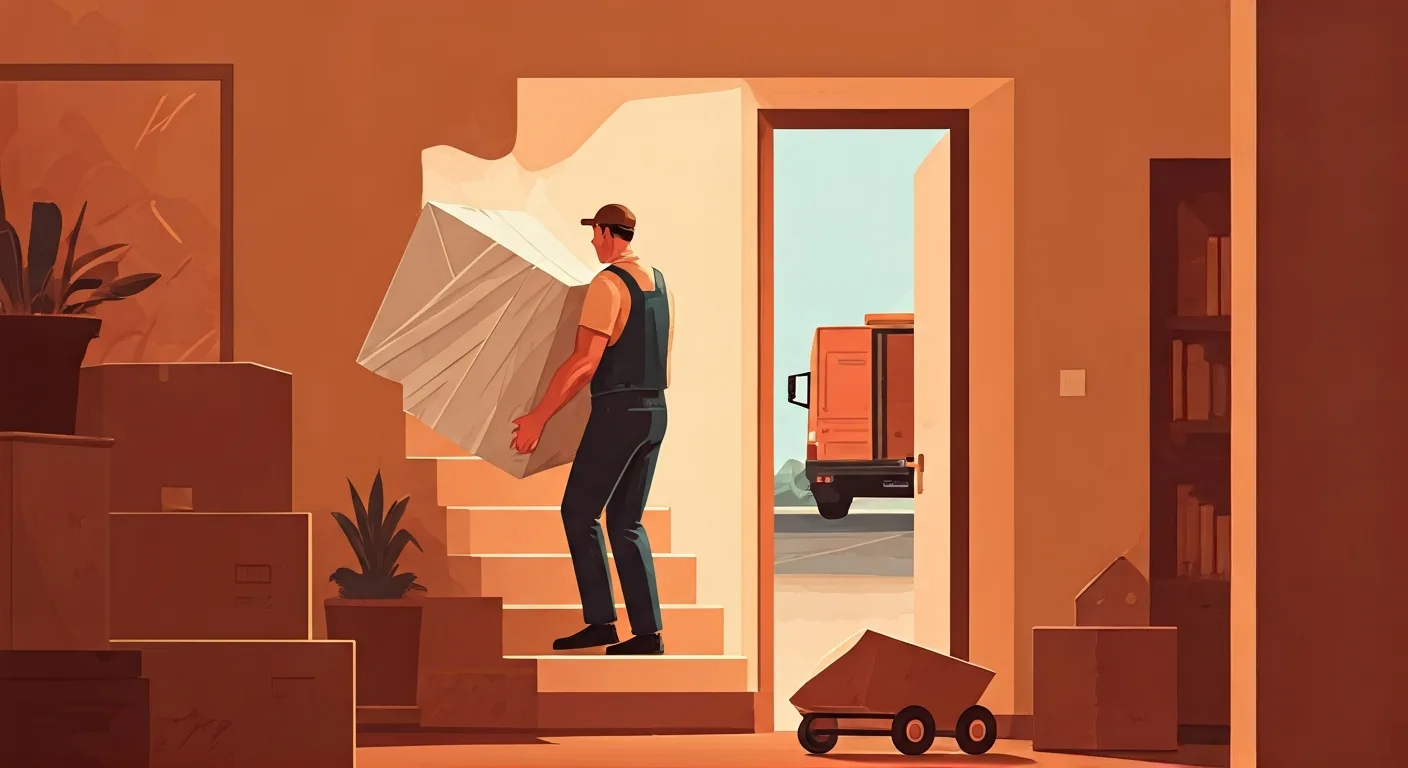
Packs, loads, transports, and unloads household or office furniture and belongings during moves. This involves carefully wrapping fragile items, navigating tight spaces, disassembling and reassembling furniture, and ensuring safe and efficient delivery to the new destination.
Facilitates smooth transitions for individuals and businesses moving to new locations, reducing stress and ensuring the safe transport of valuable possessions.
On the job
- Safely pack and wrap fragile items, furniture, and personal belongings.
- Load and unload heavy furniture and boxes onto and off moving trucks.
- Disassemble and reassemble furniture as required at origin and destination.
- Navigate tight spaces, stairs, and doorways while handling large items.
- Operate moving equipment such as hand trucks, dollies, and ramps.
- Communicate clearly and respectfully with clients throughout the moving process.
Tools & technology
Average salary
Job outlook
StableDemand is steady. This is an established role with consistent hiring across sectors.
Education & training
High school diploma or equivalent, some roles may require a commercial driver's license (CDL).
AI impact outlook
Note — this is our current view. AI is moving fast, so we revisit these ratings.
Show how this was assessed Hide the detail
Note — this is our current view. AI is moving fast, so we revisit these ratings.
Show how this was assessed Hide the detailWhy this role received this rating
Core task exposure
low
How much of the role’s important work could AI perform?
Packing varied items, loading/unloading heavy and irregularly shaped furniture, and navigating complex, unique spaces are currently intractable for AI/robotics.
End-to-end automation
low
Can AI complete the work without substantial human involvement?
The entire process requires human physical manipulation, dexterity, spatial reasoning, problem-solving in highly variable environments, and direct client interaction.
Adoption pressure
low
How likely are employers to introduce AI into this work?
Very low, due to immense technological barriers, high task variability, and the lack of clear ROI for automating highly unstructured physical work.
Human dependence
strong
How much does success depend on human judgement, relationships and accountability?
Success relies entirely on physical strength, dexterity, spatial reasoning, careful handling of personal items, and direct client communication and trust.
Protective — a higher rating lowers the overall score.
Role adaptability
moderate
How easily can the role evolve as AI takes on more tasks?
The role can adapt by specializing in high-value items, complex moves, or becoming a project manager for large-scale relocations, with core tasks largely unchanged.
Shown for context — not part of the score.
What AI may take on
These are the parts of the role most likely to be automated or significantly accelerated.
- Optimizing route planning for efficiency
- Generating packing lists based on inventory input
- Providing estimates for job duration and staffing
- Scheduling and coordination logistics
Where people remain essential
These parts continue to depend heavily on human judgement, relationships and accountability.
- Safely packing and wrapping fragile and diverse items
- Loading and unloading heavy, irregularly shaped furniture through tight spaces
- Disassembling and reassembling furniture with precision
- Navigating stairs, narrow hallways, and doorways in unique residential settings
- Communicating clearly and respectfully with clients to manage expectations
- Operating moving equipment such as hand trucks and dollies with skill
- Problem-solving unexpected challenges during a move
How the role may evolve
The physical challenge endures, enhanced by smart planning tools.
The core physical and problem-solving tasks of furniture removal will persist, with AI contributing primarily to logistical planning and route optimization rather than physical execution.
Strengthen your future fit
- Exceptional physical strength, stamina, and dexterity
- Advanced problem-solving for spatial challenges
- Client communication and customer service skills
- Proficiency in disassembling and reassembling furniture
- Efficient use of moving equipment and packing techniques
- Assessment horizon
- 3–7 years
- Confidence
- High
- Last reviewed
- August 2026
- Methodology
- v1.0
This assessment reflects current AI capabilities and expected adoption patterns. Actual impacts will vary by industry, employer and the way each role is performed.
Career pathways
WHERE YOU COULD GO
CURRENT ROLE
Furniture Removalist
Logistics & Supply Chain
ADJACENT MOVES
STARTING POINTS
Who thrives here
Interest profile
realistic · RCE
Individuals who enjoy hands-on physical work, following established procedures for packing and loading, and interacting with customers to provide a service often thrive as Furniture Removalists.
Personality characteristics
Practical
Focuses on tangible tasks and efficient, hands-on solutions rather than abstract concepts.
Reliable
Consistently follows safety protocols and ensures items are packed and transported with care.
Team-Oriented
Works effectively with a crew, coordinating efforts and communicating to complete tasks smoothly.
Helpful
Enjoys assisting clients and colleagues, contributing positively to the moving experience.
Steady
Maintains composure and efficiency even during physically demanding or stressful moves.
Best for
- Individuals who prefer active, physical work over desk-bound roles.
- People who enjoy teamwork and direct customer interaction.
- Those who appreciate seeing the tangible results of their labor at the end of each day.
- Candidates who are reliable, detail-oriented, and capable of working efficiently under pressure.
Watch out for
- The work is physically demanding and requires consistent strength and stamina.
- Unpredictable schedules and occasional weekend work may be required.
- Careful handling of items is crucial, and mistakes can lead to damage or client dissatisfaction.
A week in the life
A representative working week for a Furniture Removalist — where the deep work, meetings, and admin actually land.
Real people. Real results.
Thousands of people
can't be wrong.



Frequently asked questions about Furniture Removalist roles
What does a Furniture Removalist do?
A Furniture Removalist packs, loads, transports, and unloads household or office furniture and belongings during moves. This involves carefully wrapping fragile items, navigating tight spaces, disassembling and reassembling furniture, and ensuring safe and efficient delivery to the new destination. Facilitates smooth transitions for individuals and businesses moving to new locations, reducing stress and ensuring the safe transport of valuable possessions.
How much does a Furniture Removalist earn?
A Furniture Removalist earns a median of $38,000 per year in the US, typically ranging from $30,000 to $50,000.
What qualifications do you need to become a Furniture Removalist?
To become a Furniture Removalist, high school diploma or equivalent, some roles may require a commercial driver's license (CDL).
What personality suits a Furniture Removalist?
Furniture Removalist roles tend to suit people who are practical and grounded — happier with proven methods than experimentation (Openness 28/100) and steady under pressure — deadlines and setbacks do not rattle them easily (Emotional Stability 70/100). The traits that matter most in the role are Practical, Reliable, Team-Oriented and Helpful. Focuses on tangible tasks and efficient, hands-on solutions rather than abstract concepts. On interests, Furniture Removalist maps to a RCE Holland Code profile — individuals who enjoy hands-on physical work, following established procedures for packing and loading, and interacting with customers to provide a service often thrive as Furniture Removalists.
Who does a Furniture Removalist role suit?
A Furniture Removalist role is usually a strong fit for these reasons. The role involves significant hands-on, physical tasks, aligning well with Realistic interests. Requires careful adherence to packing and safety procedures, suiting Conventional tendencies. Frequent interaction with clients and team members provides an outlet for Enterprising engagement.
What are the downsides of being a Furniture Removalist?
Furniture Removalist roles come with trade-offs worth weighing up. The work is physically demanding and requires consistent strength and stamina. Unpredictable schedules and occasional weekend work may be required. Careful handling of items is crucial, and mistakes can lead to damage or client dissatisfaction.
What is the work environment like for a Furniture Removalist?
Work as a Furniture Removalist is mostly mixed-based with onsite arrangements common, semi-structured — a mix of set processes and self-directed work and high exposure to clients or stakeholders. Around 93% of the week is focused deep work.
What skills do you need to be a Furniture Removalist?
Core skills for a Furniture Removalist include Physical strength and stamina, Safe lifting and carrying techniques, Packing and securing items, Problem-solving (e.g., navigating obstacles), Customer service and communication and Teamwork and coordination.
How do you become a Furniture Removalist?
Common entry routes into Furniture Removalist roles include General Laborer, Delivery Driver Assistant and Warehouse Assistant.
What career progression is there for a Furniture Removalist?
From a Furniture Removalist role, common next steps include Moving Team Lead; lateral moves include Logistics Coordinator and Warehouse Worker.
What is the job outlook for Furniture Removalist roles?
The outlook for Furniture Removalist roles is currently rated stable. Demand is steady. This is an established role with consistent hiring across sectors.
Will AI replace Furniture Removalist roles?
Traitstack rates automation risk for Furniture Removalist roles at 13 out of 100, which is low. The physical manipulation of varied goods in unstructured environments remains an intractable challenge for AI, keeping the role firmly human-driven. AI is most likely to take on optimizing route planning for efficiency, generating packing lists based on inventory input and providing estimates for job duration and staffing. Safely packing and wrapping fragile and diverse items, loading and unloading heavy, irregularly shaped furniture through tight spaces and disassembling and reassembling furniture with precision stay with people. The physical challenge endures, enhanced by smart planning tools. That score measures how much of the work could change, not the likelihood the job disappears. It is Traitstack's current view, revisited as AI capability moves.