Farrier
SOC 51-4199 · ESCO 7221 · OSCA 331933
Role snapshot
Overview
Trims and shoes horses' hooves to maintain soundness and prevent lameness. This involves careful assessment of hoof health, precise trimming, and fitting of horseshoes. Farriers may forge custom horseshoes for specific needs, address therapeutic shoeing, and work closely with veterinarians and horse owners to ensure optimal equine well-being and performance.
Ensures the health, comfort, and performance of horses by providing expert hoof care, preventing lameness, and supporting equine athletes. Directly contributes to animal welfare and the equine industry.
On the job
- Inspect horses' hooves and legs to assess their condition and identify potential issues or diseases.
- Trim hooves to the correct length and angle using specialized tools like nippers and rasps.
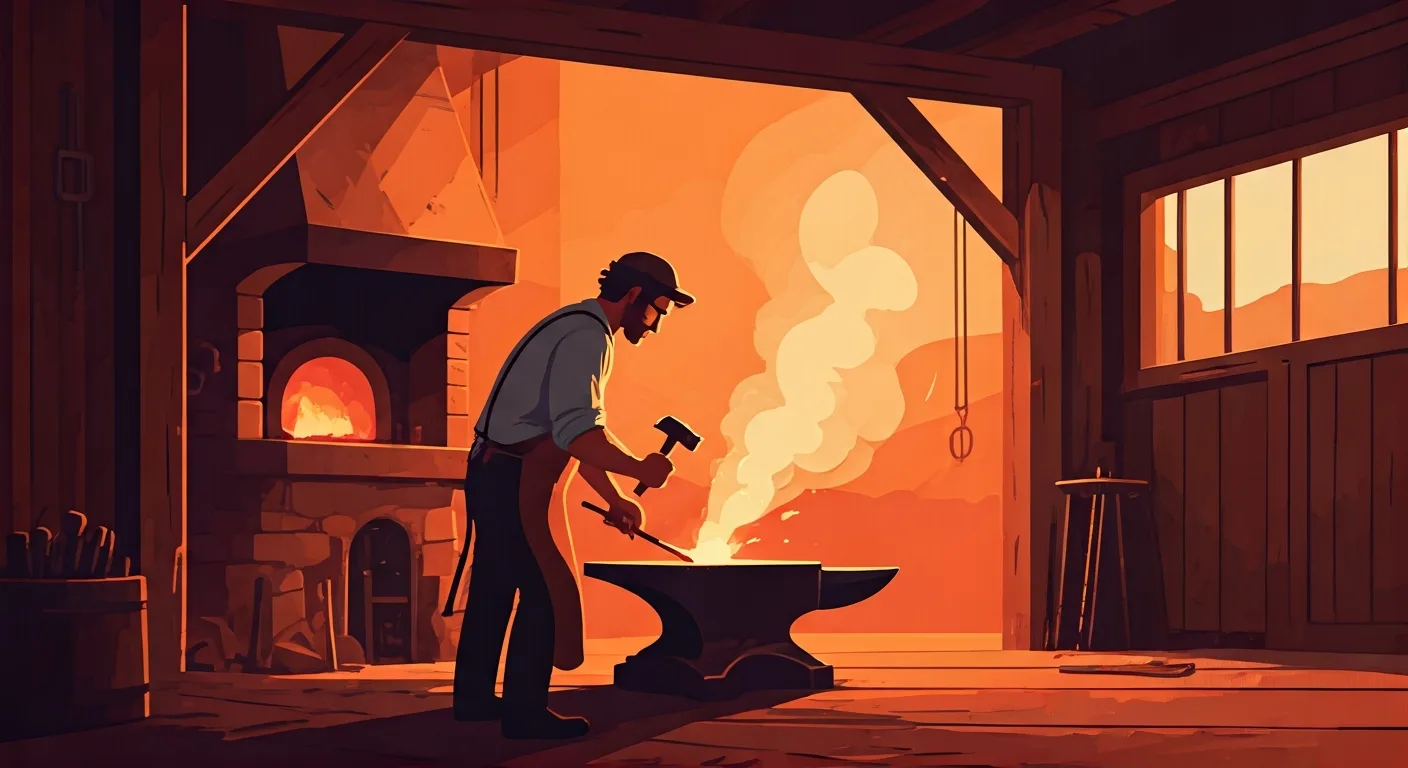
- Forge, shape, and fit metal horseshoes, often custom-made, using heat and hand tools.
- Apply horseshoes to hooves using nails, ensuring proper balance and support.
- Consult with horse owners and veterinarians to develop customized hoof care plans and address specific lameness or corrective needs.
Tools & technology
Average salary
Job outlook
StableDemand is steady. This is an established role with consistent hiring across sectors.
Education & training
Completion of a specialized farrier science program or an apprenticeship under an experienced farrier is typically required.
AI impact outlook
Note — this is our current view. AI is moving fast, so we revisit these ratings.
Show how this was assessed Hide the detail
Note — this is our current view. AI is moving fast, so we revisit these ratings.
Show how this was assessed Hide the detailWhy this role received this rating
Core task exposure
low
How much of the role’s important work could AI perform?
AI could aid in hoof health assessment via imaging and suggest optimal trimming or shoeing plans based on biomechanical data.
End-to-end automation
low
Can AI complete the work without substantial human involvement?
The physically demanding tasks of trimming, forging custom shoes, and fitting them onto live, often unpredictable animals prevent any end-to-end automation.
Adoption pressure
low
How likely are employers to introduce AI into this work?
High animal welfare considerations, significant liability, and the bespoke nature of the work will severely limit the adoption of advanced AI for core tasks.
Human dependence
strong
How much does success depend on human judgement, relationships and accountability?
Success relies on expert human judgment of equine physiology, precise manual skill, and empathetic interaction with horses and owners.
Protective — a higher rating lowers the overall score.
Role adaptability
low
How easily can the role evolve as AI takes on more tasks?
Farriers must constantly adapt to diverse horse breeds, varying hoof conditions, and specific requests from veterinarians and owners.
Shown for context — not part of the score.
What AI may take on
These are the parts of the role most likely to be automated or significantly accelerated.
- Assessing hoof condition and biomechanics using 3D scanning and imaging data
- Suggesting optimal trimming angles and shoeing designs based on gait analysis
- Maintaining detailed digital records of hoof health and shoeing history
- Predictive analysis for potential hoof problems based on historical data
- Generating customized shoe designs for specific therapeutic needs
- Ordering specialized materials and pre-fabricated shoes
Where people remain essential
These parts continue to depend heavily on human judgement, relationships and accountability.
- Physically trimming hooves to precise lengths and angles with hand tools
- Forging and shaping custom metal horseshoes using a forge and anvil
- Carefully fitting and applying horseshoes to hooves using nails
- Assessing and responding to the horse's behavior during the process
- Consulting with horse owners and veterinarians on customized care plans
- Performing therapeutic shoeing for horses with specific lameness issues
- Accountability for the immediate and long-term well-being of the horse
How the role may evolve
Augmenting traditional craft with data for advanced equine care.
AI may refine diagnostic and planning aspects, enabling farriers to apply their deep manual expertise and animal husbandry skills with even greater precision and therapeutic insight.
Strengthen your future fit
- Advanced knowledge of equine anatomy and biomechanics
- Proficiency in specialized forging and metalworking techniques
- Expertise in therapeutic and corrective shoeing
- Strong communication skills with veterinarians and horse owners
- Physical stamina and animal handling skills
- Assessment horizon
- 3–7 years
- Confidence
- High
- Last reviewed
- August 2026
- Methodology
- v1.0
This assessment reflects current AI capabilities and expected adoption patterns. Actual impacts will vary by industry, employer and the way each role is performed.
Career pathways
WHERE YOU COULD GO
CURRENT ROLE
Farrier
Skilled Trades
ADJACENT MOVES
STARTING POINTS
Who thrives here
Interest profile
realistic · RSC
Individuals who enjoy hands-on work with tools and animals, solving practical problems, and interacting with clients to provide essential services, often find satisfaction as a Farrier.
Personality characteristics
Conscientious
Demonstrates precision, reliability, and attention to detail when performing hoof care and shoeing, ensuring the best outcome for the horse.
Patient
Exhibits calmness and understanding when working with horses, especially those that may be difficult or nervous, and with clients' concerns.
Calm under pressure
Maintains composure and steady hands during challenging hoof care situations or when dealing with uncooperative animals.
Practical
Focuses on tangible results and hands-on solutions for hoof problems, utilizing tools and techniques effectively to achieve desired outcomes.
Client-focused
Engages effectively with horse owners and veterinarians, listening to their needs and explaining care plans clearly and professionally.
Best for
- Individuals who enjoy a blend of skilled craftsmanship, animal care, and problem-solving.
- Those who prefer working independently and outdoors, with direct impact on animal welfare.
- People who value continuous learning and adapting techniques for diverse equine needs.
Watch out for
- The work involves physical demands and can be strenuous, requiring good physical condition.
- Regular travel to client locations is common, meaning less time in a fixed office or workshop setting.
- Working with animals can be unpredictable, requiring adaptability and patience in challenging situations.
A week in the life
A representative working week for a Farrier — where the deep work, meetings, and admin actually land.
Real people. Real results.
Thousands of people
can't be wrong.

Frequently asked questions about Farrier roles
What does a Farrier do?
A Farrier trims and shoes horses' hooves to maintain soundness and prevent lameness. This involves careful assessment of hoof health, precise trimming, and fitting of horseshoes. Farriers may forge custom horseshoes for specific needs, address therapeutic shoeing, and work closely with veterinarians and horse owners to ensure optimal equine well-being and performance. Ensures the health, comfort, and performance of horses by providing expert hoof care, preventing lameness, and supporting equine athletes. Directly contributes to animal welfare and the equine industry.
How much does a Farrier earn?
A Farrier earns a median of $65,000 per year in the US, typically ranging from $40,000 to $90,000.
What qualifications do you need to become a Farrier?
To become a Farrier, completion of a specialized farrier science program or an apprenticeship under an experienced farrier is typically required. Certification from the American Farrier's Association (AFA) or other recognized professional bodies may be required or highly beneficial.
What personality suits a Farrier?
Farrier roles tend to suit people who are highly conscientious — precise, organised and strong on follow-through (Conscientiousness 78/100) and steady under pressure — deadlines and setbacks do not rattle them easily (Emotional Stability 70/100). The traits that matter most in the role are Conscientious, Patient, Calm under pressure and Practical. Demonstrates precision, reliability, and attention to detail when performing hoof care and shoeing, ensuring the best outcome for the horse. On interests, Farrier maps to a RSC Holland Code profile — individuals who enjoy hands-on work with tools and animals, solving practical problems, and interacting with clients to provide essential services, often find satisfaction as a Farrier.
Who does a Farrier role suit?
A Farrier role is usually a strong fit for these reasons. A high Realistic (R) affinity means you'll thrive in hands-on work with tools and animals. The role demands high conscientiousness (C), aligning with those who value precision and reliability. Significant interaction with horse owners and vets suits individuals with a strong Social (S) interest.
What are the downsides of being a Farrier?
Farrier roles come with trade-offs worth weighing up. The work involves physical demands and can be strenuous, requiring good physical condition. Regular travel to client locations is common, meaning less time in a fixed office or workshop setting. Working with animals can be unpredictable, requiring adaptability and patience in challenging situations.
What is the work environment like for a Farrier?
Work as a Farrier is mostly mixed-based with onsite arrangements common, semi-structured — a mix of set processes and self-directed work, a moderate pace and high exposure to clients or stakeholders. Around 69% of the week is focused deep work.
What skills do you need to be a Farrier?
Core skills for a Farrier include Equine anatomy and physiology, Hoof trimming techniques, Horseshoe forging and fitting, Horse handling and restraint, Client communication and Problem-solving and diagnostic skills.
How do you become a Farrier?
Common entry routes into Farrier roles include Farrier Apprentice and Assistant Farrier.
What career progression is there for a Farrier?
From a Farrier role, common next steps include Master Farrier, Farrier Instructor and Equine Podiatrist; lateral moves include Custom Shoemaker (non-equine).
What is the job outlook for Farrier roles?
The outlook for Farrier roles is currently rated stable. Demand is steady. This is an established role with consistent hiring across sectors.
Will AI replace Farrier roles?
Traitstack rates automation risk for Farrier roles at 18 out of 100, which is low. While AI offers potential for advanced hoof diagnostics, the physically demanding craft of trimming, forging, and precise shoe fitting onto live horses remains an exclusively human domain. AI is most likely to take on assessing hoof condition and biomechanics using 3d scanning and imaging data, suggesting optimal trimming angles and shoeing designs based on gait analysis and maintaining detailed digital records of hoof health and shoeing history. Physically trimming hooves to precise lengths and angles with hand tools, forging and shaping custom metal horseshoes using a forge and anvil and carefully fitting and applying horseshoes to hooves using nails stay with people. Augmenting traditional craft with data for advanced equine care. That score measures how much of the work could change, not the likelihood the job disappears. It is Traitstack's current view, revisited as AI capability moves.