Electrical Engineer
SOC 17-2071.00 · ESCO 2151 · OSCA 243331
Role snapshot
Overview
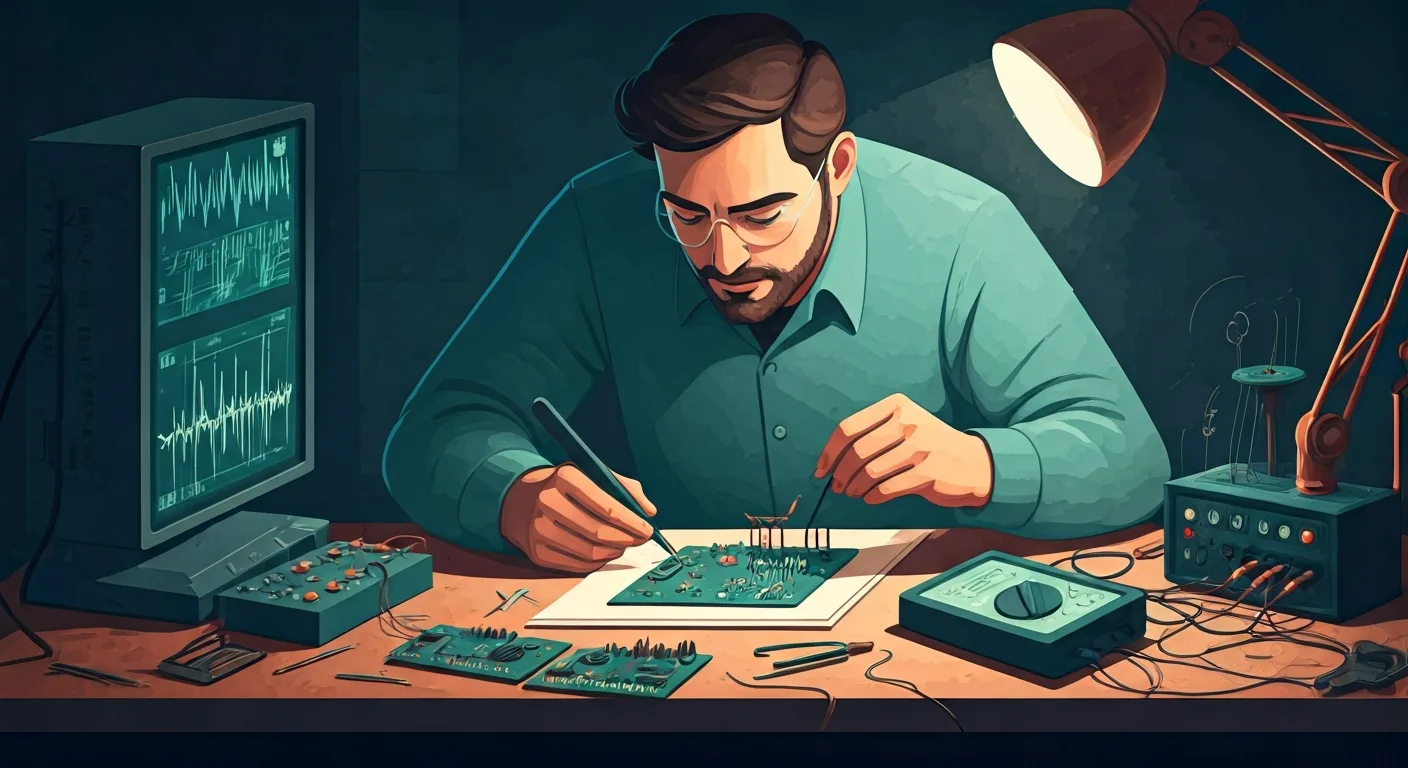
Electrical Engineers design, develop, and maintain electrical systems and components, ranging from small-scale circuit boards to large-scale power grids. This involves using advanced simulation software, mathematical models, and CAD tools to create robust and efficient electrical solutions. They are also responsible for testing prototypes, ensuring compliance with safety standards, and collaborating with multidisciplinary teams throughout the project lifecycle.
Enables the functioning of modern society by developing the electrical infrastructure, electronic devices, and control systems that power homes, industries, and communication networks, ensuring safety and efficiency.
On the job
- Design and develop electrical systems, components, and applications using CAD and simulation software.
- Test prototypes and existing systems to ensure functionality, safety, and compliance with regulations.
- Analyze and interpret technical data, schematics, and project requirements.
- Collaborate with other engineers and technicians to integrate electrical systems into larger projects.
- Prepare technical reports, specifications, and project documentation.
Tools & technology
Average salary
Job outlook
StableDemand is steady. This is an established role with consistent hiring across sectors.
Education & training
Bachelor's degree in Electrical Engineering, Electronics Engineering, or a closely related field is typically required.
AI impact outlook
Note — this is our current view. AI is moving fast, so we revisit these ratings.
Show how this was assessed Hide the detail
Note — this is our current view. AI is moving fast, so we revisit these ratings.
Show how this was assessed Hide the detailWhy this role received this rating
Core task exposure
high
How much of the role’s important work could AI perform?
Design generation, complex simulations, data analysis, and test script generation are highly exposed to AI automation.
End-to-end automation
moderate
Can AI complete the work without substantial human involvement?
AI can design and simulate, but human engineers are crucial for conceptualizing novel systems, critical validation of new designs, and ethical considerations.
Adoption pressure
high
How likely are employers to introduce AI into this work?
The demand for efficiency and innovation in complex electrical systems drives extremely high adoption of AI/ML tools for design, optimization, and verification.
Human dependence
moderate
How much does success depend on human judgement, relationships and accountability?
Success depends on human strategic direction, creative problem-solving for novel challenges, and collaborative leadership in complex, interdisciplinary projects.
Protective — a higher rating lowers the overall score.
Role adaptability
strong
How easily can the role evolve as AI takes on more tasks?
The role can highly adapt by focusing on architecting large systems, managing AI design tools, driving new technology R&D, and fostering interdisciplinary collaboration.
Shown for context — not part of the score.
What AI may take on
These are the parts of the role most likely to be automated or significantly accelerated.
- Generating optimized circuit designs and component layouts.
- Running complex simulations and analyses to predict system performance.
- Automated testing and verification of prototypes and existing systems.
- Synthesizing code for embedded systems and FPGAs.
- Analyzing large datasets from sensors and monitoring systems.
- Drafting technical reports and specifications.
Where people remain essential
These parts continue to depend heavily on human judgement, relationships and accountability.
- Conceptualizing novel electrical systems and defining ambiguous project requirements.
- Strategic decision-making for new product development and technology roadmaps.
- Critical validation of systems against real-world constraints and ethical considerations.
- Complex, multi-disciplinary problem-solving for unforeseen engineering challenges.
- Collaborating with diverse teams (software, mechanical, product management).
- Leading projects, managing timelines, and mentoring junior engineers.
- Ensuring regulatory compliance and safety standards for final designs.
How the role may evolve
Architecting novel systems, overseeing AI-driven design workflows.
Electrical engineers will shift from manual design iteration to leveraging AI for optimization and simulation, allowing them to concentrate on high-level system architecture, innovative conceptualization, and interdisciplinary project leadership.
Strengthen your future fit
- Master AI/ML tools for design, simulation, and optimization.
- Develop strong expertise in system architecture and integration.
- Enhance problem-solving skills for highly complex, ambiguous challenges.
- Gain proficiency in emerging technologies like quantum computing or advanced energy systems.
- Strengthen leadership and cross-functional communication abilities.
- Assessment horizon
- 3–7 years
- Confidence
- High
- Last reviewed
- August 2026
- Methodology
- v1.0
This assessment reflects current AI capabilities and expected adoption patterns. Actual impacts will vary by industry, employer and the way each role is performed.
Career pathways
WHERE YOU COULD GO
CURRENT ROLE
Electrical Engineer
Electrical & Electronic
ADJACENT MOVES
STARTING POINTS
Who thrives here
Interest profile
realistic · RIC
Individuals who enjoy hands-on problem-solving, analytical thinking, and systematic design of complex systems often find satisfaction in Electrical Engineering.
Personality characteristics
Conscientious
Highly organized and methodical in their approach to design, testing, and documentation, ensuring precision and reliability.
Inquisitive
Driven to understand complex electrical phenomena and continuously explore innovative solutions and technologies.
Analytical
Applies logical reasoning and mathematical principles to diagnose and solve intricate technical challenges efficiently.
Independent
Prefers to work autonomously on technical tasks, focusing deeply on detailed problem-solving and design without constant oversight.
Calm under pressure
Maintains composure and clarity when troubleshooting critical system failures or working to meet tight deadlines.
Best for
- Individuals who enjoy applying scientific principles to design and build functional electrical systems.
- Those who thrive on systematic problem-solving, detailed analysis, and ensuring technical accuracy.
- Engineers who appreciate a blend of theoretical work, simulation, and practical testing.
Watch out for
- The role often requires extensive solitary work on complex problems, which may not suit those who prefer constant social interaction.
- Requires a high degree of precision and adherence to standards, which can be demanding for individuals less inclined towards detailed, rule-bound tasks.
A week in the life
A representative working week for an Electrical Engineer — where the deep work, meetings, and admin actually land.
Real people. Real results.
Thousands of people
can't be wrong.



Frequently asked questions about Electrical Engineer roles
What does an Electrical Engineer do?
An Electrical Engineer electrical Engineers design, develop, and maintain electrical systems and components, ranging from small-scale circuit boards to large-scale power grids. This involves using advanced simulation software, mathematical models, and CAD tools to create robust and efficient electrical solutions. They are also responsible for testing prototypes, ensuring compliance with safety standards, and collaborating with multidisciplinary teams throughout the project lifecycle. Enables the functioning of modern society by developing the electrical infrastructure, electronic devices, and control systems that power homes, industries, and communication networks, ensuring safety and efficiency.
How much does an Electrical Engineer earn?
An Electrical Engineer earns a median of $105,000 per year in the US, typically ranging from $75,000 to $140,000.
What qualifications do you need to become an Electrical Engineer?
To become an Electrical Engineer, bachelor's degree in Electrical Engineering, Electronics Engineering, or a closely related field is typically required. Professional Engineer (PE) licensure may be required for certain positions, especially those involving public safety or independent practice.
What personality suits an Electrical Engineer?
Electrical Engineer roles tend to suit people who are highly conscientious — precise, organised and strong on follow-through (Conscientiousness 85/100) and steady under pressure — deadlines and setbacks do not rattle them easily (Emotional Stability 72/100). The traits that matter most in the role are Conscientious, Inquisitive, Analytical and Independent. Highly organized and methodical in their approach to design, testing, and documentation, ensuring precision and reliability. On interests, Electrical Engineer maps to a RIC Holland Code profile — individuals who enjoy hands-on problem-solving, analytical thinking, and systematic design of complex systems often find satisfaction in Electrical Engineering.
Who does an Electrical Engineer role suit?
An Electrical Engineer role is usually a strong fit for these reasons. Strong Realistic and Investigative alignment: the role heavily involves hands-on problem-solving, analytical thinking, and systematic design. A significant portion of the work week is dedicated to deep work, focusing on technical design, simulation, and testing. High Conscientiousness is a key trait for success, aligning with the need for precision and methodical execution.
What are the downsides of being an Electrical Engineer?
Electrical Engineer roles come with trade-offs worth weighing up. The role often requires extensive solitary work on complex problems, which may not suit those who prefer constant social interaction. Requires a high degree of precision and adherence to standards, which can be demanding for individuals less inclined towards detailed, rule-bound tasks.
What is the work environment like for an Electrical Engineer?
Work as an Electrical Engineer is mostly office-based with hybrid arrangements common, semi-structured — a mix of set processes and self-directed work, a moderate pace and medium exposure to clients or stakeholders. Around 60% of the week is focused deep work.
What skills do you need to be an Electrical Engineer?
Core skills for an Electrical Engineer include Circuit design, Power systems analysis, Control systems, Signal processing, Problem-solving and Technical documentation.
How do you become an Electrical Engineer?
Common entry routes into Electrical Engineer roles include Junior Electrical Engineer, Electrical Engineering Technician and Power Systems Technician.
What career progression is there for an Electrical Engineer?
From an Electrical Engineer role, common next steps include Senior Electrical Engineer, Lead Electrical Engineer and Project Manager (Engineering); lateral moves include Systems Engineer.
What is the job outlook for Electrical Engineer roles?
The outlook for Electrical Engineer roles is currently rated stable. Demand is steady. This is an established role with consistent hiring across sectors.
Will AI replace Electrical Engineer roles?
Traitstack rates automation risk for Electrical Engineer roles at 69 out of 100, which is strong. From conceptualizing novel systems to critical validation, human electrical engineers will focus on strategic design and complex problem-solving, as AI handles much of the iterative simulation and optimization. AI is most likely to take on generating optimized circuit designs and component layouts., running complex simulations and analyses to predict system performance. and automated testing and verification of prototypes and existing systems.. Conceptualizing novel electrical systems and defining ambiguous project requirements., strategic decision-making for new product development and technology roadmaps. and critical validation of systems against real-world constraints and ethical considerations. stay with people. Architecting novel systems, overseeing AI-driven design workflows. That score measures how much of the work could change, not the likelihood the job disappears. It is Traitstack's current view, revisited as AI capability moves.