Mechanical Drafter
SOC 17-3013.00 · ESCO 3118 · OSCA 312331
Role snapshot
Overview
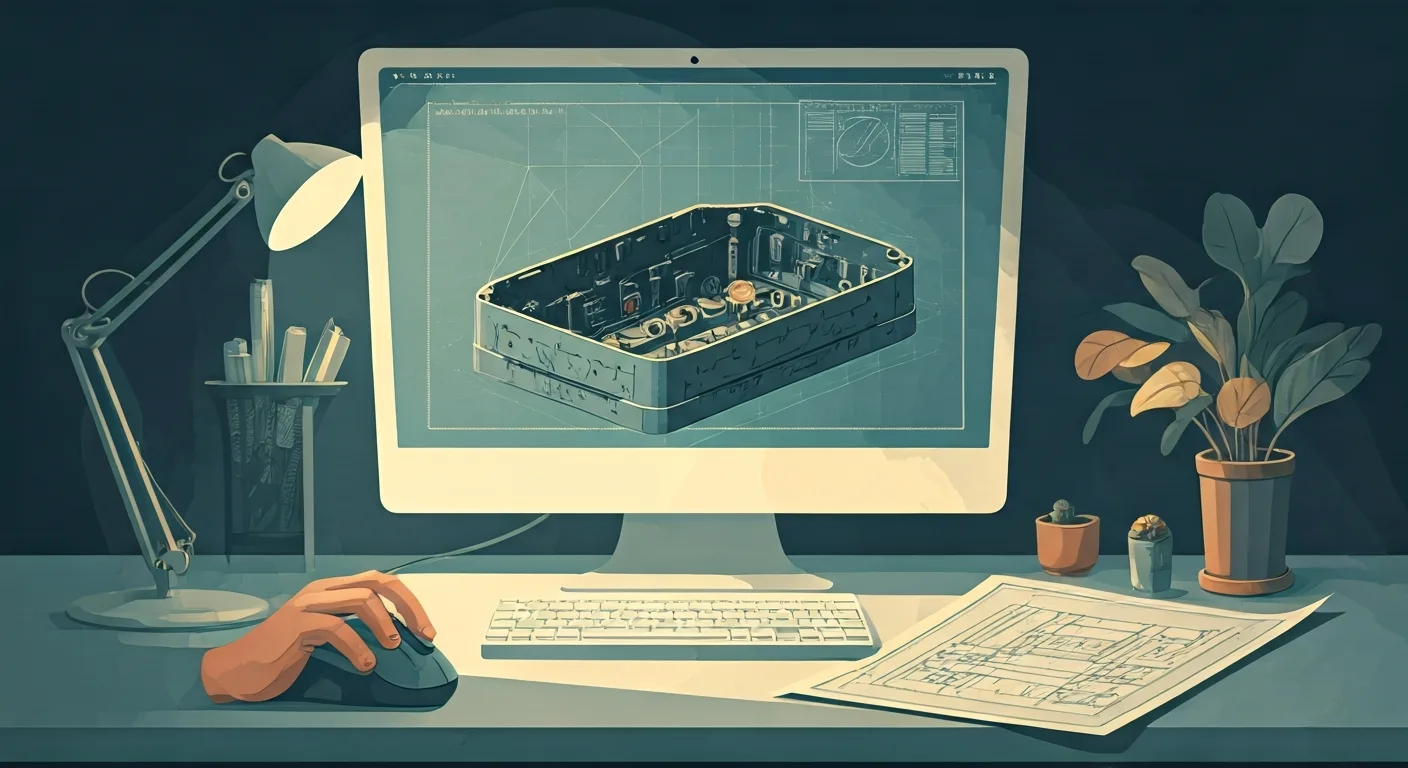
Creates detailed technical drawings and plans for mechanical devices and equipment using CAD software. Translates engineering concepts into precise 2D and 3D diagrams that manufacturing teams use to build components, ensuring accuracy and adherence to specifications.
Ensures the accurate translation of engineering designs into manufacturable components, preventing errors and streamlining production processes.
On the job
- Develop detailed design drawings and specifications for mechanical equipment, dies, tools, and controls, using computer-assisted drafting (CAD) equipment.
- Review and analyse specifications, sketches, drawings, ideas, and related data to assess factors affecting component designs and procedures.
- Modify and revise designs to correct operating deficiencies or to reduce production problems.
- Prepare multiple versions of designs for review by engineers and clients.
- Collaborate with engineers and manufacturing staff to ensure designs are feasible and meet production requirements.
Tools & technology
Average salary
Job outlook
StableDemand is steady. This is an established role with consistent hiring across sectors.
Education & training
Associate's degree or postsecondary certificate in drafting, mechanical engineering technology, or a related field.
AI impact outlook
Note — this is our current view. AI is moving fast, so we revisit these ratings.
Show how this was assessed Hide the detail
Note — this is our current view. AI is moving fast, so we revisit these ratings.
Show how this was assessed Hide the detailWhy this role received this rating
Core task exposure
high
How much of the role’s important work could AI perform?
The core task of creating detailed technical drawings and specifications using CAD software is highly amenable to AI generation and automation.
End-to-end automation
high
Can AI complete the work without substantial human involvement?
AI could generate full sets of technical drawings from high-level specifications, though human review and final validation will remain critical for quality and safety.
Adoption pressure
high
How likely are employers to introduce AI into this work?
The potential for significant cost savings and speed in generating accurate technical drawings makes this role a very high priority for AI adoption in manufacturing and engineering.
Human dependence
low
How much does success depend on human judgement, relationships and accountability?
While accuracy is vital, the role involves executing precise instructions rather than complex judgment, creative problem-solving, or client-facing accountability, which ultimately rests with supervising engineers.
Protective — a higher rating lowers the overall score.
Role adaptability
moderate
How easily can the role evolve as AI takes on more tasks?
Adaptability involves learning to direct AI tools and potentially shifting towards higher-level design support or quality assurance of AI-generated output.
Shown for context — not part of the score.
What AI may take on
These are the parts of the role most likely to be automated or significantly accelerated.
- Generating detailed 2D and 3D technical drawings from engineering specifications
- Creating multiple design variations and iterations rapidly
- Detecting errors and inconsistencies in existing drawings
- Automating the modification of designs based on engineering feedback
- Preparing BOMs (Bills of Materials) and other manufacturing documentation
Where people remain essential
These parts continue to depend heavily on human judgement, relationships and accountability.
- Reviewing and validating AI-generated drawings for accuracy and adherence to intent
- Collaborating with engineers to interpret complex or ambiguous design requirements
- Making nuanced adjustments that require spatial reasoning and practical knowledge
- Ensuring designs are manufacturable and meet specific production constraints
- Troubleshooting and correcting AI output for complex or novel components
- Maintaining quality control and sign-off on final design documentation
How the role may evolve
Beyond lines on a screen: overseeing intelligent design.
Drafters will move from manual creation to overseeing and refining AI-generated designs, requiring a deeper understanding of design intent and the ability to critically evaluate automated outputs for manufacturability and correctness.
Strengthen your future fit
- Master advanced generative AI and CAD automation tools
- Develop strong critical evaluation and quality assurance skills
- Enhance understanding of manufacturing processes and materials
- Improve communication skills to articulate design intent effectively
- Transition towards design engineering support or AI tool management
- Assessment horizon
- 3–7 years
- Confidence
- High
- Last reviewed
- August 2026
- Methodology
- v1.0
This assessment reflects current AI capabilities and expected adoption patterns. Actual impacts will vary by industry, employer and the way each role is performed.
Career pathways
WHERE YOU COULD GO
CURRENT ROLE
Mechanical Drafter
Mechanical & Aerospace
STARTING POINTS
Who thrives here
Interest profile
realistic · RCI
People who enjoy practical, hands-on work with technical details, and precise, systematic methods to create accurate designs tend to thrive in this role.
Personality characteristics
Detail-oriented
Possesses a keen eye for accuracy and ensures all specifications are meticulously met in technical drawings.
Systematic thinker
Approaches tasks with a logical and organised method, ensuring consistency and adherence to standards in designs.
Practical
Enjoys working with tangible objects and translating engineering concepts into functional, manufacturable designs.
Analytical
Likes to analyse technical problems and find precise solutions through careful design and drafting.
Calm under pressure
Maintains composure and focus when faced with tight deadlines or complex design challenges.
Collaborative
Works effectively with engineers and other team members to refine designs and incorporate feedback.
Best for
- Individuals who enjoy translating complex engineering concepts into clear, precise, and manufacturable technical drawings.
- Those who thrive in roles where accuracy, attention to detail, and a systematic approach are paramount.
Watch out for
- Requires sustained focus on intricate details, which can be challenging for those preferring broad, conceptual tasks.
- The work is often structured and rule-bound, with less scope for highly abstract or experimental creative expression.
A week in the life
A representative working week for a Mechanical Drafter — where the deep work, meetings, and admin actually land.
Real people. Real results.
Thousands of people
can't be wrong.




Frequently asked questions about Mechanical Drafter roles
What does a Mechanical Drafter do?
A Mechanical Drafter creates detailed technical drawings and plans for mechanical devices and equipment using CAD software. Translates engineering concepts into precise 2D and 3D diagrams that manufacturing teams use to build components, ensuring accuracy and adherence to specifications. Ensures the accurate translation of engineering designs into manufacturable components, preventing errors and streamlining production processes.
How much does a Mechanical Drafter earn?
A Mechanical Drafter earns a median of $60,000 per year in the US, typically ranging from $45,000 to $80,000.
What qualifications do you need to become a Mechanical Drafter?
To become a Mechanical Drafter, associate's degree or postsecondary certificate in drafting, mechanical engineering technology, or a related field.
What personality suits a Mechanical Drafter?
Mechanical Drafter roles tend to suit people who are highly conscientious — precise, organised and strong on follow-through (Conscientiousness 85/100) and steady under pressure — deadlines and setbacks do not rattle them easily (Emotional Stability 72/100). The traits that matter most in the role are Detail-oriented, Systematic thinker, Practical and Analytical. Possesses a keen eye for accuracy and ensures all specifications are meticulously met in technical drawings. On interests, Mechanical Drafter maps to a RCI Holland Code profile — people who enjoy practical, hands-on work with technical details, and precise, systematic methods to create accurate designs tend to thrive in this role.
Who does a Mechanical Drafter role suit?
A Mechanical Drafter role is usually a strong fit for these reasons. Strong Realistic and Conventional alignment: the role demands precision, systematic work, and hands-on technical application. High conscientiousness is crucial for the meticulous attention to detail required in technical drafting. A significant portion of the week is dedicated to deep work, focusing on detailed design and technical documentation.
What are the downsides of being a Mechanical Drafter?
Mechanical Drafter roles come with trade-offs worth weighing up. Requires sustained focus on intricate details, which can be challenging for those preferring broad, conceptual tasks. The work is often structured and rule-bound, with less scope for highly abstract or experimental creative expression.
What is the work environment like for a Mechanical Drafter?
Work as a Mechanical Drafter is mostly office-based with onsite arrangements common, semi-structured — a mix of set processes and self-directed work, a moderate pace and medium exposure to clients or stakeholders. Around 85% of the week is focused deep work.
What skills do you need to be a Mechanical Drafter?
Core skills for a Mechanical Drafter include CAD software proficiency, Technical drawing, Geometric dimensioning and tolerancing (GD&T), Mechanical design principles, Problem-solving and Attention to detail.
How do you become a Mechanical Drafter?
Common entry routes into Mechanical Drafter roles include Junior Drafter, Cad Technician Trainee and Manufacturing Technician.
What career progression is there for a Mechanical Drafter?
From a Mechanical Drafter role, common next steps include Senior Mechanical Drafter, Mechanical Designer and CAD Manager.
What is the job outlook for Mechanical Drafter roles?
The outlook for Mechanical Drafter roles is currently rated stable. Demand is steady. This is an established role with consistent hiring across sectors.
Will AI replace Mechanical Drafter roles?
Traitstack rates automation risk for Mechanical Drafter roles at 81 out of 100, which is strong. Much of the detailed drafting work and iteration could be AI-generated, with human drafters transitioning to reviewing, refining, and validating automated outputs. AI is most likely to take on generating detailed 2d and 3d technical drawings from engineering specifications, creating multiple design variations and iterations rapidly and detecting errors and inconsistencies in existing drawings. Reviewing and validating ai-generated drawings for accuracy and adherence to intent, collaborating with engineers to interpret complex or ambiguous design requirements and making nuanced adjustments that require spatial reasoning and practical knowledge stay with people. Beyond lines on a screen: overseeing intelligent design. That score measures how much of the work could change, not the likelihood the job disappears. It is Traitstack's current view, revisited as AI capability moves.