Dog Walker
SOC 39-2021.00 · ESCO 5169 · OSCA 461431
Role snapshot
Overview
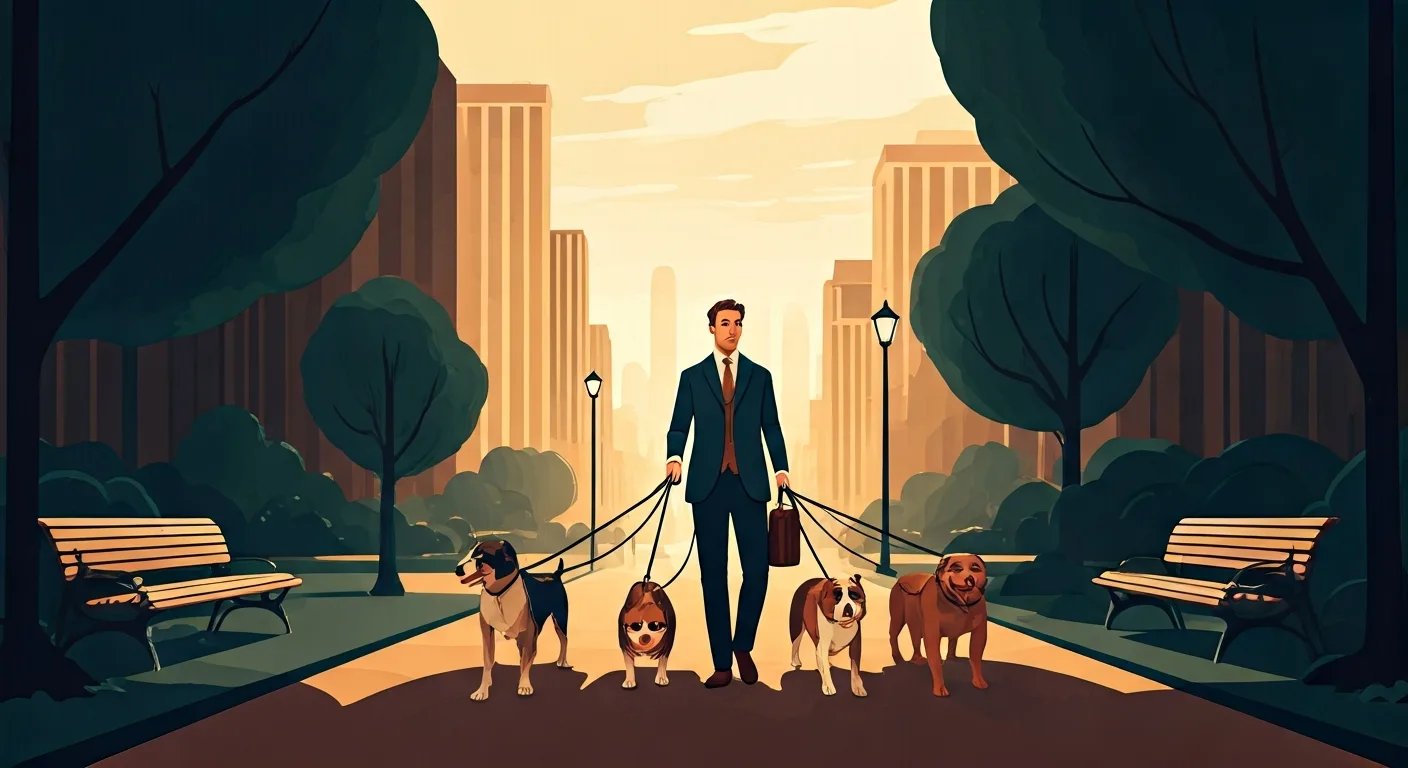
Takes clients' dogs on scheduled walks, ensuring each animal gets adequate exercise and socialisation while keeping them safe and under control in public spaces. This role involves managing multiple dogs, adhering to client instructions, and maintaining a high level of responsibility for animal welfare.
Provides essential exercise and companionship for pets, contributing to their physical health and mental well-being, while offering convenience and peace of mind to pet owners.
On the job
- Walk dogs individually or in small groups, following established routes and schedules
- Ensure the safety and well-being of all animals, preventing conflicts and managing behavior
- Clean up after dogs and properly dispose of waste
- Communicate with clients regarding their pet's activities, behavior, and any concerns
- Administer basic first aid if necessary and respond to emergencies
Tools & technology
Average salary
Job outlook
StableDemand is steady. This is an established role with consistent hiring across sectors.
Education & training
High school diploma or equivalent is typically sufficient. Some training in animal care, pet first aid, or animal behavior is beneficial but often learned on the job.
AI impact outlook
Note — this is our current view. AI is moving fast, so we revisit these ratings.
Show how this was assessed Hide the detail
Note — this is our current view. AI is moving fast, so we revisit these ratings.
Show how this was assessed Hide the detailWhy this role received this rating
Core task exposure
low
How much of the role’s important work could AI perform?
While scheduling and route optimization can be AI-assisted, the physical act of walking and managing dogs is not exposed.
End-to-end automation
low
Can AI complete the work without substantial human involvement?
AI cannot physically walk, control, or care for dogs in public spaces, nor can it administer first aid.
Adoption pressure
low
How likely are employers to introduce AI into this work?
The low-cost nature of the service and the absolute necessity of human physical presence makes widespread automation of the core task uneconomical and impractical.
Human dependence
strong
How much does success depend on human judgement, relationships and accountability?
Success critically depends on human physical presence, real-time management of unpredictable animals, and building trust with clients.
Protective — a higher rating lowers the overall score.
Role adaptability
moderate
How easily can the role evolve as AI takes on more tasks?
The role can adapt by using technology for logistics and focusing on enhanced safety protocols and personalized pet care.
Shown for context — not part of the score.
What AI may take on
These are the parts of the role most likely to be automated or significantly accelerated.
- Optimize walking routes for efficiency and dog needs
- Automate scheduling and client booking processes
- Generate daily activity reports for clients based on GPS data
- Provide alerts for weather conditions or hazardous areas
- Process payments and manage invoicing automatically
Where people remain essential
These parts continue to depend heavily on human judgement, relationships and accountability.
- Physically walk dogs individually or in groups
- Ensure the safety and well-being of all animals in public
- Prevent conflicts and manage dog behavior in real-time
- Clean up after dogs and dispose of waste properly
- Administer basic first aid and respond to emergencies
- Communicate with clients about specific pet behaviors and needs
- Provide social interaction and companionship to dogs
How the role may evolve
Optimized routes and schedules. Enhanced focus on animal welfare and client communication.
The role will leverage AI for logistical efficiency, allowing walkers to concentrate more on the safety, behavioral management, and personalized care of the animals, alongside detailed client communication.
Strengthen your future fit
- Advanced pet first aid and emergency response
- Proficiency in using GPS and pet management apps
- Enhanced canine body language interpretation skills
- Strong conflict resolution and group management skills for dogs
- Developing specialized services (e.g., senior dog walks, puppy socialization)
- Assessment horizon
- 3–7 years
- Confidence
- High
- Last reviewed
- August 2026
- Methodology
- v1.0
This assessment reflects current AI capabilities and expected adoption patterns. Actual impacts will vary by industry, employer and the way each role is performed.
Career pathways
WHERE YOU COULD GO
CURRENT ROLE
Dog Walker
Personal & Professional Services
ADJACENT MOVES
STARTING POINTS
Who thrives here
Interest profile
realistic · RSC
People who enjoy hands-on work with animals, interacting with clients, and following structured routines for pet care tend to thrive in this role.
Personality characteristics
Patient
Able to handle various animal temperaments and unexpected behaviors with calm and understanding.
Reliable
Consistently shows up on time and follows client instructions carefully, building trust with pet owners.
Animal-loving
Has a genuine affection for animals and enjoys spending time outdoors caring for them.
Organized
Manages multiple schedules, clients, and routes efficiently to ensure all pets are cared for.
Calm under pressure
Handles unexpected situations, like a dog altercation or a pet emergency, without becoming overly stressed.
Best for
- Individuals who love animals and prefer an active, outdoor work environment.
- Those who value autonomy and managing their own schedule.
- People seeking a service-oriented role where they can positively impact pet welfare.
Watch out for
- The role can be physically demanding, requiring significant walking in various weather conditions.
- Irregular hours and weekend work may be required based on client needs.
- Requires independence and self-management, as direct supervision is often minimal.
A week in the life
A representative working week for a Dog Walker — where the deep work, meetings, and admin actually land.
Real people. Real results.
Thousands of people
can't be wrong.





Frequently asked questions about Dog Walker roles
What does a Dog Walker do?
A Dog Walker takes clients' dogs on scheduled walks, ensuring each animal gets adequate exercise and socialisation while keeping them safe and under control in public spaces. This role involves managing multiple dogs, adhering to client instructions, and maintaining a high level of responsibility for animal welfare. Provides essential exercise and companionship for pets, contributing to their physical health and mental well-being, while offering convenience and peace of mind to pet owners.
How much does a Dog Walker earn?
A Dog Walker earns a median of $38,000 per year in the US, typically ranging from $25,000 to $55,000.
What qualifications do you need to become a Dog Walker?
To become a Dog Walker, high school diploma or equivalent is typically sufficient. Some training in animal care, pet first aid, or animal behavior is beneficial but often learned on the job.
What personality suits a Dog Walker?
Dog Walker roles tend to suit people who are warm and cooperative — tuned in to the people around them (Agreeableness 72/100) and steady under pressure — deadlines and setbacks do not rattle them easily (Emotional Stability 65/100). The traits that matter most in the role are Patient, Reliable, Animal-loving and Organized. Able to handle various animal temperaments and unexpected behaviors with calm and understanding. On interests, Dog Walker maps to a RSC Holland Code profile — people who enjoy hands-on work with animals, interacting with clients, and following structured routines for pet care tend to thrive in this role.
Who does a Dog Walker role suit?
A Dog Walker role is usually a strong fit for these reasons. Strong Realistic (R) interest for hands-on, outdoor work with animals. Good Social (S) alignment for interacting with pets and their owners. Requires Conscientiousness (C) for reliable scheduling and animal safety.
What are the downsides of being a Dog Walker?
Dog Walker roles come with trade-offs worth weighing up. The role can be physically demanding, requiring significant walking in various weather conditions. Irregular hours and weekend work may be required based on client needs. Requires independence and self-management, as direct supervision is often minimal.
What is the work environment like for a Dog Walker?
Work as a Dog Walker is mostly outdoors-based with field arrangements common, largely self-directed, with little imposed structure, a moderate pace and medium exposure to clients or stakeholders.
What skills do you need to be a Dog Walker?
Core skills for a Dog Walker include Animal handling and behavior, Time management and scheduling, Client communication, Pet first aid and Route planning.
How do you become a Dog Walker?
Common entry routes into Dog Walker roles include Pet Lover, Volunteer Animal Shelter and Pet Care Assistant.
What career progression is there for a Dog Walker?
From a Dog Walker role, common next steps include Pet Business Owner; lateral moves include Pet Sitter, Kennel Assistant and Pet Groomer.
What is the job outlook for Dog Walker roles?
The outlook for Dog Walker roles is currently rated stable. Demand is steady. This is an established role with consistent hiring across sectors.
Will AI replace Dog Walker roles?
Traitstack rates automation risk for Dog Walker roles at 16 out of 100, which is low. Logistical tasks like scheduling and route optimization will see AI enhancements, yet the physical presence, real-time animal management, and client trust remain exclusively human domains. AI is most likely to take on optimize walking routes for efficiency and dog needs, automate scheduling and client booking processes and generate daily activity reports for clients based on gps data. Physically walk dogs individually or in groups, ensure the safety and well-being of all animals in public and prevent conflicts and manage dog behavior in real-time stay with people. Optimized routes and schedules. Enhanced focus on animal welfare and client communication. That score measures how much of the work could change, not the likelihood the job disappears. It is Traitstack's current view, revisited as AI capability moves.