Dietitian and Nutritionist
SOC 29-1031.00 · ESCO 2265 · OSCA 263231
Role snapshot
Overview
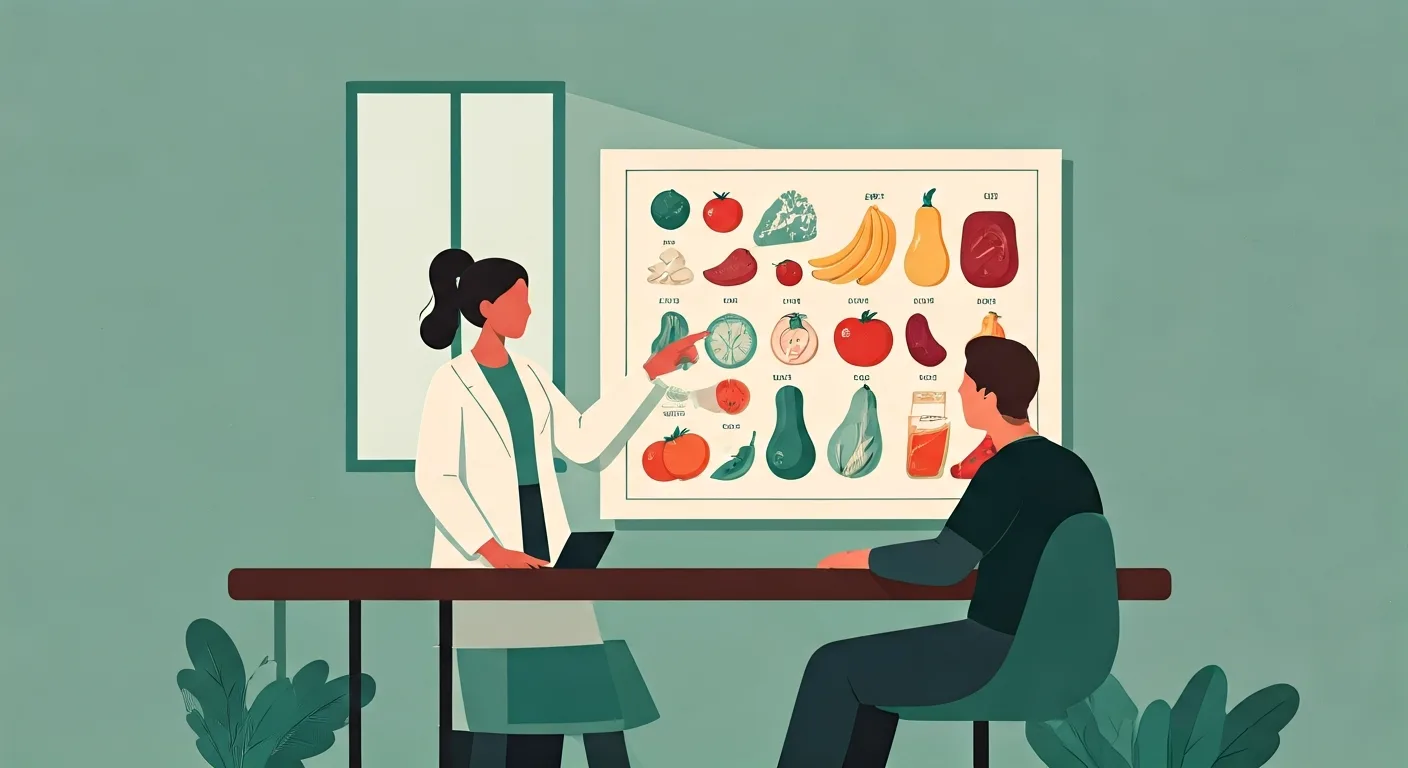
Dietitians and Nutritionists are healthcare professionals who apply the science of food and nutrition to promote health and manage disease. They assess patients' nutritional needs, create personalised eating plans, and counsel individuals on how food choices affect health. Working in hospitals, clinics, private practice, or community settings, they translate complex scientific information into practical, everyday dietary advice.
Improves public health by preventing and treating diseases through nutrition, enhancing patient recovery, and empowering individuals to make informed food choices for better well-being.
On the job
- Conduct comprehensive nutritional assessments, including dietary histories and anthropometric measurements.
- Develop and implement individualized medical nutrition therapy and care plans for patients with various health conditions.
- Provide one-on-one and group nutrition education and counseling to promote healthy eating habits.
- Collaborate with physicians, nurses, and other healthcare professionals to integrate nutrition into overall patient care.
- Monitor and evaluate the effectiveness of nutrition interventions, adjusting plans as needed.
Tools & technology
Average salary
Job outlook
GrowingJob growth is expected to be above average over the next five years.
Education & training
A bachelor's or master's degree in dietetics, nutrition, or a related field, typically followed by a supervised practice internship and passing a national exam.
AI impact outlook
Note — this is our current view. AI is moving fast, so we revisit these ratings.
Show how this was assessed Hide the detail
Note — this is our current view. AI is moving fast, so we revisit these ratings.
Show how this was assessed Hide the detailWhy this role received this rating
Core task exposure
moderate
How much of the role’s important work could AI perform?
Initial nutritional assessments and basic plan generation can leverage AI, but complex clinical judgment and nuanced counseling are less exposed.
End-to-end automation
low
Can AI complete the work without substantial human involvement?
Complex patient counseling, motivational change, and collaboration in multi-disciplinary teams require human interaction and accountability, preventing end-to-end automation.
Adoption pressure
high
How likely are employers to introduce AI into this work?
Adoption pressure is high for AI to assist with data analysis and personalized content, but much lower for replacing the direct clinical judgment and counseling components of the role.
Human dependence
strong
How much does success depend on human judgement, relationships and accountability?
Success critically depends on deep clinical judgment, empathy, communication skills for motivational interviewing, building rapport, and ethical accountability for patient outcomes.
Protective — a higher rating lowers the overall score.
Role adaptability
strong
How easily can the role evolve as AI takes on more tasks?
The role is highly adaptable, leveraging AI for data-driven insights and personalized resources, allowing dietitians to focus on complex cases, behavior change, and strategic nutritional planning.
Shown for context — not part of the score.
What AI may take on
These are the parts of the role most likely to be automated or significantly accelerated.
- Initial collection and analysis of dietary histories and anthropometric data
- Generating evidence-based nutritional guidelines and resource materials
- Recommending basic meal plans for common health conditions
- Monitoring and tracking patient progress against nutritional goals
- Identifying potential drug-nutrient interactions
Where people remain essential
These parts continue to depend heavily on human judgement, relationships and accountability.
- Conducting comprehensive nutritional assessments with clinical interpretation
- Developing individualized medical nutrition therapy and care plans for complex patients
- Providing one-on-one and group nutrition education and counseling for behavior change
- Collaborating with physicians and other healthcare professionals for integrated care
- Monitoring and evaluating the effectiveness of nutrition interventions with clinical judgment
- Translating complex scientific information into practical advice
How the role may evolve
Leveraging data for deeper insights. Focusing on complex counseling.
Dietitians will increasingly use AI to process data and inform basic recommendations, enabling them to dedicate more time to complex clinical cases, advanced nutritional therapy, and deeply personalized, empathetic counseling.
Strengthen your future fit
- Proficiency in advanced nutritional analysis software and AI tools
- Expertise in motivational interviewing and behavior change strategies
- Strong collaborative and interdisciplinary communication skills
- Critical thinking for complex medical nutrition therapy
- Continuous learning in nutrition science and emerging technologies
- Assessment horizon
- 3–7 years
- Confidence
- Medium
- Last reviewed
- August 2026
- Methodology
- v1.0
This assessment reflects current AI capabilities and expected adoption patterns. Actual impacts will vary by industry, employer and the way each role is performed.
Career pathways
WHERE YOU COULD GO
CURRENT ROLE
Dietitian and Nutritionist
Allied Health
ADJACENT MOVES
STARTING POINTS
Who thrives here
Interest profile
social · SIE
Individuals who enjoy helping others, applying scientific knowledge to solve practical problems, and educating groups or individuals on health-related topics tend to thrive in this role.
Personality characteristics
Inquisitive
A keen interest in scientific research and a desire to understand the complexities of human physiology and nutrition.
Meticulous
High attention to detail when assessing patient data, developing care plans, and documenting progress.
Engaging
Comfortable and effective in counseling individuals and leading group education sessions.
Empathetic
Strong capacity to understand and share the feelings of patients, fostering trust and effective communication.
Composed
Maintains calm and professionalism when dealing with challenging patient cases or emotionally sensitive topics.
Best for
- Individuals passionate about health, science, and making a direct, positive impact on people's lives.
- Those who enjoy both analytical problem-solving and interpersonal communication and education.
- Professionals who thrive in structured environments but also require autonomy in patient care decisions.
Watch out for
- Can involve emotionally demanding situations when dealing with patients facing chronic illness or difficult health challenges.
- Requires navigating complex healthcare systems and collaborating with diverse professional teams, which can sometimes lead to administrative burden or interpersonal challenges.
A week in the life
A representative working week for a Dietitian and Nutritionist — where the deep work, meetings, and admin actually land.
Real people. Real results.
Thousands of people
can't be wrong.






Frequently asked questions about Dietitian and Nutritionist roles
What does a Dietitian and Nutritionist do?
A Dietitian and Nutritionist dietitians and Nutritionists are healthcare professionals who apply the science of food and nutrition to promote health and manage disease. They assess patients' nutritional needs, create personalised eating plans, and counsel individuals on how food choices affect health. Working in hospitals, clinics, private practice, or community settings, they translate complex scientific information into practical, everyday dietary advice. Improves public health by preventing and treating diseases through nutrition, enhancing patient recovery, and empowering individuals to make informed food choices for better well-being.
How much does a Dietitian and Nutritionist earn?
A Dietitian and Nutritionist earns a median of $75,000 per year in the US, typically ranging from $60,000 to $95,000.
What qualifications do you need to become a Dietitian and Nutritionist?
To become a Dietitian and Nutritionist, a bachelor's or master's degree in dietetics, nutrition, or a related field, typically followed by a supervised practice internship and passing a national exam. State licensure or certification is typically required.
What personality suits a Dietitian and Nutritionist?
Dietitian and Nutritionist roles tend to suit people who are highly conscientious — precise, organised and strong on follow-through (Conscientiousness 78/100) and warm and cooperative — tuned in to the people around them (Agreeableness 78/100). The traits that matter most in the role are Inquisitive, Meticulous, Engaging and Empathetic. A keen interest in scientific research and a desire to understand the complexities of human physiology and nutrition. On interests, Dietitian and Nutritionist maps to a SIE Holland Code profile — individuals who enjoy helping others, applying scientific knowledge to solve practical problems, and educating groups or individuals on health-related topics tend to thrive in this role.
Who does a Dietitian and Nutritionist role suit?
A Dietitian and Nutritionist role is usually a strong fit for these reasons. Strong Social (S) and Investigative (I) alignment: the role is centered on helping people using scientific knowledge. High Conscientiousness is valued for meticulous care planning and documentation. Significant opportunity for direct patient interaction and education, appealing to those with high Agreeableness and moderate Extraversion.
What are the downsides of being a Dietitian and Nutritionist?
Dietitian and Nutritionist roles come with trade-offs worth weighing up. Can involve emotionally demanding situations when dealing with patients facing chronic illness or difficult health challenges. Requires navigating complex healthcare systems and collaborating with diverse professional teams, which can sometimes lead to administrative burden or interpersonal challenges.
What is the work environment like for a Dietitian and Nutritionist?
Work as a Dietitian and Nutritionist is mostly mixed-based with hybrid arrangements common, semi-structured — a mix of set processes and self-directed work, a moderate pace and high exposure to clients or stakeholders. Around 23% of the week is focused deep work.
What skills do you need to be a Dietitian and Nutritionist?
Core skills for a Dietitian and Nutritionist include Nutritional assessment, Medical nutrition therapy, Dietary counseling, Patient education, Interdisciplinary collaboration and Critical thinking.
How do you become a Dietitian and Nutritionist?
Common entry routes into Dietitian and Nutritionist roles include Dietetic Intern, Entry Level Nutritionist and Community Health Educator.
What career progression is there for a Dietitian and Nutritionist?
From a Dietitian and Nutritionist role, common next steps include Senior Clinical Dietitian and Nutrition Manager; lateral moves include Public Health Nutritionist and Nutrition Researcher.
What is the job outlook for Dietitian and Nutritionist roles?
The outlook for Dietitian and Nutritionist roles is currently rated growing. Job growth is expected to be above average over the next five years.
Will AI replace Dietitian and Nutritionist roles?
Traitstack rates automation risk for Dietitian and Nutritionist roles at 44 out of 100, which is moderate. Nutritional assessments and basic plan generation are areas where AI can assist, but the nuanced counseling, complex clinical judgment, and collaborative care require human expertise. AI is most likely to take on initial collection and analysis of dietary histories and anthropometric data, generating evidence-based nutritional guidelines and resource materials and recommending basic meal plans for common health conditions. Conducting comprehensive nutritional assessments with clinical interpretation, developing individualized medical nutrition therapy and care plans for complex patients and providing one-on-one and group nutrition education and counseling for behavior change stay with people. Leveraging data for deeper insights. Focusing on complex counseling. That score measures how much of the work could change, not the likelihood the job disappears. It is Traitstack's current view, revisited as AI capability moves.