Dermal Therapist
SOC 39-5094.00 · ESCO 5142 · OSCA 461132
Role snapshot
Overview
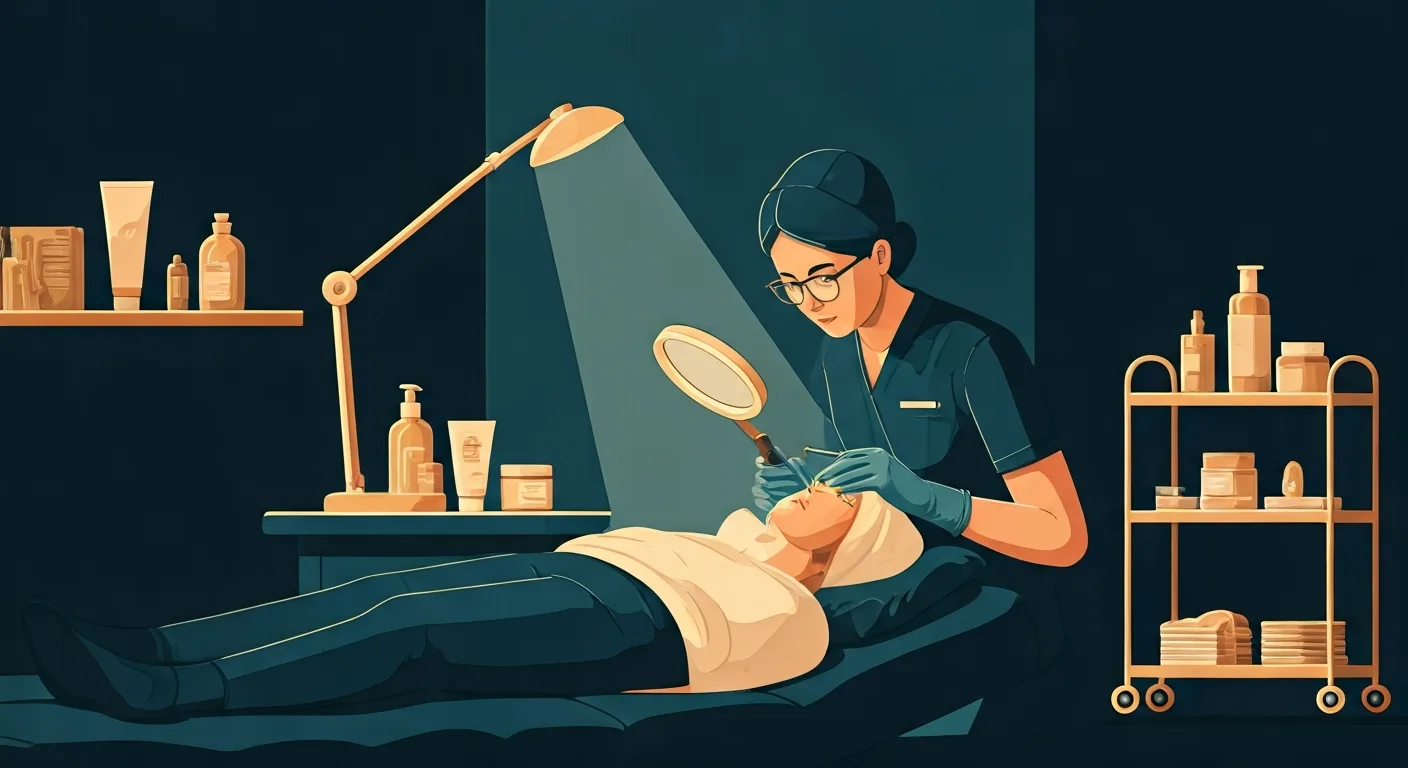
A Dermal Therapist specialises in providing advanced non-invasive and minimally invasive skin treatments under clinical protocols. They use technologies such as laser and light therapies, chemical peels, microdermabrasion, and other advanced modalities to address various skin conditions like acne, scarring, pigmentation, sun damage, and anti-aging concerns, aiming to improve skin health and appearance.
Helps clients achieve healthier, clearer, and more youthful-looking skin, boosting their confidence and addressing specific dermatological concerns through evidence-based treatments.
On the job
- Conduct comprehensive skin assessments and analyse client skin concerns to develop personalised treatment plans.
- Perform advanced clinical skin treatments such as laser therapy, chemical peels, and microdermabrasion.
- Educate clients on appropriate skincare routines, product usage, and post-treatment care instructions.
- Maintain detailed and accurate client records, ensuring all treatment protocols and safety guidelines are followed.
- Operate and maintain specialised dermal therapy equipment safely and effectively, adhering to clinical standards.
Tools & technology
Average salary
Job outlook
GrowingJob growth is expected to be above average over the next five years.
Education & training
Specialised diploma or certificate in dermal therapies, aesthetics, or skin science is typically required.
AI impact outlook
Note — this is our current view. AI is moving fast, so we revisit these ratings.
Show how this was assessed Hide the detail
Note — this is our current view. AI is moving fast, so we revisit these ratings.
Show how this was assessed Hide the detailWhy this role received this rating
Core task exposure
moderate
How much of the role’s important work could AI perform?
AI can enhance skin analysis and treatment plan suggestions, but the core work involves hands-on application of advanced therapies and patient interaction.
End-to-end automation
low
Can AI complete the work without substantial human involvement?
The need for real-time assessment, hands-on treatment, and safety monitoring ensures a human remains in the loop for complex procedures.
Adoption pressure
moderate
How likely are employers to introduce AI into this work?
There is moderate employer pressure to adopt AI for administrative efficiency and diagnostic support, but direct treatment is less exposed.
Human dependence
strong
How much does success depend on human judgement, relationships and accountability?
Success critically depends on human touch, real-time client assessment, safety oversight during procedures, and empathetic communication.
Protective — a higher rating lowers the overall score.
Role adaptability
strong
How easily can the role evolve as AI takes on more tasks?
The role can readily adapt by integrating new technologies and focusing on personalized, high-touch client experiences in an evolving field.
Shown for context — not part of the score.
What AI may take on
These are the parts of the role most likely to be automated or significantly accelerated.
- Automated skin analysis via image recognition for conditions and concerns
- AI-driven recommendations for treatment protocols and product selections
- Managing detailed client records and appointment scheduling
- Predicting skin response based on historical data and treatment efficacy
Where people remain essential
These parts continue to depend heavily on human judgement, relationships and accountability.
- Performing advanced clinical skin treatments such as laser and chemical peels
- Conducting comprehensive client consultations and managing expectations
- Adapting treatment protocols in real-time based on skin response
- Ensuring strict adherence to safety guidelines and clinical standards
- Providing empathetic client education and post-treatment care instructions
- Operating and maintaining specialized dermal therapy equipment
How the role may evolve
From manual skin assessment to human-guided application of technology-driven insights.
The role will evolve to integrate AI for enhanced diagnostics and planning, allowing therapists to focus more on the skilled application of treatments and personalized client relationships.
Strengthen your future fit
- Advanced training in new laser and light-based technologies
- Proficiency in interpreting AI-driven skin analysis reports
- Strong client communication and education abilities
- Expertise in managing complex skin conditions
- Continuous learning in dermatological advancements
- Assessment horizon
- 3–7 years
- Confidence
- Medium
- Last reviewed
- August 2026
- Methodology
- v1.0
This assessment reflects current AI capabilities and expected adoption patterns. Actual impacts will vary by industry, employer and the way each role is performed.
Career pathways
WHERE YOU COULD GO
CURRENT ROLE
Dermal Therapist
Allied Health
ADJACENT MOVES
STARTING POINTS
Who thrives here
Interest profile
realistic · RSC
People who enjoy hands-on, practical work with specialised equipment, coupled with a focus on scientific understanding and providing direct service to clients, tend to thrive in this role.
Personality characteristics
Conscientious
Follows precise protocols for treatments and hygiene, ensuring client safety and consistent results.
Empathetic
Listens actively to client concerns and builds trust and rapport to provide supportive care.
Practical
Enjoys working directly with specialised equipment and performing hands-on, procedural tasks.
Engaging
Comfortably explains complex procedures and manages client expectations effectively.
Stable
Maintains composure during delicate procedures or when addressing client concerns.
Inquisitive
Stays updated on new skin technologies, research, and treatment advancements.
Best for
- Individuals who enjoy practical, hands-on work in a clinical setting.
- Those who are passionate about skin science and helping others improve their appearance and confidence.
- Professionals who thrive in roles requiring precision, attention to detail, and direct client communication.
Watch out for
- Managing client expectations and potential dissatisfaction can be challenging.
- Requires continuous learning to stay updated with evolving technologies and treatment methods.
- Adherence to strict hygiene and safety protocols is paramount and requires constant vigilance.
A week in the life
A representative working week for a Dermal Therapist — where the deep work, meetings, and admin actually land.
Real people. Real results.
Thousands of people
can't be wrong.





Frequently asked questions about Dermal Therapist roles
What does a Dermal Therapist do?
A Dermal Therapist a Dermal Therapist specialises in providing advanced non-invasive and minimally invasive skin treatments under clinical protocols. They use technologies such as laser and light therapies, chemical peels, microdermabrasion, and other advanced modalities to address various skin conditions like acne, scarring, pigmentation, sun damage, and anti-aging concerns, aiming to improve skin health and appearance. Helps clients achieve healthier, clearer, and more youthful-looking skin, boosting their confidence and addressing specific dermatological concerns through evidence-based treatments.
How much does a Dermal Therapist earn?
A Dermal Therapist earns a median of $58,000 per year in the US, typically ranging from $42,000 to $78,000.
What qualifications do you need to become a Dermal Therapist?
To become a Dermal Therapist, specialised diploma or certificate in dermal therapies, aesthetics, or skin science is typically required. State-specific licensing or registration for dermal therapists or clinical aestheticians may be required depending on jurisdiction and services offered.
What personality suits a Dermal Therapist?
Dermal Therapist roles tend to suit people who are highly conscientious — precise, organised and strong on follow-through (Conscientiousness 75/100) and warm and cooperative — tuned in to the people around them (Agreeableness 70/100). The traits that matter most in the role are Conscientious, Empathetic, Practical and Engaging. Follows precise protocols for treatments and hygiene, ensuring client safety and consistent results. On interests, Dermal Therapist maps to a RSC Holland Code profile — people who enjoy hands-on, practical work with specialised equipment, coupled with a focus on scientific understanding and providing direct service to clients, tend to thrive in this role.
Who does a Dermal Therapist role suit?
A Dermal Therapist role is usually a strong fit for these reasons. Strong Realistic (R) and Social (S) alignment: the role combines hands-on technical work with direct client interaction. A significant portion of the week involves focused treatment delivery and client consultations. The clinical setting provides a structured environment for those who value clear protocols and scientific application.
What are the downsides of being a Dermal Therapist?
Dermal Therapist roles come with trade-offs worth weighing up. Managing client expectations and potential dissatisfaction can be challenging. Requires continuous learning to stay updated with evolving technologies and treatment methods. Adherence to strict hygiene and safety protocols is paramount and requires constant vigilance.
What is the work environment like for a Dermal Therapist?
Work as a Dermal Therapist is mostly clinical-based with onsite arrangements common, semi-structured — a mix of set processes and self-directed work, a moderate pace and high exposure to clients or stakeholders. Around 44% of the week is focused deep work.
What skills do you need to be a Dermal Therapist?
Core skills for a Dermal Therapist include Advanced skin assessment, Laser and light therapy application, Chemical peeling techniques, Client consultation and education and Clinical hygiene and safety protocols.
How do you become a Dermal Therapist?
Common entry routes into Dermal Therapist roles include Beauty Therapist, Aesthetician Assistant and Medical Receptionist With Clinical Interest.
What career progression is there for a Dermal Therapist?
From a Dermal Therapist role, common next steps include Senior Dermal Therapist and Clinic Manager; lateral moves include Dermal Educator.
What is the job outlook for Dermal Therapist roles?
The outlook for Dermal Therapist roles is currently rated growing. Job growth is expected to be above average over the next five years.
Will AI replace Dermal Therapist roles?
Traitstack rates automation risk for Dermal Therapist roles at 36 out of 100, which is low. AI can streamline skin analysis and treatment planning, yet the Dermal Therapist's hands-on application of advanced therapies and empathetic client care remains indispensable. AI is most likely to take on automated skin analysis via image recognition for conditions and concerns, ai-driven recommendations for treatment protocols and product selections and managing detailed client records and appointment scheduling. Performing advanced clinical skin treatments such as laser and chemical peels, conducting comprehensive client consultations and managing expectations and adapting treatment protocols in real-time based on skin response stay with people. From manual skin assessment to human-guided application of technology-driven insights. That score measures how much of the work could change, not the likelihood the job disappears. It is Traitstack's current view, revisited as AI capability moves.