Commissioned Fire Officer
SOC 33-1021.00 · ESCO 1349 · OSCA 149232
Role snapshot
Overview
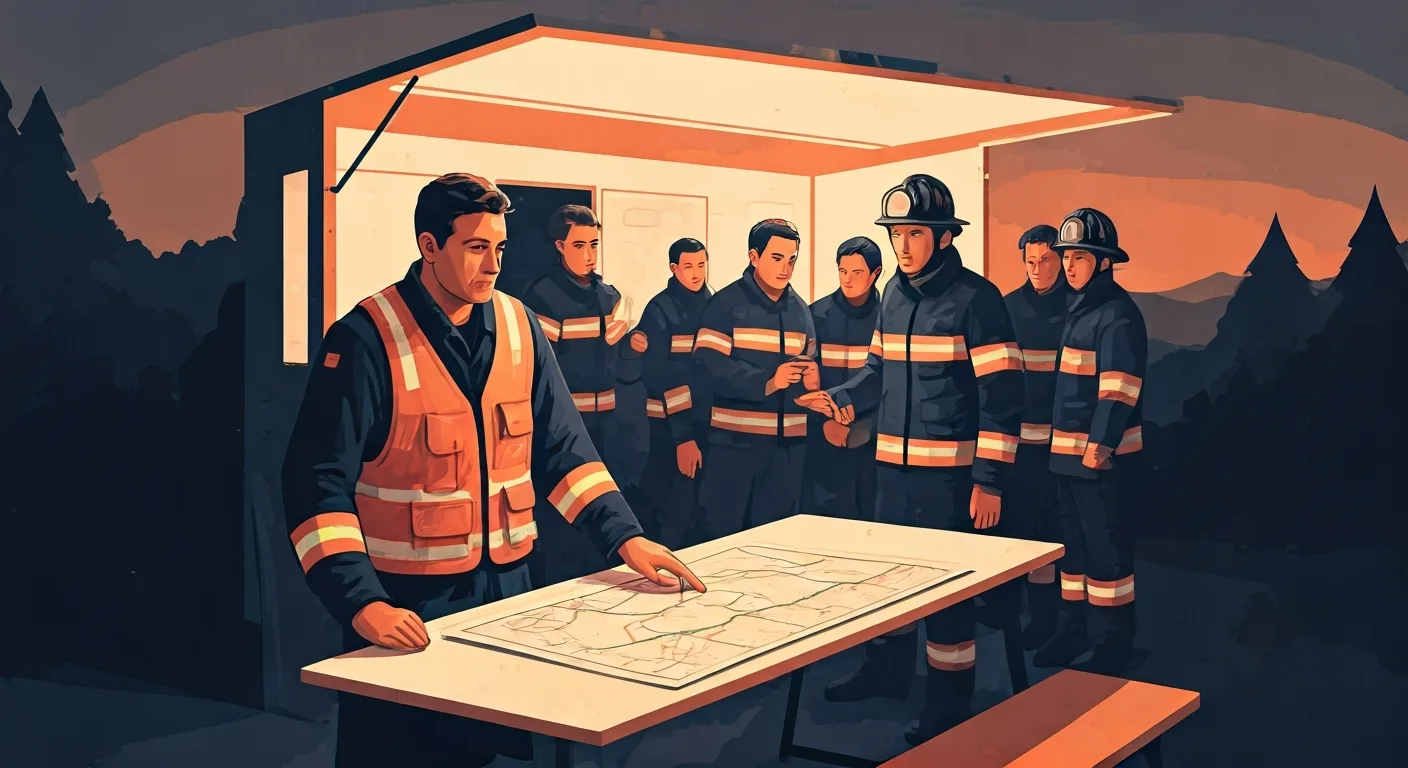
Commissioned Fire Officers lead and manage firefighting crews, coordinating emergency response efforts including fire suppression, rescue operations, and hazardous materials incidents. They are responsible for the tactical deployment of personnel and equipment, ensuring adherence to safety protocols, and making critical decisions under pressure. Beyond emergency response, they manage fire station resources, oversee equipment maintenance, and develop and deliver training programs to maintain crew readiness and professional development. This role also involves administrative duties, community engagement, and enforcing fire safety regulations.
Protects lives and property by effectively leading emergency response teams, ensuring public safety, and maintaining a high state of readiness through rigorous training and resource management.
On the job
- Lead and direct fire suppression, rescue, and hazardous materials operations
- Manage fire station personnel, resources
- Develop, implement, and oversee training programs for fire crews
- Conduct post-incident analyses and prepare detailed reports
- Enforce fire safety codes and conduct public education initiatives
Tools & technology
Average salary
Job outlook
StableDemand is steady. This is an established role with consistent hiring across sectors.
Education & training
Bachelor's degree in fire science, public administration, or a related field, often combined with extensive experience as a firefighter and specific leadership training.
AI impact outlook
Note — this is our current view. AI is moving fast, so we revisit these ratings.
Show how this was assessed Hide the detail
Note — this is our current view. AI is moving fast, so we revisit these ratings.
Show how this was assessed Hide the detailWhy this role received this rating
Core task exposure
high
How much of the role’s important work could AI perform?
AI can assist significantly with tactical planning, training program design, post-incident analysis, and fire safety code review.
End-to-end automation
low
Can AI complete the work without substantial human involvement?
While AI can complete specific administrative or analytical workflows, the overall function of tactical command and direct crew leadership cannot be automated end-to-end.
Adoption pressure
moderate
How likely are employers to introduce AI into this work?
There is a strong incentive for efficiency in planning and analysis, but high-stakes operational environments and public safety concerns temper the adoption of AI in command roles.
Human dependence
strong
How much does success depend on human judgement, relationships and accountability?
Success critically relies on human judgment in dynamic crises, leadership of crews, building inter-agency relationships, and direct accountability for life-or-death decisions.
Protective — a higher rating lowers the overall score.
Role adaptability
strong
How easily can the role evolve as AI takes on more tasks?
Fire officers continuously adapt to evolving incident types, new technologies, and changing community needs, requiring ongoing training and strategic adjustments.
Shown for context — not part of the score.
What AI may take on
These are the parts of the role most likely to be automated or significantly accelerated.
- Optimize resource allocation and deployment strategies based on real-time data and predictive analytics.
- Generate comprehensive training programs and adaptive learning modules for fire crews.
- Conduct detailed post-incident analyses, identifying patterns and generating report drafts.
- Automate fire safety code reviews and compliance checks for buildings and plans.
- Assist in developing tactical response plans for various incident scenarios.
- Synthesize information from multiple sensors and data streams to provide enhanced situational awareness.
Where people remain essential
These parts continue to depend heavily on human judgement, relationships and accountability.
- Exercise critical judgment and make life-or-death decisions in dynamic, unpredictable incident environments.
- Provide direct leadership, motivation, and psychological support to fire crews under extreme pressure.
- Improvise and adapt tactical responses based on unforeseen real-time developments.
- Build and maintain inter-agency relationships for coordinated emergency response.
- Carry ultimate accountability for the safety of personnel and the public during operations.
- Engage in public education initiatives requiring empathy and community trust.
- Conduct hands-on assessment of complex, evolving incident scenes.
How the role may evolve
From managing processes to leading with augmented intelligence.
AI will handle many of the data-heavy planning, analytical, and administrative tasks, allowing officers to focus on strategic oversight, complex problem-solving, and direct human leadership.
Strengthen your future fit
- Proficiency in interpreting AI-generated tactical recommendations and data insights.
- Enhanced critical thinking and adaptive decision-making under uncertainty.
- Strong leadership and emotional intelligence for managing diverse teams in crisis.
- Advanced strategic planning and inter-agency coordination skills.
- Expertise in human-AI collaboration for emergency response systems.
- Assessment horizon
- 3–7 years
- Confidence
- High
- Last reviewed
- August 2026
- Methodology
- v1.0
This assessment reflects current AI capabilities and expected adoption patterns. Actual impacts will vary by industry, employer and the way each role is performed.
Career pathways
WHERE YOU COULD GO
CURRENT ROLE
Commissioned Fire Officer
Emergency Services & Defence
ADJACENT MOVES
STARTING POINTS
Who thrives here
Interest profile
enterprising · REC
Individuals who enjoy leading structured operations, responding to emergencies, and applying practical knowledge in critical situations tend to excel as Commissioned Fire Officers.
Personality characteristics
Disciplined
Demonstrates exceptional organisation, reliability, and attention to detail in emergency planning and execution.
Calm Under Pressure
Maintains composure and clarity of thought when facing high-stress, life-threatening situations.
Decisive Leader
Takes charge and makes critical, timely decisions to guide teams during complex incidents.
Team-Oriented
Fosters strong camaraderie and cooperation within the crew, valuing collective success over individual recognition.
Practical & Resourceful
Applies hands-on problem-solving skills and makes effective use of available resources during emergencies.
Best for
- Individuals who thrive in structured, high-stakes environments where leadership and quick decision-making are paramount.
- Those passionate about public service, team leadership, and continuous operational improvement.
- People who are highly disciplined, resilient, and can maintain focus under extreme pressure.
Watch out for
- The unpredictable nature of emergencies requires constant readiness and can lead to high-stress situations.
- Regular shift work, including nights, weekends, and holidays, is often required.
A week in the life
A representative working week for a Commissioned Fire Officer — where the deep work, meetings, and admin actually land.
Real people. Real results.
Thousands of people
can't be wrong.





Frequently asked questions about Commissioned Fire Officer roles
What does a Commissioned Fire Officer do?
A Commissioned Fire Officer commissioned Fire Officers lead and manage firefighting crews, coordinating emergency response efforts including fire suppression, rescue operations, and hazardous materials incidents. They are responsible for the tactical deployment of personnel and equipment, ensuring adherence to safety protocols, and making critical decisions under pressure. Beyond emergency response, they manage fire station resources, oversee equipment maintenance, and develop and deliver training programs to maintain crew readiness and professional development. This role also involves administrative duties, community engagement, and enforcing fire safety regulations. Protects lives and property by effectively leading emergency response teams, ensuring public safety, and maintaining a high state of readiness through rigorous training and resource management.
How much does a Commissioned Fire Officer earn?
A Commissioned Fire Officer earns a median of $95,000 per year in the US, typically ranging from $65,000 to $130,000.
What qualifications do you need to become a Commissioned Fire Officer?
To become a Commissioned Fire Officer, bachelor's degree in fire science, public administration, or a related field, often combined with extensive experience as a firefighter and specific leadership training. State or national certification as a Firefighter I/II.
What personality suits a Commissioned Fire Officer?
Commissioned Fire Officer roles tend to suit people who are highly conscientious — precise, organised and strong on follow-through (Conscientiousness 85/100) and steady under pressure — deadlines and setbacks do not rattle them easily (Emotional Stability 70/100). The traits that matter most in the role are Disciplined, Calm Under Pressure, Decisive Leader and Team-Oriented. Demonstrates exceptional organisation, reliability, and attention to detail in emergency planning and execution. On interests, Commissioned Fire Officer maps to a REC Holland Code profile — individuals who enjoy leading structured operations, responding to emergencies, and applying practical knowledge in critical situations tend to excel as Commissioned Fire Officers.
Who does a Commissioned Fire Officer role suit?
A Commissioned Fire Officer role is usually a strong fit for these reasons. High Realistic and Enterprising affinity aligns with the practical, leadership-driven nature of emergency response. The role demands high conscientiousness and low neuroticism, critical for effective command in crisis. Significant time is dedicated to training and operational readiness, appealing to those who value preparedness and skill development.
What are the downsides of being a Commissioned Fire Officer?
Commissioned Fire Officer roles come with trade-offs worth weighing up. The unpredictable nature of emergencies requires constant readiness and can lead to high-stress situations. Regular shift work, including nights, weekends, and holidays, is often required.
What is the work environment like for a Commissioned Fire Officer?
Work as a Commissioned Fire Officer is mostly mixed-based with onsite arrangements common, highly structured, with set processes and deadlines and high exposure to clients or stakeholders. Around 19% of the week is focused deep work.
What skills do you need to be a Commissioned Fire Officer?
Core skills for a Commissioned Fire Officer include Incident command, Emergency response, Team leadership, Critical decision-making, Hazard assessment and Training and development.
How do you become a Commissioned Fire Officer?
Common entry routes into Commissioned Fire Officer roles include Firefighter, Paramedic and Military Officer.
What career progression is there for a Commissioned Fire Officer?
From a Commissioned Fire Officer role, common next steps include Senior Fire Officer and Fire Chief; lateral moves include Emergency Management Director.
What is the job outlook for Commissioned Fire Officer roles?
The outlook for Commissioned Fire Officer roles is currently rated stable. Demand is steady. This is an established role with consistent hiring across sectors.
Will AI replace Commissioned Fire Officer roles?
Traitstack rates automation risk for Commissioned Fire Officer roles at 48 out of 100, which is moderate. AI can significantly streamline planning, training design, and post-incident analysis, while critical on-scene command and leadership remain firmly human. AI is most likely to take on optimize resource allocation and deployment strategies based on real-time data and predictive analytics., generate comprehensive training programs and adaptive learning modules for fire crews. and conduct detailed post-incident analyses, identifying patterns and generating report drafts.. Exercise critical judgment and make life-or-death decisions in dynamic, unpredictable incident environments., provide direct leadership, motivation, and psychological support to fire crews under extreme pressure. and improvise and adapt tactical responses based on unforeseen real-time developments. stay with people. From managing processes to leading with augmented intelligence. That score measures how much of the work could change, not the likelihood the job disappears. It is Traitstack's current view, revisited as AI capability moves.