Indigenous Health Worker
SOC 21-1094.00 · ESCO 3253 · OSCA 441932
Role snapshot
Overview
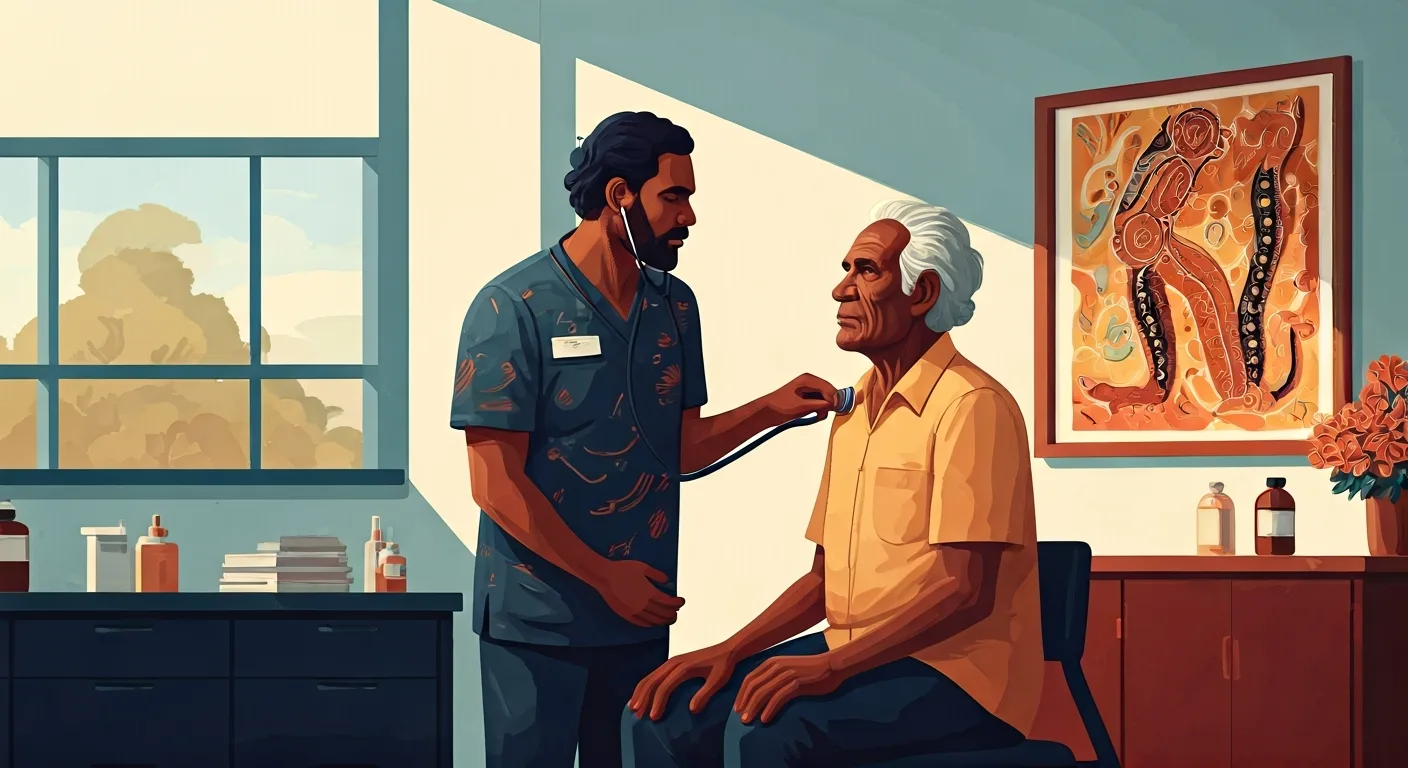
The Indigenous Health Worker plays a crucial role in supporting community members to access health services, providing vital health education, and acting as a cultural liaison between Indigenous communities and mainstream healthcare providers. This role is essential for improving health outcomes and ensuring culturally safe healthcare delivery.
Significantly improves health access and outcomes for Aboriginal and Torres Strait Islander communities by providing culturally appropriate support, education, and advocacy, bridging the gap between traditional practices and Western medicine.
On the job
- Provide culturally appropriate health education and promotion to individuals and groups within the community.
- Assist community members in navigating the healthcare system, including making appointments and accompanying them to consultations.
- Act as a cultural broker, facilitating communication and understanding between Indigenous patients/clients and healthcare professionals.
- Conduct basic health assessments, monitor chronic conditions, and provide initial care under supervision.
- Advocate for the health and well-being needs of Aboriginal and Torres Strait Islander people within health services.

Tools & technology
Average salary
Job outlook
GrowingJob growth is expected to be above average over the next five years.
Education & training
Certificate or Diploma in Aboriginal and/or Torres Strait Islander Primary Health Care, or a related field.
AI impact outlook
Note — this is our current view. AI is moving fast, so we revisit these ratings.
Show how this was assessed Hide the detail
Note — this is our current view. AI is moving fast, so we revisit these ratings.
Show how this was assessed Hide the detailWhy this role received this rating
Core task exposure
moderate
How much of the role’s important work could AI perform?
Basic health assessments, routine monitoring, and administrative tasks could be significantly augmented or performed by AI.
End-to-end automation
low
Can AI complete the work without substantial human involvement?
The critical components of cultural brokerage, advocacy, and relationship building make end-to-end automation virtually impossible.
Adoption pressure
low
How likely are employers to introduce AI into this work?
Healthcare's regulatory environment and the absolute necessity of trust in culturally sensitive roles will temper rapid AI adoption for core tasks.
Human dependence
strong
How much does success depend on human judgement, relationships and accountability?
Success hinges on deep cultural understanding, empathy, relationship building, and nuanced advocacy that AI cannot replicate.
Protective — a higher rating lowers the overall score.
Role adaptability
strong
How easily can the role evolve as AI takes on more tasks?
The role can adapt its methods and tools, but its fundamental purpose of human connection and cultural liaison remains constant.
Shown for context — not part of the score.
What AI may take on
These are the parts of the role most likely to be automated or significantly accelerated.
- Assisting with appointment scheduling and reminders
- Monitoring chronic conditions based on recorded inputs
- Drafting routine health education materials
- Managing electronic health records and documentation
- Identifying individuals due for specific health screenings
Where people remain essential
These parts continue to depend heavily on human judgement, relationships and accountability.
- Acting as a cultural broker between communities and healthcare providers
- Providing culturally appropriate health education and promotion face-to-face
- Advocating for the health and well-being needs of individuals and groups
- Building trust and rapport within Indigenous communities
- Navigating complex healthcare systems with patients
- Providing emotional support during consultations
- Exercising judgment in complex social and cultural situations
How the role may evolve
A deeper focus on community relationships and cultural navigation.
This role will evolve to leverage AI for routine data and administrative tasks, allowing Indigenous Health Workers to dedicate more time to their irreplaceable functions of cultural liaison and community advocacy.
Strengthen your future fit
- Enhancing cultural competency and communication skills
- Developing advanced advocacy and negotiation techniques
- Mastering complex problem-solving in community health
- Fostering strong interpersonal and trust-building abilities
- Utilizing AI tools for data analysis to inform advocacy
- Assessment horizon
- 3–7 years
- Confidence
- Medium
- Last reviewed
- August 2026
- Methodology
- v1.0
This assessment reflects current AI capabilities and expected adoption patterns. Actual impacts will vary by industry, employer and the way each role is performed.
Career pathways
WHERE YOU COULD GO
CURRENT ROLE
Indigenous Health Worker
Allied Health
ADJACENT MOVES
STARTING POINTS
Who thrives here
Interest profile
social · SEI
Individuals who are highly social, enjoy helping others, and are motivated by community well-being, often with an interest in problem-solving and leadership within a service context, thrive in this role.
Personality characteristics
Conscientious
Organised and reliable in managing patient care, administrative tasks, and community programs.
Empathetic
Deeply understanding and sensitive to the cultural and social needs of community members.
Engaged
Enjoys interacting with diverse groups, advocating for others, and leading health initiatives.
Calm under pressure
Maintains composure and effectiveness when dealing with sensitive health issues or emergencies.
Inquisitive
Interested in learning about health conditions, cultural practices, and effective ways to support community health.
Service-oriented
Driven by a strong desire to help and support individuals and their community's well-being.
Best for
- Individuals passionate about improving health outcomes for Aboriginal and Torres Strait Islander people.
- Those who thrive in direct community interaction and culturally sensitive environments.
- People who are natural advocates and enjoy empowering others through education and support.
Watch out for
- The role can be emotionally demanding due to exposure to complex health and social issues.
- Requires flexibility and adaptability, as work environments can vary from clinics to remote communities.
A week in the life
A representative working week for an Indigenous Health Worker — where the deep work, meetings, and admin actually land.
Real people. Real results.
Thousands of people
can't be wrong.




Frequently asked questions about Indigenous Health Worker roles
What does an Indigenous Health Worker do?
An Indigenous Health Worker the Indigenous Health Worker plays a crucial role in supporting community members to access health services, providing vital health education, and acting as a cultural liaison between Indigenous communities and mainstream healthcare providers. This role is essential for improving health outcomes and ensuring culturally safe healthcare delivery. Significantly improves health access and outcomes for Aboriginal and Torres Strait Islander communities by providing culturally appropriate support, education, and advocacy, bridging the gap between traditional practices and Western medicine.
How much does an Indigenous Health Worker earn?
An Indigenous Health Worker earns a median of $58,000 per year in the US, typically ranging from $45,000 to $75,000.
What qualifications do you need to become an Indigenous Health Worker?
To become an Indigenous Health Worker, certificate or Diploma in Aboriginal and/or Torres Strait Islander Primary Health Care, or a related field. Registration with relevant national or state health worker associations (e.g., AHPRA in Australia for Health Practitioners, or state-specific registration for Health Workers).
What personality suits an Indigenous Health Worker?
Indigenous Health Worker roles tend to suit people who are warm and cooperative — tuned in to the people around them (Agreeableness 80/100) and highly conscientious — precise, organised and strong on follow-through (Conscientiousness 72/100). The traits that matter most in the role are Conscientious, Empathetic, Engaged and Calm under pressure. Organised and reliable in managing patient care, administrative tasks, and community programs. On interests, Indigenous Health Worker maps to a SEI Holland Code profile — individuals who are highly social, enjoy helping others, and are motivated by community well-being, often with an interest in problem-solving and leadership within a service context, thrive in this role.
Who does an Indigenous Health Worker role suit?
An Indigenous Health Worker role is usually a strong fit for these reasons. High Social (S) affinity aligns with the core of providing direct community support and care. The role's emphasis on advocacy and community engagement suits individuals with Enterprising (E) traits. A strong investigative (I) component in understanding health needs and delivering education.
What are the downsides of being an Indigenous Health Worker?
Indigenous Health Worker roles come with trade-offs worth weighing up. The role can be emotionally demanding due to exposure to complex health and social issues. Requires flexibility and adaptability, as work environments can vary from clinics to remote communities.
What is the work environment like for an Indigenous Health Worker?
Work as an Indigenous Health Worker is mostly mixed-based with onsite arrangements common, semi-structured — a mix of set processes and self-directed work, a moderate pace and high exposure to clients or stakeholders. Around 8% of the week is focused deep work.
What skills do you need to be an Indigenous Health Worker?
Core skills for an Indigenous Health Worker include Cultural competency, Health education, Patient advocacy, Communication skills, Basic clinical skills and Community engagement.
How do you become an Indigenous Health Worker?
Common entry routes into Indigenous Health Worker roles include Community Support Worker, Aged Care Worker and Disability Support Worker.
What career progression is there for an Indigenous Health Worker?
From an Indigenous Health Worker role, common next steps include Indigenous Health Practitioner and Community Health Manager; lateral moves include Social Worker and Youth Worker.
What is the job outlook for Indigenous Health Worker roles?
The outlook for Indigenous Health Worker roles is currently rated growing. Job growth is expected to be above average over the next five years.
Will AI replace Indigenous Health Worker roles?
Traitstack rates automation risk for Indigenous Health Worker roles at 27 out of 100, which is low. The core work of cultural brokerage, advocacy, and building community trust remains deeply human, even as AI may automate some administrative and basic health monitoring tasks. AI is most likely to take on assisting with appointment scheduling and reminders, monitoring chronic conditions based on recorded inputs and drafting routine health education materials. Acting as a cultural broker between communities and healthcare providers, providing culturally appropriate health education and promotion face-to-face and advocating for the health and well-being needs of individuals and groups stay with people. A deeper focus on community relationships and cultural navigation. That score measures how much of the work could change, not the likelihood the job disappears. It is Traitstack's current view, revisited as AI capability moves.