Bush Regenerator
SOC 19-1032.00 · ESCO 9215 · OSCA 842931
Role snapshot
Overview
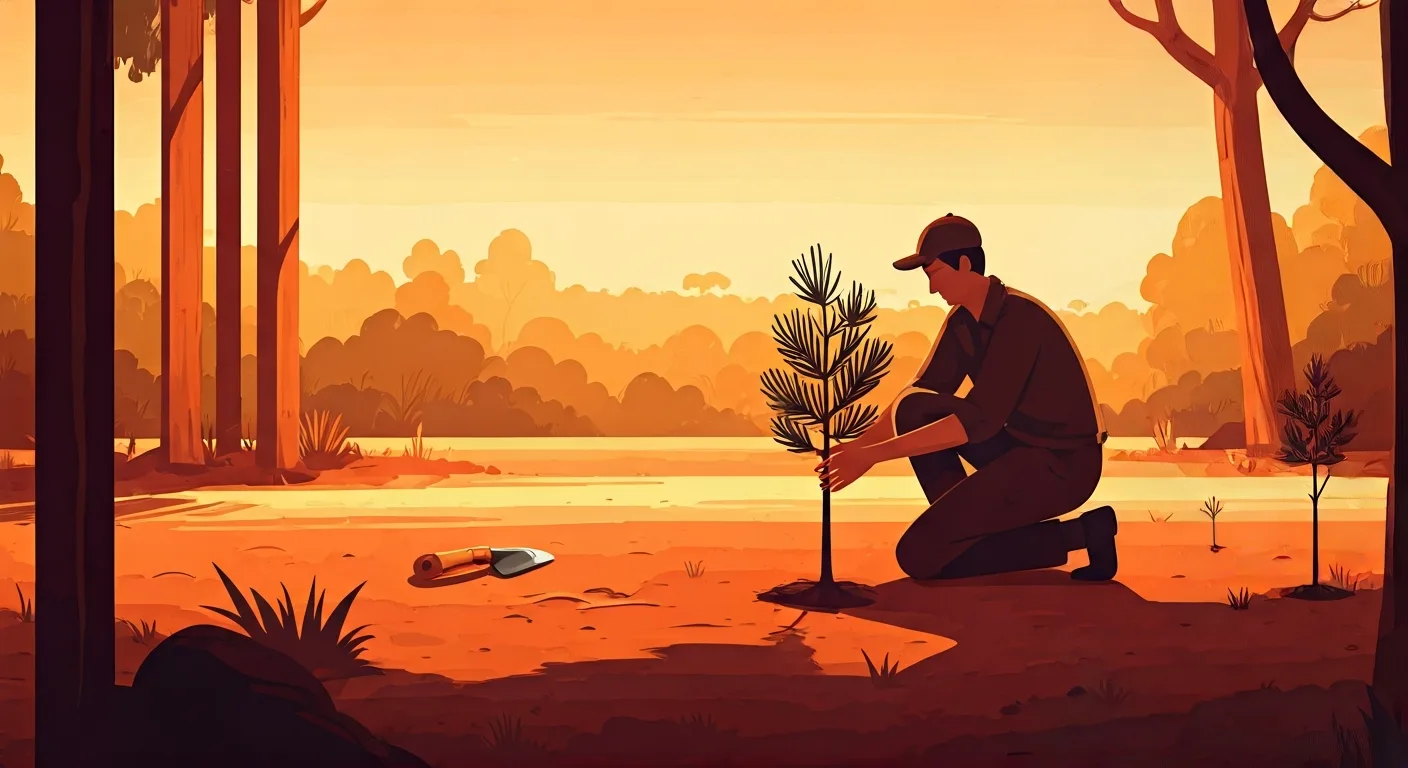
Restores native bushland by removing invasive weeds, planting indigenous species, and managing erosion to help degraded ecosystems recover over time. This involves hands-on work in various outdoor environments, applying ecological principles to enhance biodiversity and ecosystem health.
Directly contributes to the health and biodiversity of natural ecosystems, helping to preserve native flora and fauna, improve water quality, and mitigate the effects of climate change and land degradation.
On the job
- Identify and remove invasive exotic plant species using manual, mechanical, or chemical methods
- Propagate and plant native flora suitable for the local ecosystem
- Implement erosion control measures such as coir logs, jute matting, and revegetation
- Monitor restoration sites for weed regrowth, plant health, and ecological progress
- Maintain tools and equipment, and ensure safe working practices in the field
Tools & technology
Average salary
Job outlook
StableDemand is steady. This is an established role with consistent hiring across sectors.
Education & training
Typically requires a certificate or diploma in conservation and land management, horticulture, or environmental science. Some roles may prefer a bachelor's degree.
AI impact outlook
Note — this is our current view. AI is moving fast, so we revisit these ratings.
Show how this was assessed Hide the detail
Note — this is our current view. AI is moving fast, so we revisit these ratings.
Show how this was assessed Hide the detailWhy this role received this rating
Core task exposure
low
How much of the role’s important work could AI perform?
AI can assist with species identification, mapping restoration sites, and monitoring progress, but the core tasks of physical weed removal and planting are inherently manual.
End-to-end automation
low
Can AI complete the work without substantial human involvement?
Physical removal of invasive species, precise planting of native flora, and implementing erosion control measures are hands-on tasks that AI cannot perform end-to-end.
Adoption pressure
moderate
How likely are employers to introduce AI into this work?
Adoption pressure for AI is relatively low, as the primary work involves physical labor in varied terrain, where the cost-benefit of AI deployment is often unfavorable compared to human teams.
Human dependence
strong
How much does success depend on human judgement, relationships and accountability?
Success critically depends on human judgment for ecological decision-making on site, safe operation of tools, adapting to complex and dynamic natural environments, and physical dexterity.
Protective — a higher rating lowers the overall score.
Role adaptability
moderate
How easily can the role evolve as AI takes on more tasks?
The role can adapt by integrating new mapping and identification technologies, allowing regenerators to focus more on nuanced ecological interventions and complex physical tasks.
Shown for context — not part of the score.
What AI may take on
These are the parts of the role most likely to be automated or significantly accelerated.
- Identify invasive plant species from images or drone footage
- Map and categorize restoration sites for targeted intervention
- Monitor plant health and growth patterns in restored areas
- Analyze environmental data to optimize planting locations
- Generate reports on restoration progress and ecological metrics
Where people remain essential
These parts continue to depend heavily on human judgement, relationships and accountability.
- Physically removing invasive exotic plant species using various methods
- Propagating and planting native flora with manual precision
- Implementing erosion control measures in varied terrain
- Making on-the-ground ecological judgments about site-specific needs
- Operating and maintaining hand tools, brush cutters, and chainsaws safely
- Adapting restoration techniques to unexpected site conditions or weather
How the role may evolve
Better identification, enduring physical work.
AI will streamline the planning and monitoring aspects of bush regeneration, allowing regenerators to enhance their focus on the irreplaceable hands-on physical labor and nuanced ecological decision-making in the field.
Strengthen your future fit
- Proficiency in GIS and drone-based mapping technologies
- Advanced plant identification and ecological assessment
- Safe and efficient operation of specialized tools
- Problem-solving for complex environmental challenges
- Effective team collaboration and communication
- Assessment horizon
- 3–7 years
- Confidence
- High
- Last reviewed
- August 2026
- Methodology
- v1.0
This assessment reflects current AI capabilities and expected adoption patterns. Actual impacts will vary by industry, employer and the way each role is performed.
Career pathways
WHERE YOU COULD GO
CURRENT ROLE
Bush Regenerator
Agriculture & Food
ADJACENT MOVES
STARTING POINTS
Who thrives here
Interest profile
realistic · RIC
Individuals who enjoy practical, hands-on work outdoors, investigating ecological problems, and following systematic procedures for restoration will find this role fulfilling.
Personality characteristics
Observant
Pays close attention to environmental details, identifying different plant species, signs of degradation, and ecological changes.
Methodical
Follows established protocols for weed removal, planting, and site management to ensure effective and consistent restoration outcomes.
Independent
Comfortable working alone or in small groups in remote outdoor settings, often requiring self-reliance and problem-solving.
Cooperative
Works well with team members, supervisors, and occasionally community volunteers to achieve shared conservation goals.
Resilient
Handles physically demanding work, variable weather conditions, and the often slow progress of ecological restoration without becoming discouraged.
Best for
- Individuals who enjoy physical work in outdoor settings.
- People passionate about environmental conservation and biodiversity.
- Those who appreciate systematic approaches to problem-solving in natural contexts.
Watch out for
- The work can be physically demanding and expose you to various weather conditions and natural hazards.
- Requires patience, as ecological restoration is a long-term process with gradual results.
A week in the life
A representative working week for a Bush Regenerator — where the deep work, meetings, and admin actually land.
Real people. Real results.
Thousands of people
can't be wrong.





Frequently asked questions about Bush Regenerator roles
What does a Bush Regenerator do?
A Bush Regenerator restores native bushland by removing invasive weeds, planting indigenous species, and managing erosion to help degraded ecosystems recover over time. This involves hands-on work in various outdoor environments, applying ecological principles to enhance biodiversity and ecosystem health. Directly contributes to the health and biodiversity of natural ecosystems, helping to preserve native flora and fauna, improve water quality, and mitigate the effects of climate change and land degradation.
How much does a Bush Regenerator earn?
A Bush Regenerator earns a median of $48,000 per year in the US, typically ranging from $35,000 to $65,000.
What qualifications do you need to become a Bush Regenerator?
To become a Bush Regenerator, typically requires a certificate or diploma in conservation and land management, horticulture, or environmental science. Some roles may prefer a bachelor's degree.
What personality suits a Bush Regenerator?
Bush Regenerator roles tend to suit people who are highly conscientious — precise, organised and strong on follow-through (Conscientiousness 68/100) and warm and cooperative — tuned in to the people around them (Agreeableness 68/100). The traits that matter most in the role are Observant, Methodical, Independent and Cooperative. Pays close attention to environmental details, identifying different plant species, signs of degradation, and ecological changes. On interests, Bush Regenerator maps to a RIC Holland Code profile — individuals who enjoy practical, hands-on work outdoors, investigating ecological problems, and following systematic procedures for restoration will find this role fulfilling.
Who does a Bush Regenerator role suit?
A Bush Regenerator role is usually a strong fit for these reasons. High Realistic affinity: the role is very hands-on, physically active, and involves working with tools and nature. Investigative aspects: requires identifying species, understanding ecosystems, and monitoring results. Conscientious work: involves following established methods and detailed plans for restoration.
What are the downsides of being a Bush Regenerator?
Bush Regenerator roles come with trade-offs worth weighing up. The work can be physically demanding and expose you to various weather conditions and natural hazards. Requires patience, as ecological restoration is a long-term process with gradual results.
What is the work environment like for a Bush Regenerator?
Work as a Bush Regenerator is mostly outdoors-based with onsite arrangements common, semi-structured — a mix of set processes and self-directed work, a moderate pace and low exposure to clients or stakeholders. Around 12% of the week is focused deep work.
What skills do you need to be a Bush Regenerator?
Core skills for a Bush Regenerator include Weed identification and control, Native plant propagation and planting, Erosion control techniques, Ecological monitoring and Safe use of power tools and chemicals.
How do you become a Bush Regenerator?
Common entry routes into Bush Regenerator roles include Conservation Volunteer, Nursery Assistant and Farm Worker.
What career progression is there for a Bush Regenerator?
From a Bush Regenerator role, common next steps include Senior Bush Regenerator and Team Leader, Bush Regeneration; lateral moves include Environmental Officer and Horticulturalist.
What is the job outlook for Bush Regenerator roles?
The outlook for Bush Regenerator roles is currently rated stable. Demand is steady. This is an established role with consistent hiring across sectors.
Will AI replace Bush Regenerator roles?
Traitstack rates automation risk for Bush Regenerator roles at 27 out of 100, which is low. Physical weed removal and native planting are inherently manual, though AI can aid in species identification and mapping restoration sites. AI is most likely to take on identify invasive plant species from images or drone footage, map and categorize restoration sites for targeted intervention and monitor plant health and growth patterns in restored areas. Physically removing invasive exotic plant species using various methods, propagating and planting native flora with manual precision and implementing erosion control measures in varied terrain stay with people. Better identification, enduring physical work. That score measures how much of the work could change, not the likelihood the job disappears. It is Traitstack's current view, revisited as AI capability moves.