Audio or Live Performance Director
SOC 27-2012.00 · ESCO 2654 · OSCA 231432
Role snapshot
Overview
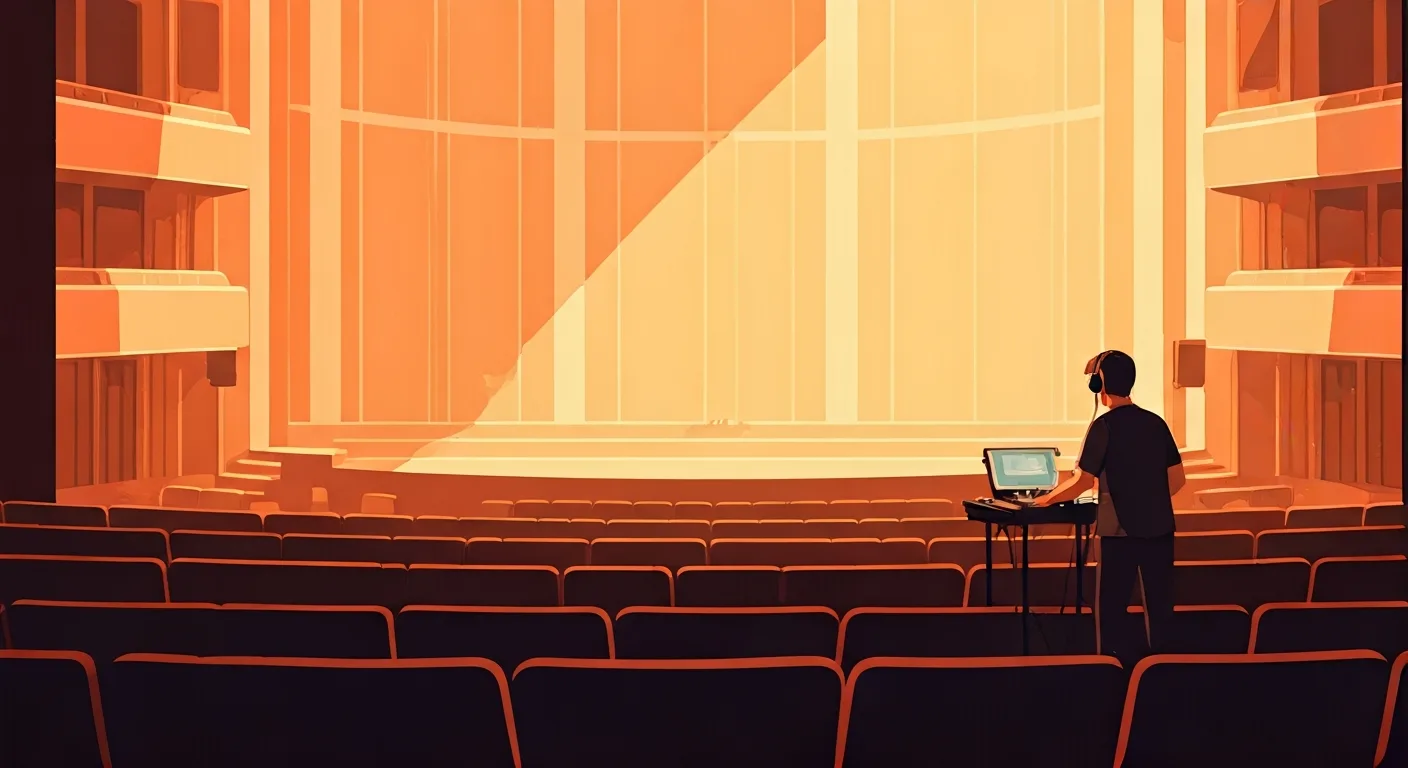
Directs the creative and technical execution of live shows, concerts, or audio productions, guiding performers and technical crew to realise a unified artistic vision. This role involves meticulous planning, leading rehearsals, and making real-time decisions during performances to ensure a seamless and impactful experience. Shapes rehearsal processes to achieve production goals and ensures all technical and artistic elements align with the overall vision.
Brings artistic visions to life for audiences, creating memorable and engaging live experiences. Ensures technical precision and creative coherence, contributing significantly to the success and impact of performances and productions.
On the job
- Develop and communicate the artistic vision for productions to performers and technical crew.
- Lead rehearsals, providing direction to performers and coordinating technical elements such as lighting, sound, and staging.
- Make real-time adjustments and decisions during live performances to address unforeseen issues or enhance the artistic outcome.
- Collaborate with producers, designers, and other stakeholders to integrate all production components effectively.
- Manage budgets and schedules related to the creative and technical aspects of a production.
Tools & technology
Average salary
Job outlook
StableDemand is steady. This is an established role with consistent hiring across sectors.
Education & training
Bachelor's degree or significant professional experience in theatre arts, music production, live event management, or a related field is often expected.
AI impact outlook
Note — this is our current view. AI is moving fast, so we revisit these ratings.
Show how this was assessed Hide the detail
Note — this is our current view. AI is moving fast, so we revisit these ratings.
Show how this was assessed Hide the detailWhy this role received this rating
Core task exposure
moderate
How much of the role’s important work could AI perform?
AI can significantly assist with pre-production planning, technical cue generation, sequencing, and pre-visualization of complex lighting, audio, and video elements.
End-to-end automation
low
Can AI complete the work without substantial human involvement?
AI cannot fully direct human performers, interpret artistic nuance, or make real-time, adaptive decisions for unforeseen live performance challenges.
Adoption pressure
high
How likely are employers to introduce AI into this work?
Employers are highly motivated to adopt AI for efficiencies in pre-production, planning, and show control to reduce costs and enhance production quality.
Human dependence
strong
How much does success depend on human judgement, relationships and accountability?
Success in this role relies heavily on human artistic vision, leadership, real-time decision-making under pressure, and direct collaboration with performers and crew.
Protective — a higher rating lowers the overall score.
Role adaptability
strong
How easily can the role evolve as AI takes on more tasks?
The role can readily adapt by leveraging AI for technical planning and execution, allowing the director to focus more intensely on artistic vision, human guidance, and creative problem-solving.
Shown for context — not part of the score.
What AI may take on
These are the parts of the role most likely to be automated or significantly accelerated.
- Generate optimal lighting and sound cues based on script or music analysis
- Automate sequence programming for video switchers and lighting consoles
- Assist with pre-visualization of complex technical elements against virtual rigs
- Optimize rehearsal schedules and resource allocation based on production goals
Where people remain essential
These parts continue to depend heavily on human judgement, relationships and accountability.
- Develop and communicate a unified artistic vision to the entire crew and cast
- Provide real-time creative direction to performers during rehearsals and live shows
- Make critical, adaptive decisions during live performances to address unexpected issues
- Build and maintain collaborative relationships with producers, designers, and talent
- Absorb accountability for the overall artistic and technical success of a production
How the role may evolve
From managing technical cues to mastering the live performance.
This role will shift from hands-on technical programming to overseeing AI-assisted systems, with a stronger emphasis on artistic leadership, human performance coaching, and dynamic, on-the-fly creative problem-solving.
Strengthen your future fit
- Mastering AI-driven show control and pre-visualization software
- Developing advanced skills in artistic interpretation and creative direction
- Strengthening leadership and real-time decision-making under pressure
- Cultivating emotional intelligence for effective human collaboration
- Adapting quickly to new technologies for integrated production workflows
- Assessment horizon
- 3–7 years
- Confidence
- High
- Last reviewed
- August 2026
- Methodology
- v1.0
This assessment reflects current AI capabilities and expected adoption patterns. Actual impacts will vary by industry, employer and the way each role is performed.
Career pathways
WHERE YOU COULD GO
CURRENT ROLE
Audio or Live Performance Director
Entertainment & Media
ADJACENT MOVES
STARTING POINTS
Who thrives here
Interest profile
artistic · AEC
People who thrive on creative expression, leading teams to realize an artistic vision, and maintaining meticulous organization behind the scenes often find success in this dynamic role.
Personality characteristics
Visionary
Possesses a strong imagination and an openness to new ideas, essential for developing unique and compelling productions.
Organised
Maintains discipline and attention to detail in planning, scheduling, and executing complex live events.
Commanding
Naturally takes charge, directs teams, and makes decisive calls, especially crucial during live performances.
Collaborative
Works effectively with diverse teams, balancing assertiveness with cooperation to achieve a shared artistic goal.
Resilient
Handles the high-pressure environment of live productions and unexpected challenges with relative calm and stability.
Best for
- Individuals passionate about bringing artistic visions to life through a blend of creative and technical leadership.
- Leaders who thrive in dynamic, fast-paced environments and enjoy guiding diverse teams to a unified goal.
Watch out for
- Irregular and demanding hours, including evenings and weekends, are common due to live performance schedules.
- Requires quick decision-making under intense pressure, which can be stressful for some.
A week in the life
A representative working week for an Audio or Live Performance Director — where the deep work, meetings, and admin actually land.
Real people. Real results.
Thousands of people
can't be wrong.




Frequently asked questions about Audio or Live Performance Director roles
What does an Audio or Live Performance Director do?
An Audio or Live Performance Director directs the creative and technical execution of live shows, concerts, or audio productions, guiding performers and technical crew to realise a unified artistic vision. This role involves meticulous planning, leading rehearsals, and making real-time decisions during performances to ensure a seamless and impactful experience. Shapes rehearsal processes to achieve production goals and ensures all technical and artistic elements align with the overall vision. Brings artistic visions to life for audiences, creating memorable and engaging live experiences. Ensures technical precision and creative coherence, contributing significantly to the success and impact of performances and productions.
How much does an Audio or Live Performance Director earn?
An Audio or Live Performance Director earns a median of $95,000 per year in the US, typically ranging from $70,000 to $120,000.
What qualifications do you need to become an Audio or Live Performance Director?
To become an Audio or Live Performance Director, bachelor's degree or significant professional experience in theatre arts, music production, live event management, or a related field is often expected.
What personality suits an Audio or Live Performance Director?
Audio or Live Performance Director roles tend to suit people who are open and curious — drawn to variety, ideas and new approaches (Openness 88/100) and outgoing — energised by people, visibility and quick social contact (Extraversion 72/100). The traits that matter most in the role are Visionary, Organised, Commanding and Collaborative. Possesses a strong imagination and an openness to new ideas, essential for developing unique and compelling productions. On interests, Audio or Live Performance Director maps to an AEC Holland Code profile — people who thrive on creative expression, leading teams to realize an artistic vision, and maintaining meticulous organization behind the scenes often find success in this dynamic role.
Who does an Audio or Live Performance Director role suit?
An Audio or Live Performance Director role is usually a strong fit for these reasons. High Artistic and Enterprising affinity, aligning with leading creative projects and guiding teams. Significant portion of the work involves direct hands-on creative direction and real-time problem-solving. The role demands high team interaction and stakeholder exposure, ideal for those who enjoy collaborative leadership.
What are the downsides of being an Audio or Live Performance Director?
Audio or Live Performance Director roles come with trade-offs worth weighing up. Irregular and demanding hours, including evenings and weekends, are common due to live performance schedules. Requires quick decision-making under intense pressure, which can be stressful for some.
What is the work environment like for an Audio or Live Performance Director?
Work as an Audio or Live Performance Director is mostly mixed-based with hybrid arrangements common, semi-structured — a mix of set processes and self-directed work and high exposure to clients or stakeholders. Around 23% of the week is focused deep work.
What skills do you need to be an Audio or Live Performance Director?
Core skills for an Audio or Live Performance Director include Artistic direction, Technical production management, Live event coordination, Team leadership and Problem-solving under pressure.
How do you become an Audio or Live Performance Director?
Common entry routes into Audio or Live Performance Director roles include Assistant Director Stage, Audio Engineer, Stage Manager and Technical Coordinator.
What career progression is there for an Audio or Live Performance Director?
From an Audio or Live Performance Director role, common next steps include Senior Performance Director, Creative Director and Producer (Live Events); lateral moves include Theatre Director.
What is the job outlook for Audio or Live Performance Director roles?
The outlook for Audio or Live Performance Director roles is currently rated stable. Demand is steady. This is an established role with consistent hiring across sectors.
Will AI replace Audio or Live Performance Director roles?
Traitstack rates automation risk for Audio or Live Performance Director roles at 50 out of 100, which is moderate. AI will increasingly handle technical cue generation and show control, yet the artistic interpretation, real-time direction of performers, and adapting to live events remain firmly human. AI is most likely to take on generate optimal lighting and sound cues based on script or music analysis, automate sequence programming for video switchers and lighting consoles and assist with pre-visualization of complex technical elements against virtual rigs. Develop and communicate a unified artistic vision to the entire crew and cast, provide real-time creative direction to performers during rehearsals and live shows and make critical, adaptive decisions during live performances to address unexpected issues stay with people. From managing technical cues to mastering the live performance. That score measures how much of the work could change, not the likelihood the job disappears. It is Traitstack's current view, revisited as AI capability moves.