Wool Classer
SOC 45-2099 · ESCO 7543 · OSCA 343332
Role snapshot
Overview
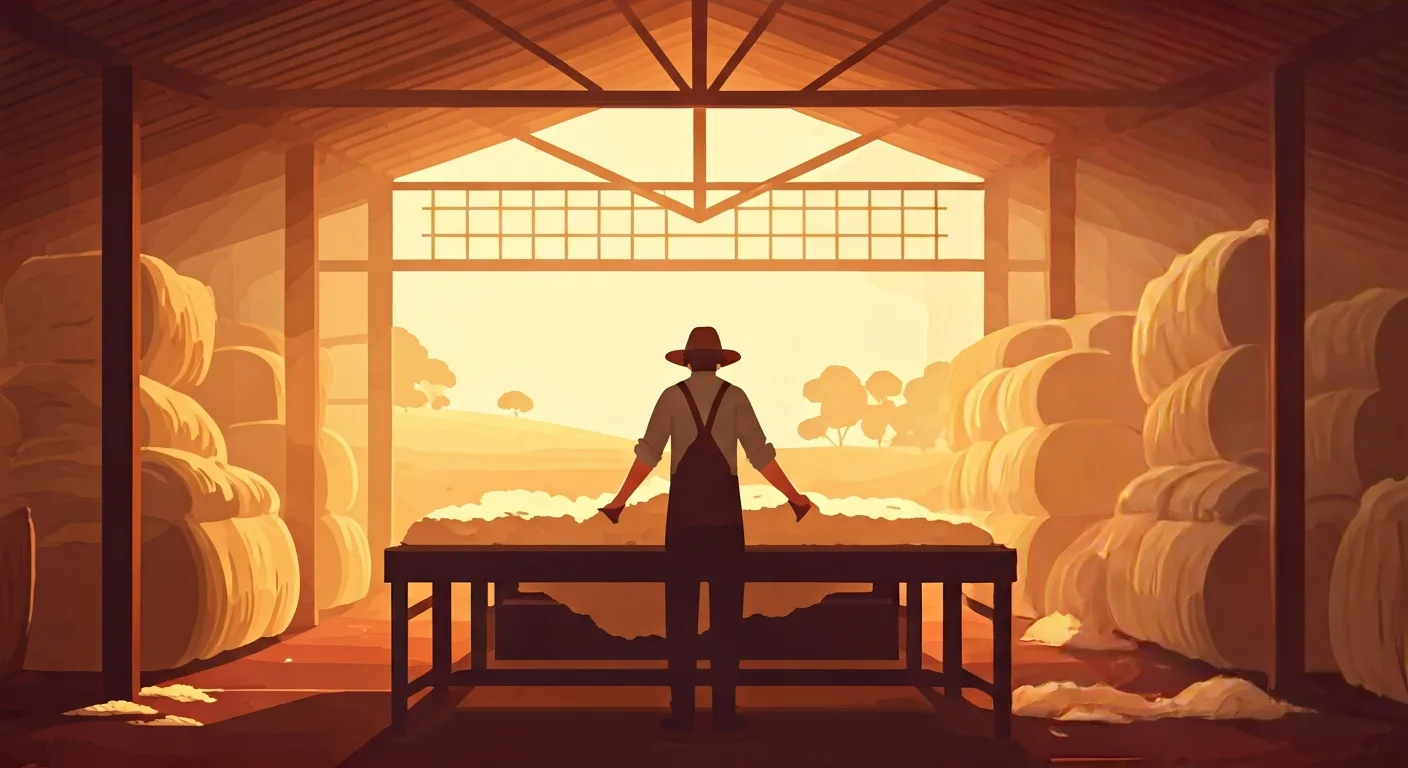
A Wool Classer sorts and grades shorn fleeces by fibre quality, length, and cleanliness, then presses them into bales for sale. This role is critical for ensuring the wool meets strict industry classification standards and preparing accurate documentation for market.
Ensures the quality and consistency of wool clips, maximizing their market value and maintaining the integrity of wool as a natural fiber product. Directly influences the profitability of wool producers.
On the job
- Assess shorn fleeces for characteristics such as fineness, length, strength, colour, and contamination.
- Sort wool into various lines based on established industry standards and classifications.
- Operate and maintain a wool press to create compact, standardized bales.
- Complete detailed clip documentation, including weight, class, and identification marks for each bale.
- Maintain a clean and organized work area within the shearing shed.
Tools & technology
Average salary
Job outlook
StableDemand is steady. This is an established role with consistent hiring across sectors.
Education & training
Formal training, such as a certificate or diploma in wool classing, is typically required. Practical experience is also highly valued.
AI impact outlook
Note — this is our current view. AI is moving fast, so we revisit these ratings.
Show how this was assessed Hide the detail
Note — this is our current view. AI is moving fast, so we revisit these ratings.
Show how this was assessed Hide the detailWhy this role received this rating
Core task exposure
moderate
How much of the role’s important work could AI perform?
While AI can assist with initial fleece assessment and documentation, the tactile grading of wool characteristics remains largely manual.
End-to-end automation
low
Can AI complete the work without substantial human involvement?
Physical sorting into lines, operating a press, and final accountability for bale quality prevent complete end-to-end automation.
Adoption pressure
moderate
How likely are employers to introduce AI into this work?
High-value commodity and industry standardization drive employer investment in efficiency, including potential automation where feasible.
Human dependence
strong
How much does success depend on human judgement, relationships and accountability?
Success critically depends on human judgement for nuanced fleece grading, quality assurance, and accountability for documentation.
Protective — a higher rating lowers the overall score.
Role adaptability
strong
How easily can the role evolve as AI takes on more tasks?
The role can adapt by focusing on quality control, managing automated systems, or providing expert advice on wool characteristics.
Shown for context — not part of the score.
What AI may take on
These are the parts of the role most likely to be automated or significantly accelerated.
- Initial assessment of fleece color and contamination using computer vision
- Automated recording of bale weights and identification marks
- Synthesizing data for clip documentation and reporting
- Predictive analysis for market value based on classified wool data
Where people remain essential
These parts continue to depend heavily on human judgement, relationships and accountability.
- Tactile assessment of wool fineness, strength, and handle
- Physical sorting of fleeces into specific classing lines
- Operating and maintaining the wool press and associated equipment
- Making final quality judgements and ensuring classification standards are met
- Troubleshooting issues with wool processing equipment
- Accountability for the accuracy of classification and documentation
How the role may evolve
From hands-on sorting to supervising smart systems and ensuring quality.
The role will shift from detailed manual classification to overseeing technology that aids in assessment and processing, with an increased focus on final quality control and expert judgement.
Strengthen your future fit
- Develop proficiency in operating and monitoring automated classification systems
- Enhance sensory skills for advanced wool quality assessment
- Gain understanding of data analytics for clip documentation and market insights
- Focus on equipment maintenance and troubleshooting
- Participate in ongoing professional development for wool science and technology
- Assessment horizon
- 3–7 years
- Confidence
- High
- Last reviewed
- August 2026
- Methodology
- v1.0
This assessment reflects current AI capabilities and expected adoption patterns. Actual impacts will vary by industry, employer and the way each role is performed.
Career pathways
WHERE YOU COULD GO
CURRENT ROLE
Wool Classer
Agriculture & Food
ADJACENT MOVES
STARTING POINTS
Who thrives here
Interest profile
realistic · RCI
Individuals who enjoy practical, hands-on work with a strong focus on precise standards and analytical assessment of materials are well-suited to wool classing.
Personality characteristics
Conscientious
Takes immense pride in adhering to strict grading standards and meticulous record-keeping, ensuring accuracy in every bale.
Practical
Prefers hands-on tasks and physical work, directly engaging with the wool and operating machinery.
Observant
Possesses a keen eye for detail, able to quickly identify subtle differences in wool quality and potential faults.
Composed
Maintains a steady temperament and focus, even during busy shearing seasons or when dealing with varying wool quality.
Independent
Comfortable working autonomously for extended periods, making consistent grading decisions without constant supervision.
Best for
- Individuals who value precision, order, and working with tangible materials.
- People who thrive in structured environments and enjoy applying specialized knowledge to a craft.
- Those who prefer independent work while contributing to a team effort.
Watch out for
- The role can be physically demanding and often involves working in varying shed environments.
- Work is often seasonal, requiring travel and irregular hours during peak shearing times.
A week in the life
A representative working week for a Wool Classer — where the deep work, meetings, and admin actually land.
Real people. Real results.
Thousands of people
can't be wrong.




Frequently asked questions about Wool Classer roles
What does a Wool Classer do?
A Wool Classer a Wool Classer sorts and grades shorn fleeces by fibre quality, length, and cleanliness, then presses them into bales for sale. This role is critical for ensuring the wool meets strict industry classification standards and preparing accurate documentation for market. Ensures the quality and consistency of wool clips, maximizing their market value and maintaining the integrity of wool as a natural fiber product. Directly influences the profitability of wool producers.
How much does a Wool Classer earn?
A Wool Classer earns a median of $55,000 per year in the US, typically ranging from $40,000 to $70,000.
What qualifications do you need to become a Wool Classer?
To become a Wool Classer, formal training, such as a certificate or diploma in wool classing, is typically required. Practical experience is also highly valued. Formal certification or registration as a qualified Wool Classer is often mandatory in major wool-producing regions to ensure adherence to industry standards.
What personality suits a Wool Classer?
Wool Classer roles tend to suit people who are highly conscientious — precise, organised and strong on follow-through (Conscientiousness 80/100) and steady under pressure — deadlines and setbacks do not rattle them easily (Emotional Stability 75/100). The traits that matter most in the role are Conscientious, Practical, Observant and Composed. Takes immense pride in adhering to strict grading standards and meticulous record-keeping, ensuring accuracy in every bale. On interests, Wool Classer maps to a RCI Holland Code profile — individuals who enjoy practical, hands-on work with a strong focus on precise standards and analytical assessment of materials are well-suited to wool classing.
Who does a Wool Classer role suit?
A Wool Classer role is usually a strong fit for these reasons. High Conventional and Realistic scores mean the role aligns with practical, hands-on work requiring precision and adherence to standards. The job demands strong analytical skills (Investigative trait) for detailed fleece assessment. A significant portion of the week is dedicated to focused, independent work on grading and processing wool.
What are the downsides of being a Wool Classer?
Wool Classer roles come with trade-offs worth weighing up. The role can be physically demanding and often involves working in varying shed environments. Work is often seasonal, requiring travel and irregular hours during peak shearing times.
What is the work environment like for a Wool Classer?
Work as a Wool Classer is mostly workshop-based with onsite arrangements common, highly structured, with set processes and deadlines, a moderate pace and low exposure to clients or stakeholders. Around 79% of the week is focused deep work.
What skills do you need to be a Wool Classer?
Core skills for a Wool Classer include Fleece assessment, Wool grading standards, Quality control, Documentation, Machine operation and Attention to detail.
How do you become a Wool Classer?
Common entry routes into Wool Classer roles include Wool Handler, Shed Hand and Trainee Wool Classer.
What career progression is there for a Wool Classer?
From a Wool Classer role, common next steps include Senior Wool Classer / Head Classer; lateral moves include Wool Broker and Shearing Contractor.
What is the job outlook for Wool Classer roles?
The outlook for Wool Classer roles is currently rated stable. Demand is steady. This is an established role with consistent hiring across sectors.
Will AI replace Wool Classer roles?
Traitstack rates automation risk for Wool Classer roles at 39 out of 100, which is low. While AI can assist with initial fleece assessment and documentation, nuanced sensory grading and the physical handling of wool remain critical human responsibilities. AI is most likely to take on initial assessment of fleece color and contamination using computer vision, automated recording of bale weights and identification marks and synthesizing data for clip documentation and reporting. Tactile assessment of wool fineness, strength, and handle, physical sorting of fleeces into specific classing lines and operating and maintaining the wool press and associated equipment stay with people. From hands-on sorting to supervising smart systems and ensuring quality. That score measures how much of the work could change, not the likelihood the job disappears. It is Traitstack's current view, revisited as AI capability moves.