Taxi Driver
SOC 53-3054.00 · ESCO 8322 · OSCA 711134
Role snapshot
Overview
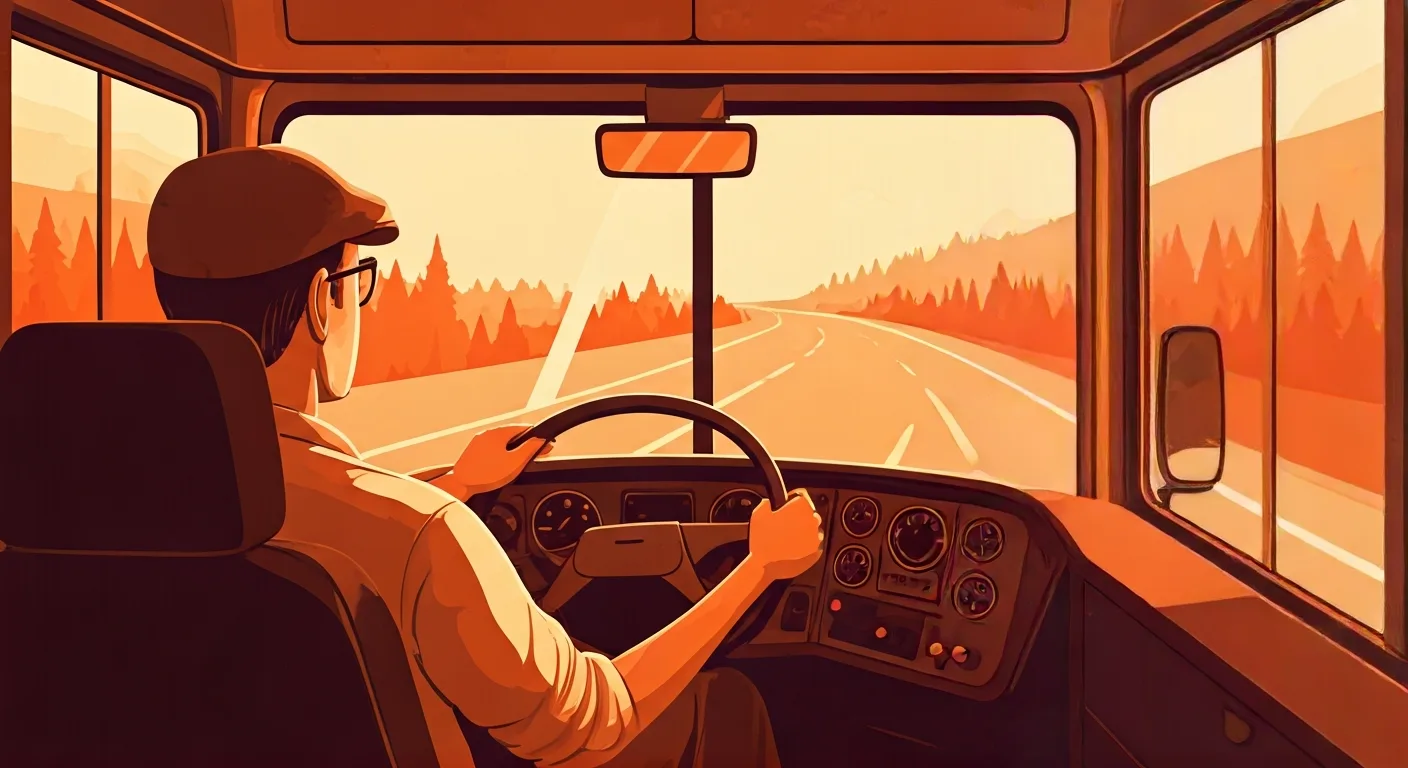
Operates a taxi to transport passengers safely and efficiently to their desired destinations within urban and suburban areas. This role requires extensive knowledge of local geography, traffic patterns, and navigation tools. Responsibilities include collecting fares, assisting passengers with luggage, maintaining vehicle cleanliness, and ensuring a comfortable and secure journey for all occupants.
Provides essential transportation services, connecting people to their workplaces, homes, and other destinations, contributing to urban mobility and local economies.
On the job
- Navigate local streets and identify optimal routes to avoid traffic congestion
- Safely operate a vehicle in various weather and traffic conditions
- Collect fares, process payments, and provide receipts
- Assist passengers with loading and unloading luggage
- Maintain the cleanliness and basic upkeep of the vehicle

Tools & technology
Average salary
Job outlook
StableDemand is steady. This is an established role with consistent hiring across sectors.
Education & training
High school diploma or equivalent, plus completion of specific taxi licensing requirements.
AI impact outlook
Note — this is our current view. AI is moving fast, so we revisit these ratings.
Show how this was assessed Hide the detail
Note — this is our current view. AI is moving fast, so we revisit these ratings.
Show how this was assessed Hide the detailWhy this role received this rating
Core task exposure
high
How much of the role’s important work could AI perform?
The core task of navigating dynamic urban environments, avoiding traffic, and driving safely to a destination is an area where AI excels and is rapidly deployed.
End-to-end automation
high
Can AI complete the work without substantial human involvement?
While driving, navigation, and payment processing are highly automatable, direct human interaction for luggage assistance and personalized service limits full end-to-end automation.
Adoption pressure
high
How likely are employers to introduce AI into this work?
The highly competitive and cost-sensitive taxi and ride-hailing industries are strongly incentivized to adopt autonomous driving for efficiency and labor cost reduction, with commercial services already operating.
Human dependence
low
How much does success depend on human judgement, relationships and accountability?
Success relies less on deep human relationships and more on efficient transport, though basic customer service and direct assistance with luggage still require human presence.
Protective — a higher rating lowers the overall score.
Role adaptability
low
How easily can the role evolve as AI takes on more tasks?
The core driving task is highly exposed, offering fewer complex auxiliary duties for adaptation beyond becoming a fleet monitor or remote support agent for autonomous vehicles.
Shown for context — not part of the score.
What AI may take on
These are the parts of the role most likely to be automated or significantly accelerated.
- Navigating local streets and identifying optimal routes
- Operating a vehicle in various weather and traffic conditions
- Processing payments and providing receipts via automated systems
- Identifying and avoiding traffic congestion
- Predicting optimal pick-up and drop-off points
- Responding to dispatch requests
Where people remain essential
These parts continue to depend heavily on human judgement, relationships and accountability.
- Assisting passengers with loading and unloading luggage
- Maintaining the cleanliness and basic upkeep of the vehicle interior
- Providing personalized customer service and local recommendations
- Managing difficult or intoxicated passengers
- Responding to unexpected situations that require human judgment
- Ensuring passenger comfort and peace of mind
How the role may evolve
From navigating streets to managing the in-cabin experience.
The taxi driver's role will evolve to prioritize customer service, vehicle oversight, and direct assistance, as the driving aspects are increasingly handled by autonomous systems.
Strengthen your future fit
- Exceptional customer service and communication skills
- Basic vehicle maintenance and interior detailing
- Problem-solving for passenger-related issues
- Local knowledge beyond navigation for personalized recommendations
- Proficiency with in-car technology and passenger interfaces
- Assessment horizon
- 3–7 years
- Confidence
- High
- Last reviewed
- August 2026
- Methodology
- v1.0
This assessment reflects current AI capabilities and expected adoption patterns. Actual impacts will vary by industry, employer and the way each role is performed.
Career pathways
WHERE YOU COULD GO
CURRENT ROLE
Taxi Driver
Transport & Aviation
ADJACENT MOVES
STARTING POINTS
Who thrives here
Interest profile
realistic · RCS
Individuals who enjoy practical, hands-on tasks, following established procedures, and interacting with people in a service-oriented capacity often find satisfaction in this role.
Personality characteristics
Reliable
Consistently adheres to schedules, rules, and safety regulations, ensuring timely and secure service.
Courteous
Maintains a polite and helpful demeanor with all passengers, fostering a positive experience.
Calm
Remains composed and focused when navigating challenging traffic or handling unexpected situations.
Independent
Comfortable working autonomously for extended periods, managing their own time and routes.
Practical
Prefers concrete tasks and direct problem-solving over abstract thinking or theoretical concepts.
Best for
- Individuals who enjoy driving and have excellent spatial awareness.
- People who thrive on independence and managing their own work.
- Those who enjoy providing a direct service to the public and navigating city environments.
Watch out for
- Can involve long hours of driving and irregular shifts, including weekends and nights.
- Requires excellent navigation and driving skills in potentially stressful traffic conditions.
- Dealing with a wide range of passengers, some of whom may be demanding or difficult.
A week in the life
A representative working week for a Taxi Driver — where the deep work, meetings, and admin actually land.
Real people. Real results.
Thousands of people
can't be wrong.



Frequently asked questions about Taxi Driver roles
What does a Taxi Driver do?
A Taxi Driver operates a taxi to transport passengers safely and efficiently to their desired destinations within urban and suburban areas. This role requires extensive knowledge of local geography, traffic patterns, and navigation tools. Responsibilities include collecting fares, assisting passengers with luggage, maintaining vehicle cleanliness, and ensuring a comfortable and secure journey for all occupants. Provides essential transportation services, connecting people to their workplaces, homes, and other destinations, contributing to urban mobility and local economies.
How much does a Taxi Driver earn?
A Taxi Driver earns a median of $45,000 per year in the US, typically ranging from $30,000 to $60,000.
What qualifications do you need to become a Taxi Driver?
To become a Taxi Driver, high school diploma or equivalent, plus completion of specific taxi licensing requirements. Valid Driver's License.
What personality suits a Taxi Driver?
Taxi Driver roles tend to suit people who are highly conscientious — precise, organised and strong on follow-through (Conscientiousness 68/100) and steady under pressure — deadlines and setbacks do not rattle them easily (Emotional Stability 65/100). The traits that matter most in the role are Reliable, Courteous, Calm and Independent. Consistently adheres to schedules, rules, and safety regulations, ensuring timely and secure service. On interests, Taxi Driver maps to a RCS Holland Code profile — individuals who enjoy practical, hands-on tasks, following established procedures, and interacting with people in a service-oriented capacity often find satisfaction in this role.
Who does a Taxi Driver role suit?
A Taxi Driver role is usually a strong fit for these reasons. Strong Realistic (R) and Conventional (C) affinity, perfect for hands-on driving tasks and adherence to regulations. Opportunity for independent work and self-management of daily routes. Regular interaction with diverse people, suiting those with a Social (S) interest.
What are the downsides of being a Taxi Driver?
Taxi Driver roles come with trade-offs worth weighing up. Can involve long hours of driving and irregular shifts, including weekends and nights. Requires excellent navigation and driving skills in potentially stressful traffic conditions. Dealing with a wide range of passengers, some of whom may be demanding or difficult.
What is the work environment like for a Taxi Driver?
Work as a Taxi Driver is mostly field-based with onsite arrangements common, semi-structured — a mix of set processes and self-directed work, a moderate pace and high exposure to clients or stakeholders. Around 84% of the week is focused deep work.
What skills do you need to be a Taxi Driver?
Core skills for a Taxi Driver include Safe driving practices, Local geographical knowledge, Customer service, Navigation and route planning and Cash handling and payment processing.
How do you become a Taxi Driver?
Common entry routes into Taxi Driver roles include Direct Entry and Delivery Driver.
What career progression is there for a Taxi Driver?
From a Taxi Driver role, common next steps include Fleet Manager and Dispatcher; lateral moves include Delivery Driver and Ride-Share Driver.
What is the job outlook for Taxi Driver roles?
The outlook for Taxi Driver roles is currently rated stable. Demand is steady. This is an established role with consistent hiring across sectors.
Will AI replace Taxi Driver roles?
Traitstack rates automation risk for Taxi Driver roles at 79 out of 100, which is strong. AI is already capable of handling most driving and navigation tasks, leaving human drivers to focus on customer service and direct assistance with luggage. AI is most likely to take on navigating local streets and identifying optimal routes, operating a vehicle in various weather and traffic conditions and processing payments and providing receipts via automated systems. Assisting passengers with loading and unloading luggage, maintaining the cleanliness and basic upkeep of the vehicle interior and providing personalized customer service and local recommendations stay with people. From navigating streets to managing the in-cabin experience. That score measures how much of the work could change, not the likelihood the job disappears. It is Traitstack's current view, revisited as AI capability moves.