Captain (Water Vessel)
SOC 53-5021.00 · ESCO 3152 · OSCA 299231
Role snapshot
Overview
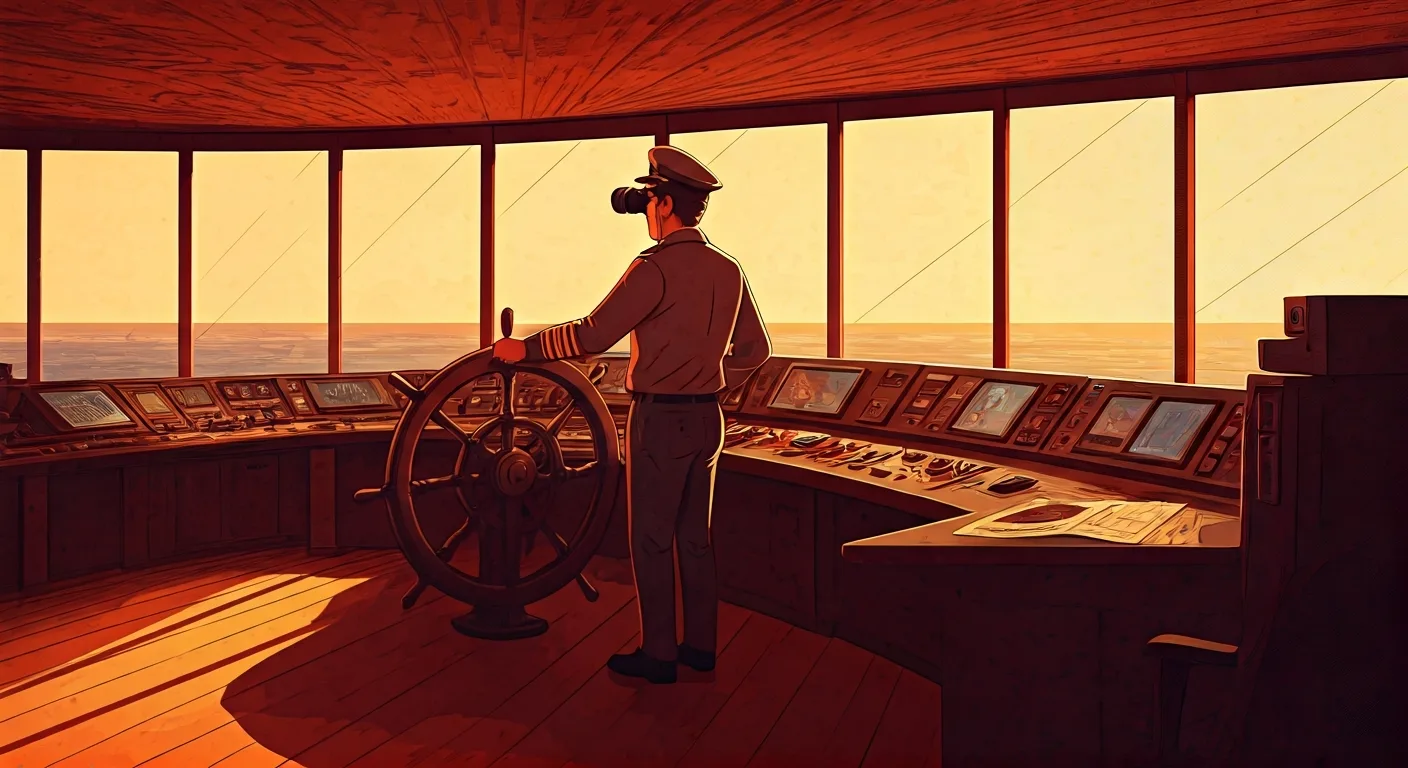
Commands ships, ferries, or tugboats, navigating waterways and managing crew to ensure safe passage of cargo or passengers. Plots courses, monitors weather and sea conditions, and oversees loading and docking operations. Responsible for the safety of the vessel, its crew, and any cargo or passengers, ensuring compliance with all maritime laws and regulations.
Ensures the safe and efficient transport of goods and people across waterways, contributing to global trade, travel, and coastal operations. Critical for maritime safety and environmental protection.
On the job
- Navigate vessels through various waterways, including oceans, rivers, and canals, using charts, GPS, and radar.
- Manage and supervise the crew, assigning duties, ensuring compliance with safety protocols, and fostering teamwork.
- Monitor weather forecasts, sea conditions, and vessel systems to make informed decisions and mitigate risks.
- Oversee cargo loading, securing, and unloading, or passenger boarding and disembarkation procedures.
- Communicate with port authorities, pilots, and other vessels, coordinating movements and ensuring smooth operations.
Tools & technology
Average salary
Job outlook
StableDemand is steady. This is an established role with consistent hiring across sectors.
Education & training
Requires a combination of formal education, extensive sea experience, and specific licensing based on vessel size and operating area.
AI impact outlook
Note — this is our current view. AI is moving fast, so we revisit these ratings.
Show how this was assessed Hide the detail
Note — this is our current view. AI is moving fast, so we revisit these ratings.
Show how this was assessed Hide the detailWhy this role received this rating
Core task exposure
moderate
How much of the role’s important work could AI perform?
Navigation, route optimization, and system monitoring can be significantly augmented by AI, but core command and complex maneuvering remain human.
End-to-end automation
low
Can AI complete the work without substantial human involvement?
Full, unaided automation for commanding vessels is highly improbable due to complex maritime environments, human safety, and legal accountability.
Adoption pressure
low
How likely are employers to introduce AI into this work?
High safety requirements, complex international regulations, and significant capital costs mean AI adoption for displacement will be very slow, focusing on assistance.
Human dependence
strong
How much does success depend on human judgement, relationships and accountability?
Success critically depends on human judgment, crew command, complex decision-making in adverse conditions, and ultimate legal responsibility for the vessel.
Protective — a higher rating lowers the overall score.
Role adaptability
strong
How easily can the role evolve as AI takes on more tasks?
Captains can adapt by becoming expert managers of advanced navigation and vessel management systems, focusing on strategic oversight and complex problem-solving.
Shown for context — not part of the score.
What AI may take on
These are the parts of the role most likely to be automated or significantly accelerated.
- Optimize routes based on real-time weather and sea conditions
- Detect potential collision risks and suggest avoidance maneuvers
- Monitor vessel systems for predictive maintenance and fault diagnosis
- Assist with complex docking procedures through augmented reality interfaces
Where people remain essential
These parts continue to depend heavily on human judgement, relationships and accountability.
- Commanding and motivating the vessel's crew, ensuring their safety and performance
- Making critical decisions in adverse weather, emergencies, or equipment failures
- Navigating through challenging waterways, dense traffic, and port environments
- Ensuring strict compliance with all national and international maritime laws
- Overseeing cargo loading, securing, or passenger safety protocols
- Bearing ultimate legal and ethical responsibility for the vessel and its occupants
How the role may evolve
Commanding automated vessels, guiding human crew.
The role of a captain will evolve into that of a high-level system supervisor and crew leader, leveraging AI for navigation and monitoring while focusing on strategic decision-making, complex maneuvers, and overall command.
Strengthen your future fit
- Proficiency in managing and interpreting advanced vessel navigation and monitoring systems
- Exceptional leadership and crew management capabilities
- Advanced critical thinking and crisis management skills for maritime emergencies
- Deep understanding of maritime law and international shipping regulations
- Assessment horizon
- 3–7 years
- Confidence
- High
- Last reviewed
- August 2026
- Methodology
- v1.0
This assessment reflects current AI capabilities and expected adoption patterns. Actual impacts will vary by industry, employer and the way each role is performed.
Career pathways
WHERE YOU COULD GO
CURRENT ROLE
Captain (Water Vessel)
Transport & Aviation
ADJACENT MOVES
STARTING POINTS
Who thrives here
Interest profile
realistic · RCE
Individuals who enjoy practical, hands-on work with equipment and systems, are methodical in their approach, and can confidently lead and direct others in structured environments often thrive as a Captain.
Personality characteristics
Conscientious
Highly organized and disciplined, ensuring all regulations and safety protocols are meticulously followed.
Decisive Leader
Confidently takes charge and makes critical decisions under pressure, directing the crew effectively.
Detail-Oriented
Pays close attention to navigational data, weather patterns, and vessel systems for safe operation.
Calm Under Pressure
Maintains composure and clear thinking during emergencies or challenging sea conditions.
Cooperative
Works effectively with the crew, port authorities, and other maritime professionals.
Best for
- Individuals who thrive in highly responsible, structured environments with clear procedures.
- Those who enjoy leading teams and making critical decisions in dynamic settings.
- People with a passion for the sea, navigation, and maritime operations.
Watch out for
- Demands long periods away from home and irregular working hours, including weekends and holidays.
- High-stakes responsibility for lives, cargo, and environment can be stressful.
- Requires continuous learning and certification updates.
A week in the life
A representative working week for a Captain (Water Vessel) — where the deep work, meetings, and admin actually land.
Real people. Real results.
Thousands of people
can't be wrong.



Frequently asked questions about Captain (Water Vessel) roles
What does a Captain (Water Vessel) do?
A Captain (Water Vessel) commands ships, ferries, or tugboats, navigating waterways and managing crew to ensure safe passage of cargo or passengers. Plots courses, monitors weather and sea conditions, and oversees loading and docking operations. Responsible for the safety of the vessel, its crew, and any cargo or passengers, ensuring compliance with all maritime laws and regulations. Ensures the safe and efficient transport of goods and people across waterways, contributing to global trade, travel, and coastal operations. Critical for maritime safety and environmental protection.
How much does a Captain (Water Vessel) earn?
A Captain (Water Vessel) earns a median of $110,000 per year in the US, typically ranging from $70,000 to $180,000.
What qualifications do you need to become a Captain (Water Vessel)?
To become a Captain (Water Vessel), requires a combination of formal education, extensive sea experience, and specific licensing based on vessel size and operating area. Master's License (e.g., Master 1600 Tons, Unlimited Master).
What personality suits a Captain (Water Vessel)?
Captain (Water Vessel) roles tend to suit people who are highly conscientious — precise, organised and strong on follow-through (Conscientiousness 85/100) and steady under pressure — deadlines and setbacks do not rattle them easily (Emotional Stability 75/100). The traits that matter most in the role are Conscientious, Decisive Leader, Detail-Oriented and Calm Under Pressure. Highly organized and disciplined, ensuring all regulations and safety protocols are meticulously followed. On interests, Captain (Water Vessel) maps to a RCE Holland Code profile — individuals who enjoy practical, hands-on work with equipment and systems, are methodical in their approach, and can confidently lead and direct others in structured environments often thrive as a Captain.
Who does a Captain (Water Vessel) role suit?
A Captain (Water Vessel) role is usually a strong fit for these reasons. High Realistic and Conventional affinity, aligning with structured operations, equipment handling, and rule adherence. Requires strong leadership and decisive action, fitting a high Conscientiousness and moderate Extraversion profile. The role demands meticulous attention to detail and adherence to strict safety protocols.
What are the downsides of being a Captain (Water Vessel)?
Captain (Water Vessel) roles come with trade-offs worth weighing up. Demands long periods away from home and irregular working hours, including weekends and holidays. High-stakes responsibility for lives, cargo, and environment can be stressful. Requires continuous learning and certification updates.
What is the work environment like for a Captain (Water Vessel)?
Work as a Captain (Water Vessel) is mostly mixed-based with onsite arrangements common, highly structured, with set processes and deadlines, a moderate pace and high exposure to clients or stakeholders. Around 57% of the week is focused deep work.
What skills do you need to be a Captain (Water Vessel)?
Core skills for a Captain (Water Vessel) include Navigation and piloting, Crew management and leadership, Maritime safety protocols, Risk assessment and management, Emergency response and Communication.
How do you become a Captain (Water Vessel)?
Common entry routes into Captain (Water Vessel) roles include Deck Officer, Chief Mate and Second Mate.
What career progression is there for a Captain (Water Vessel)?
From a Captain (Water Vessel) role, common next steps include Marine Superintendent and Port Captain; lateral moves include Maritime Pilot.
What is the job outlook for Captain (Water Vessel) roles?
The outlook for Captain (Water Vessel) roles is currently rated stable. Demand is steady. This is an established role with consistent hiring across sectors.
Will AI replace Captain (Water Vessel) roles?
Traitstack rates automation risk for Captain (Water Vessel) roles at 31 out of 100, which is low. AI will increasingly automate vessel navigation and system monitoring, yet human captains remain indispensable for crew command, complex maneuvering, and ultimate safety accountability. AI is most likely to take on optimize routes based on real-time weather and sea conditions, detect potential collision risks and suggest avoidance maneuvers and monitor vessel systems for predictive maintenance and fault diagnosis. Commanding and motivating the vessel's crew, ensuring their safety and performance, making critical decisions in adverse weather, emergencies, or equipment failures and navigating through challenging waterways, dense traffic, and port environments stay with people. Commanding automated vessels, guiding human crew. That score measures how much of the work could change, not the likelihood the job disappears. It is Traitstack's current view, revisited as AI capability moves.