Sugar Cane Grower
SOC 11-9013.00 · ESCO 1311 · OSCA 151133
Role snapshot
Overview
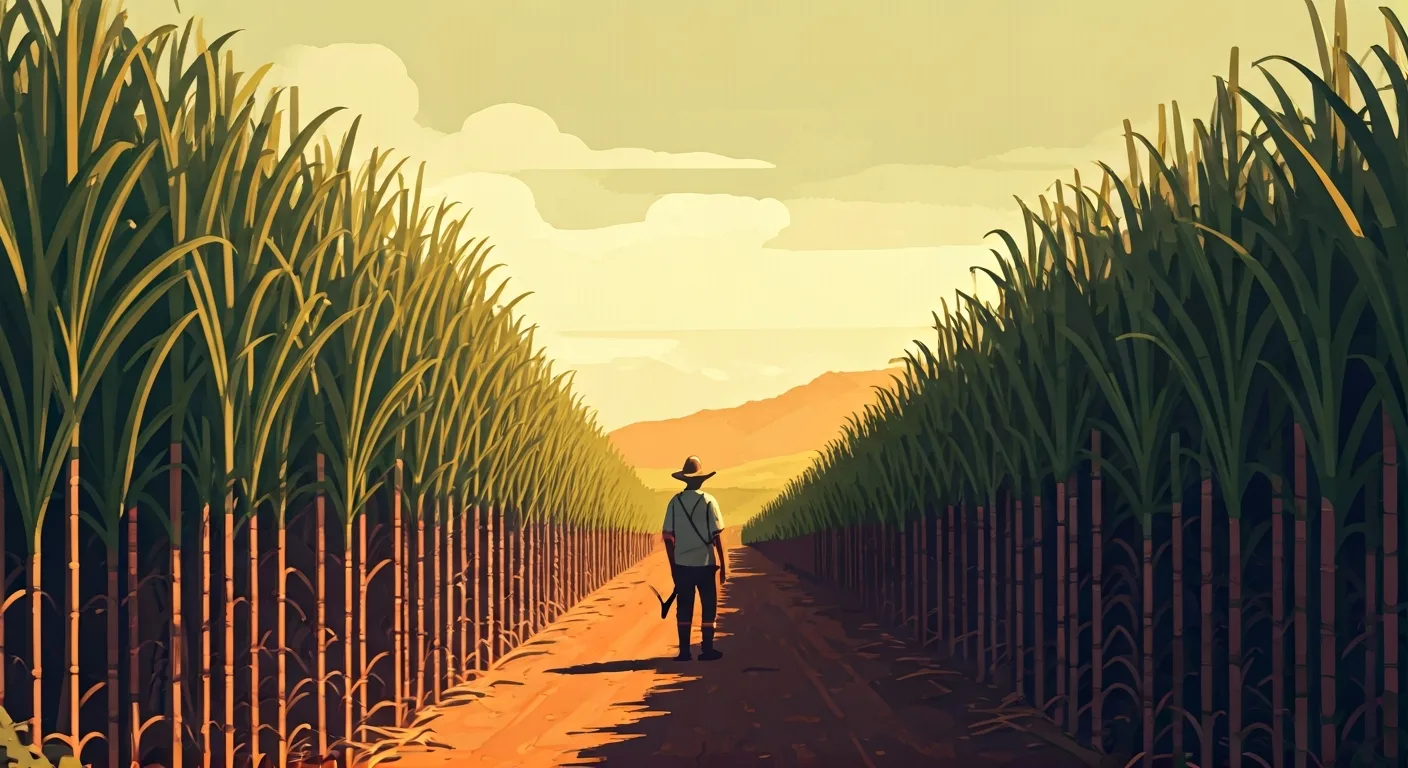
Manages the cultivation and harvesting of sugar cane, overseeing all stages from soil preparation and planting to irrigation, nutrient management, pest and disease control, and the precise timing of mechanical harvesting. Focuses on sustainable practices and optimising sugar content for efficient processing at mills.
Contributes significantly to the global sugar supply chain, supporting food production and bio-fuel industries, while also managing land and resources sustainably and efficiently.
On the job
- Plan and execute planting schedules and crop rotation strategies for sugar cane.
- Monitor soil health, analyse nutrient levels, and apply appropriate fertilisers and amendments.
- Manage and maintain irrigation systems to ensure optimal water supply to crops.
- Implement integrated pest and disease management strategies to protect yields.
- Coordinate and supervise mechanical harvesting operations to maximise sugar content and efficiency.
Tools & technology
Average salary
Job outlook
StableDemand is steady. This is an established role with consistent hiring across sectors.
Education & training
Practical experience combined with a certificate, diploma, or degree in agriculture, agronomy, or a related field is typically required.
AI impact outlook
Note — this is our current view. AI is moving fast, so we revisit these ratings.
Show how this was assessed Hide the detail
Note — this is our current view. AI is moving fast, so we revisit these ratings.
Show how this was assessed Hide the detailWhy this role received this rating
Core task exposure
high
How much of the role’s important work could AI perform?
Planning planting schedules, optimizing nutrient application, pest/disease strategies, and precise harvest timing for sugar content are highly data-driven and AI-amenable.
End-to-end automation
moderate
Can AI complete the work without substantial human involvement?
AI can provide advanced recommendations, but human oversight is still required for execution, machinery operation, and adapting to real-world farm variability.
Adoption pressure
high
How likely are employers to introduce AI into this work?
Precision agriculture technologies and AI-driven optimization are being rapidly adopted in large-scale crop production due to clear ROI in efficiency and yield.
Human dependence
moderate
How much does success depend on human judgement, relationships and accountability?
Success depends on adapting to unpredictable weather, managing labor, making critical on-the-ground decisions, and coordinating with sugar mills.
Protective — a higher rating lowers the overall score.
Role adaptability
strong
How easily can the role evolve as AI takes on more tasks?
Growers are already integrating sophisticated technologies, making the role highly adaptable to further AI advancements.
Shown for context — not part of the score.
What AI may take on
These are the parts of the role most likely to be automated or significantly accelerated.
- Optimizing planting schedules based on weather and soil data
- Predicting optimal harvest windows for maximum sugar content (CCS)
- Recommending precise fertilizer and pesticide applications
- Forecasting yield and managing mill delivery logistics
- Analyzing satellite imagery for crop health monitoring
Where people remain essential
These parts continue to depend heavily on human judgement, relationships and accountability.
- Operating and maintaining heavy agricultural machinery
- Adapting to unexpected weather events and field issues
- Supervising and managing vineyard staff
- Negotiating contracts and managing supplier relationships
- Making strategic decisions about sustainable practices
- Troubleshooting complex machinery or crop problems
How the role may evolve
Refining harvest strategy. Less guesswork, more data.
Growers will leverage AI for precision planning and real-time optimization of sugar content and mill deliveries, shifting focus to strategic oversight and on-the-ground problem-solving.
Strengthen your future fit
- Proficiency in precision agriculture software and data analysis
- Understanding of AI-driven optimization models
- Adaptability to new farming technologies and practices
- Strategic decision-making based on complex data
- Strong operational management and problem-solving skills
- Assessment horizon
- 3–7 years
- Confidence
- Medium
- Last reviewed
- August 2026
- Methodology
- v1.0
This assessment reflects current AI capabilities and expected adoption patterns. Actual impacts will vary by industry, employer and the way each role is performed.
Career pathways
WHERE YOU COULD GO
CURRENT ROLE
Sugar Cane Grower
Agriculture & Food
ADJACENT MOVES
STARTING POINTS
Who thrives here
Interest profile
enterprising · ERC
People who enjoy leading teams, managing complex agricultural operations, and applying practical knowledge to achieve tangible results in an outdoor setting tend to thrive in this role.
Personality characteristics
Conscientious
Diligent in managing crop cycles, adhering to schedules, and maintaining farm operations to ensure high yields.
Agreeable
Works cooperatively with farmhands, suppliers, and mill operators to ensure smooth operations and resolve issues.
Practical
Focused on real-world application of agricultural science and efficient problem-solving in the field.
Resilient
Handles unexpected challenges like weather changes, market fluctuations, or crop issues with a calm and steady approach.
Directive
Comfortable supervising farm staff and coordinating with external partners to achieve agricultural goals.
Best for
- Individuals who enjoy working outdoors, managing complex systems, and seeing the direct impact of their efforts.
- Those who are highly organised, resilient, and comfortable making decisions that affect crop yields and profitability.
- People who thrive in a semi-structured environment where routine tasks are balanced with reactive problem-solving.
Watch out for
- Work often extends beyond regular hours, especially during planting and harvesting seasons, and can involve weekend work.
- The role can be physically demanding and expose individuals to various weather conditions.
- Market fluctuations and unpredictable environmental factors can introduce significant stress and require adaptability.
A week in the life
A representative working week for a Sugar Cane Grower — where the deep work, meetings, and admin actually land.
Real people. Real results.
Thousands of people
can't be wrong.

Frequently asked questions about Sugar Cane Grower roles
What does a Sugar Cane Grower do?
A Sugar Cane Grower manages the cultivation and harvesting of sugar cane, overseeing all stages from soil preparation and planting to irrigation, nutrient management, pest and disease control, and the precise timing of mechanical harvesting. Focuses on sustainable practices and optimising sugar content for efficient processing at mills. Contributes significantly to the global sugar supply chain, supporting food production and bio-fuel industries, while also managing land and resources sustainably and efficiently.
How much does a Sugar Cane Grower earn?
A Sugar Cane Grower earns a median of $65,000 per year in the US, typically ranging from $45,000 to $90,000.
What qualifications do you need to become a Sugar Cane Grower?
To become a Sugar Cane Grower, practical experience combined with a certificate, diploma, or degree in agriculture, agronomy, or a related field is typically required.
What personality suits a Sugar Cane Grower?
Sugar Cane Grower roles tend to suit people who are highly conscientious — precise, organised and strong on follow-through (Conscientiousness 78/100) and steady under pressure — deadlines and setbacks do not rattle them easily (Emotional Stability 72/100). The traits that matter most in the role are Conscientious, Agreeable, Practical and Resilient. Diligent in managing crop cycles, adhering to schedules, and maintaining farm operations to ensure high yields. On interests, Sugar Cane Grower maps to an ERC Holland Code profile — people who enjoy leading teams, managing complex agricultural operations, and applying practical knowledge to achieve tangible results in an outdoor setting tend to thrive in this role.
Who does a Sugar Cane Grower role suit?
A Sugar Cane Grower role is usually a strong fit for these reasons. Strong Realistic and Enterprising affinities: the role involves hands-on work, managing resources, and leading farm operations. A significant portion of the week is dedicated to practical field work and crop management, appealing to those who enjoy tangible results. The role demands a high level of conscientiousness and practical problem-solving, crucial for successful agricultural outcomes.
What are the downsides of being a Sugar Cane Grower?
Sugar Cane Grower roles come with trade-offs worth weighing up. Work often extends beyond regular hours, especially during planting and harvesting seasons, and can involve weekend work. The role can be physically demanding and expose individuals to various weather conditions. Market fluctuations and unpredictable environmental factors can introduce significant stress and require adaptability.
What is the work environment like for a Sugar Cane Grower?
Work as a Sugar Cane Grower is mostly outdoors-based with onsite arrangements common, semi-structured — a mix of set processes and self-directed work, a moderate pace and medium exposure to clients or stakeholders. Around 84% of the week is focused deep work.
What skills do you need to be a Sugar Cane Grower?
Core skills for a Sugar Cane Grower include Crop management, Irrigation management, Pest and disease control, Agricultural machinery operation and Farm planning and logistics.
How do you become a Sugar Cane Grower?
Common entry routes into Sugar Cane Grower roles include Farm Hand, Agricultural Technician and Crop Scout.
What career progression is there for a Sugar Cane Grower?
From a Sugar Cane Grower role, common next steps include Farm Manager and Agricultural Consultant; lateral moves include Grain Farmer and Vegetable Farmer.
What is the job outlook for Sugar Cane Grower roles?
The outlook for Sugar Cane Grower roles is currently rated stable. Demand is steady. This is an established role with consistent hiring across sectors.
Will AI replace Sugar Cane Grower roles?
Traitstack rates automation risk for Sugar Cane Grower roles at 60 out of 100, which is moderate. AI will optimize complex decisions around sugar content timing and mill delivery, while growers navigate unpredictable field conditions and manage physical operations. AI is most likely to take on optimizing planting schedules based on weather and soil data, predicting optimal harvest windows for maximum sugar content (ccs) and recommending precise fertilizer and pesticide applications. Operating and maintaining heavy agricultural machinery, adapting to unexpected weather events and field issues and supervising and managing vineyard staff stay with people. Refining harvest strategy. Less guesswork, more data. That score measures how much of the work could change, not the likelihood the job disappears. It is Traitstack's current view, revisited as AI capability moves.