Shearer
SOC 45-2099 · ESCO 6121 · OSCA 343331
Role snapshot
Overview
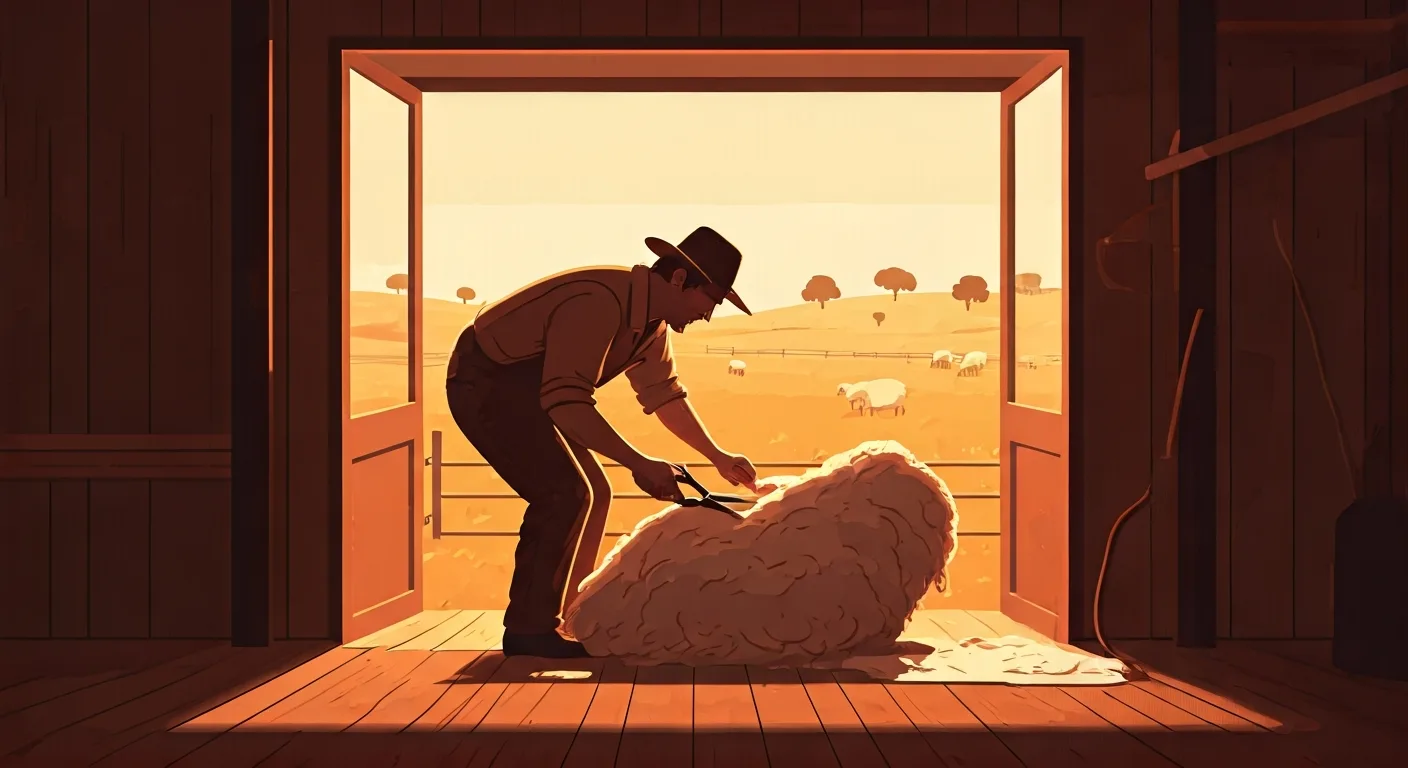
Removes wool from sheep quickly and cleanly using electric or blade shears, working in shearing sheds on farms and stations. This role involves maintaining equipment, handling animals safely, and meeting daily tally targets, often requiring travel to various locations during shearing seasons.
Contributes to the agricultural economy by preparing wool for market, ensuring animal welfare during the shearing process, and supporting farm productivity.
On the job
- Operate and maintain electric or blade shearing equipment
- Handle and position sheep safely and efficiently during shearing
- Remove wool in a single, clean fleece without causing injury to the animal
- Sharpen and adjust shearing combs and cutters
- Work as part of a shearing team, often alongside wool handlers and classers
Tools & technology
Average salary
Job outlook
StableDemand is steady. This is an established role with consistent hiring across sectors.
Education & training
Typically requires on-the-job training, apprenticeships, or vocational courses in shearing techniques and animal husbandry. Formal qualifications are rare but short courses are common.
AI impact outlook
Note — this is our current view. AI is moving fast, so we revisit these ratings.
Show how this was assessed Hide the detail
Note — this is our current view. AI is moving fast, so we revisit these ratings.
Show how this was assessed Hide the detailWhy this role received this rating
Core task exposure
low
How much of the role’s important work could AI perform?
The core task of physically removing wool from a live, moving animal is a highly skilled physical manipulation task, with minimal direct AI exposure.
End-to-end automation
low
Can AI complete the work without substantial human involvement?
The extreme variability of sheep anatomy and behavior, combined with the need for precision and animal welfare, makes end-to-end AI-driven automation virtually impossible.
Adoption pressure
low
How likely are employers to introduce AI into this work?
While there is a desire for automation due to the strenuous nature of the work, the technical challenges mean adoption pressure for AI in the core task is very low.
Human dependence
strong
How much does success depend on human judgement, relationships and accountability?
Success is overwhelmingly dependent on the shearer's exceptional physical dexterity, strength, rapid decision-making, and deep understanding of animal handling and welfare.
Protective — a higher rating lowers the overall score.
Role adaptability
low
How easily can the role evolve as AI takes on more tasks?
While the core skill is specialized, shearers adapt to different breeds, equipment types, and working conditions across various farms, showing moderate adaptability.
Shown for context — not part of the score.
What AI may take on
These are the parts of the role most likely to be automated or significantly accelerated.
- Optimizing shearing patterns for efficiency and wool quality (decision support)
- Monitoring sheep health indicators for pre-shearing assessment
- Predicting optimal shearing times based on wool growth and market demand
- Analyzing wool quality after shearing (computer vision, data analysis)
Where people remain essential
These parts continue to depend heavily on human judgement, relationships and accountability.
- Physically handling and positioning live sheep safely and efficiently
- Operating electric or blade shears with extreme precision and speed
- Adapting shearing technique to the unique contours and movements of each animal
- Removing wool in a single, clean fleece without causing injury to the sheep
- Maintaining and sharpening shearing equipment on-site
- Working as part of a high-speed team in challenging physical conditions
How the role may evolve
A physically demanding skill, with little fundamental shift from AI.
This role's core identity as a highly skilled physical trade is unlikely to be fundamentally reshaped by AI, which offers little to the intricate task of removing wool from a live animal. Any changes would likely be in peripheral support or data analysis, not the shearing itself.
Strengthen your future fit
- Maintaining exceptional physical fitness and dexterity
- Advanced animal handling and welfare practices
- Proficiency in equipment maintenance and sharpening
- Efficiency and teamwork in high-pressure environments
- Adaptability to new shearing techniques or breeds
- Assessment horizon
- 3–7 years
- Confidence
- High
- Last reviewed
- August 2026
- Methodology
- v1.0
This assessment reflects current AI capabilities and expected adoption patterns. Actual impacts will vary by industry, employer and the way each role is performed.
Career pathways
WHERE YOU COULD GO
CURRENT ROLE
Shearer
Agriculture & Food
ADJACENT MOVES
STARTING POINTS
Who thrives here
Interest profile
realistic · RCI
People who enjoy physical, hands-on work with tools and animals, combined with a methodical and practical approach, tend to thrive in this role.
Personality characteristics
Practical
Prefers concrete tasks and hands-on work rather than abstract concepts.
Disciplined
Committed to efficient work, meeting daily targets, and maintaining equipment meticulously.
Independent
Comfortable focusing on individual tasks and working for extended periods with minimal social interaction.
Precise
Focused on accuracy and care in handling animals and operating equipment.
Resilient
Handles the physical demands and challenging work conditions without excessive stress.
Best for
- Individuals who enjoy physical labor, working outdoors, and directly with animals.
- Those who thrive on clear, measurable targets and the satisfaction of a job well done.
- People who value independence, practical problem-solving, and a trade-based career.
Watch out for
- The work is physically demanding and often performed in challenging environmental conditions.
- Requires frequent travel and can involve long, irregular hours during peak shearing seasons.
- Social interaction is often limited compared to office-based roles.
A week in the life
A representative working week for a Shearer — where the deep work, meetings, and admin actually land.
Real people. Real results.
Thousands of people
can't be wrong.



Frequently asked questions about Shearer roles
What does a Shearer do?
A Shearer removes wool from sheep quickly and cleanly using electric or blade shears, working in shearing sheds on farms and stations. This role involves maintaining equipment, handling animals safely, and meeting daily tally targets, often requiring travel to various locations during shearing seasons. Contributes to the agricultural economy by preparing wool for market, ensuring animal welfare during the shearing process, and supporting farm productivity.
How much does a Shearer earn?
A Shearer earns a median of $55,000 per year in the US, typically ranging from $35,000 to $80,000.
What qualifications do you need to become a Shearer?
To become a Shearer, typically requires on-the-job training, apprenticeships, or vocational courses in shearing techniques and animal husbandry. Formal qualifications are rare but short courses are common.
What personality suits a Shearer?
Shearer roles tend to suit people who are highly conscientious — precise, organised and strong on follow-through (Conscientiousness 75/100) and steady under pressure — deadlines and setbacks do not rattle them easily (Emotional Stability 72/100). The traits that matter most in the role are Practical, Disciplined, Independent and Precise. Prefers concrete tasks and hands-on work rather than abstract concepts. On interests, Shearer maps to a RCI Holland Code profile — people who enjoy physical, hands-on work with tools and animals, combined with a methodical and practical approach, tend to thrive in this role.
Who does a Shearer role suit?
A Shearer role is usually a strong fit for these reasons. Strong Realistic alignment: the role involves consistent physical, hands-on work with tools and animals. High Conscientiousness is rewarded: precision, efficiency, and equipment maintenance are crucial for success. The work pattern is heavily focused on deep, physical work, ideal for those who prefer task-oriented days.
What are the downsides of being a Shearer?
Shearer roles come with trade-offs worth weighing up. The work is physically demanding and often performed in challenging environmental conditions. Requires frequent travel and can involve long, irregular hours during peak shearing seasons. Social interaction is often limited compared to office-based roles.
What is the work environment like for a Shearer?
Work as a Shearer is mostly mixed-based with onsite arrangements common, semi-structured — a mix of set processes and self-directed work and low exposure to clients or stakeholders. Around 82% of the week is focused deep work.
What skills do you need to be a Shearer?
Core skills for a Shearer include Sheep handling and restraint, Precision shearing techniques, Equipment maintenance and sharpening, Physical stamina and coordination and Teamwork and communication.
How do you become a Shearer?
Common entry routes into Shearer roles include Farm Worker, Wool Handler and Livestock Worker.
What career progression is there for a Shearer?
From a Shearer role, common next steps include Shearing Contractor and Farm Manager; lateral moves include Livestock Handler and Agricultural Technician.
What is the job outlook for Shearer roles?
The outlook for Shearer roles is currently rated stable. Demand is steady. This is an established role with consistent hiring across sectors.
Will AI replace Shearer roles?
Traitstack rates automation risk for Shearer roles at 11 out of 100, which is low. AI has minimal impact on the core task of physically shearing sheep, which requires extreme dexterity, animal handling, and a high degree of human skill. AI is most likely to take on optimizing shearing patterns for efficiency and wool quality (decision support), monitoring sheep health indicators for pre-shearing assessment and predicting optimal shearing times based on wool growth and market demand. Physically handling and positioning live sheep safely and efficiently, operating electric or blade shears with extreme precision and speed and adapting shearing technique to the unique contours and movements of each animal stay with people. A physically demanding skill, with little fundamental shift from AI. That score measures how much of the work could change, not the likelihood the job disappears. It is Traitstack's current view, revisited as AI capability moves.