Radio Dispatcher
SOC 43-5032.00 · ESCO 4229 · OSCA 599936
Role snapshot
Overview
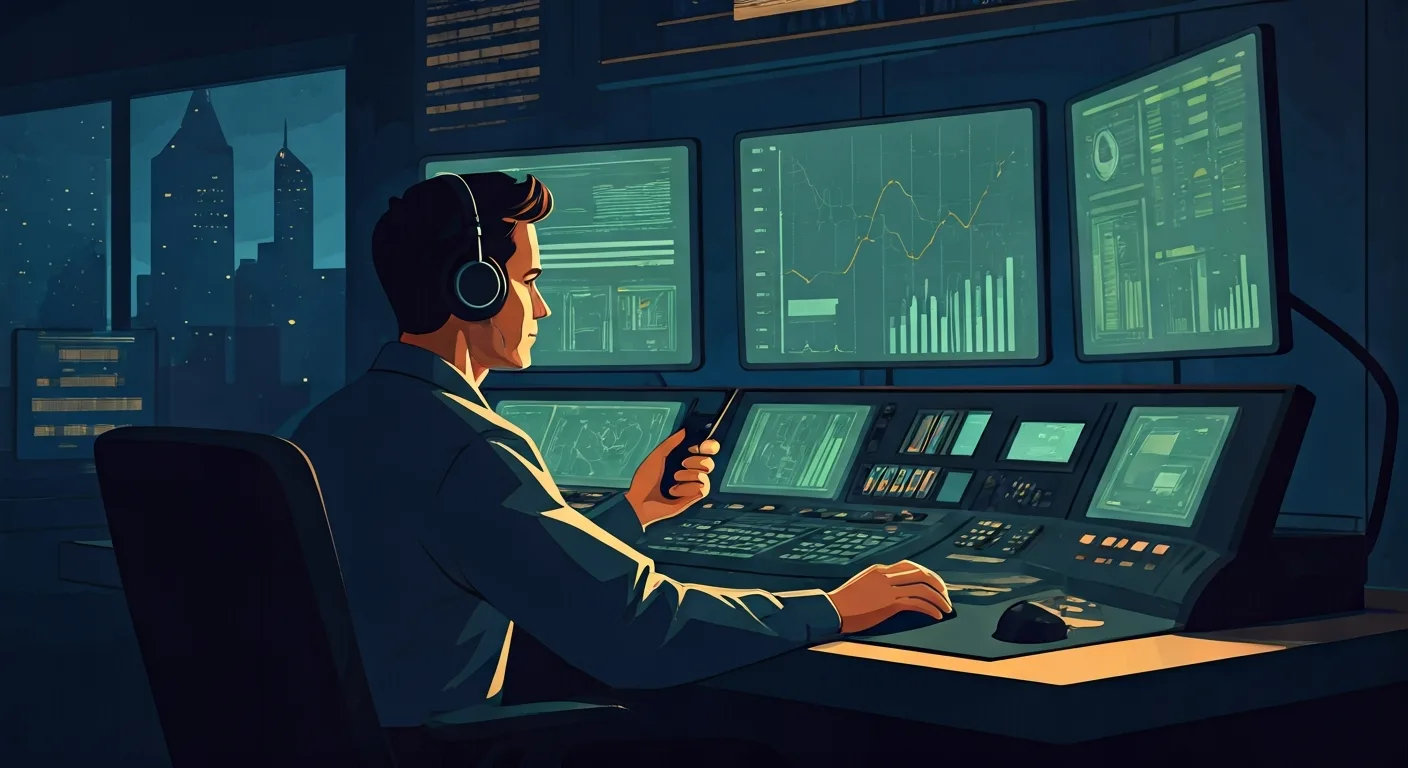
Receives incoming calls and uses two-way radio systems to direct emergency vehicles, taxis, couriers, or field crews to their assignments. This role involves prioritising requests, tracking unit locations, maintaining communication logs, and providing critical support throughout each shift.
Ensures timely and efficient deployment of resources, directly contributing to public safety, operational efficiency, and rapid response in critical situations by serving as the vital communication link.
On the job
- Receive and process incoming calls, assessing urgency and determining appropriate response.
- Utilise two-way radio systems to dispatch emergency services, field personnel, or vehicles.
- Monitor unit locations and status using tracking systems, providing updates as needed.
- Maintain accurate logs and records of all communications, dispatches, and incidents.
- Provide clear and concise instructions to callers and field units during critical events.
Tools & technology
Average salary
Job outlook
StableDemand is steady. This is an established role with consistent hiring across sectors.
Education & training
High school diploma or GED, often combined with specialised dispatcher training or certification for public safety roles.
AI impact outlook
Note — this is our current view. AI is moving fast, so we revisit these ratings.
Show how this was assessed Hide the detail
Note — this is our current view. AI is moving fast, so we revisit these ratings.
Show how this was assessed Hide the detailWhy this role received this rating
Core task exposure
high
How much of the role’s important work could AI perform?
AI is highly capable of processing incoming calls, assessing urgency, tracking units, and optimizing dispatch decisions, exposing a significant portion of core tasks.
End-to-end automation
low
Can AI complete the work without substantial human involvement?
AI can automate much of the call processing and optimal resource allocation for routine events, but the dynamic, high-stakes nature of critical incidents requires human judgment and intervention, preventing full end-to-end automation.
Adoption pressure
high
How likely are employers to introduce AI into this work?
Efficiency, speed, and optimal resource allocation are paramount in dispatching, especially for emergency services, leading to very strong adoption pressure for AI augmentation.
Human dependence
moderate
How much does success depend on human judgement, relationships and accountability?
Success critically depends on human judgment under pressure, empathy with callers, adapting to rapidly evolving situations, and providing clear, decisive instructions during critical events.
Protective — a higher rating lowers the overall score.
Role adaptability
moderate
How easily can the role evolve as AI takes on more tasks?
The role can adapt by focusing on managing complex incidents, overseeing automated systems, and training AI to handle increasingly nuanced scenarios.
Shown for context — not part of the score.
What AI may take on
These are the parts of the role most likely to be automated or significantly accelerated.
- Processing incoming calls and assessing initial urgency (voice AI)
- Optimizing dispatch routes and resource allocation for routine incidents
- Monitoring unit locations and status using GPS tracking software
- Automated generation and maintenance of communication logs
Where people remain essential
These parts continue to depend heavily on human judgement, relationships and accountability.
- Providing clear, concise instructions to callers during critical events
- Exercising human judgment in rapidly evolving or ambiguous situations
- Managing and de-escalating emotionally charged interactions
- Coordinating complex multi-unit responses during major incidents
- Ensuring accountability and compliance with safety protocols
How the role may evolve
From reactive dispatch to proactive crisis management.
The role will shift from managing all incoming requests to overseeing AI-driven routine dispatch, allowing human dispatchers to focus on complex crisis management, human-centric problem-solving, and system oversight.
Strengthen your future fit
- Proficiency in advanced CAD and AI-powered dispatch systems
- Enhanced critical thinking and decision-making under pressure
- Strong empathetic communication and de-escalation skills
- Ability to manage complex, multi-agency incident coordination
- Assessment horizon
- 3–7 years
- Confidence
- Medium
- Last reviewed
- August 2026
- Methodology
- v1.0
This assessment reflects current AI capabilities and expected adoption patterns. Actual impacts will vary by industry, employer and the way each role is performed.
Career pathways
WHERE YOU COULD GO
CURRENT ROLE
Radio Dispatcher
Logistics & Supply Chain
ADJACENT MOVES
STARTING POINTS
Who thrives here
Interest profile
conventional · CRE
Individuals who thrive in structured environments, enjoy operating equipment, and are adept at making quick decisions to direct resources often find success as a radio dispatcher.
Personality characteristics
Organized
Methodical and disciplined in handling information and following protocols, even under pressure, to ensure accurate dispatching.
Calm under pressure
Maintains composure and clarity of thought during high-stress and critical incidents, ensuring effective communication.
Clear Communicator
Articulates instructions and gathers information precisely and efficiently with callers and field units.
Procedure-focused
Prefers established protocols and standard operating procedures to ensure consistent, reliable, and safe service delivery.
Service-oriented
Dedicated to assisting callers and field units, ensuring their needs are met effectively and compassionately.
Best for
- Individuals who excel in structured, rule-bound environments and can make rapid, critical decisions.
- People who are calm under pressure and can effectively multitask during emergencies.
- Those who find purpose in providing essential support to emergency services and the public.
Watch out for
- The fast-paced and high-stress nature of the job can be emotionally demanding and requires significant resilience.
- Regular shift work, including nights, weekends, and holidays, is common and requires personal flexibility.
A week in the life
A representative working week for a Radio Dispatcher — where the deep work, meetings, and admin actually land.
Real people. Real results.
Thousands of people
can't be wrong.



Frequently asked questions about Radio Dispatcher roles
What does a Radio Dispatcher do?
A Radio Dispatcher receives incoming calls and uses two-way radio systems to direct emergency vehicles, taxis, couriers, or field crews to their assignments. This role involves prioritising requests, tracking unit locations, maintaining communication logs, and providing critical support throughout each shift. Ensures timely and efficient deployment of resources, directly contributing to public safety, operational efficiency, and rapid response in critical situations by serving as the vital communication link.
How much does a Radio Dispatcher earn?
A Radio Dispatcher earns a median of $48,000 per year in the US, typically ranging from $35,000 to $65,000.
What qualifications do you need to become a Radio Dispatcher?
To become a Radio Dispatcher, high school diploma or GED, often combined with specialised dispatcher training or certification for public safety roles. Emergency Medical Dispatch (EMD) Certification (for emergency services).
What personality suits a Radio Dispatcher?
Radio Dispatcher roles tend to suit people who are highly conscientious — precise, organised and strong on follow-through (Conscientiousness 82/100) and practical and grounded — happier with proven methods than experimentation (Openness 35/100). The traits that matter most in the role are Organized, Calm under pressure, Clear Communicator and Procedure-focused. Methodical and disciplined in handling information and following protocols, even under pressure, to ensure accurate dispatching. On interests, Radio Dispatcher maps to a CRE Holland Code profile — individuals who thrive in structured environments, enjoy operating equipment, and are adept at making quick decisions to direct resources often find success as a radio dispatcher.
Who does a Radio Dispatcher role suit?
A Radio Dispatcher role is usually a strong fit for these reasons. High Conscientiousness is crucial for maintaining accurate records and following strict protocols in a high-stakes environment. Low Neuroticism helps in remaining calm and effective during high-stress emergency situations. A strong Conventional affinity aligns with the need for structured tasks and adherence to procedures.
What are the downsides of being a Radio Dispatcher?
Radio Dispatcher roles come with trade-offs worth weighing up. The fast-paced and high-stress nature of the job can be emotionally demanding and requires significant resilience. Regular shift work, including nights, weekends, and holidays, is common and requires personal flexibility.
What is the work environment like for a Radio Dispatcher?
Work as a Radio Dispatcher is mostly office-based with onsite arrangements common, highly structured, with set processes and deadlines and high exposure to clients or stakeholders. Around 68% of the week is focused deep work.
What skills do you need to be a Radio Dispatcher?
Core skills for a Radio Dispatcher include Active listening, Situational awareness, Clear communication, Decision-making under pressure, Data entry and record keeping and Multitasking.
How do you become a Radio Dispatcher?
Common entry routes into Radio Dispatcher roles include Call Taker, Customer Service Representative and Administrative Assistant.
What career progression is there for a Radio Dispatcher?
From a Radio Dispatcher role, common next steps include Senior Dispatcher and Dispatch Supervisor; lateral moves include Emergency Management Specialist.
What is the job outlook for Radio Dispatcher roles?
The outlook for Radio Dispatcher roles is currently rated stable. Demand is steady. This is an established role with consistent hiring across sectors.
Will AI replace Radio Dispatcher roles?
Traitstack rates automation risk for Radio Dispatcher roles at 61 out of 100, which is strong. AI can streamline call processing and dispatch optimization, however, critical decision-making under pressure and empathetic communication require human intervention. AI is most likely to take on processing incoming calls and assessing initial urgency (voice ai), optimizing dispatch routes and resource allocation for routine incidents and monitoring unit locations and status using gps tracking software. Providing clear, concise instructions to callers during critical events, exercising human judgment in rapidly evolving or ambiguous situations and managing and de-escalating emotionally charged interactions stay with people. From reactive dispatch to proactive crisis management. That score measures how much of the work could change, not the likelihood the job disappears. It is Traitstack's current view, revisited as AI capability moves.