Primary Products Quality Assurance Officer
SOC 45-2099 · ESCO 3257 · OSCA 311138
Role snapshot
Overview
Tests and inspects agricultural products such as grain, fruit, vegetables, or dairy to verify they meet established quality, safety, and regulatory standards. This role involves auditing production processes, conducting laboratory tests, documenting results, and collaborating with producers to identify and resolve non-conformances and implement corrective actions. Ensures product integrity from farm to market.
Ensures the safety, quality, and compliance of primary products, protecting consumers, maintaining brand reputation, and adhering to regulatory requirements throughout the supply chain.
On the job
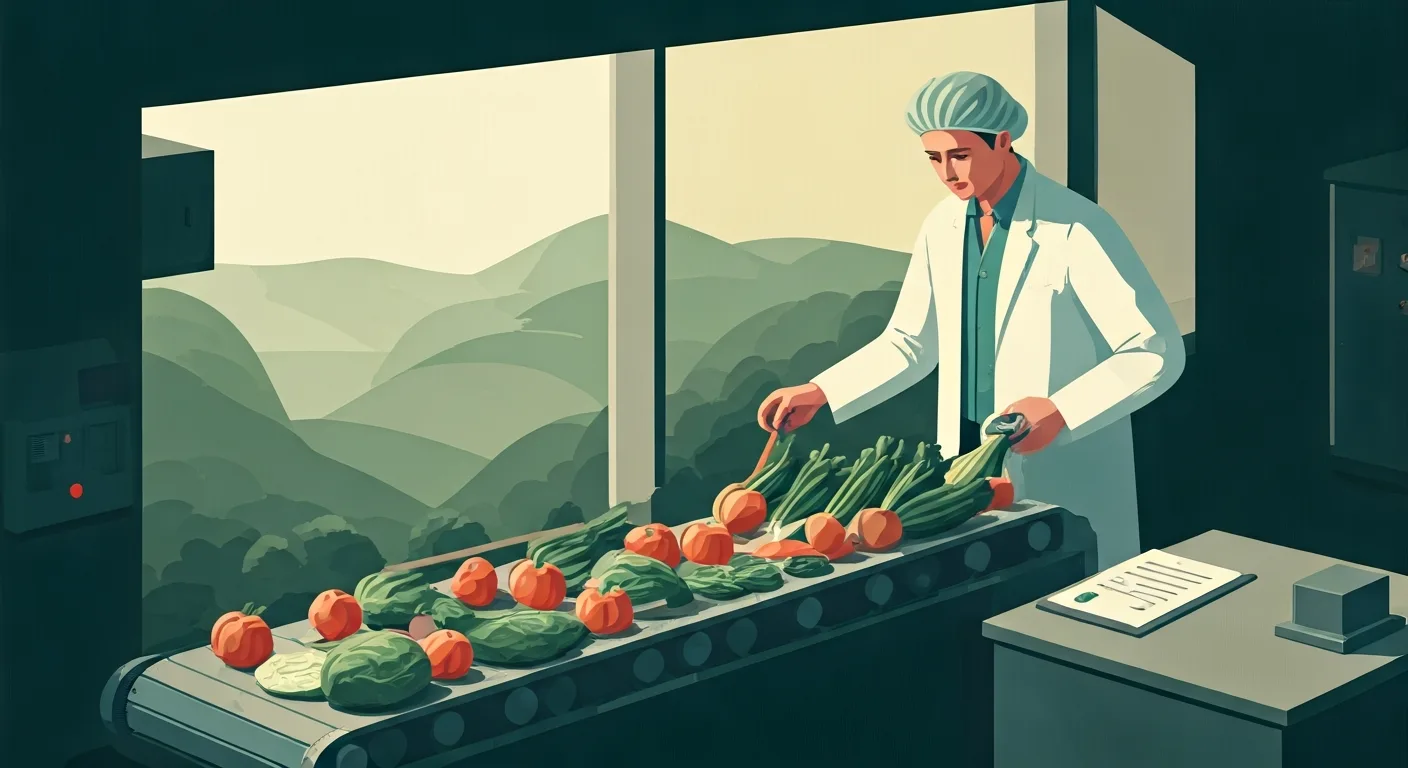
- Conduct physical and sensory inspections of raw and processed agricultural products.
- Perform laboratory tests on samples to check for contaminants, nutritional content, and other quality parameters.
- Audit production facilities and processes to ensure adherence to Good Manufacturing Practices (GMP) and other quality protocols.
- Document inspection findings, test results, and non-conformances, preparing detailed reports.
- Collaborate with production teams to develop and implement corrective actions and preventative measures.
Tools & technology
Average salary
Job outlook
StableDemand is steady. This is an established role with consistent hiring across sectors.
Education & training
A certificate or diploma in food science, agriculture, quality assurance, or a related field is often required. A bachelor's degree may be preferred for some positions.
AI impact outlook
Note — this is our current view. AI is moving fast, so we revisit these ratings.
Show how this was assessed Hide the detail
Note — this is our current view. AI is moving fast, so we revisit these ratings.
Show how this was assessed Hide the detailWhy this role received this rating
Core task exposure
moderate
How much of the role’s important work could AI perform?
AI can analyze large datasets from lab tests, identify visible defects via computer vision, and flag non-conformances based on defined parameters.
End-to-end automation
low
Can AI complete the work without substantial human involvement?
While AI can automate parts of inspection and data analysis, human judgment for ambiguous cases, sensory assessment, and collaborative problem-solving are essential, preventing full automation.
Adoption pressure
high
How likely are employers to introduce AI into this work?
The high stakes of food safety and regulatory compliance, coupled with efficiency gains, create significant pressure to adopt AI-assisted quality control systems.
Human dependence
moderate
How much does success depend on human judgement, relationships and accountability?
Success depends on human sensory skills, critical judgment in non-standard situations, the ability to audit complex processes, and interpersonal skills to negotiate corrective actions with production teams.
Protective — a higher rating lowers the overall score.
Role adaptability
moderate
How easily can the role evolve as AI takes on more tasks?
The role requires continuous adaptation to evolving food safety regulations, new testing methodologies, and advancements in agricultural production and processing.
Shown for context — not part of the score.
What AI may take on
These are the parts of the role most likely to be automated or significantly accelerated.
- Automatically analyzing lab test results for contaminants or nutritional content
- Identifying visible defects or foreign materials in products using computer vision systems
- Flagging deviations from quality standards in real-time production data
- Generating detailed reports on batch quality and compliance
- Predicting potential quality issues based on upstream process data
Where people remain essential
These parts continue to depend heavily on human judgement, relationships and accountability.
- Performing complex sensory evaluations (taste, smell, texture) of products
- Making final judgment calls on product release in ambiguous or novel cases
- Conducting on-site audits of production facilities and human processes against GMP standards
- Negotiating and collaborating with production teams to implement corrective actions
- Interpreting and applying nuanced regulatory requirements
- Developing new quality control protocols in response to emerging risks
How the role may evolve
Evolving from routine testing to critical oversight and collaborative problem-solving.
The role will shift focus from repetitive testing and data collection towards supervising AI-driven systems, making critical judgments in complex situations, and acting as a crucial interface between quality data and production teams to drive continuous improvement. Skills in data interpretation and interpersonal negotiation will become paramount.
Strengthen your future fit
- Proficiency in interpreting AI-generated quality reports and insights
- Enhanced sensory evaluation skills for nuanced product assessment
- Strong negotiation and communication skills for stakeholder engagement
- Deep understanding of regulatory frameworks and compliance auditing
- Ability to troubleshoot and validate AI-powered inspection systems
- Assessment horizon
- 3–7 years
- Confidence
- High
- Last reviewed
- August 2026
- Methodology
- v1.0
This assessment reflects current AI capabilities and expected adoption patterns. Actual impacts will vary by industry, employer and the way each role is performed.
Career pathways
WHERE YOU COULD GO
CURRENT ROLE
Primary Products Quality Assurance Officer
Agriculture & Food
ADJACENT MOVES
STARTING POINTS
Who thrives here
Interest profile
investigative · RIC
Individuals who enjoy systematic investigation, practical application of scientific principles, and meticulous attention to detail in structured environments are well-suited for this role.
Personality characteristics
Conscientious
Demonstrates high levels of organisation, meticulousness, and a strong sense of duty to ensure standards are met.
Inquisitive
Possesses a natural curiosity to investigate problems, understand processes, and identify root causes of quality issues.
Methodical
Prefers working with established procedures, data, and systematic approaches to problem-solving and inspection.
Detail-oriented
Pays close attention to small details and discrepancies that could impact product quality or safety.
Composed
Remains calm and objective when identifying non-conformances or dealing with production pressures.
Best for
- Individuals who thrive in structured environments focused on accuracy and compliance.
- Those who enjoy applying scientific methods to ensure product integrity.
- People who are meticulous, observant, and committed to upholding safety standards.
Watch out for
- Requires a high tolerance for repetitive tasks and detailed documentation.
- May involve confronting non-compliance, requiring firmness and diplomacy.
A week in the life
A representative working week for a Primary Products Quality Assurance Officer — where the deep work, meetings, and admin actually land.
Real people. Real results.
Thousands of people
can't be wrong.





Frequently asked questions about Primary Products Quality Assurance Officer roles
What does a Primary Products Quality Assurance Officer do?
A Primary Products Quality Assurance Officer tests and inspects agricultural products such as grain, fruit, vegetables, or dairy to verify they meet established quality, safety, and regulatory standards. This role involves auditing production processes, conducting laboratory tests, documenting results, and collaborating with producers to identify and resolve non-conformances and implement corrective actions. Ensures product integrity from farm to market. Ensures the safety, quality, and compliance of primary products, protecting consumers, maintaining brand reputation, and adhering to regulatory requirements throughout the supply chain.
How much does a Primary Products Quality Assurance Officer earn?
A Primary Products Quality Assurance Officer earns a median of $70,000 per year in the US, typically ranging from $50,000 to $95,000.
What qualifications do you need to become a Primary Products Quality Assurance Officer?
To become a Primary Products Quality Assurance Officer, a certificate or diploma in food science, agriculture, quality assurance, or a related field is often required. A bachelor's degree may be preferred for some positions.
What personality suits a Primary Products Quality Assurance Officer?
Primary Products Quality Assurance Officer roles tend to suit people who are highly conscientious — precise, organised and strong on follow-through (Conscientiousness 85/100) and steady under pressure — deadlines and setbacks do not rattle them easily (Emotional Stability 75/100). The traits that matter most in the role are Conscientious, Inquisitive, Methodical and Detail-oriented. Demonstrates high levels of organisation, meticulousness, and a strong sense of duty to ensure standards are met. On interests, Primary Products Quality Assurance Officer maps to a RIC Holland Code profile — individuals who enjoy systematic investigation, practical application of scientific principles, and meticulous attention to detail in structured environments are well-suited for this role.
Who does a Primary Products Quality Assurance Officer role suit?
A Primary Products Quality Assurance Officer role is usually a strong fit for these reasons. Strong Investigative and Conventional alignment: the role requires systematic analysis and adherence to standards. High conscientiousness is crucial for the meticulous inspection and documentation required. Focus on practical problem-solving and ensuring tangible product quality.
What are the downsides of being a Primary Products Quality Assurance Officer?
Primary Products Quality Assurance Officer roles come with trade-offs worth weighing up. Requires a high tolerance for repetitive tasks and detailed documentation. May involve confronting non-compliance, requiring firmness and diplomacy.
What is the work environment like for a Primary Products Quality Assurance Officer?
Work as a Primary Products Quality Assurance Officer is mostly mixed-based with onsite arrangements common, semi-structured — a mix of set processes and self-directed work, a moderate pace and medium exposure to clients or stakeholders. Around 58% of the week is focused deep work.
What skills do you need to be a Primary Products Quality Assurance Officer?
Core skills for a Primary Products Quality Assurance Officer include Quality control procedures, Food safety regulations, Laboratory testing, Data analysis, Auditing and Problem-solving.
How do you become a Primary Products Quality Assurance Officer?
Common entry routes into Primary Products Quality Assurance Officer roles include Quality Control Technician, Laboratory Assistant and Agricultural Technician.
What career progression is there for a Primary Products Quality Assurance Officer?
From a Primary Products Quality Assurance Officer role, common next steps include Senior Quality Assurance Officer and Quality Assurance Manager; lateral moves include Food Safety Specialist and Agricultural Consultant.
What is the job outlook for Primary Products Quality Assurance Officer roles?
The outlook for Primary Products Quality Assurance Officer roles is currently rated stable. Demand is steady. This is an established role with consistent hiring across sectors.
Will AI replace Primary Products Quality Assurance Officer roles?
Traitstack rates automation risk for Primary Products Quality Assurance Officer roles at 53 out of 100, which is moderate. AI assists with data analysis and visible defect detection, yet sensory assessment, audit judgment, and negotiating corrective actions demand human expertise. AI is most likely to take on automatically analyzing lab test results for contaminants or nutritional content, identifying visible defects or foreign materials in products using computer vision systems and flagging deviations from quality standards in real-time production data. Performing complex sensory evaluations (taste, smell, texture) of products, making final judgment calls on product release in ambiguous or novel cases and conducting on-site audits of production facilities and human processes against gmp standards stay with people. Evolving from routine testing to critical oversight and collaborative problem-solving. That score measures how much of the work could change, not the likelihood the job disappears. It is Traitstack's current view, revisited as AI capability moves.