Pig Farmer
SOC 11-9013.00 · ESCO 1311 · OSCA 152934
Role snapshot
Overview
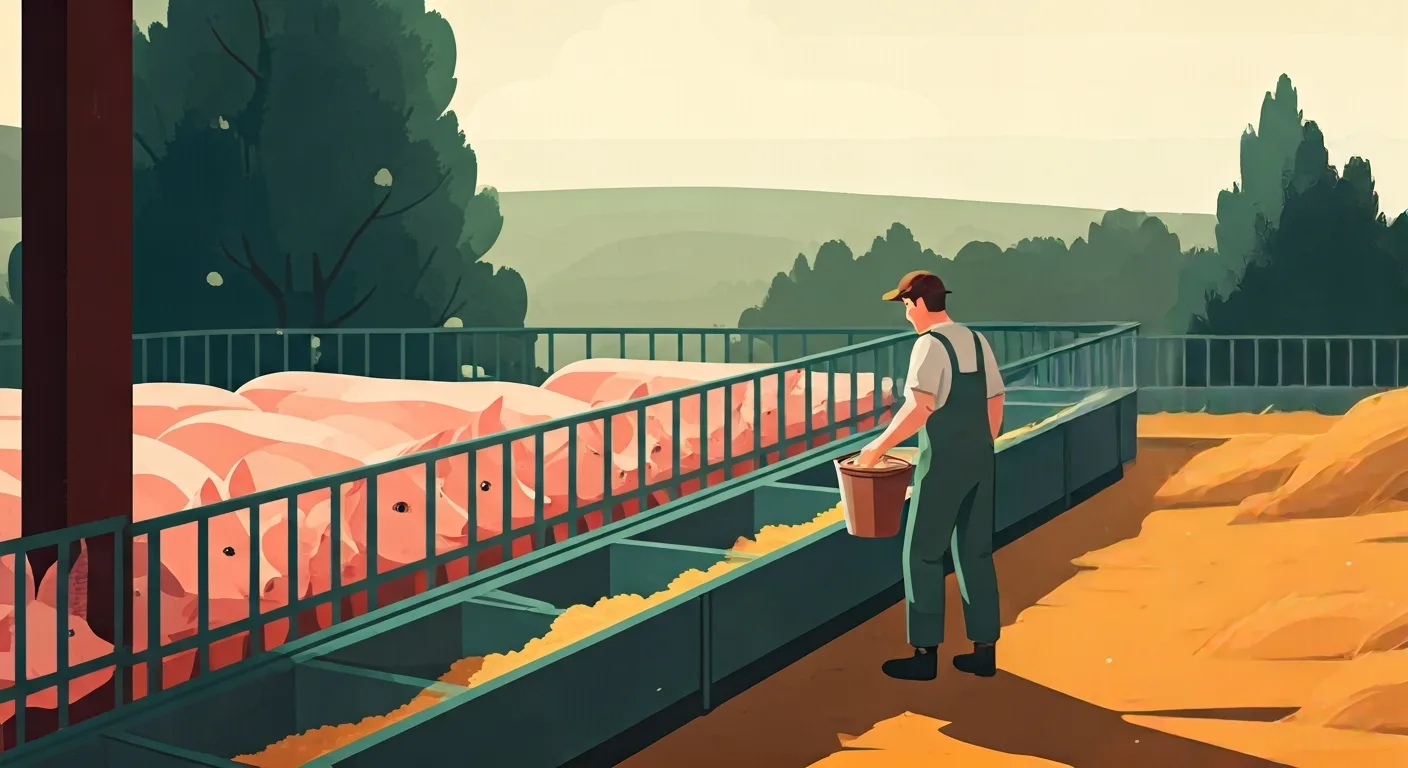
Manages pigs from farrowing through to market weight, controlling feed programs, housing conditions, and biosecurity measures. Monitors animal welfare closely in intensive or free-range systems and coordinates with processors and veterinarians. This role requires hands-on animal care, farm management, and business acumen.
Contributes to the food supply chain by raising healthy pigs, ensuring sustainable practices, and maintaining high animal welfare standards, which directly impacts public health and economic stability in rural communities.
On the job
- Monitor pig health, administer treatments, and implement preventative care programs
- Manage feeding schedules, nutrition plans, and ensure access to clean water
- Maintain and clean housing facilities, ensuring appropriate ventilation and environmental conditions
- Implement and enforce biosecurity protocols to prevent disease outbreaks
- Keep detailed records of breeding, farrowing, growth rates, and sales
Tools & technology
Average salary
Job outlook
StableDemand is steady. This is an established role with consistent hiring across sectors.
Education & training
Vocational certificate or diploma in agriculture or animal science, or a bachelor's degree in a related field. Practical experience is highly valued.
AI impact outlook
Note — this is our current view. AI is moving fast, so we revisit these ratings.
Show how this was assessed Hide the detail
Note — this is our current view. AI is moving fast, so we revisit these ratings.
Show how this was assessed Hide the detailWhy this role received this rating
Core task exposure
low
How much of the role’s important work could AI perform?
AI can effectively monitor animal health and optimize feeding, but hands-on care, critical welfare decisions, and physical biosecurity measures remain human tasks.
End-to-end automation
low
Can AI complete the work without substantial human involvement?
The complex, unpredictable nature of animal biology, coupled with ethical considerations and the need for physical intervention, prevents full end-to-end automation.
Adoption pressure
high
How likely are employers to introduce AI into this work?
High for AI-driven monitoring and data analysis due to clear benefits in efficiency and animal welfare, but lower for full automation of direct animal care.
Human dependence
strong
How much does success depend on human judgement, relationships and accountability?
Success requires the farmer's deep biological understanding, intuitive judgment for animal health, and ethical decision-making regarding welfare and treatment.
Protective — a higher rating lowers the overall score.
Role adaptability
strong
How easily can the role evolve as AI takes on more tasks?
The role can adapt by leveraging AI for data-driven insights into animal health and farm management, enhancing the farmer's capacity for expert care and strategic planning.
Shown for context — not part of the score.
What AI may take on
These are the parts of the role most likely to be automated or significantly accelerated.
- Monitor individual pig health and behavior using vision systems and sensors
- Optimize feed formulation and delivery based on growth stages and individual needs
- Automate detailed record-keeping for breeding, growth, and treatments
- Predict disease outbreaks based on environmental and behavioral data
- Synthesize data for overall farm management and efficiency reporting
Where people remain essential
These parts continue to depend heavily on human judgement, relationships and accountability.
- Administering treatments and providing direct hands-on animal care
- Making critical ethical decisions regarding animal welfare and culling
- Implementing and enforcing complex biosecurity protocols to prevent disease
- Diagnosing nuanced health issues that require physical examination
- Managing and supervising farm staff and ensuring operational compliance
- Responding to unexpected events like equipment failures or animal emergencies
How the role may evolve
Less manual data entry. More nuanced animal welfare and health intervention.
Pig farmers will increasingly rely on AI for data collection and analysis, allowing them to dedicate more time to hands-on animal health interventions, welfare assessments, and strategic farm management.
Strengthen your future fit
- Proficiency in animal health monitoring systems and data interpretation
- Advanced knowledge of swine biology, nutrition, and disease prevention
- Strong ethical judgment and animal welfare advocacy
- Effective farm management and leadership abilities
- Adaptability to new farming technologies and biosecurity protocols
- Assessment horizon
- 3–7 years
- Confidence
- High
- Last reviewed
- August 2026
- Methodology
- v1.0
This assessment reflects current AI capabilities and expected adoption patterns. Actual impacts will vary by industry, employer and the way each role is performed.
Career pathways
WHERE YOU COULD GO
CURRENT ROLE
Pig Farmer
Agriculture & Food
ADJACENT MOVES
STARTING POINTS
Who thrives here
Interest profile
enterprising · ERC
Individuals who thrive in hands-on environments, enjoy managing operations, and prefer structured tasks with clear protocols are well-suited for this role. It combines practical work with business oversight and meticulous record-keeping.
Personality characteristics
Conscientious
Demonstrates high responsibility, organization, and discipline in managing farm operations and animal welfare.
Practical
Prefers hands-on work with animals and equipment, focusing on tangible results and efficient methods.
Independent
Comfortable working autonomously and making decisions, often with minimal direct supervision.
Calm under pressure
Handles unexpected challenges, such as animal health emergencies or equipment breakdowns, with resilience.
Organized
Maintains meticulous records of animal health, breeding, and finances to ensure efficient farm management.
Best for
- Individuals who are passionate about animal care and enjoy the challenges of farm management.
- Those who prefer a blend of practical, hands-on work with administrative and planning responsibilities.
- People seeking a career with a direct connection to food production and rural lifestyle.
Watch out for
- The work involves regular weekend and early morning hours, requiring significant commitment.
- Physical demands can be high, and exposure to outdoor elements and farm environments is constant.
A week in the life
A representative working week for a Pig Farmer — where the deep work, meetings, and admin actually land.
Real people. Real results.
Thousands of people
can't be wrong.

Frequently asked questions about Pig Farmer roles
What does a Pig Farmer do?
A Pig Farmer manages pigs from farrowing through to market weight, controlling feed programs, housing conditions, and biosecurity measures. Monitors animal welfare closely in intensive or free-range systems and coordinates with processors and veterinarians. This role requires hands-on animal care, farm management, and business acumen. Contributes to the food supply chain by raising healthy pigs, ensuring sustainable practices, and maintaining high animal welfare standards, which directly impacts public health and economic stability in rural communities.
How much does a Pig Farmer earn?
A Pig Farmer earns a median of $55,000 per year in the US, typically ranging from $38,000 to $75,000.
What qualifications do you need to become a Pig Farmer?
To become a Pig Farmer, vocational certificate or diploma in agriculture or animal science, or a bachelor's degree in a related field. Practical experience is highly valued.
What personality suits a Pig Farmer?
Pig Farmer roles tend to suit people who are highly conscientious — precise, organised and strong on follow-through (Conscientiousness 80/100) and steady under pressure — deadlines and setbacks do not rattle them easily (Emotional Stability 72/100). The traits that matter most in the role are Conscientious, Practical, Independent and Calm under pressure. Demonstrates high responsibility, organization, and discipline in managing farm operations and animal welfare. On interests, Pig Farmer maps to an ERC Holland Code profile — individuals who thrive in hands-on environments, enjoy managing operations, and prefer structured tasks with clear protocols are well-suited for this role. It combines practical work with business oversight and meticulous record-keeping.
Who does a Pig Farmer role suit?
A Pig Farmer role is usually a strong fit for these reasons. Strong Realistic (R) and Enterprising (E) alignment, perfect for hands-on management of a farm business. High Conscientiousness (C) is crucial for the meticulous care and biosecurity protocols required. The role offers a high degree of independence and direct impact on animal welfare and food production.
What are the downsides of being a Pig Farmer?
Pig Farmer roles come with trade-offs worth weighing up. The work involves regular weekend and early morning hours, requiring significant commitment. Physical demands can be high, and exposure to outdoor elements and farm environments is constant.
What is the work environment like for a Pig Farmer?
Work as a Pig Farmer is mostly mixed-based with onsite arrangements common, semi-structured — a mix of set processes and self-directed work, a moderate pace and medium exposure to clients or stakeholders.
What skills do you need to be a Pig Farmer?
Core skills for a Pig Farmer include Animal husbandry, Biosecurity management, Farm equipment operation, Record keeping, Problem solving and Basic veterinary care.
How do you become a Pig Farmer?
Common entry routes into Pig Farmer roles include Farm Worker, Livestock Attendant and Agricultural Intern.
What career progression is there for a Pig Farmer?
From a Pig Farmer role, common next steps include Farm Manager (Large Scale); lateral moves include Agricultural Consultant and Livestock Buyer.
What is the job outlook for Pig Farmer roles?
The outlook for Pig Farmer roles is currently rated stable. Demand is steady. This is an established role with consistent hiring across sectors.
Will AI replace Pig Farmer roles?
Traitstack rates automation risk for Pig Farmer roles at 38 out of 100, which is low. AI can enhance animal monitoring and record-keeping, leaving the hands-on care, critical welfare decisions, and direct administration of treatments to the human farmer. AI is most likely to take on monitor individual pig health and behavior using vision systems and sensors, optimize feed formulation and delivery based on growth stages and individual needs and automate detailed record-keeping for breeding, growth, and treatments. Administering treatments and providing direct hands-on animal care, making critical ethical decisions regarding animal welfare and culling and implementing and enforcing complex biosecurity protocols to prevent disease stay with people. Less manual data entry. More nuanced animal welfare and health intervention. That score measures how much of the work could change, not the likelihood the job disappears. It is Traitstack's current view, revisited as AI capability moves.