Petroleum Engineer
SOC 17-2171.00 · ESCO 2146 · OSCA 243632
Role snapshot
Overview
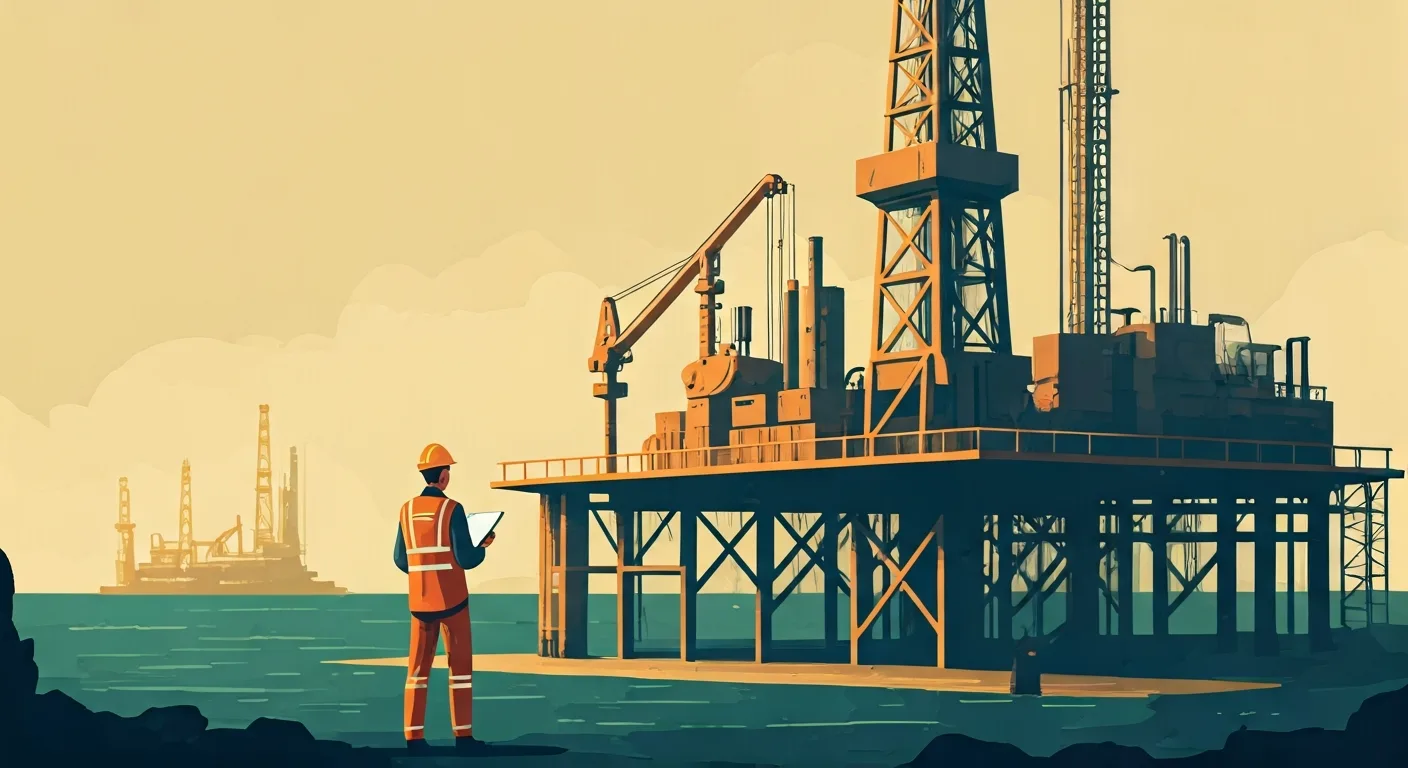
Designs methods for extracting oil and gas from underground reservoirs, optimising drilling techniques and production equipment. Analyses geological and reservoir data to maximise recovery while managing costs and environmental impact. This involves applying principles of geology, physics, and engineering to solve complex challenges in hydrocarbon exploration and production.
Ensures efficient and responsible extraction of vital energy resources, contributing to global energy supply while striving to minimize environmental footprint and maximize economic return from oil and gas fields.
On the job
- Design and implement drilling and well completion plans for oil and gas wells
- Analyze geological and geophysical data to estimate reservoir size and characteristics
- Develop and optimize production strategies to maximize hydrocarbon recovery rates
- Monitor and evaluate well performance, identifying opportunities for improved efficiency
- Assess and manage risks associated with drilling operations, reservoir management, and production
Tools & technology
Average salary
Job outlook
StableDemand is steady. This is an established role with consistent hiring across sectors.
Education & training
A bachelor's degree in petroleum engineering, chemical engineering, or a closely related field is typically required. A master's degree can be advantageous for advanced roles.
AI impact outlook
Note — this is our current view. AI is moving fast, so we revisit these ratings.
Show how this was assessed Hide the detail
Note — this is our current view. AI is moving fast, so we revisit these ratings.
Show how this was assessed Hide the detailWhy this role received this rating
Core task exposure
high
How much of the role’s important work could AI perform?
Reservoir simulation, drilling optimization, and data analysis are highly amenable to AI, leading to significant core task exposure.
End-to-end automation
moderate
Can AI complete the work without substantial human involvement?
AI can generate optimized drilling plans and production strategies, but the overall design, risk management, and strategic decision-making for high-stakes projects require human oversight.
Adoption pressure
high
How likely are employers to introduce AI into this work?
Very high pressure due to the immense scale of data, the cost implications of optimization, and the need for precision in extraction.
Human dependence
moderate
How much does success depend on human judgement, relationships and accountability?
While technical expertise is high, strategic decision-making, ethical considerations, and managing high-stakes risks in uncertain environments are still deeply human.
Protective — a higher rating lowers the overall score.
Role adaptability
strong
How easily can the role evolve as AI takes on more tasks?
The role is highly adaptable, integrating advanced AI tools to move from manual data processing to interpreting complex simulations and making strategic, high-level decisions.
Shown for context — not part of the score.
What AI may take on
These are the parts of the role most likely to be automated or significantly accelerated.
- Advanced reservoir simulation and modeling for recovery optimization
- AI-driven design and optimization of drilling paths and well completion plans
- Real-time monitoring and predictive maintenance of production equipment
- Automated analysis of geological and geophysical data for resource estimation
- Optimization of production strategies to maximize hydrocarbon recovery
Where people remain essential
These parts continue to depend heavily on human judgement, relationships and accountability.
- Strategic decision-making for multi-billion dollar projects in uncertain geological conditions
- Interpreting complex simulations and validating AI-generated recommendations
- Assessing and managing high-stakes risks related to drilling and production
- Navigating complex environmental regulations and stakeholder demands
- Ethical considerations in resource extraction and environmental impact
How the role may evolve
Data-intensive design transforms into strategic oversight of AI-powered reservoir optimization.
Petroleum engineers will increasingly use AI for complex simulations and optimization, shifting their focus to validating models, managing extreme risks, and making strategic decisions.
Strengthen your future fit
- Expertise in advanced AI/ML models for reservoir engineering and drilling optimization
- Strong data interpretation and critical validation skills for AI outputs
- High-level risk management and strategic planning capabilities
- Proficiency in environmental regulations and sustainable practices
- Effective communication with diverse stakeholders and decision-makers
- Assessment horizon
- 3–7 years
- Confidence
- High
- Last reviewed
- August 2026
- Methodology
- v1.0
This assessment reflects current AI capabilities and expected adoption patterns. Actual impacts will vary by industry, employer and the way each role is performed.
Career pathways
WHERE YOU COULD GO
CURRENT ROLE
Petroleum Engineer
Mining & Resources
ADJACENT MOVES
STARTING POINTS
Who thrives here
Interest profile
realistic · RIC
People who enjoy applying scientific principles to practical problems, conducting detailed analyses, and working with complex technical systems in a structured environment often find satisfaction as a Petroleum Engineer.
Personality characteristics
Analytical
Thrives on dissecting complex data and applying scientific methods to solve engineering challenges.
Conscientious
Exhibits strong attention to detail, organization, and a commitment to following safety and regulatory protocols.
Problem-solver
Enjoys systematically identifying issues and developing practical, efficient solutions for extraction and production.
Resilient
Maintains composure and effectiveness when faced with technical setbacks or challenging field conditions.
Collaborative
Works effectively within multidisciplinary teams, sharing expertise and coordinating efforts to achieve project goals.
Best for
- Individuals who enjoy applying engineering principles to real-world, tangible problems.
- Those who thrive in a data-driven environment and enjoy complex analytical work.
- Professionals who are meticulous, disciplined, and committed to safety and efficiency in operations.
Watch out for
- The role can involve frequent travel to remote field sites, which may not suit everyone.
- The industry is subject to market volatility and environmental regulations, requiring adaptability and resilience.
A week in the life
A representative working week for a Petroleum Engineer — where the deep work, meetings, and admin actually land.
Real people. Real results.
Thousands of people
can't be wrong.




Frequently asked questions about Petroleum Engineer roles
What does a Petroleum Engineer do?
A Petroleum Engineer designs methods for extracting oil and gas from underground reservoirs, optimising drilling techniques and production equipment. Analyses geological and reservoir data to maximise recovery while managing costs and environmental impact. This involves applying principles of geology, physics, and engineering to solve complex challenges in hydrocarbon exploration and production. Ensures efficient and responsible extraction of vital energy resources, contributing to global energy supply while striving to minimize environmental footprint and maximize economic return from oil and gas fields.
How much does a Petroleum Engineer earn?
A Petroleum Engineer earns a median of $135,000 per year in the US, typically ranging from $95,000 to $190,000.
What qualifications do you need to become a Petroleum Engineer?
To become a Petroleum Engineer, a bachelor's degree in petroleum engineering, chemical engineering, or a closely related field is typically required. A master's degree can be advantageous for advanced roles. Professional Engineer (PE) license may be required for senior positions, independent consulting, or for stamping engineering designs, particularly in roles involving public safety or significant environmental impact.
What personality suits a Petroleum Engineer?
Petroleum Engineer roles tend to suit people who are highly conscientious — precise, organised and strong on follow-through (Conscientiousness 78/100) and steady under pressure — deadlines and setbacks do not rattle them easily (Emotional Stability 72/100). The traits that matter most in the role are Analytical, Conscientious, Problem-solver and Resilient. Thrives on dissecting complex data and applying scientific methods to solve engineering challenges. On interests, Petroleum Engineer maps to a RIC Holland Code profile — people who enjoy applying scientific principles to practical problems, conducting detailed analyses, and working with complex technical systems in a structured environment often find satisfaction as a Petroleum Engineer.
Who does a Petroleum Engineer role suit?
A Petroleum Engineer role is usually a strong fit for these reasons. The role strongly aligns with Realistic and Investigative interests, focusing on practical problem-solving and scientific analysis. A significant portion of the work involves deep analytical tasks like reservoir modeling and data interpretation. The need for high conscientiousness and structured thinking is a core component of successful project execution.
What are the downsides of being a Petroleum Engineer?
Petroleum Engineer roles come with trade-offs worth weighing up. The role can involve frequent travel to remote field sites, which may not suit everyone. The industry is subject to market volatility and environmental regulations, requiring adaptability and resilience.
What is the work environment like for a Petroleum Engineer?
Work as a Petroleum Engineer is mostly mixed-based with hybrid arrangements common, semi-structured — a mix of set processes and self-directed work, a moderate pace and high exposure to clients or stakeholders. Around 48% of the week is focused deep work.
What skills do you need to be a Petroleum Engineer?
Core skills for a Petroleum Engineer include Reservoir engineering, Drilling operations design, Production optimization, Geological data interpretation, Fluid dynamics and Risk management.
How do you become a Petroleum Engineer?
Common entry routes into Petroleum Engineer roles include Junior Petroleum Engineer, Field Engineer and Geological Engineer Entry.
What career progression is there for a Petroleum Engineer?
From a Petroleum Engineer role, common next steps include Senior Petroleum Engineer, Reservoir Manager and Drilling Manager; lateral moves include Project Manager (Oil & Gas).
What is the job outlook for Petroleum Engineer roles?
The outlook for Petroleum Engineer roles is currently rated stable. Demand is steady. This is an established role with consistent hiring across sectors.
Will AI replace Petroleum Engineer roles?
Traitstack rates automation risk for Petroleum Engineer roles at 59 out of 100, which is moderate. Driving the optimization of drilling and production strategies will fall to AI, freeing Petroleum Engineers to focus on complex reservoir analysis, risk management, and long-term strategic planning. AI is most likely to take on advanced reservoir simulation and modeling for recovery optimization, ai-driven design and optimization of drilling paths and well completion plans and real-time monitoring and predictive maintenance of production equipment. Strategic decision-making for multi-billion dollar projects in uncertain geological conditions, interpreting complex simulations and validating ai-generated recommendations and assessing and managing high-stakes risks related to drilling and production stay with people. Data-intensive design transforms into strategic oversight of AI-powered reservoir optimization. That score measures how much of the work could change, not the likelihood the job disappears. It is Traitstack's current view, revisited as AI capability moves.