Pastrycook
SOC 51-3011.00 · ESCO 7512 · OSCA 322431
Role snapshot
Overview
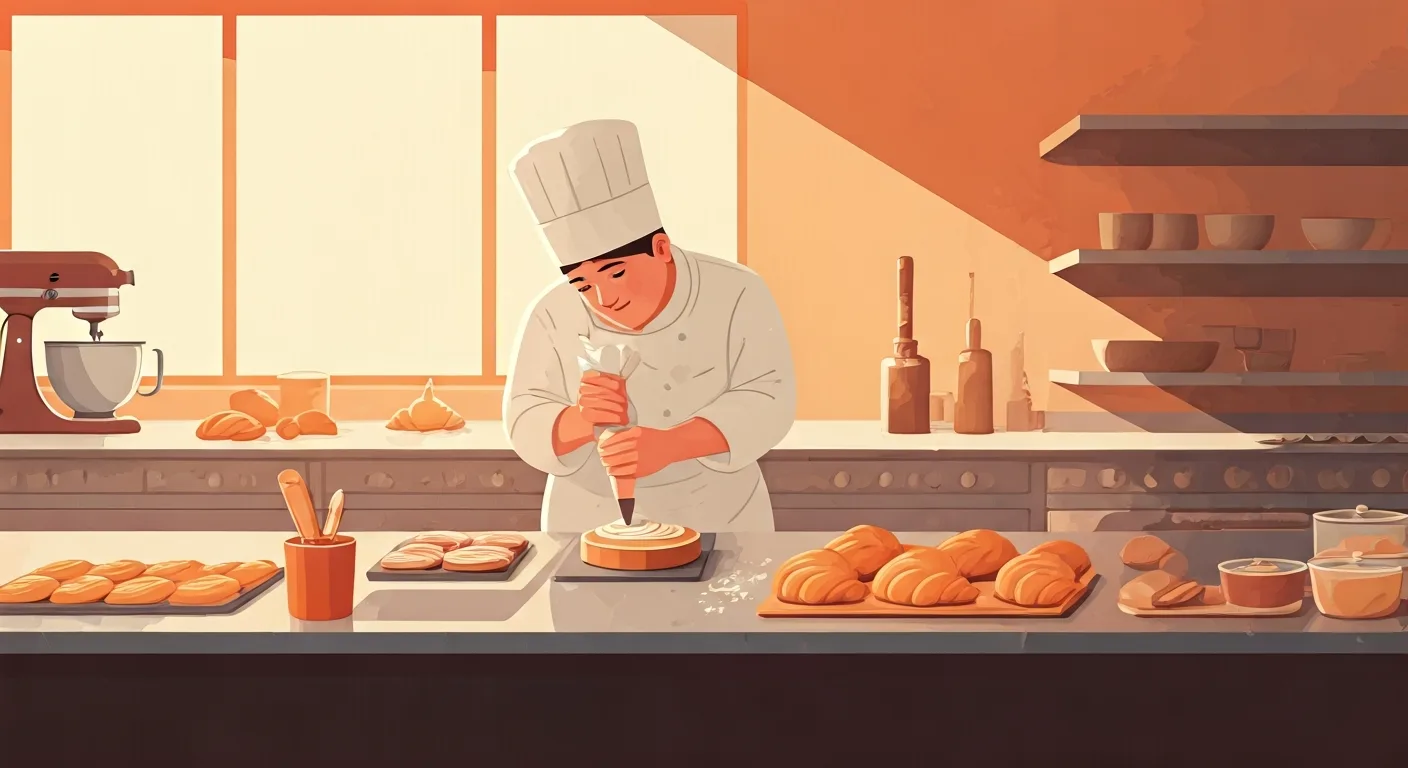
Creates cakes, pastries, breads, and desserts by measuring ingredients, mixing batters, and operating ovens and specialist equipment. Decorates finished products and develops new recipes to keep menus fresh. This role requires precision, creativity, and a strong understanding of baking science and artistic presentation.
Delights customers with delicious and visually appealing baked goods, contributing to a positive dining experience and the establishment's reputation. Plays a key role in menu innovation and quality control.
On the job
- Prepare and bake a variety of pastries, cakes, breads, and desserts following recipes and production schedules.
- Measure and mix ingredients accurately, operating commercial ovens, mixers, and other baking equipment.
- Decorate finished products with icing, glazes, and garnishes, ensuring high aesthetic standards.
- Develop and test new recipes, collaborating with chefs to integrate new items into menus.
- Maintain a clean and organised workstation, adhering to food safety and hygiene standards.
Tools & technology
Average salary
Job outlook
StableDemand is steady. This is an established role with consistent hiring across sectors.
Education & training
Formal culinary training, apprenticeship, or significant on-the-job experience in pastry arts is typically required.
AI impact outlook
Note — this is our current view. AI is moving fast, so we revisit these ratings.
Show how this was assessed Hide the detail
Note — this is our current view. AI is moving fast, so we revisit these ratings.
Show how this was assessed Hide the detailWhy this role received this rating
Core task exposure
low
How much of the role’s important work could AI perform?
Recipe variation suggestions and inventory management have some AI exposure, but the sensory, artistic, and physical aspects of baking are less exposed.
End-to-end automation
low
Can AI complete the work without substantial human involvement?
The need for precise manual decoration, sensory evaluation, and adapting recipes for small batches makes full end-to-end automation unfeasible for craft pastry work.
Adoption pressure
moderate
How likely are employers to introduce AI into this work?
Adoption of AI is likely for back-end efficiency (e.g., inventory), but the craft-oriented nature of the role limits its use in direct production for most establishments.
Human dependence
strong
How much does success depend on human judgement, relationships and accountability?
Success critically depends on human judgment for taste, texture, artistic presentation, and adapting recipes to ensure high-quality, creative products.
Protective — a higher rating lowers the overall score.
Role adaptability
strong
How easily can the role evolve as AI takes on more tasks?
The role can adapt by using AI to streamline ingredient management and recipe refinement, allowing more focus on creative development, artistic execution, and sensory perfection.
Shown for context — not part of the score.
What AI may take on
These are the parts of the role most likely to be automated or significantly accelerated.
- Suggesting new recipe variations or ingredient substitutions based on trends
- Optimizing ingredient purchasing and inventory management
- Scheduling production runs based on demand forecasts
- Monitoring oven temperatures and baking times for consistency
Where people remain essential
These parts continue to depend heavily on human judgement, relationships and accountability.
- Developing new recipes and innovative dessert concepts
- Precisely measuring and mixing ingredients by feel and experience
- Artistically decorating finished products with intricate designs
- Conducting sensory evaluation for taste, texture, and aroma
- Operating specialized baking equipment that requires human dexterity
- Maintaining a clean and organized workstation to health standards
How the role may evolve
From following recipes to innovating culinary art with AI as a creative assistant.
The role will shift from routine production to a more creative and experimental focus, leveraging AI for efficiency in ingredient management and recipe iteration, while emphasizing artistic skill and sensory mastery.
Strengthen your future fit
- Advanced culinary creativity and recipe development skills
- Mastery of artistic decoration techniques
- Acute sensory evaluation for taste and texture
- Proficiency in leveraging AI tools for recipe innovation and inventory
- Attention to detail and precision in execution
- Assessment horizon
- 3–7 years
- Confidence
- High
- Last reviewed
- August 2026
- Methodology
- v1.0
This assessment reflects current AI capabilities and expected adoption patterns. Actual impacts will vary by industry, employer and the way each role is performed.
Career pathways
WHERE YOU COULD GO
CURRENT ROLE
Pastrycook
Hospitality & Food Service
ADJACENT MOVES
STARTING POINTS
Who thrives here
Interest profile
realistic · RCA
People who enjoy hands-on creation, precise execution of recipes, and artistic presentation of food tend to thrive in this role.
Personality characteristics
Creative
Enjoys experimenting with new flavours, techniques, and presentations to innovate dessert offerings.
Detail-oriented
Takes pride in precise measurements, meticulous decoration, and adherence to recipes and standards.
Team Player
Works cooperatively with other kitchen staff to ensure smooth operations and timely delivery of products.
Resilient
Manages the fast pace and pressure of a commercial kitchen without becoming easily stressed.
Practical
Prefers hands-on work, operating equipment, and producing tangible, delicious results.
Best for
- Individuals who love baking, have a strong artistic flair, and enjoy working in a dynamic kitchen environment.
- Those who are meticulous, patient, and find joy in creating beautiful and delicious food products.
Watch out for
- Can involve long hours, including early mornings, late nights, and weekends, especially during peak seasons.
- Requires physical stamina for standing for extended periods and lifting heavy ingredients.
A week in the life
A representative working week for a Pastrycook — where the deep work, meetings, and admin actually land.
Real people. Real results.
Thousands of people
can't be wrong.




Frequently asked questions about Pastrycook roles
What does a Pastrycook do?
A Pastrycook creates cakes, pastries, breads, and desserts by measuring ingredients, mixing batters, and operating ovens and specialist equipment. Decorates finished products and develops new recipes to keep menus fresh. This role requires precision, creativity, and a strong understanding of baking science and artistic presentation. Delights customers with delicious and visually appealing baked goods, contributing to a positive dining experience and the establishment's reputation. Plays a key role in menu innovation and quality control.
How much does a Pastrycook earn?
A Pastrycook earns a median of $45,000 per year in the US, typically ranging from $35,000 to $60,000.
What qualifications do you need to become a Pastrycook?
To become a Pastrycook, formal culinary training, apprenticeship, or significant on-the-job experience in pastry arts is typically required.
What personality suits a Pastrycook?
Pastrycook roles tend to suit people who are highly conscientious — precise, organised and strong on follow-through (Conscientiousness 75/100) and open and curious — drawn to variety, ideas and new approaches (Openness 72/100). The traits that matter most in the role are Creative, Detail-oriented, Team Player and Resilient. Enjoys experimenting with new flavours, techniques, and presentations to innovate dessert offerings. On interests, Pastrycook maps to a RCA Holland Code profile — people who enjoy hands-on creation, precise execution of recipes, and artistic presentation of food tend to thrive in this role.
Who does a Pastrycook role suit?
A Pastrycook role is usually a strong fit for these reasons. Strong Realistic interest: thrives in practical, hands-on work with tools and ingredients. High Conscientiousness: excels in roles requiring precision, attention to detail, and adherence to standards. Artistic inclination: finds satisfaction in the creative aspects of decorating and recipe development.
What are the downsides of being a Pastrycook?
Pastrycook roles come with trade-offs worth weighing up. Can involve long hours, including early mornings, late nights, and weekends, especially during peak seasons. Requires physical stamina for standing for extended periods and lifting heavy ingredients.
What is the work environment like for a Pastrycook?
Work as a Pastrycook is mostly mixed-based with onsite arrangements common, semi-structured — a mix of set processes and self-directed work and medium exposure to clients or stakeholders. Around 85% of the week is focused deep work.
What skills do you need to be a Pastrycook?
Core skills for a Pastrycook include Baking techniques, Recipe development, Decorating and plating, Ingredient knowledge and Food safety.
How do you become a Pastrycook?
Common entry routes into Pastrycook roles include Culinary School Graduate, Baking Apprentice and Commis Chef Pastry.
What career progression is there for a Pastrycook?
From a Pastrycook role, common next steps include Senior Pastrycook, Head Pastry Chef and Confectionery Business Owner; lateral moves include Chocolatier.
What is the job outlook for Pastrycook roles?
The outlook for Pastrycook roles is currently rated stable. Demand is steady. This is an established role with consistent hiring across sectors.
Will AI replace Pastrycook roles?
Traitstack rates automation risk for Pastrycook roles at 31 out of 100, which is low. AI offers assistance with recipe variation and inventory, yet human creativity, sensory judgment, and precision in decorating remain indispensable for crafting unique pastries. AI is most likely to take on suggesting new recipe variations or ingredient substitutions based on trends, optimizing ingredient purchasing and inventory management and scheduling production runs based on demand forecasts. Developing new recipes and innovative dessert concepts, precisely measuring and mixing ingredients by feel and experience and artistically decorating finished products with intricate designs stay with people. From following recipes to innovating culinary art with AI as a creative assistant. That score measures how much of the work could change, not the likelihood the job disappears. It is Traitstack's current view, revisited as AI capability moves.