Passenger Train Driver
SOC 53-4011.00 · ESCO 8311 · OSCA 711332
Role snapshot
Overview
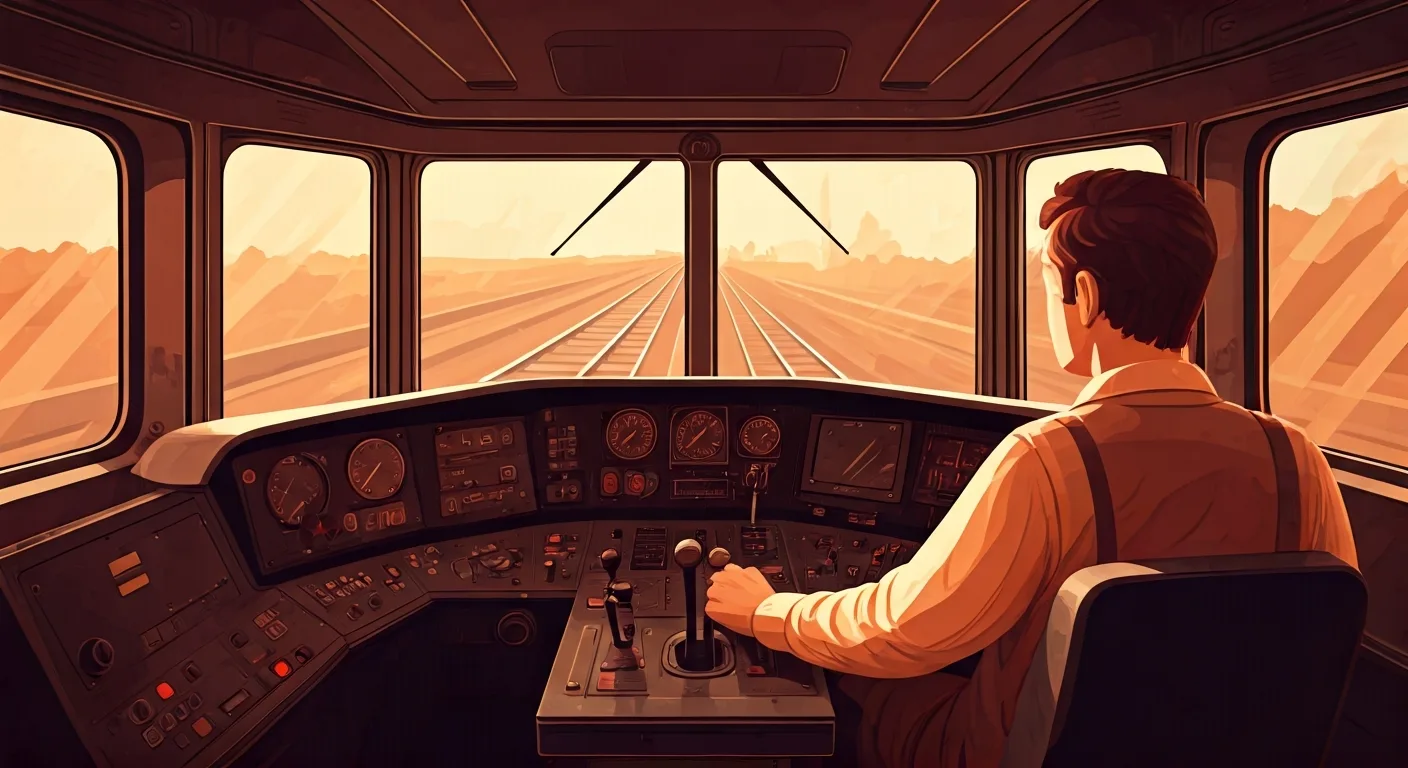
Drives commuter or intercity trains, stopping at scheduled stations while adhering to strict timetables and safety protocols. Monitors signals, communicates with control, and manages door operations at platforms. This role requires meticulous attention to detail, adherence to safety regulations, and strong communication skills to ensure the safe and efficient transport of passengers.
Ensures the safe, reliable, and timely transportation of thousands of passengers daily, contributing significantly to public infrastructure and urban mobility.
On the job
- Conduct pre-departure inspections of the train, including brakes, signals, and communication systems.
- Operate the locomotive, controlling speed, braking, and power according to signals, timetables, and track conditions.
- Communicate regularly and clearly with dispatchers, conductors, and station personnel via radio.
- Monitor track conditions, signals, and railway crossings to anticipate and respond to potential hazards.
- Manage door operations at stations, ensuring passenger safety during boarding and alighting.
Tools & technology
Average salary
Job outlook
StableDemand is steady. This is an established role with consistent hiring across sectors.
Education & training
Completion of a high school diploma or GED, followed by specialized vocational training or an apprenticeship program in railway operations.
AI impact outlook
Note — this is our current view. AI is moving fast, so we revisit these ratings.
Show how this was assessed Hide the detail
Note — this is our current view. AI is moving fast, so we revisit these ratings.
Show how this was assessed Hide the detailWhy this role received this rating
Core task exposure
high
How much of the role’s important work could AI perform?
The structured and predictable nature of train operation, including speed control, braking, and signal response, makes it highly exposed to automated train operation (ATO) systems.
End-to-end automation
high
Can AI complete the work without substantial human involvement?
Automated Train Operation systems can manage significant portions of the journey end-to-end, though human oversight is still critical for safety, incident response, and precise platform operations.
Adoption pressure
high
How likely are employers to introduce AI into this work?
There is strong pressure for AI adoption in rail for efficiency, safety, and capacity reasons, with many advanced ATO systems already in use globally.
Human dependence
moderate
How much does success depend on human judgement, relationships and accountability?
Success requires human oversight for ultimate safety responsibility, managing unexpected incidents, and ensuring precise door operations and passenger safety at stations.
Protective — a higher rating lowers the overall score.
Role adaptability
moderate
How easily can the role evolve as AI takes on more tasks?
The role can adapt by shifting from direct operation to monitoring automated systems, intervening in complex scenarios, and ensuring passenger safety and service.
Shown for context — not part of the score.
What AI may take on
These are the parts of the role most likely to be automated or significantly accelerated.
- Controlling train speed, acceleration, and braking automatically
- Responding to track signals and speed limits without human input
- Adhering precisely to timetables and stopping at designated stations
- Monitoring train systems for optimal performance and fault detection
- Communicating routine operational updates to control centers
Where people remain essential
These parts continue to depend heavily on human judgement, relationships and accountability.
- Exercising ultimate safety responsibility and intervening in emergencies
- Managing precise door operations at stations, ensuring passenger safety
- Responding effectively to unexpected track conditions or equipment failures
- Communicating with dispatchers and conductors during complex incidents
- Troubleshooting onboard system anomalies and making critical decisions
- Maintaining vigilance for potential hazards not detected by automated systems
How the role may evolve
Moving from direct operation to expert supervision of train control.
The role will transition from manual operation to supervising highly automated train systems, with the driver's expertise becoming focused on critical safety interventions, incident response, and ensuring smooth passenger experience.
Strengthen your future fit
- Proficiency in monitoring and overriding advanced automated train control systems
- Deep understanding of rail safety protocols and emergency procedures
- Exceptional problem-solving for operational and technical issues
- Strong communication and coordination skills with control and station staff
- Maintaining acute situational awareness and readiness for intervention
- Assessment horizon
- 3–7 years
- Confidence
- Medium
- Last reviewed
- August 2026
- Methodology
- v1.0
This assessment reflects current AI capabilities and expected adoption patterns. Actual impacts will vary by industry, employer and the way each role is performed.
Career pathways
WHERE YOU COULD GO
CURRENT ROLE
Passenger Train Driver
Transport & Aviation
ADJACENT MOVES
STARTING POINTS
Who thrives here
Interest profile
realistic · RCI
People who enjoy operating complex machinery, following precise procedures, and analyzing information in a structured environment tend to thrive in this role.
Personality characteristics
Disciplined
Consistently adheres to strict operational rules, schedules, and safety protocols without deviation.
Calm under pressure
Maintains composure and makes rational decisions quickly during unexpected events or emergencies.
Detail-oriented
Pays close attention to signals, gauges, and track conditions, noticing subtle changes that could impact safety.
Independent
Comfortable working autonomously for extended periods, making critical decisions within established guidelines.
Practical
Focuses on concrete tasks and established procedures, preferring direct application over abstract theories.
Best for
- Individuals who are highly reliable, disciplined, and thrive in structured operational environments.
- Those who enjoy mastering complex equipment and ensuring safety through meticulous attention to detail.
- People who are comfortable with independent work and can maintain focus for extended periods.
Watch out for
- The role often involves irregular shifts, including nights, weekends, and holidays.
- It requires long periods of solitary work in the locomotive cab, with limited direct interaction.
- High responsibility for passenger safety can lead to significant pressure and stress.
A week in the life
A representative working week for a Passenger Train Driver — where the deep work, meetings, and admin actually land.
Real people. Real results.
Thousands of people
can't be wrong.



Frequently asked questions about Passenger Train Driver roles
What does a Passenger Train Driver do?
A Passenger Train Driver drives commuter or intercity trains, stopping at scheduled stations while adhering to strict timetables and safety protocols. Monitors signals, communicates with control, and manages door operations at platforms. This role requires meticulous attention to detail, adherence to safety regulations, and strong communication skills to ensure the safe and efficient transport of passengers. Ensures the safe, reliable, and timely transportation of thousands of passengers daily, contributing significantly to public infrastructure and urban mobility.
How much does a Passenger Train Driver earn?
A Passenger Train Driver earns a median of $80,000 per year in the US, typically ranging from $60,000 to $105,000.
What qualifications do you need to become a Passenger Train Driver?
To become a Passenger Train Driver, completion of a high school diploma or GED, followed by specialized vocational training or an apprenticeship program in railway operations. Valid Driver's License.
What personality suits a Passenger Train Driver?
Passenger Train Driver roles tend to suit people who are highly conscientious — precise, organised and strong on follow-through (Conscientiousness 85/100) and steady under pressure — deadlines and setbacks do not rattle them easily (Emotional Stability 75/100). The traits that matter most in the role are Disciplined, Calm under pressure, Detail-oriented and Independent. Consistently adheres to strict operational rules, schedules, and safety protocols without deviation. On interests, Passenger Train Driver maps to a RCI Holland Code profile — people who enjoy operating complex machinery, following precise procedures, and analyzing information in a structured environment tend to thrive in this role.
Who does a Passenger Train Driver role suit?
A Passenger Train Driver role is usually a strong fit for these reasons. Strong Realistic (R) interest, as the role involves operating and maintaining complex machinery. High Conscientiousness (C) is crucial for adherence to strict safety protocols and timetables. The highly structured work environment provides clarity and predictability, appealing to those who prefer clear guidelines.
What are the downsides of being a Passenger Train Driver?
Passenger Train Driver roles come with trade-offs worth weighing up. The role often involves irregular shifts, including nights, weekends, and holidays. It requires long periods of solitary work in the locomotive cab, with limited direct interaction. High responsibility for passenger safety can lead to significant pressure and stress.
What is the work environment like for a Passenger Train Driver?
Work as a Passenger Train Driver is mostly field-based with onsite arrangements common, highly structured, with set processes and deadlines, a moderate pace and low exposure to clients or stakeholders.
What skills do you need to be a Passenger Train Driver?
Core skills for a Passenger Train Driver include Train operation and control, Safety protocol adherence, Emergency response procedures, Verbal communication, Situational awareness and Mechanical inspection.
How do you become a Passenger Train Driver?
Common entry routes into Passenger Train Driver roles include Railroad Conductor, Train Operator Apprentice and Rail Operations Trainee.
What career progression is there for a Passenger Train Driver?
From a Passenger Train Driver role, common next steps include Lead Train Driver, Train Operations Manager and Rail Safety Inspector; lateral moves include Freight Train Driver and Train Dispatcher.
What is the job outlook for Passenger Train Driver roles?
The outlook for Passenger Train Driver roles is currently rated stable. Demand is steady. This is an established role with consistent hiring across sectors.
Will AI replace Passenger Train Driver roles?
Traitstack rates automation risk for Passenger Train Driver roles at 74 out of 100, which is strong. Automated Train Operation systems are already highly capable for routine functions, yet human oversight, critical incident management, and precise platform operations remain crucial for passenger safety. AI is most likely to take on controlling train speed, acceleration, and braking automatically, responding to track signals and speed limits without human input and adhering precisely to timetables and stopping at designated stations. Exercising ultimate safety responsibility and intervening in emergencies, managing precise door operations at stations, ensuring passenger safety and responding effectively to unexpected track conditions or equipment failures stay with people. Moving from direct operation to expert supervision of train control. That score measures how much of the work could change, not the likelihood the job disappears. It is Traitstack's current view, revisited as AI capability moves.