Panelbeater
SOC 49-3021.00 · ESCO 7213 · OSCA 351331
Role snapshot
Overview
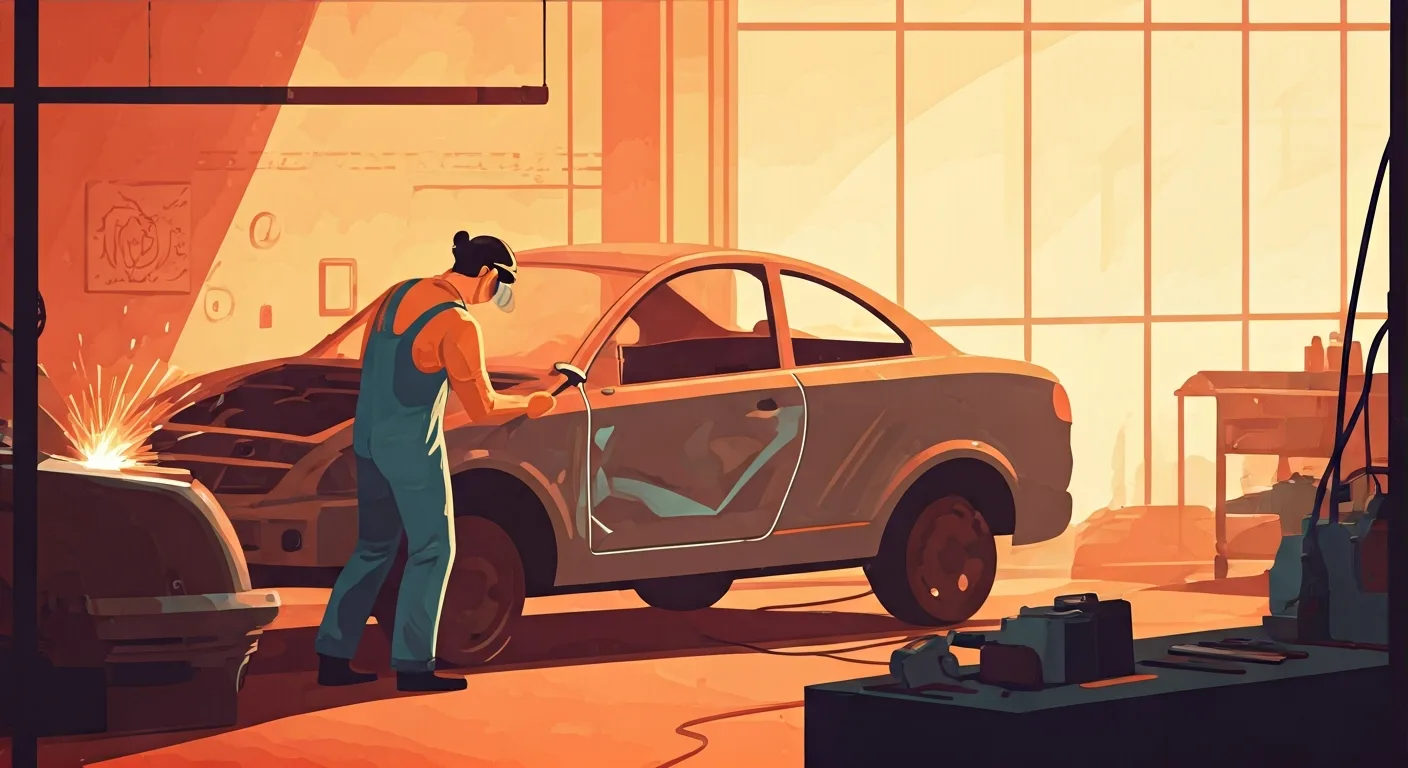
Panelbeaters are skilled automotive technicians who specialize in repairing and restoring damaged vehicle bodywork. This involves assessing damage, performing precise metalwork such as straightening, reshaping, or replacing panels, and preparing surfaces for painting. They utilize a range of hand tools, power tools, and specialized equipment like frame-straightening machines, welding apparatus, and body fillers to return vehicles to their original structural integrity and aesthetic condition.
Ensures vehicle safety and structural integrity after collisions, restores aesthetic appeal, and extends the lifespan of vehicles, contributing to road safety and owner satisfaction.
On the job
- Inspect damaged vehicles to assess the extent of body, frame, and structural damage.
- Straighten bent frames and chassis using hydraulic frame-straightening equipment.
- Remove damaged panels and components, and install new or repaired parts.
- Repair dents, creases, and other damage to vehicle body panels using hammers, dollies, and body fillers.
- Prepare repaired surfaces for painting by sanding, grinding, and applying primers.
Tools & technology
Average salary
Job outlook
StableDemand is steady. This is an established role with consistent hiring across sectors.
Education & training
Vocational training, apprenticeship, or certificate in automotive body repair is typically required. Many panelbeaters complete a formal apprenticeship program.
AI impact outlook
Note — this is our current view. AI is moving fast, so we revisit these ratings.
Show how this was assessed Hide the detail
Note — this is our current view. AI is moving fast, so we revisit these ratings.
Show how this was assessed Hide the detailWhy this role received this rating
Core task exposure
moderate
How much of the role’s important work could AI perform?
AI vision systems can assist with detailed damage assessment and precise measurement, while robotic welding and grinding can perform repetitive tasks.
End-to-end automation
low
Can AI complete the work without substantial human involvement?
The high variability of vehicle damage, the need for skilled manual reshaping, and the safety-critical nature of structural repairs limit full automation.
Adoption pressure
high
How likely are employers to introduce AI into this work?
The automotive repair industry seeks efficiency and precision, making AI for damage assessment and robotic assistance for certain tasks highly desirable.
Human dependence
strong
How much does success depend on human judgement, relationships and accountability?
Success depends on critical judgment for structural integrity, skilled manual dexterity for complex metalwork, client communication, and accountability for vehicle safety.
Protective — a higher rating lowers the overall score.
Role adaptability
strong
How easily can the role evolve as AI takes on more tasks?
The role constantly adapts to new vehicle designs, materials (e.g., aluminum, composites), advanced repair techniques, and digital diagnostic tools.
Shown for context — not part of the score.
What AI may take on
These are the parts of the role most likely to be automated or significantly accelerated.
- Perform detailed damage assessment using AI vision and laser scanning
- Suggest optimal repair methods based on damage severity
- Guide robotic welders for precise spot welds
- Generate precise measurements for frame straightening
Where people remain essential
These parts continue to depend heavily on human judgement, relationships and accountability.
- Complex metal reshaping using hammers and dollies
- Expert welding for critical structural repairs
- Replacing and fitting new body panels with precision
- Preparing repaired surfaces for painting through sanding and filling
- Ensuring the structural integrity and safety of the vehicle
- Communicating repair progress and costs to customers
- Adapting repair strategies for unique or unforeseen damage
How the role may evolve
Leveraging digital diagnostics for repair oversight, reducing manual damage assessment.
Panelbeaters will increasingly use AI-driven diagnostics for damage assessment, allowing them to focus their expert manual skills on complex metalwork and ensuring structural integrity.
Strengthen your future fit
- Proficiency with advanced digital diagnostic and measurement systems
- Expertise in welding various modern vehicle materials (e.g., aluminum)
- Deep understanding of vehicle structural integrity and safety standards
- Advanced manual dexterity for complex metal shaping
- Strong problem-solving for unique repair challenges
- Assessment horizon
- 3–7 years
- Confidence
- High
- Last reviewed
- August 2026
- Methodology
- v1.0
This assessment reflects current AI capabilities and expected adoption patterns. Actual impacts will vary by industry, employer and the way each role is performed.
Career pathways
WHERE YOU COULD GO
CURRENT ROLE
Panelbeater
Skilled Trades
ADJACENT MOVES
STARTING POINTS
Who thrives here
Interest profile
realistic · RCI
Individuals who enjoy hands-on work, solving practical problems, and working with tools and machinery to achieve precise, tangible results often find satisfaction in this role.
Personality characteristics
Detail-oriented
Pays close attention to small imperfections and ensures all repairs meet high standards.
Practical problem-solver
Enjoys diagnosing vehicle damage and figuring out the most effective repair solutions.
Steady under pressure
Remains calm and focused when dealing with complex repairs or tight deadlines.
Team player
Works effectively with other technicians, painters, and service advisors.
Methodical
Follows established procedures and safety protocols for consistent, high-quality results.
Best for
- Individuals who enjoy mechanical work, solving tangible problems, and seeing the direct results of their labor.
- People who thrive in a structured workshop environment and value precision and craftsmanship.
Watch out for
- The work involves physical demands, exposure to noise, chemicals, and sometimes uncomfortable positions.
- Repetitive tasks and adherence to strict repair guidelines may not suit those seeking highly creative or unstructured roles.
A week in the life
A representative working week for a Panelbeater — where the deep work, meetings, and admin actually land.
Real people. Real results.
Thousands of people
can't be wrong.




Frequently asked questions about Panelbeater roles
What does a Panelbeater do?
A Panelbeater panelbeaters are skilled automotive technicians who specialize in repairing and restoring damaged vehicle bodywork. This involves assessing damage, performing precise metalwork such as straightening, reshaping, or replacing panels, and preparing surfaces for painting. They utilize a range of hand tools, power tools, and specialized equipment like frame-straightening machines, welding apparatus, and body fillers to return vehicles to their original structural integrity and aesthetic condition. Ensures vehicle safety and structural integrity after collisions, restores aesthetic appeal, and extends the lifespan of vehicles, contributing to road safety and owner satisfaction.
How much does a Panelbeater earn?
A Panelbeater earns a median of $55,000 per year in the US, typically ranging from $40,000 to $75,000.
What qualifications do you need to become a Panelbeater?
To become a Panelbeater, vocational training, apprenticeship, or certificate in automotive body repair is typically required. Many panelbeaters complete a formal apprenticeship program. ASE Certification (B3, B4, B5).
What personality suits a Panelbeater?
Panelbeater roles tend to suit people who are highly conscientious — precise, organised and strong on follow-through (Conscientiousness 75/100) and steady under pressure — deadlines and setbacks do not rattle them easily (Emotional Stability 70/100). The traits that matter most in the role are Detail-oriented, Practical problem-solver, Steady under pressure and Team player. Pays close attention to small imperfections and ensures all repairs meet high standards. On interests, Panelbeater maps to a RCI Holland Code profile — individuals who enjoy hands-on work, solving practical problems, and working with tools and machinery to achieve precise, tangible results often find satisfaction in this role.
Who does a Panelbeater role suit?
A Panelbeater role is usually a strong fit for these reasons. Strong Realistic affinity: the role is highly hands-on, involving tools, machinery, and tangible outcomes. High Conscientiousness is rewarded through the need for precision, accuracy, and adherence to repair standards. A significant portion of the week involves deep work focused on intricate repair tasks.
What are the downsides of being a Panelbeater?
Panelbeater roles come with trade-offs worth weighing up. The work involves physical demands, exposure to noise, chemicals, and sometimes uncomfortable positions. Repetitive tasks and adherence to strict repair guidelines may not suit those seeking highly creative or unstructured roles.
What is the work environment like for a Panelbeater?
Work as a Panelbeater is mostly workshop-based with onsite arrangements common, semi-structured — a mix of set processes and self-directed work, a moderate pace and medium exposure to clients or stakeholders. Around 73% of the week is focused deep work.
What skills do you need to be a Panelbeater?
Core skills for a Panelbeater include Metal fabrication, Welding techniques, Damage assessment, Surface preparation and Precision measurement.
How do you become a Panelbeater?
Common entry routes into Panelbeater roles include Automotive Apprentice, Auto Body Trainee and Entry Level Collision Repair Technician.
What career progression is there for a Panelbeater?
From a Panelbeater role, common next steps include Senior Panelbeater and Body Shop Manager; lateral moves include Automotive Appraiser.
What is the job outlook for Panelbeater roles?
The outlook for Panelbeater roles is currently rated stable. Demand is steady. This is an established role with consistent hiring across sectors.
Will AI replace Panelbeater roles?
Traitstack rates automation risk for Panelbeater roles at 38 out of 100, which is low. AI can provide advanced damage assessment and robotic assistance for some tasks, but structural repair, intricate metalwork, and accountability for vehicle safety remain human-centric. AI is most likely to take on perform detailed damage assessment using ai vision and laser scanning, suggest optimal repair methods based on damage severity and guide robotic welders for precise spot welds. Complex metal reshaping using hammers and dollies, expert welding for critical structural repairs and replacing and fitting new body panels with precision stay with people. Leveraging digital diagnostics for repair oversight, reducing manual damage assessment. That score measures how much of the work could change, not the likelihood the job disappears. It is Traitstack's current view, revisited as AI capability moves.