Paleontologist
SOC 19-2042.00 · ESCO 2114 · OSCA 234531
Role snapshot
Overview
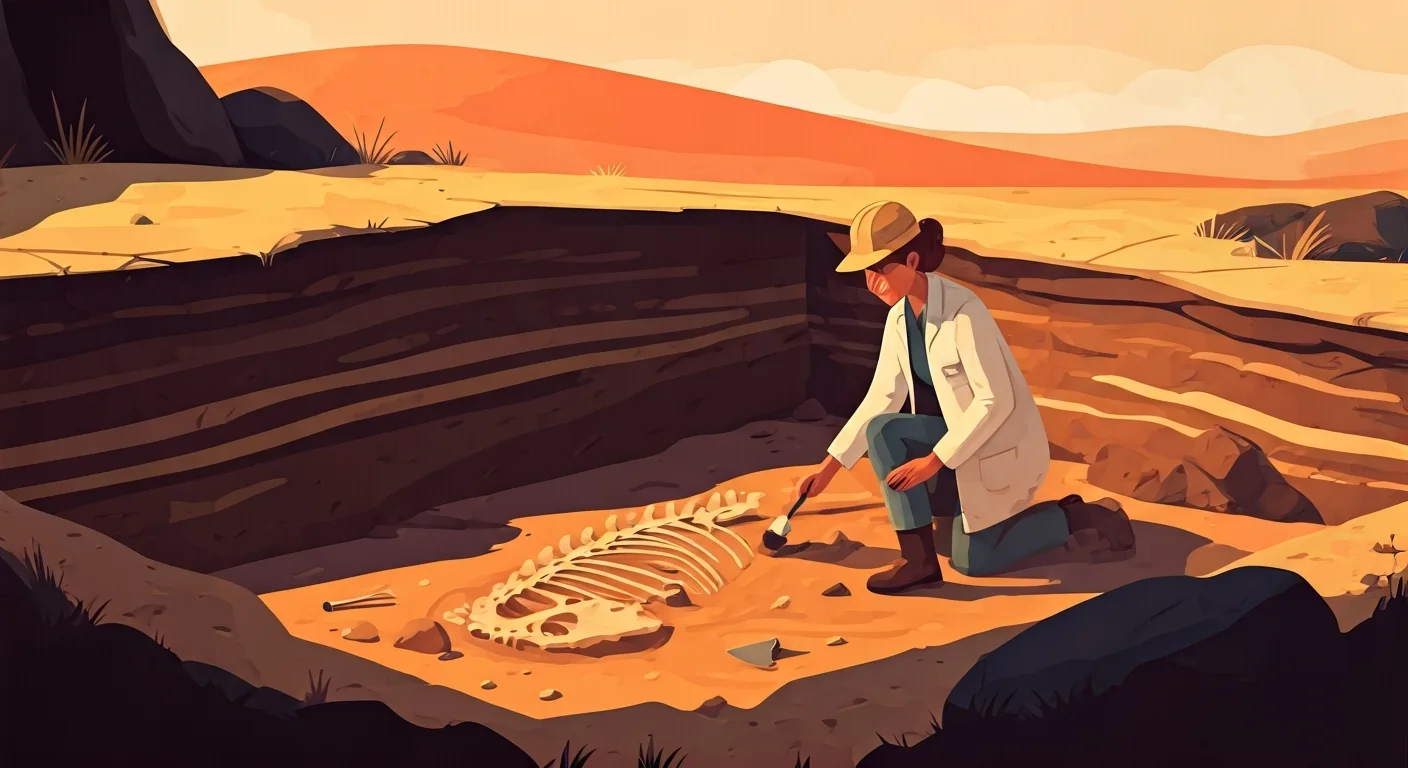
A Paleontologist excavates and studies fossilised remains to reconstruct the history of life on Earth, working both in the field and in laboratories. This role involves conducting original scientific research, publishing findings in peer-reviewed journals, curating fossil collections, and often teaching at universities or engaging in public outreach.
Contributes to humanity's understanding of Earth's deep history, evolution, ancient ecosystems, and informs contemporary climate and biodiversity challenges.
On the job
- Plan and lead fossil excavation expeditions in diverse geological settings.
- Analyze fossil specimens using various scientific techniques in a laboratory.
- Conduct independent research, develop hypotheses, and interpret data to reconstruct past life forms and environments.
- Write and publish research papers in scientific journals and present findings at conferences.
- Curate and manage fossil collections, ensuring proper preservation and documentation.
Tools & technology
Average salary
Job outlook
StableDemand is steady. This is an established role with consistent hiring across sectors.
Education & training
A Ph.D. in Paleontology, Geology, Evolutionary Biology, or a related field is typically required for research and academic positions.
AI impact outlook
Note — this is our current view. AI is moving fast, so we revisit these ratings.
Show how this was assessed Hide the detail
Note — this is our current view. AI is moving fast, so we revisit these ratings.
Show how this was assessed Hide the detailWhy this role received this rating
Core task exposure
moderate
How much of the role’s important work could AI perform?
Lab analysis of specimens (e.g., CT scans), statistical data interpretation, and paper drafting are highly exposed to AI, but fieldwork and initial fossil preparation are less so.
End-to-end automation
low
Can AI complete the work without substantial human involvement?
AI can assist significantly with data interpretation and research paper drafting, but the unique physical challenges of fieldwork and the nuanced interpretation of fossil records require human expertise.
Adoption pressure
high
How likely are employers to introduce AI into this work?
There's moderate pressure for AI adoption to enhance data analysis, image processing of fossils, and accelerate research paper generation, improving efficiency in academic work.
Human dependence
strong
How much does success depend on human judgement, relationships and accountability?
Success in this role relies heavily on human judgment for interpreting sparse fossil evidence, formulating complex hypotheses about past life, and leading physically demanding fieldwork.
Protective — a higher rating lowers the overall score.
Role adaptability
strong
How easily can the role evolve as AI takes on more tasks?
The role can adapt by focusing more on advanced analytical techniques, interdisciplinary synthesis, and public communication, leveraging AI for data processing and initial drafting.
Shown for context — not part of the score.
What AI may take on
These are the parts of the role most likely to be automated or significantly accelerated.
- Analyze CT scans and microscopic images of fossils for morphological details
- Process large datasets from fossil sites for statistical analysis
- Draft sections of research papers and literature reviews
- Reconstruct past environments and climate from geological data
- Identify patterns in fossil distribution and evolutionary trends
- Automate documentation and cataloging of fossil collections
Where people remain essential
These parts continue to depend heavily on human judgement, relationships and accountability.
- Planning and leading fossil excavation expeditions in diverse terrains
- Physically excavating, preparing, and curating fossil specimens
- Interpreting fragmentary fossil evidence to reconstruct past life forms
- Developing novel hypotheses about evolutionary history and paleoenvironments
- Securing research funding and managing field logistics
- Communicating scientific findings to academic and public audiences
How the role may evolve
From routine analysis to complex fieldwork and interpretive synthesis.
As AI handles more data processing and initial drafting, paleontologists will shift towards more intensive fieldwork, advanced interpretive analysis of fossil records, and compelling communication of scientific narratives.
Strengthen your future fit
- Advanced GIS and data analysis skills for geological contexts
- Expertise in scientific writing and communication
- Critical thinking for interpreting AI-generated insights
- Fieldwork and expedition planning expertise
- Interdisciplinary knowledge of geology, biology, and climate science
- Assessment horizon
- 3–7 years
- Confidence
- High
- Last reviewed
- August 2026
- Methodology
- v1.0
This assessment reflects current AI capabilities and expected adoption patterns. Actual impacts will vary by industry, employer and the way each role is performed.
Career pathways
WHERE YOU COULD GO
CURRENT ROLE
Paleontologist
Research & Academia
ADJACENT MOVES
STARTING POINTS
Who thrives here
Interest profile
investigative · IRC
Individuals who are intellectually curious, enjoy systematic investigation, and are comfortable working independently or in small teams to solve complex puzzles will find this role rewarding.
Personality characteristics
Intellectually curious
Possesses a strong drive to explore new theories, interpret complex data, and uncover the mysteries of ancient life.
Methodical
Approaches research, data collection, and analysis with a systematic and organized mindset, ensuring accuracy and reliability.
Resilient
Handles the challenges of field work, long research cycles, and potential setbacks without losing motivation.
Collaborative
Works effectively with field teams, co-authors, and academic colleagues to achieve shared research goals.
Reserved
Prefers deep, focused work and intellectual pursuits over constant social interaction, thriving in environments that allow for independent study.
Best for
- Individuals passionate about Earth's history, evolution, and ancient life.
- Those who enjoy meticulous scientific investigation, data analysis, and problem-solving.
- People who thrive in environments that combine field exploration with laboratory analysis and academic pursuit.
Watch out for
- Requires extensive formal education, often including a Ph.D., and academic positions can be highly competitive.
- Field work can be physically demanding and involve remote locations with limited amenities.
- Long research cycles mean results and recognition may take years.
A week in the life
A representative working week for a Paleontologist — where the deep work, meetings, and admin actually land.
Real people. Real results.
Thousands of people
can't be wrong.



Frequently asked questions about Paleontologist roles
What does a Paleontologist do?
A Paleontologist a Paleontologist excavates and studies fossilised remains to reconstruct the history of life on Earth, working both in the field and in laboratories. This role involves conducting original scientific research, publishing findings in peer-reviewed journals, curating fossil collections, and often teaching at universities or engaging in public outreach. Contributes to humanity's understanding of Earth's deep history, evolution, ancient ecosystems, and informs contemporary climate and biodiversity challenges.
How much does a Paleontologist earn?
A Paleontologist earns a median of $85,000 per year in the US, typically ranging from $65,000 to $120,000.
What qualifications do you need to become a Paleontologist?
To become a Paleontologist, a Ph.D. in Paleontology, Geology, Evolutionary Biology, or a related field is typically required for research and academic positions.
What personality suits a Paleontologist?
Paleontologist roles tend to suit people who are open and curious — drawn to variety, ideas and new approaches (Openness 92/100) and highly conscientious — precise, organised and strong on follow-through (Conscientiousness 78/100). The traits that matter most in the role are Intellectually curious, Methodical, Resilient and Collaborative. Possesses a strong drive to explore new theories, interpret complex data, and uncover the mysteries of ancient life. On interests, Paleontologist maps to an IRC Holland Code profile — individuals who are intellectually curious, enjoy systematic investigation, and are comfortable working independently or in small teams to solve complex puzzles will find this role rewarding.
Who does a Paleontologist role suit?
A Paleontologist role is usually a strong fit for these reasons. Strong Investigative and Realistic interests, aligning with the scientific inquiry and hands-on nature of the work. High openness to experience, essential for exploring new theories and interpreting complex geological and biological data. The role offers significant autonomy and opportunities for deep, focused research.
What are the downsides of being a Paleontologist?
Paleontologist roles come with trade-offs worth weighing up. Requires extensive formal education, often including a Ph.D., and academic positions can be highly competitive. Field work can be physically demanding and involve remote locations with limited amenities. Long research cycles mean results and recognition may take years.
What is the work environment like for a Paleontologist?
Work as a Paleontologist is mostly mixed-based with hybrid arrangements common, largely self-directed, with little imposed structure, a moderate pace and medium exposure to clients or stakeholders. Around 75% of the week is focused deep work.
What skills do you need to be a Paleontologist?
Core skills for a Paleontologist include Fossil identification, Field excavation techniques, Comparative anatomy, Taphonomy, Scientific writing and Data analysis.
How do you become a Paleontologist?
Common entry routes into Paleontologist roles include Postdoctoral Researcher, Research Assistant and Geologist.
What career progression is there for a Paleontologist?
From a Paleontologist role, common next steps include Senior Paleontologist / Lead Researcher and University Professor (Paleontology); lateral moves include Museum Curator (Paleontology).
What is the job outlook for Paleontologist roles?
The outlook for Paleontologist roles is currently rated stable. Demand is steady. This is an established role with consistent hiring across sectors.
Will AI replace Paleontologist roles?
Traitstack rates automation risk for Paleontologist roles at 50 out of 100, which is moderate. AI can accelerate fossil analysis and research paper drafting, allowing paleontologists to focus on leading complex fieldwork, interpreting sparse evidence, and reconstructing ancient ecosystems. AI is most likely to take on analyze ct scans and microscopic images of fossils for morphological details, process large datasets from fossil sites for statistical analysis and draft sections of research papers and literature reviews. Planning and leading fossil excavation expeditions in diverse terrains, physically excavating, preparing, and curating fossil specimens and interpreting fragmentary fossil evidence to reconstruct past life forms stay with people. From routine analysis to complex fieldwork and interpretive synthesis. That score measures how much of the work could change, not the likelihood the job disappears. It is Traitstack's current view, revisited as AI capability moves.