Mining Engineer (excluding Petroleum)
SOC 17-2151.00 · ESCO 2146 · OSCA 243631
Role snapshot
Overview
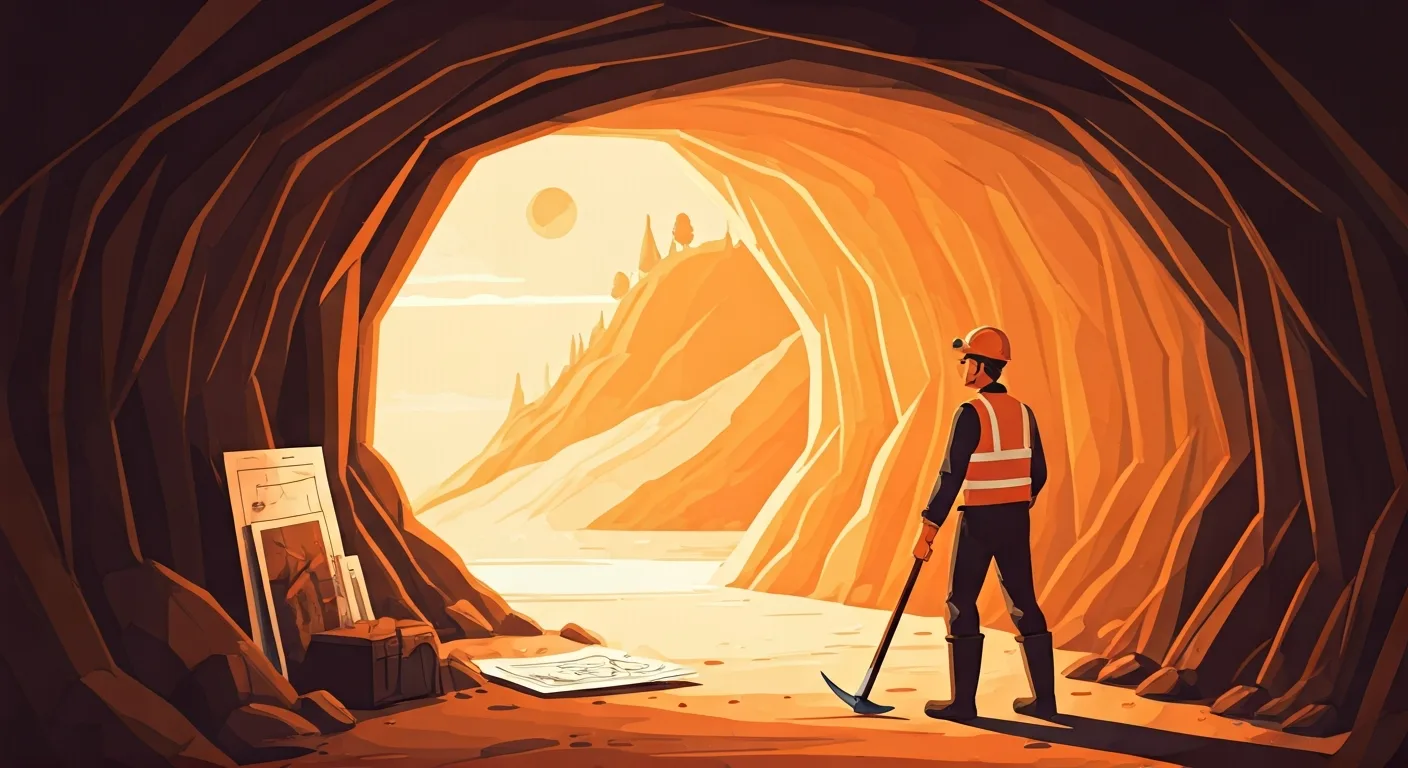
Plans and manages the extraction of minerals and ores from underground or open-pit mines. This includes designing mine layouts, selecting efficient extraction methods, and continuously monitoring critical factors like safety, ventilation systems, ground stability, and environmental compliance throughout the mining operations. They work to optimize resource recovery while adhering to strict regulatory standards.
Ensures the safe, efficient, and environmentally responsible extraction of valuable mineral resources, contributing to essential industries while managing complex geological and operational challenges.
On the job
- Design and optimize mine plans, including pit layouts, tunnels, and extraction sequences.
- Select and implement appropriate mining methods, equipment, and technologies.
- Monitor and ensure compliance with safety, health, and environmental regulations.
- Analyze geological data and geotechnical conditions to assess ground stability and risk.
- Manage project budgets, schedules, and resources for mining operations.
Tools & technology
Average salary
Job outlook
StableDemand is steady. This is an established role with consistent hiring across sectors.
Education & training
A bachelor's degree in mining engineering, geological engineering, or a related field is typically required. Professional Engineer (PE) licensure is often sought for higher-level positions.
AI impact outlook
Note — this is our current view. AI is moving fast, so we revisit these ratings.
Show how this was assessed Hide the detail
Note — this is our current view. AI is moving fast, so we revisit these ratings.
Show how this was assessed Hide the detailWhy this role received this rating
Core task exposure
high
How much of the role’s important work could AI perform?
AI is highly capable of optimizing mine designs, analyzing geological data for stability, and suggesting efficient extraction methods.
End-to-end automation
moderate
Can AI complete the work without substantial human involvement?
The full scope of mine management, including critical safety oversight, regulatory compliance, and unforeseen operational challenges, necessitates human judgment and accountability.
Adoption pressure
high
How likely are employers to introduce AI into this work?
The mining industry's high capital investment and strict safety regulations create strong incentives for adopting AI to enhance efficiency, safety, and resource optimization.
Human dependence
strong
How much does success depend on human judgement, relationships and accountability?
Success is critically dependent on human judgment for safety protocols, environmental compliance, strategic decision-making in complex operations, and managing large-scale projects.
Protective — a higher rating lowers the overall score.
Role adaptability
strong
How easily can the role evolve as AI takes on more tasks?
Mining engineers are accustomed to integrating new technologies and methodologies to address evolving geological conditions, economic demands, and regulatory requirements.
Shown for context — not part of the score.
What AI may take on
These are the parts of the role most likely to be automated or significantly accelerated.
- Optimizing complex mine plans and extraction sequences
- Analyzing geological and geotechnical data for ground stability
- Recommending appropriate mining methods and equipment based on data
- Monitoring operational parameters and flagging safety/environmental anomalies
- Generating initial drafts of project budgets and schedules
- Simulating different mine design scenarios
Where people remain essential
These parts continue to depend heavily on human judgement, relationships and accountability.
- Ensuring ultimate accountability for mine safety and environmental compliance
- Making strategic decisions on mine development and resource allocation
- Managing and leading diverse teams in challenging operational environments
- Adapting to unforeseen geological conditions or operational disruptions
- Negotiating with regulators and stakeholders
- Overseeing the implementation of complex mining technologies
How the role may evolve
Less time on iterative design, more on ensuring safe, compliant, and profitable operations.
AI will automate much of the analytical and design optimization work, enabling mining engineers to focus on higher-level strategic planning, ensuring safety and compliance, and adapting to dynamic operational challenges.
Strengthen your future fit
- Expertise in validating and leveraging AI-driven optimization tools
- Strong leadership and project management capabilities
- Deep understanding of safety regulations and environmental stewardship
- Critical thinking for complex problem-solving in dynamic environments
- Effective communication with technical teams, management, and regulators
- Assessment horizon
- 3–7 years
- Confidence
- High
- Last reviewed
- August 2026
- Methodology
- v1.0
This assessment reflects current AI capabilities and expected adoption patterns. Actual impacts will vary by industry, employer and the way each role is performed.
Career pathways
WHERE YOU COULD GO
CURRENT ROLE
Mining Engineer (excluding Petroleum)
Mining & Resources
ADJACENT MOVES
STARTING POINTS
Who thrives here
Interest profile
realistic · RIC
People who enjoy working with machinery and geological environments, solving complex technical problems through analysis, and adhering to strict regulations and procedures tend to thrive in this role.
Personality characteristics
Conscientious
Exhibits strong attention to detail, adheres strictly to safety protocols, and meticulously plans operations.
Analytical
Enjoys investigating complex geological data and technical problems to find effective solutions.
Composed
Remains calm and effective under pressure, especially when dealing with unexpected site conditions or emergencies.
Practical
Prefers hands-on work, dealing with tangible systems, and seeing projects from design to implementation in a physical environment.
Structured
Values clear procedures, compliance with regulations, and systematic approaches to work.
Best for
- Individuals who thrive on technical challenges, enjoy a mix of office-based design and field-based oversight.
- Professionals who are highly responsible, detail-oriented, and committed to safety and efficiency.
- Those who appreciate contributing to foundational industries and managing large-scale engineering projects.
Watch out for
- The job involves frequent site visits and potential exposure to challenging environmental conditions.
- Adherence to strict regulations and safety protocols means less room for creative deviation.
- Occasional weekend work may be required due to operational needs or project deadlines.
A week in the life
A representative working week for a Mining Engineer (excluding Petroleum) — where the deep work, meetings, and admin actually land.
Real people. Real results.
Thousands of people
can't be wrong.





Frequently asked questions about Mining Engineer (excluding Petroleum) roles
What does a Mining Engineer (excluding Petroleum) do?
A Mining Engineer (excluding Petroleum) plans and manages the extraction of minerals and ores from underground or open-pit mines. This includes designing mine layouts, selecting efficient extraction methods, and continuously monitoring critical factors like safety, ventilation systems, ground stability, and environmental compliance throughout the mining operations. They work to optimize resource recovery while adhering to strict regulatory standards. Ensures the safe, efficient, and environmentally responsible extraction of valuable mineral resources, contributing to essential industries while managing complex geological and operational challenges.
How much does a Mining Engineer (excluding Petroleum) earn?
A Mining Engineer (excluding Petroleum) earns a median of $115,000 per year in the US, typically ranging from $85,000 to $160,000.
What qualifications do you need to become a Mining Engineer (excluding Petroleum)?
To become a Mining Engineer (excluding Petroleum), a bachelor's degree in mining engineering, geological engineering, or a related field is typically required. Professional Engineer (PE) licensure is often sought for higher-level positions. Professional Engineer (PE) license may be required for senior positions or to stamp engineering drawings, varying by state and specific role.
What personality suits a Mining Engineer (excluding Petroleum)?
Mining Engineer (excluding Petroleum) roles tend to suit people who are highly conscientious — precise, organised and strong on follow-through (Conscientiousness 78/100) and steady under pressure — deadlines and setbacks do not rattle them easily (Emotional Stability 72/100). The traits that matter most in the role are Conscientious, Analytical, Composed and Practical. Exhibits strong attention to detail, adheres strictly to safety protocols, and meticulously plans operations. On interests, Mining Engineer (excluding Petroleum) maps to a RIC Holland Code profile — people who enjoy working with machinery and geological environments, solving complex technical problems through analysis, and adhering to strict regulations and procedures tend to thrive in this role.
Who does a Mining Engineer (excluding Petroleum) role suit?
A Mining Engineer (excluding Petroleum) role is usually a strong fit for these reasons. A significant portion of the week involves realistic and investigative tasks, aligning with the RIC RIASEC profile. The role demands high conscientiousness and low neuroticism, critical for safety and precise planning. There's ample opportunity for problem-solving, technical analysis, and working with complex systems in a physical environment.
What are the downsides of being a Mining Engineer (excluding Petroleum)?
Mining Engineer (excluding Petroleum) roles come with trade-offs worth weighing up. The job involves frequent site visits and potential exposure to challenging environmental conditions. Adherence to strict regulations and safety protocols means less room for creative deviation. Occasional weekend work may be required due to operational needs or project deadlines.
What is the work environment like for a Mining Engineer (excluding Petroleum)?
Work as a Mining Engineer (excluding Petroleum) is mostly mixed-based with hybrid arrangements common, semi-structured — a mix of set processes and self-directed work, a moderate pace and high exposure to clients or stakeholders. Around 45% of the week is focused deep work.
What skills do you need to be a Mining Engineer (excluding Petroleum)?
Core skills for a Mining Engineer (excluding Petroleum) include Mine design and planning, Geotechnical analysis, Safety management, Resource estimation, Environmental compliance and Project management.
How do you become a Mining Engineer (excluding Petroleum)?
Common entry routes into Mining Engineer (excluding Petroleum) roles include Junior Mining Engineer, Graduate Mining Engineer and Mining Technician.
What career progression is there for a Mining Engineer (excluding Petroleum)?
From a Mining Engineer (excluding Petroleum) role, common next steps include Senior Mining Engineer and Mine Manager; lateral moves include Geological Engineer and Metallurgical Engineer.
What is the job outlook for Mining Engineer (excluding Petroleum) roles?
The outlook for Mining Engineer (excluding Petroleum) roles is currently rated stable. Demand is steady. This is an established role with consistent hiring across sectors.
Will AI replace Mining Engineer (excluding Petroleum) roles?
Traitstack rates automation risk for Mining Engineer (excluding Petroleum) roles at 62 out of 100, which is strong. While AI optimizes mine designs and operational analysis, human engineers will remain essential for ensuring safety, regulatory compliance, and making high-stakes strategic decisions in complex mining environments. AI is most likely to take on optimizing complex mine plans and extraction sequences, analyzing geological and geotechnical data for ground stability and recommending appropriate mining methods and equipment based on data. Ensuring ultimate accountability for mine safety and environmental compliance, making strategic decisions on mine development and resource allocation and managing and leading diverse teams in challenging operational environments stay with people. Less time on iterative design, more on ensuring safe, compliant, and profitable operations. That score measures how much of the work could change, not the likelihood the job disappears. It is Traitstack's current view, revisited as AI capability moves.