Medical Physicist
SOC 19-2012.00 · ESCO 2111 · OSCA 244732
Role snapshot
Overview
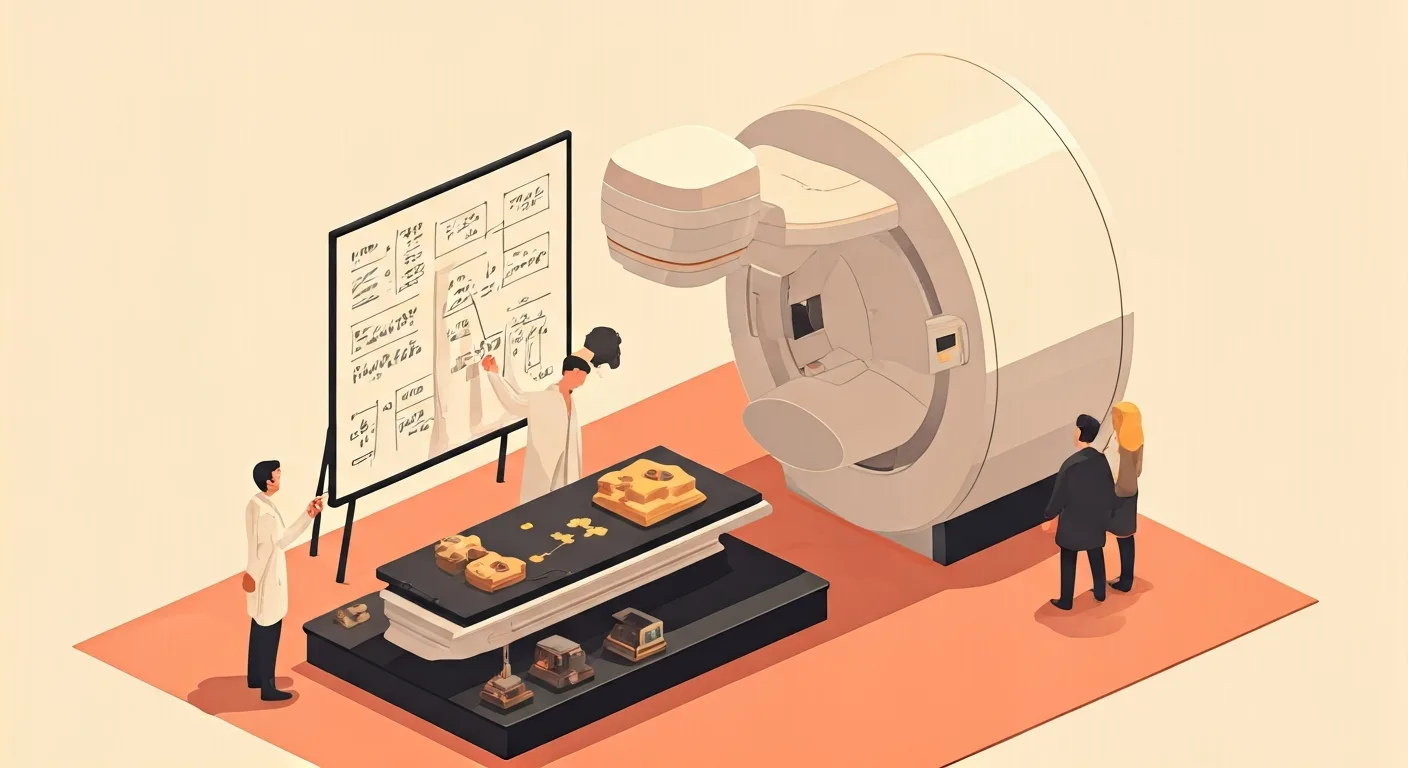
Medical Physicists are highly specialized professionals who ensure that radiation-based medical equipment such as CT scanners, MRI machines, and linear accelerators delivers accurate, safe, and effective doses to patients. They are critical in the design, implementation, and oversight of radiation therapy and diagnostic imaging procedures, calibrating machines, developing patient-specific treatment plans, and advising clinical teams on radiation safety, quality assurance, and regulatory compliance. Their work blends advanced scientific principles with direct patient care support.
Directly contributes to patient safety and treatment efficacy in radiation therapy and diagnostic imaging, ensuring cutting-edge technology is applied precisely and responsibly for optimal health outcomes.
On the job
- Perform calibration and quality assurance tests on radiation therapy and diagnostic imaging equipment.
- Develop and review patient-specific radiation treatment plans in collaboration with radiation oncologists.
- Advise clinical staff on radiation safety protocols, equipment operation, and regulatory compliance.
- Conduct research and implement new technologies and techniques in medical physics.
- Participate in machine commissioning, acceptance testing, and shielding design for new facilities.
Tools & technology
Average salary
Job outlook
GrowingJob growth is expected to be above average over the next five years.
Education & training
Typically requires a Ph.D. in medical physics, physics, or a related engineering field, followed by a residency program and board certification.
AI impact outlook
Note — this is our current view. AI is moving fast, so we revisit these ratings.
Show how this was assessed Hide the detail
Note — this is our current view. AI is moving fast, so we revisit these ratings.
Show how this was assessed Hide the detailWhy this role received this rating
Core task exposure
high
How much of the role’s important work could AI perform?
AI is highly capable of optimizing dose distributions, contouring anatomical structures, and performing automated quality assurance analyses.
End-to-end automation
moderate
Can AI complete the work without substantial human involvement?
While AI can generate treatment plans and analyze dosimetry data, the final review, patient-specific adaptation, and clinical sign-off require human expertise and accountability.
Adoption pressure
high
How likely are employers to introduce AI into this work?
Employer adoption of AI for treatment planning optimization and automated QA is already high, driven by efficiency and accuracy gains, despite safety and regulatory hurdles.
Human dependence
strong
How much does success depend on human judgement, relationships and accountability?
Patient safety, ethical considerations, and the need for expert judgment in complex treatment planning and equipment troubleshooting depend critically on human input.
Protective — a higher rating lowers the overall score.
Role adaptability
strong
How easily can the role evolve as AI takes on more tasks?
This role is inherently adaptable, constantly integrating new technologies, conducting research, and pushing the boundaries of medical imaging and radiation therapy.
Shown for context — not part of the score.
What AI may take on
These are the parts of the role most likely to be automated or significantly accelerated.
- Optimizing radiation dose distributions for treatment plans
- Auto-contouring target volumes and organs-at-risk from imaging data
- Performing automated quality assurance tests on equipment
- Predicting equipment maintenance needs through data analysis
- Analyzing vast datasets for treatment outcomes and patterns
Where people remain essential
These parts continue to depend heavily on human judgement, relationships and accountability.
- Reviewing and adapting patient-specific treatment plans
- Advising clinical staff on complex radiation safety protocols
- Troubleshooting novel equipment issues requiring deep expertise
- Leading research and developing new treatment techniques
- Ensuring regulatory compliance and ethical standards in practice
- Performing hands-on commissioning and acceptance testing of new facilities
How the role may evolve
More time for patient-specific adaptation. Less time on routine plan generation.
The role will evolve to spend less time on routine plan generation, enabling more focus on complex patient cases, research into new technologies, and direct clinical consultation.
Strengthen your future fit
- Developing advanced programming and data science skills
- Cultivating strong communication and interdisciplinary collaboration
- Enhancing critical thinking for complex problem-solving
- Staying at the forefront of AI and medical imaging advancements
- Mastering ethical considerations in AI-driven healthcare
- Assessment horizon
- 3–7 years
- Confidence
- High
- Last reviewed
- August 2026
- Methodology
- v1.0
This assessment reflects current AI capabilities and expected adoption patterns. Actual impacts will vary by industry, employer and the way each role is performed.
Career pathways
WHERE YOU COULD GO
CURRENT ROLE
Medical Physicist
Allied Health
ADJACENT MOVES
STARTING POINTS
Who thrives here
Interest profile
investigative · IRC
People who enjoy analytical problem-solving, hands-on work with complex technology, and meticulous adherence to protocols for safety and precision tend to thrive in this role.
Personality characteristics
Analytical
Enjoys investigating complex physical phenomena and applying scientific principles to medical challenges.
Meticulous
Demonstrates extreme attention to detail and precision, essential for patient safety and equipment accuracy.
Calm under pressure
Maintains composure and makes sound decisions in critical situations involving complex machinery and patient care.
Collaborative
Works effectively with radiation oncologists, therapists, and other medical staff to optimize treatment plans.
Practical
Enjoys hands-on work with advanced medical equipment, including calibration and troubleshooting.
Best for
- Individuals with a deep passion for physics and its application in medicine.
- Professionals who thrive on solving complex technical problems with a direct impact on human health.
- Those who are highly detail-oriented, methodical, and committed to safety and accuracy.
Watch out for
- The role demands extreme precision and responsibility, with little room for error.
- Requires continuous learning and adaptation to new technologies and regulatory changes.
A week in the life
A representative working week for a Medical Physicist — where the deep work, meetings, and admin actually land.
Real people. Real results.
Thousands of people
can't be wrong.





Frequently asked questions about Medical Physicist roles
What does a Medical Physicist do?
A Medical Physicist medical Physicists are highly specialized professionals who ensure that radiation-based medical equipment such as CT scanners, MRI machines, and linear accelerators delivers accurate, safe, and effective doses to patients. They are critical in the design, implementation, and oversight of radiation therapy and diagnostic imaging procedures, calibrating machines, developing patient-specific treatment plans, and advising clinical teams on radiation safety, quality assurance, and regulatory compliance. Their work blends advanced scientific principles with direct patient care support. Directly contributes to patient safety and treatment efficacy in radiation therapy and diagnostic imaging, ensuring cutting-edge technology is applied precisely and responsibly for optimal health outcomes.
How much does a Medical Physicist earn?
A Medical Physicist earns a median of $180,000 per year in the US, typically ranging from $120,000 to $250,000.
What qualifications do you need to become a Medical Physicist?
To become a Medical Physicist, typically requires a Ph.D. in medical physics, physics, or a related engineering field, followed by a residency program and board certification. American Board of Radiology (ABR) certification in Therapeutic Medical Physics or Diagnostic Medical Physics.
What personality suits a Medical Physicist?
Medical Physicist roles tend to suit people who are highly conscientious — precise, organised and strong on follow-through (Conscientiousness 88/100) and open and curious — drawn to variety, ideas and new approaches (Openness 72/100). The traits that matter most in the role are Analytical, Meticulous, Calm under pressure and Collaborative. Enjoys investigating complex physical phenomena and applying scientific principles to medical challenges. On interests, Medical Physicist maps to an IRC Holland Code profile — people who enjoy analytical problem-solving, hands-on work with complex technology, and meticulous adherence to protocols for safety and precision tend to thrive in this role.
Who does a Medical Physicist role suit?
A Medical Physicist role is usually a strong fit for these reasons. High Investigative (I) score aligns with the role's focus on research, analysis, and problem-solving. Strong Realistic (R) affinity is crucial for hands-on work with complex medical equipment and precision tasks. High Conscientiousness (C) is vital for the meticulous attention to detail and safety protocols required.
What are the downsides of being a Medical Physicist?
Medical Physicist roles come with trade-offs worth weighing up. The role demands extreme precision and responsibility, with little room for error. Requires continuous learning and adaptation to new technologies and regulatory changes.
What is the work environment like for a Medical Physicist?
Work as a Medical Physicist is mostly clinical-based with onsite arrangements common, semi-structured — a mix of set processes and self-directed work, a moderate pace and high exposure to clients or stakeholders. Around 55% of the week is focused deep work.
What skills do you need to be a Medical Physicist?
Core skills for a Medical Physicist include Radiation dosimetry, Treatment planning optimization, Medical imaging physics, Radiation safety and protection, Quality assurance and control and Data analysis and interpretation.
How do you become a Medical Physicist?
Common entry routes into Medical Physicist roles include Medical Physics Resident, Postdoctoral Researcher Physics and Dosimetrist.
What career progression is there for a Medical Physicist?
From a Medical Physicist role, common next steps include Chief Medical Physicist; lateral moves include Academic Medical Physicist (Research/Teaching focus) and Radiological Health Physicist.
What is the job outlook for Medical Physicist roles?
The outlook for Medical Physicist roles is currently rated growing. Job growth is expected to be above average over the next five years.
Will AI replace Medical Physicist roles?
Traitstack rates automation risk for Medical Physicist roles at 59 out of 100, which is moderate. Computational tasks such as dose modeling and treatment plan optimization are increasingly AI-assisted, but patient safety accountability and clinical judgment for plan review remain human. AI is most likely to take on optimizing radiation dose distributions for treatment plans, auto-contouring target volumes and organs-at-risk from imaging data and performing automated quality assurance tests on equipment. Reviewing and adapting patient-specific treatment plans, advising clinical staff on complex radiation safety protocols and troubleshooting novel equipment issues requiring deep expertise stay with people. More time for patient-specific adaptation. Less time on routine plan generation. That score measures how much of the work could change, not the likelihood the job disappears. It is Traitstack's current view, revisited as AI capability moves.