Entomologist
SOC 19-1023.00 · ESCO 2131 · OSCA 244633
Role snapshot
Overview
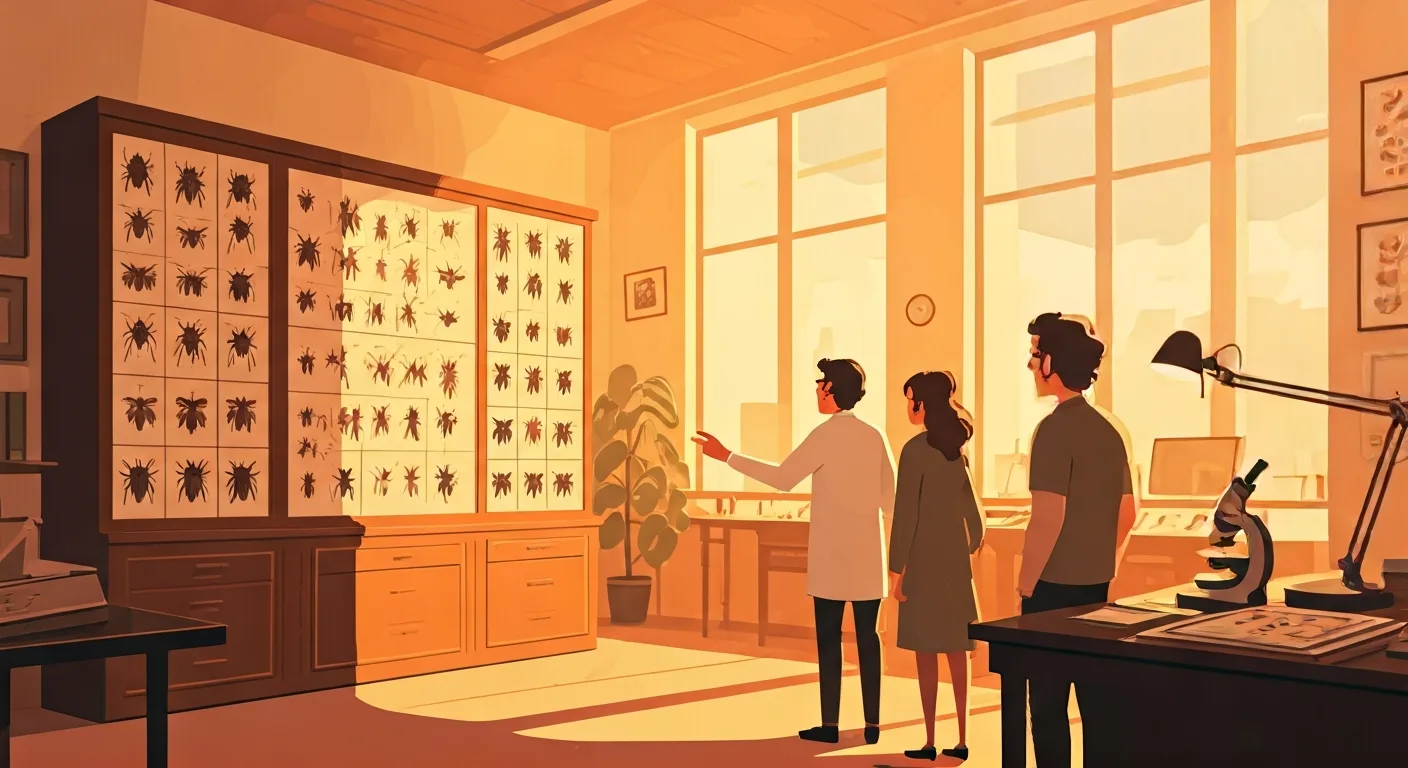
Studies insects and their behaviour, life cycles, and interactions with ecosystems, crops, or human health. Entomologists conduct field research, collect and identify specimens, perform laboratory analyses, and develop strategies for pest management, biodiversity conservation, or disease vector control. They may work in research, agriculture, public health, or education.
Contributes to understanding biodiversity, protecting agricultural crops from pests, preventing insect-borne diseases, and developing sustainable environmental management practices.
On the job
- Conduct field surveys and collect insect samples using various methods.
- Identify insect species using morphological keys, molecular techniques, and microscopic analysis.
- Design and execute scientific experiments to study insect behavior, physiology, or ecology.
- Analyze data, interpret research findings, and prepare scientific reports or publications.
- Develop and implement integrated pest management (IPM) strategies for agriculture or urban environments.
Tools & technology
Average salary
Job outlook
StableDemand is steady. This is an established role with consistent hiring across sectors.
Education & training
Typically requires a Master's or Ph.D. in Entomology, Biology, Zoology, or a related scientific field.
AI impact outlook
Note — this is our current view. AI is moving fast, so we revisit these ratings.
Show how this was assessed Hide the detail
Note — this is our current view. AI is moving fast, so we revisit these ratings.
Show how this was assessed Hide the detailWhy this role received this rating
Core task exposure
high
How much of the role’s important work could AI perform?
Automated species identification (from images/sound), data analysis, and report drafting are significantly exposed to AI.
End-to-end automation
low
Can AI complete the work without substantial human involvement?
Low, as actual fieldwork, hands-on specimen handling, complex experimental execution, and developing novel pest management strategies require human judgment.
Adoption pressure
high
How likely are employers to introduce AI into this work?
Moderate to high, particularly in agriculture and public health, where efficient pest management is critical, driving adoption of AI tools.
Human dependence
strong
How much does success depend on human judgement, relationships and accountability?
High, as success relies on deep biological understanding, nuanced interpretation of insect behavior, and ethical decision-making in pest control strategies.
Protective — a higher rating lowers the overall score.
Role adaptability
strong
How easily can the role evolve as AI takes on more tasks?
Entomology is a science that continually integrates new technologies (genomics, AI for identification) and responds to evolving environmental and pest challenges.
Shown for context — not part of the score.
What AI may take on
These are the parts of the role most likely to be automated or significantly accelerated.
- Automated identification of insect species from images or sounds
- Analyzing large datasets of insect populations and behaviors
- Suggesting optimal experimental designs for insect studies
- Drafting scientific reports on research findings
- Predicting pest outbreaks based on environmental data and models
Where people remain essential
These parts continue to depend heavily on human judgement, relationships and accountability.
- Conducting hands-on fieldwork and collecting samples in diverse environments
- Designing and executing complex laboratory experiments with live specimens
- Interpreting nuanced insect-ecosystem interactions and anomalies
- Developing novel and ethical integrated pest management strategies
- Advising agricultural and public health stakeholders on specific interventions
- Mentoring junior researchers and collaborating on interdisciplinary projects
How the role may evolve
From laborious identification to innovative pest management and biological insights.
Entomologists will increasingly leverage AI for routine identification and data analysis, shifting their focus to complex experimental design, ecological interpretation, and the development of sustainable pest control solutions.
Strengthen your future fit
- Advanced genomics and molecular entomology
- AI-assisted species identification and monitoring
- Integrated pest management (IPM) strategy development
- Science communication for public health/agriculture
- Ethical considerations in insect manipulation
- Assessment horizon
- 3–7 years
- Confidence
- High
- Last reviewed
- August 2026
- Methodology
- v1.0
This assessment reflects current AI capabilities and expected adoption patterns. Actual impacts will vary by industry, employer and the way each role is performed.
Career pathways
WHERE YOU COULD GO
CURRENT ROLE
Entomologist
Research & Academia
ADJACENT MOVES
STARTING POINTS
Who thrives here
Interest profile
investigative · IRC
Individuals who enjoy scientific inquiry, systematic research, working with data and natural specimens, and applying practical solutions to biological problems often find this role rewarding.
Personality characteristics
Curious
Driven by a deep desire to understand the natural world, particularly insect life and its complex interactions.
Meticulous
Applies a systematic and precise approach to data collection, identification, and experimental procedures.
Independent
Comfortable working autonomously for extended periods, whether in the lab or field, focused on research tasks.
Collaborative
Works effectively with research teams, field assistants, and other scientists to achieve project goals.
Resilient
Handles the challenges of scientific research, including inconclusive results or demanding field conditions, with composure.
Best for
- Individuals with a passion for scientific discovery and understanding the natural world, especially insects.
- Those who enjoy a mix of outdoor field work, precise laboratory analysis, and intellectual problem-solving.
- People who are meticulous, patient, and dedicated to contributing to scientific knowledge and practical applications.
Watch out for
- Can involve long hours in the field, sometimes in challenging environmental conditions.
- Requires patience for detailed observation and analysis, which may not suit those seeking fast-paced, high-social interaction roles.
A week in the life
A representative working week for an Entomologist — where the deep work, meetings, and admin actually land.
Real people. Real results.
Thousands of people
can't be wrong.




Frequently asked questions about Entomologist roles
What does an Entomologist do?
An Entomologist studies insects and their behaviour, life cycles, and interactions with ecosystems, crops, or human health. Entomologists conduct field research, collect and identify specimens, perform laboratory analyses, and develop strategies for pest management, biodiversity conservation, or disease vector control. They may work in research, agriculture, public health, or education. Contributes to understanding biodiversity, protecting agricultural crops from pests, preventing insect-borne diseases, and developing sustainable environmental management practices.
How much does an Entomologist earn?
An Entomologist earns a median of $75,000 per year in the US, typically ranging from $55,000 to $110,000.
What qualifications do you need to become an Entomologist?
To become an Entomologist, typically requires a Master's or Ph.D. in Entomology, Biology, Zoology, or a related scientific field.
What personality suits an Entomologist?
Entomologist roles tend to suit people who are open and curious — drawn to variety, ideas and new approaches (Openness 85/100) and highly conscientious — precise, organised and strong on follow-through (Conscientiousness 76/100). The traits that matter most in the role are Curious, Meticulous, Independent and Collaborative. Driven by a deep desire to understand the natural world, particularly insect life and its complex interactions. On interests, Entomologist maps to an IRC Holland Code profile — individuals who enjoy scientific inquiry, systematic research, working with data and natural specimens, and applying practical solutions to biological problems often find this role rewarding.
Who does an Entomologist role suit?
An Entomologist role is usually a strong fit for these reasons. Strong Investigative interest: the role involves extensive scientific research, data analysis, and problem-solving related to insect biology. High Realistic activities: includes significant field work, handling specimens, and operating scientific equipment. Opportunity to contribute to critical areas like agriculture, public health, and environmental conservation.
What are the downsides of being an Entomologist?
Entomologist roles come with trade-offs worth weighing up. Can involve long hours in the field, sometimes in challenging environmental conditions. Requires patience for detailed observation and analysis, which may not suit those seeking fast-paced, high-social interaction roles.
What is the work environment like for an Entomologist?
Work as an Entomologist is mostly mixed-based with hybrid arrangements common, semi-structured — a mix of set processes and self-directed work, a moderate pace and medium exposure to clients or stakeholders. Around 57% of the week is focused deep work.
What skills do you need to be an Entomologist?
Core skills for an Entomologist include Insect identification, Field research methodology, Experimental design, Data analysis, Scientific writing and Pest management.
How do you become an Entomologist?
Common entry routes into Entomologist roles include Research Assistant, Laboratory Technician and Field Biologist.
What career progression is there for an Entomologist?
From an Entomologist role, common next steps include Senior Entomologist, Research Scientist (Ecology) and University Professor (Entomology); lateral moves include Environmental Consultant and Public Health Specialist.
What is the job outlook for Entomologist roles?
The outlook for Entomologist roles is currently rated stable. Demand is steady. This is an established role with consistent hiring across sectors.
Will AI replace Entomologist roles?
Traitstack rates automation risk for Entomologist roles at 54 out of 100, which is moderate. Insect identification and routine data analysis are likely targets for AI automation, allowing entomologists to deepen their focus on experimental design and pest management strategy. AI is most likely to take on automated identification of insect species from images or sounds, analyzing large datasets of insect populations and behaviors and suggesting optimal experimental designs for insect studies. Conducting hands-on fieldwork and collecting samples in diverse environments, designing and executing complex laboratory experiments with live specimens and interpreting nuanced insect-ecosystem interactions and anomalies stay with people. From laborious identification to innovative pest management and biological insights. That score measures how much of the work could change, not the likelihood the job disappears. It is Traitstack's current view, revisited as AI capability moves.