Medical Equipment Repairer
SOC 49-9062.00 · ESCO 7311 · OSCA 342331
Role snapshot
Overview
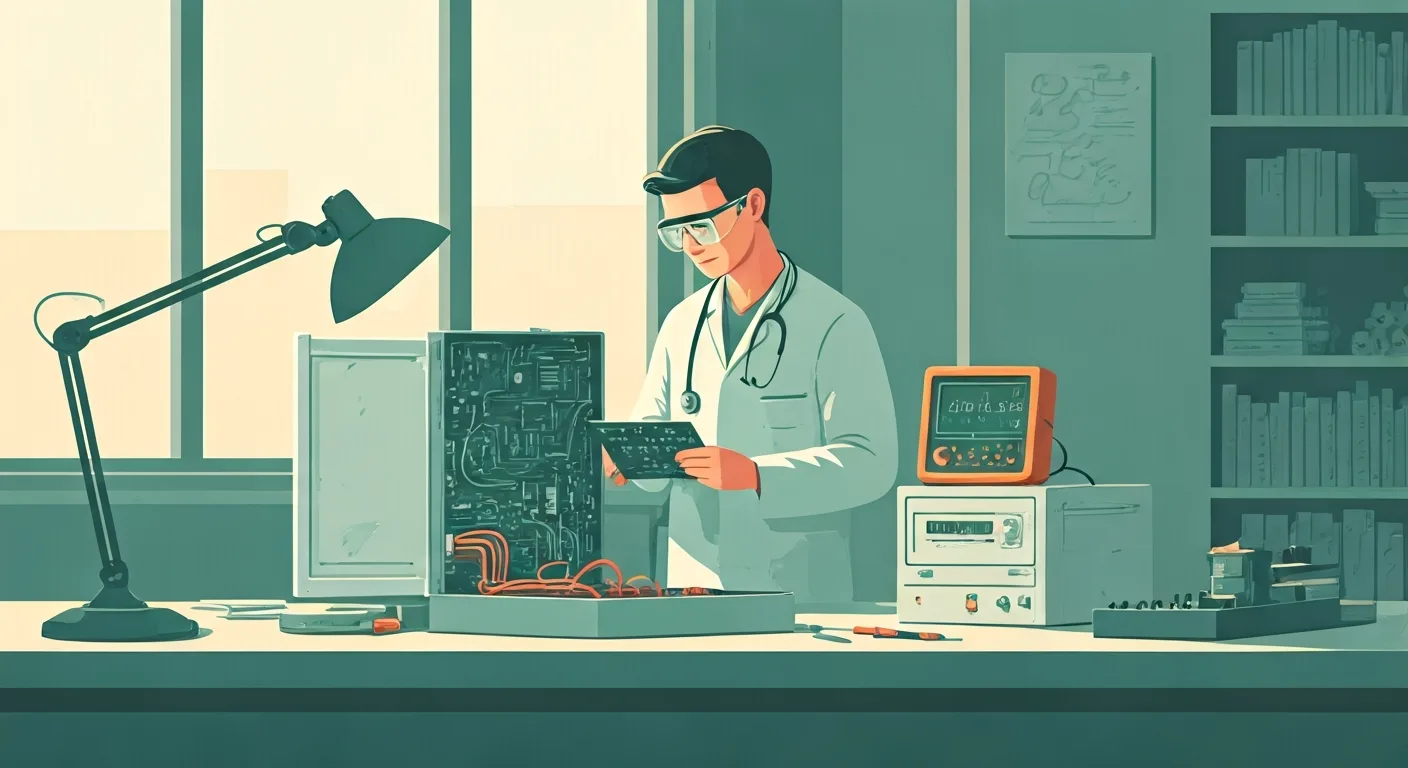
Medical Equipment Repairers inspect, maintain, and fix a wide array of hospital equipment, including complex devices such as ventilators, MRI machines, X-ray equipment, and defibrillators. They troubleshoot electronic and mechanical faults, often under time pressure, to ensure critical medical devices are operational and safe for patient use. This role requires precision, technical expertise, and a deep understanding of medical technology and safety protocols.
Ensures the reliable and safe operation of life-saving medical equipment, directly contributing to patient care and hospital efficiency. Prevents equipment failures that could compromise patient safety or disrupt critical medical procedures.
On the job
- Perform routine inspections, preventive maintenance, and calibration of medical devices.
- Diagnose and repair complex electronic, electrical, and mechanical malfunctions in medical equipment.
- Install, test, and commission new medical equipment, ensuring it meets manufacturer specifications and safety standards.
- Maintain accurate service records, inventory of parts, and compliance documentation.
- Provide technical support and training to clinical staff on the proper operation and basic troubleshooting of equipment.
Tools & technology
Average salary
Job outlook
GrowingJob growth is expected to be above average over the next five years.
Education & training
An associate's degree or certificate in biomedical equipment technology, electronics, or a related engineering field is typically required. Some positions may require a bachelor's degree.
AI impact outlook
Note — this is our current view. AI is moving fast, so we revisit these ratings.
Show how this was assessed Hide the detail
Note — this is our current view. AI is moving fast, so we revisit these ratings.
Show how this was assessed Hide the detailWhy this role received this rating
Core task exposure
moderate
How much of the role’s important work could AI perform?
Diagnostics, predictive maintenance scheduling, and documentation are significantly exposed to AI assistance.
End-to-end automation
low
Can AI complete the work without substantial human involvement?
AI cannot physically repair, install, or commission medical equipment; human intervention is critical for precision and safety.
Adoption pressure
high
How likely are employers to introduce AI into this work?
High for efficiency and compliance, but tempered by extreme risk aversion and regulations in the healthcare sector.
Human dependence
strong
How much does success depend on human judgement, relationships and accountability?
Success hinges on human judgment for complex diagnostics, precision in repairs, rapid response under pressure, and paramount accountability for patient safety.
Protective — a higher rating lowers the overall score.
Role adaptability
strong
How easily can the role evolve as AI takes on more tasks?
The role constantly adapts to new medical technologies, diagnostic tools, and evolving regulatory standards in healthcare.
Shown for context — not part of the score.
What AI may take on
These are the parts of the role most likely to be automated or significantly accelerated.
- Scheduling preventive maintenance
- Initial diagnostic analysis from error codes
- Managing parts inventory
- Documenting routine service records
Where people remain essential
These parts continue to depend heavily on human judgement, relationships and accountability.
- Performing urgent and precise repairs on life-critical devices
- Diagnosing complex, intermittent malfunctions
- Installing and commissioning new medical equipment
- Providing technical training to clinical staff
- Ensuring compliance with safety standards
- Troubleshooting under time pressure
How the role may evolve
AI pinpoints issues; humans perform intricate fixes on life-sustaining equipment.
AI will increasingly support diagnostics and maintenance planning, allowing repairers to focus on the intricate, hands-on repair of diverse medical devices, critical troubleshooting under pressure, and direct engagement with clinical staff for training and support.
Strengthen your future fit
- Mastery of advanced diagnostic and repair tools
- Expertise in biomedical equipment technology
- Crisis management and rapid problem-solving
- Compliance with medical device regulations
- Interpersonal skills for clinical collaboration
- Assessment horizon
- 3–7 years
- Confidence
- Medium
- Last reviewed
- August 2026
- Methodology
- v1.0
This assessment reflects current AI capabilities and expected adoption patterns. Actual impacts will vary by industry, employer and the way each role is performed.
Career pathways
WHERE YOU COULD GO
CURRENT ROLE
Medical Equipment Repairer
Electrical & Electronic
ADJACENT MOVES
STARTING POINTS
Who thrives here
Interest profile
realistic · RCI
Individuals who enjoy hands-on technical work, systematic problem-solving, and in-depth investigation of mechanical and electronic systems often find this role rewarding.
Personality characteristics
Observant
Pays close attention to details and patterns when diagnosing equipment failures.
Conscientious
Highly systematic and thorough in following repair procedures and maintaining safety standards.
Methodical
Approaches problem-solving with a logical, step-by-step process.
Reliable
Committed to ensuring critical equipment is always operational and safe.
Calm under pressure
Maintains composure and focus when troubleshooting urgent equipment malfunctions.
Best for
- Individuals who enjoy diagnosing and fixing complex mechanical and electronic systems.
- Technically-minded people who thrive on ensuring the reliability and safety of critical equipment.
Watch out for
- Requires working in a clinical environment, which can be demanding and require quick responses to emergencies.
- Constant need for precision and adherence to strict regulations, leaving little room for error.
A week in the life
A representative working week for a Medical Equipment Repairer — where the deep work, meetings, and admin actually land.
Real people. Real results.
Thousands of people
can't be wrong.




Frequently asked questions about Medical Equipment Repairer roles
What does a Medical Equipment Repairer do?
A Medical Equipment Repairer medical Equipment Repairers inspect, maintain, and fix a wide array of hospital equipment, including complex devices such as ventilators, MRI machines, X-ray equipment, and defibrillators. They troubleshoot electronic and mechanical faults, often under time pressure, to ensure critical medical devices are operational and safe for patient use. This role requires precision, technical expertise, and a deep understanding of medical technology and safety protocols. Ensures the reliable and safe operation of life-saving medical equipment, directly contributing to patient care and hospital efficiency. Prevents equipment failures that could compromise patient safety or disrupt critical medical procedures.
How much does a Medical Equipment Repairer earn?
A Medical Equipment Repairer earns a median of $65,000 per year in the US, typically ranging from $50,000 to $85,000.
What qualifications do you need to become a Medical Equipment Repairer?
To become a Medical Equipment Repairer, an associate's degree or certificate in biomedical equipment technology, electronics, or a related engineering field is typically required. Some positions may require a bachelor's degree. Certification as a Certified Biomedical Equipment Technician (CBET) through AAMI (Association for the Advancement of Medical Instrumentation) is often preferred or required by employers.
What personality suits a Medical Equipment Repairer?
Medical Equipment Repairer roles tend to suit people who are highly conscientious — precise, organised and strong on follow-through (Conscientiousness 82/100) and steady under pressure — deadlines and setbacks do not rattle them easily (Emotional Stability 65/100). The traits that matter most in the role are Observant, Conscientious, Methodical and Reliable. Pays close attention to details and patterns when diagnosing equipment failures. On interests, Medical Equipment Repairer maps to a RCI Holland Code profile — individuals who enjoy hands-on technical work, systematic problem-solving, and in-depth investigation of mechanical and electronic systems often find this role rewarding.
Who does a Medical Equipment Repairer role suit?
A Medical Equipment Repairer role is usually a strong fit for these reasons. Strong Realistic and Investigative alignment: the role demands hands-on technical skills and deep problem-solving. High Conscientiousness is crucial for adhering to strict safety protocols and documentation requirements. The work involves direct impact on patient safety and hospital operations, appealing to those who value tangible contributions.
What are the downsides of being a Medical Equipment Repairer?
Medical Equipment Repairer roles come with trade-offs worth weighing up. Requires working in a clinical environment, which can be demanding and require quick responses to emergencies. Constant need for precision and adherence to strict regulations, leaving little room for error.
What is the work environment like for a Medical Equipment Repairer?
Work as a Medical Equipment Repairer is mostly clinical-based with onsite arrangements common, semi-structured — a mix of set processes and self-directed work, a moderate pace and medium exposure to clients or stakeholders. Around 69% of the week is focused deep work.
What skills do you need to be a Medical Equipment Repairer?
Core skills for a Medical Equipment Repairer include Troubleshooting, Electronics repair, Mechanical repair, Preventive maintenance, Calibration and Technical documentation.
How do you become a Medical Equipment Repairer?
Common entry routes into Medical Equipment Repairer roles include Electronics Technician, Military Biomedical Technician and Junior Medical Equipment Repairer.
What career progression is there for a Medical Equipment Repairer?
From a Medical Equipment Repairer role, common next steps include Senior Biomedical Equipment Technician and Clinical Engineering Supervisor; lateral moves include Medical Device Sales Engineer and Field Service Engineer.
What is the job outlook for Medical Equipment Repairer roles?
The outlook for Medical Equipment Repairer roles is currently rated growing. Job growth is expected to be above average over the next five years.
Will AI replace Medical Equipment Repairer roles?
Traitstack rates automation risk for Medical Equipment Repairer roles at 48 out of 100, which is moderate. AI can assist with diagnostic routines and predictive maintenance schedules, though human expertise remains crucial for urgent, precise repair of diverse medical devices and ensuring patient safety. AI is most likely to take on scheduling preventive maintenance, initial diagnostic analysis from error codes and managing parts inventory. Performing urgent and precise repairs on life-critical devices, diagnosing complex, intermittent malfunctions and installing and commissioning new medical equipment stay with people. AI pinpoints issues; humans perform intricate fixes on life-sustaining equipment. That score measures how much of the work could change, not the likelihood the job disappears. It is Traitstack's current view, revisited as AI capability moves.