Master Fisher
SOC 45-3011 · ESCO 6222 · OSCA 313434
Role snapshot
Overview
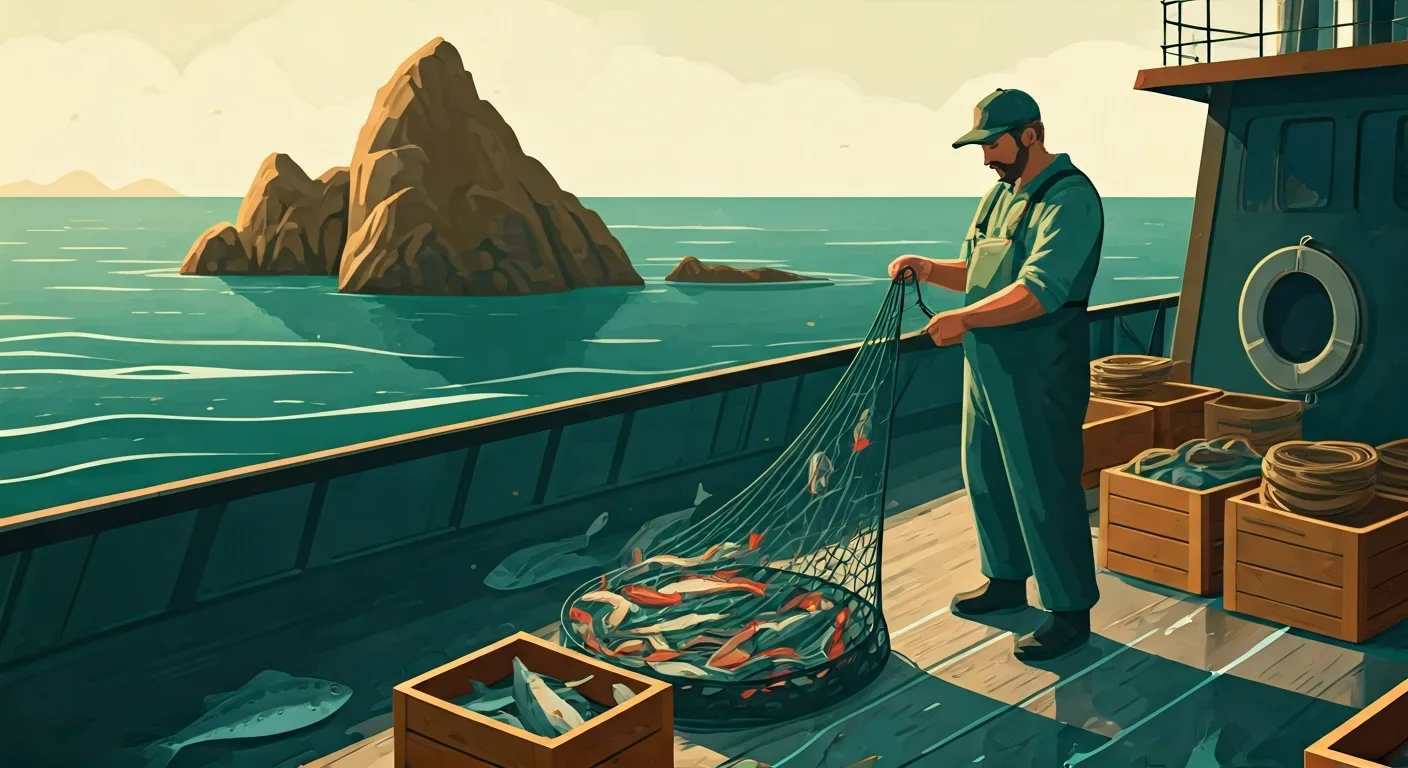
Commands a commercial fishing vessel, managing the crew, navigating to fishing grounds, and overseeing the catch and storage of seafood. Ensures compliance with fishing quotas, safety regulations, and environmental standards. Responsible for the vessel's operations, maintenance, and the safety of all personnel on board during fishing expeditions.
Provides a vital food source to communities, contributes to the economy, and, when practiced responsibly, helps maintain the health and sustainability of marine ecosystems.
On the job
- Navigate the vessel to and from fishing grounds, using charts, radar, and GPS.
- Manage and supervise the fishing crew, assigning duties and ensuring efficient operations.
- Operate and maintain fishing gear, including nets, trawls, and lines.
- Monitor weather conditions and sea state, making critical decisions for vessel and crew safety.
- Oversee the handling, processing, and storage of the catch to ensure quality and compliance.
Tools & technology
Average salary
Job outlook
StableDemand is steady. This is an established role with consistent hiring across sectors.
Education & training
Extensive practical experience at sea, often beginning as a deckhand, progressing to mate, and obtaining required maritime certifications and licenses.
AI impact outlook
Note — this is our current view. AI is moving fast, so we revisit these ratings.
Show how this was assessed Hide the detail
Note — this is our current view. AI is moving fast, so we revisit these ratings.
Show how this was assessed Hide the detailWhy this role received this rating
Core task exposure
low
How much of the role’s important work could AI perform?
AI can assist with navigation, fish finding, and weather analysis, but the core decisions and physical operation of fishing gear are less exposed.
End-to-end automation
low
Can AI complete the work without substantial human involvement?
The complex, unpredictable environment of commercial fishing and the absolute need for human command and safety oversight prevent unaided AI workflows.
Adoption pressure
low
How likely are employers to introduce AI into this work?
High capital costs for advanced vessel automation, significant safety risks, and slow regulatory approval limit widespread AI adoption for commercial fishing command.
Human dependence
strong
How much does success depend on human judgement, relationships and accountability?
Success hinges on the master's critical judgment in adverse conditions, leadership of the crew, and ultimate legal and ethical accountability for all operations.
Protective — a higher rating lowers the overall score.
Role adaptability
strong
How easily can the role evolve as AI takes on more tasks?
The role can integrate AI for enhanced decision support and operational efficiency, shifting focus to strategic oversight and complex problem-solving.
Shown for context — not part of the score.
What AI may take on
These are the parts of the role most likely to be automated or significantly accelerated.
- Optimize navigation routes based on weather and fishing ground data
- Process sonar and radar data for fish detection and obstacle avoidance
- Synthesize real-time environmental data for strategic decision support
- Monitor vessel systems and predict maintenance needs
- Manage electronic logbooks and compliance reporting
Where people remain essential
These parts continue to depend heavily on human judgement, relationships and accountability.
- Commanding the vessel and ensuring crew safety in unpredictable conditions
- Making critical decisions when faced with unexpected weather or equipment failure
- Leading and motivating the fishing crew, assigning duties effectively
- Operating and maintaining complex fishing gear that requires human dexterity
- Interpreting and ensuring compliance with dynamic fishing quotas and regulations
- Negotiating with buyers and managing the sale of catch
How the role may evolve
From navigating by instinct to commanding a data-augmented vessel.
The role will increasingly leverage AI for data processing and predictive insights, allowing the Master Fisher to focus more on strategic command, crew welfare, and complex problem-solving.
Strengthen your future fit
- Proficiency in advanced navigation and data analysis software
- Enhanced leadership and crisis management capabilities
- Strong understanding of maritime regulations and environmental stewardship
- Adaptability to new fishing technologies and operational strategies
- Effective communication and team coordination skills
- Assessment horizon
- 3–7 years
- Confidence
- High
- Last reviewed
- August 2026
- Methodology
- v1.0
This assessment reflects current AI capabilities and expected adoption patterns. Actual impacts will vary by industry, employer and the way each role is performed.
Career pathways
WHERE YOU COULD GO
CURRENT ROLE
Master Fisher
Agriculture & Food
ADJACENT MOVES
STARTING POINTS
Who thrives here
Interest profile
realistic · RES
Individuals who enjoy hands-on practical work, leading and directing others, and interacting with a team in a challenging outdoor environment are well-suited for this role.
Personality characteristics
Resilient
Remains calm and effective under stress, such as severe weather or equipment failures, ensuring the safety of the vessel and crew.
Conscientious
Highly responsible and detail-oriented in vessel maintenance, navigation, and adherence to regulations.
Practical
Prefers hands-on problem-solving and direct engagement with physical tasks and equipment.
Decisive Leader
Confidently makes critical decisions quickly and effectively, guiding the crew and operations.
Observant
Attentive to environmental cues, weather patterns, and the performance of fishing gear.
Best for
- Individuals who thrive in challenging, independent outdoor environments with significant responsibility.
- Leaders who are practical, resilient, and enjoy guiding a team through complex operations.
- People passionate about the sea and the commercial fishing industry.
Watch out for
- Long and irregular hours, often including weekends and nights, far from home.
- Exposure to harsh weather conditions and physically demanding work.
- High responsibility for crew safety and valuable assets.
A week in the life
A representative working week for a Master Fisher — where the deep work, meetings, and admin actually land.
Real people. Real results.
Thousands of people
can't be wrong.





Frequently asked questions about Master Fisher roles
What does a Master Fisher do?
A Master Fisher commands a commercial fishing vessel, managing the crew, navigating to fishing grounds, and overseeing the catch and storage of seafood. Ensures compliance with fishing quotas, safety regulations, and environmental standards. Responsible for the vessel's operations, maintenance, and the safety of all personnel on board during fishing expeditions. Provides a vital food source to communities, contributes to the economy, and, when practiced responsibly, helps maintain the health and sustainability of marine ecosystems.
How much does a Master Fisher earn?
A Master Fisher earns a median of $95,000 per year in the US, typically ranging from $60,000 to $150,000.
What qualifications do you need to become a Master Fisher?
To become a Master Fisher, extensive practical experience at sea, often beginning as a deckhand, progressing to mate, and obtaining required maritime certifications and licenses. United States Coast Guard (USCG) Master's License.
What personality suits a Master Fisher?
Master Fisher roles tend to suit people who are highly conscientious — precise, organised and strong on follow-through (Conscientiousness 78/100) and steady under pressure — deadlines and setbacks do not rattle them easily (Emotional Stability 70/100). The traits that matter most in the role are Resilient, Conscientious, Practical and Decisive Leader. Remains calm and effective under stress, such as severe weather or equipment failures, ensuring the safety of the vessel and crew. On interests, Master Fisher maps to a RES Holland Code profile — individuals who enjoy hands-on practical work, leading and directing others, and interacting with a team in a challenging outdoor environment are well-suited for this role.
Who does a Master Fisher role suit?
A Master Fisher role is usually a strong fit for these reasons. Strong Realistic alignment: the role requires extensive practical skills and hands-on engagement with marine operations. High Enterprising demands: involves significant leadership, decision-making, and responsibility for commercial outcomes. Regular team interaction: working closely with a crew in a challenging environment.
What are the downsides of being a Master Fisher?
Master Fisher roles come with trade-offs worth weighing up. Long and irregular hours, often including weekends and nights, far from home. Exposure to harsh weather conditions and physically demanding work. High responsibility for crew safety and valuable assets.
What is the work environment like for a Master Fisher?
Work as a Master Fisher is mostly outdoors-based with onsite arrangements common, largely self-directed, with little imposed structure and medium exposure to clients or stakeholders. Around 84% of the week is focused deep work.
What skills do you need to be a Master Fisher?
Core skills for a Master Fisher include Navigational expertise, Crew management, Fishing techniques, Maritime safety, Decision-making under pressure and Vessel maintenance.
How do you become a Master Fisher?
Common entry routes into Master Fisher roles include Deckhand, First Mate and Commercial Fisherman.
What career progression is there for a Master Fisher?
From a Master Fisher role, common next steps include Fleet Manager (Fishing) and Marine Operations Director; lateral moves include Marine Pilot and Commercial Diver.
What is the job outlook for Master Fisher roles?
The outlook for Master Fisher roles is currently rated stable. Demand is steady. This is an established role with consistent hiring across sectors.
Will AI replace Master Fisher roles?
Traitstack rates automation risk for Master Fisher roles at 28 out of 100, which is low. While AI tools will augment navigation and fish finding, the master's ultimate judgment, leadership of the crew, and accountability for the vessel are firmly human-led. AI is most likely to take on optimize navigation routes based on weather and fishing ground data, process sonar and radar data for fish detection and obstacle avoidance and synthesize real-time environmental data for strategic decision support. Commanding the vessel and ensuring crew safety in unpredictable conditions, making critical decisions when faced with unexpected weather or equipment failure and leading and motivating the fishing crew, assigning duties effectively stay with people. From navigating by instinct to commanding a data-augmented vessel. That score measures how much of the work could change, not the likelihood the job disappears. It is Traitstack's current view, revisited as AI capability moves.