Laundry Worker
SOC 51-6011.00 · ESCO 8157 · OSCA 811332
Role snapshot
Overview
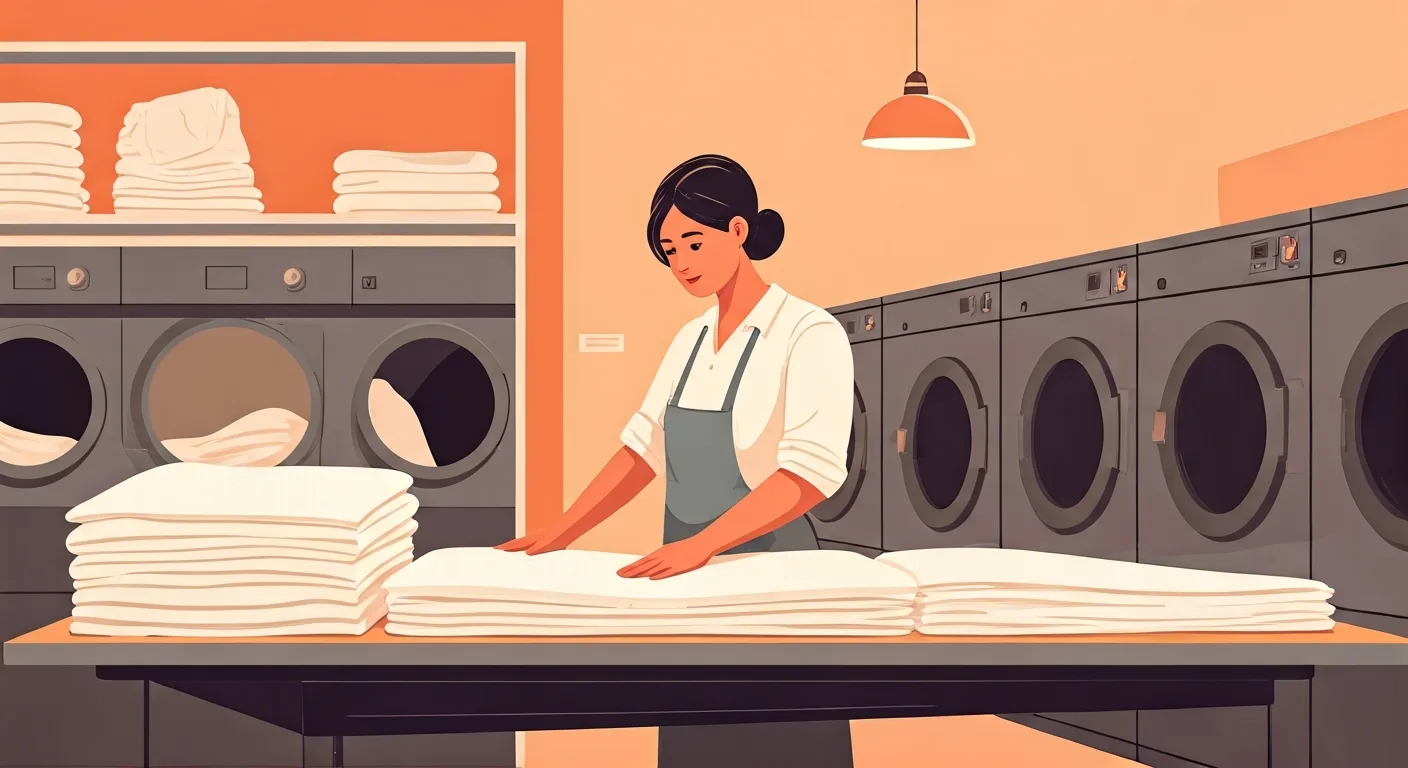
Operates and maintains commercial laundry equipment to clean, dry, iron, and fold a high volume of clothing, towels, and linens for various commercial or institutional clients such as hospitals, hotels, and care facilities. Ensures all items meet strict hygiene and quality standards.
Contributes to public health and safety by providing clean and sanitized textiles for essential services like healthcare and hospitality, ensuring operational readiness and customer satisfaction.
On the job
- Load and unload industrial washing machines, dryers, and ironers.
- Sort soiled articles by type, color, and cleaning requirements.
- Operate pressing and folding machinery to process large volumes of linen.
- Inspect items for stains, damage, and quality of cleaning, re-processing as needed.
- Maintain a clean and organized work environment, adhering to safety and hygiene protocols.
Tools & technology
Average salary
Job outlook
StableDemand is steady. This is an established role with consistent hiring across sectors.
Education & training
No formal education beyond high school is typically required, though basic literacy and numeracy are beneficial.
AI impact outlook
Note — this is our current view. AI is moving fast, so we revisit these ratings.
Show how this was assessed Hide the detail
Note — this is our current view. AI is moving fast, so we revisit these ratings.
Show how this was assessed Hide the detailWhy this role received this rating
Core task exposure
low
How much of the role’s important work could AI perform?
AI can assist with identifying stains and optimizing machine loads, but the primary tasks involve physical handling of items.
End-to-end automation
low
Can AI complete the work without substantial human involvement?
The extensive physical manipulation required for loading, sorting, and operating machinery prevents end-to-end automation by AI alone.
Adoption pressure
moderate
How likely are employers to introduce AI into this work?
While industrial automation is highly funded, direct AI adoption for the specific physical tasks of this role is moderate, often bundled with capital equipment.
Human dependence
moderate
How much does success depend on human judgement, relationships and accountability?
Success relies on human judgment for inspecting quality, re-processing items, and ensuring adherence to hygiene and safety protocols.
Protective — a higher rating lowers the overall score.
Role adaptability
moderate
How easily can the role evolve as AI takes on more tasks?
The role can adapt by shifting towards supervising automated laundry systems and handling exceptions or maintenance tasks.
Shown for context — not part of the score.
What AI may take on
These are the parts of the role most likely to be automated or significantly accelerated.
- Identifying soiled articles for sorting based on visual cues
- Flagging specific types of stains or damage during inspection
- Optimizing the loading order and machine settings for energy efficiency
- Monitoring machine performance and alerting to anomalies
Where people remain essential
These parts continue to depend heavily on human judgement, relationships and accountability.
- Physically loading and unloading heavy laundry items into machines
- Operating and maintaining complex industrial laundry equipment
- Manually re-processing items that fail automated quality checks
- Exercising judgment on delicate or specialty items requiring special handling
- Adhering to and enforcing strict hygiene and safety protocols
How the role may evolve
Shift towards managing and overseeing advanced industrial laundry systems.
As more physical tasks are automated, the worker's role will evolve from manual labor to supervising automated systems, troubleshooting, and ensuring quality control for specialized items.
Strengthen your future fit
- Operating and maintaining new industrial laundry technologies
- Advanced problem-solving for machine malfunctions
- Detailed quality inspection and exception handling
- Understanding and enforcing hygiene and safety standards
- Cross-training in logistics and inventory management
- Assessment horizon
- 3–7 years
- Confidence
- High
- Last reviewed
- August 2026
- Methodology
- v1.0
This assessment reflects current AI capabilities and expected adoption patterns. Actual impacts will vary by industry, employer and the way each role is performed.
Career pathways
WHERE YOU COULD GO
CURRENT ROLE
Laundry Worker
Personal & Professional Services
ADJACENT MOVES
STARTING POINTS
Who thrives here
Interest profile
realistic · RCE
Individuals who enjoy hands-on, practical tasks, prefer structured environments, and are conscientious about following procedures and maintaining standards often find satisfaction in this role.
Personality characteristics
Conscientious
Follows established procedures and pays close attention to detail to ensure quality and hygiene standards are met.
Agreeable
Works well with team members and contributes positively to a collaborative work environment.
Practical
Prefers hands-on tasks and finds satisfaction in tangible results, such as clean and neatly folded linen.
Calm under pressure
Maintains composure and efficiency even during busy periods or when dealing with high volumes of laundry.
Methodical
Approaches tasks systematically and consistently to ensure efficient processing and accurate sorting.
Best for
- People who enjoy physical work and operating machinery.
- Individuals who thrive in structured, process-driven roles.
- Those who value contributing to essential services behind the scenes.
Watch out for
- Can be physically demanding, requiring standing for long periods and lifting heavy loads.
- The work environment can be hot, humid, and noisy.
- Repetitive tasks may not suit those seeking constant variety or creative challenges.
A week in the life
A representative working week for a Laundry Worker — where the deep work, meetings, and admin actually land.
Real people. Real results.
Thousands of people
can't be wrong.





Frequently asked questions about Laundry Worker roles
What does a Laundry Worker do?
A Laundry Worker operates and maintains commercial laundry equipment to clean, dry, iron, and fold a high volume of clothing, towels, and linens for various commercial or institutional clients such as hospitals, hotels, and care facilities. Ensures all items meet strict hygiene and quality standards. Contributes to public health and safety by providing clean and sanitized textiles for essential services like healthcare and hospitality, ensuring operational readiness and customer satisfaction.
How much does a Laundry Worker earn?
A Laundry Worker earns a median of $32,000 per year in the US, typically ranging from $25,000 to $40,000.
What qualifications do you need to become a Laundry Worker?
To become a Laundry Worker, no formal education beyond high school is typically required, though basic literacy and numeracy are beneficial.
What personality suits a Laundry Worker?
Laundry Worker roles tend to suit people who are warm and cooperative — tuned in to the people around them (Agreeableness 68/100) and highly conscientious — precise, organised and strong on follow-through (Conscientiousness 65/100). The traits that matter most in the role are Conscientious, Agreeable, Practical and Calm under pressure. Follows established procedures and pays close attention to detail to ensure quality and hygiene standards are met. On interests, Laundry Worker maps to a RCE Holland Code profile — individuals who enjoy hands-on, practical tasks, prefer structured environments, and are conscientious about following procedures and maintaining standards often find satisfaction in this role.
Who does a Laundry Worker role suit?
A Laundry Worker role is usually a strong fit for these reasons. High demand for practical, hands-on skills in a structured environment. Rewards individuals who are thorough and focused on maintaining high standards of cleanliness. Offers a clear set of tasks and procedures, appealing to those who prefer routine and order.
What are the downsides of being a Laundry Worker?
Laundry Worker roles come with trade-offs worth weighing up. Can be physically demanding, requiring standing for long periods and lifting heavy loads. The work environment can be hot, humid, and noisy. Repetitive tasks may not suit those seeking constant variety or creative challenges.
What is the work environment like for a Laundry Worker?
Work as a Laundry Worker is mostly warehouse-based with onsite arrangements common, highly structured, with set processes and deadlines and low exposure to clients or stakeholders. Around 88% of the week is focused deep work.
What skills do you need to be a Laundry Worker?
Core skills for a Laundry Worker include Machine operation, Attention to detail, Physical stamina, Time management and Hygiene protocols.
How do you become a Laundry Worker?
Common entry routes into Laundry Worker roles include General Laborer and Cleaning Assistant.
What career progression is there for a Laundry Worker?
From a Laundry Worker role, common next steps include Laundry Supervisor and Facilities Coordinator; lateral moves include Housekeeper.
What is the job outlook for Laundry Worker roles?
The outlook for Laundry Worker roles is currently rated stable. Demand is steady. This is an established role with consistent hiring across sectors.
Will AI replace Laundry Worker roles?
Traitstack rates automation risk for Laundry Worker roles at 28 out of 100, which is low. AI capabilities can support quality control and process optimization for laundry tasks, but the core physical handling and operation of industrial equipment remain firmly human-dependent. AI is most likely to take on identifying soiled articles for sorting based on visual cues, flagging specific types of stains or damage during inspection and optimizing the loading order and machine settings for energy efficiency. Physically loading and unloading heavy laundry items into machines, operating and maintaining complex industrial laundry equipment and manually re-processing items that fail automated quality checks stay with people. Shift towards managing and overseeing advanced industrial laundry systems. That score measures how much of the work could change, not the likelihood the job disappears. It is Traitstack's current view, revisited as AI capability moves.