Landscape Gardener
SOC 37-3011.00 · ESCO 6113 · OSCA 342432
Role snapshot
Overview
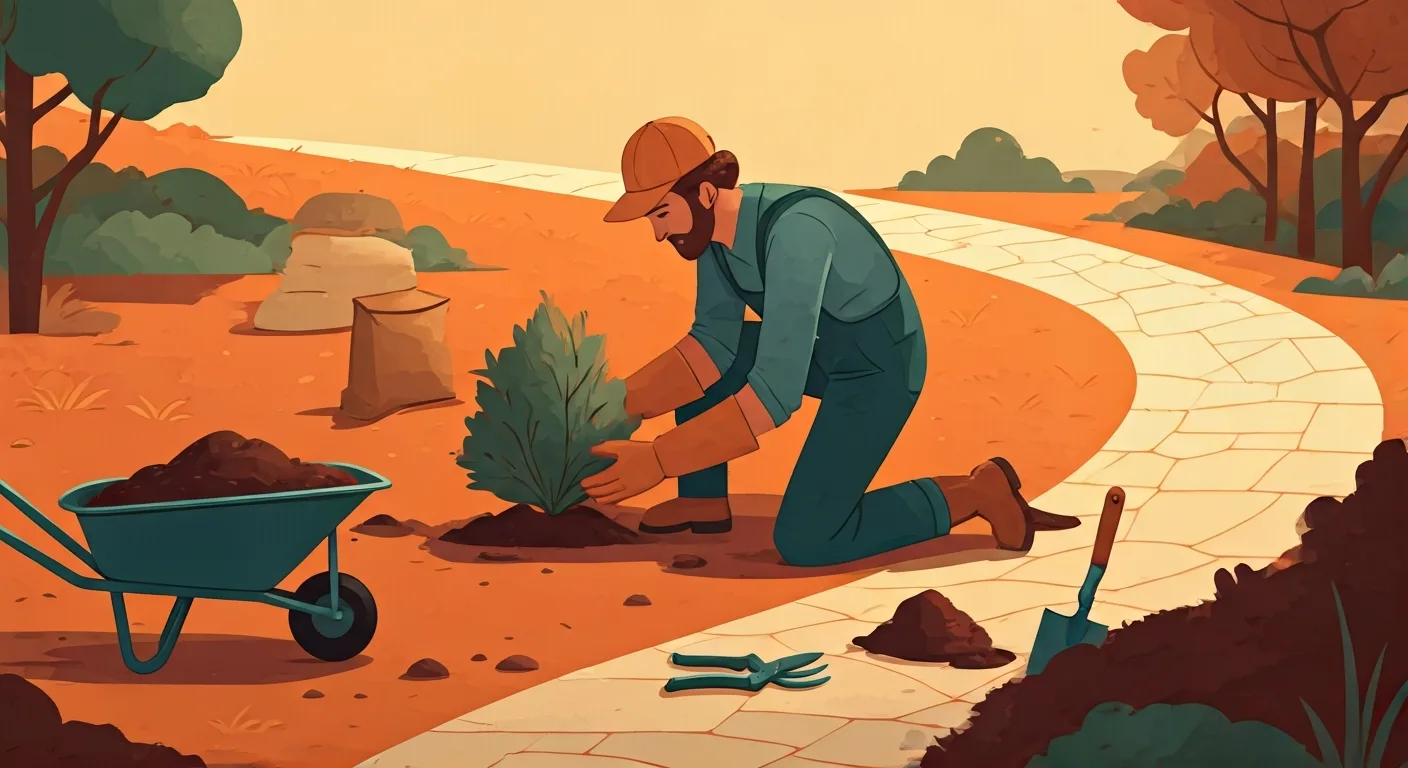
Constructs outdoor spaces by laying paving, building retaining walls, installing garden beds, and planting trees and shrubs according to a designer's plan. Operates small machinery and works with a range of materials. This role involves physical labor, attention to detail, and practical application of horticultural and construction principles to create aesthetically pleasing and functional landscapes.
Transforms outdoor environments, enhancing property value, promoting biodiversity, and creating functional and beautiful spaces for relaxation and recreation. Contributes to environmental sustainability through proper plant selection and land management.
On the job
- Interpret landscape plans and blueprints to execute designs
- Prepare sites, including grading, soil amendment, and drainage installation
- Install hardscaping elements such as patios, walkways, and retaining walls
- Select, plant, and maintain a variety of trees, shrubs, and flowers
- Operate and maintain various landscaping equipment, including excavators, skid steers, and power tools
Tools & technology
Average salary
Job outlook
StableDemand is steady. This is an established role with consistent hiring across sectors.
Education & training
Vocational certificate or associate's degree in horticulture, landscape design, or a related field; often combined with on-the-job training or an apprenticeship.
AI impact outlook
Note — this is our current view. AI is moving fast, so we revisit these ratings.
Show how this was assessed Hide the detail
Note — this is our current view. AI is moving fast, so we revisit these ratings.
Show how this was assessed Hide the detailWhy this role received this rating
Core task exposure
low
How much of the role’s important work could AI perform?
AI can assist with interpreting plans and recommending plant selections, but site preparation and physical construction remain highly manual.
End-to-end automation
low
Can AI complete the work without substantial human involvement?
Highly unlikely for complex landscape projects due to site variability, aesthetic judgment, physical construction, and working with living, dynamic plants.
Adoption pressure
low
How likely are employers to introduce AI into this work?
Low for complex projects due to cost, site variability, and the need for aesthetic judgment; moderate for highly repetitive tasks like basic grading or planting with specialized machinery.
Human dependence
strong
How much does success depend on human judgement, relationships and accountability?
Requires strong aesthetic judgment, physical labor, on-site problem-solving, client communication, and continuous adaptation to unpredictable environmental conditions.
Protective — a higher rating lowers the overall score.
Role adaptability
moderate
How easily can the role evolve as AI takes on more tasks?
The role can evolve by integrating smart irrigation systems, utilizing drone mapping for site analysis, and focusing on sustainable design principles and enhanced client collaboration.
Shown for context — not part of the score.
What AI may take on
These are the parts of the role most likely to be automated or significantly accelerated.
- Generating landscape design concepts from client preferences
- Optimizing plant selection for specific climate and soil conditions
- Automating basic grading and earth-moving with advanced machinery
- Monitoring plant health and irrigation needs via sensors
Where people remain essential
These parts continue to depend heavily on human judgement, relationships and accountability.
- Interpreting landscape plans and adapting them to real-world sites
- Installing hardscaping elements like patios and retaining walls
- Carefully planting and maintaining a variety of trees, shrubs, and flowers
- Operating and maintaining complex landscaping equipment safely
- Communicating with clients to ensure design satisfaction
How the role may evolve
Orchestrating designs, not just executing them.
Landscape gardeners will increasingly become project leaders and design implementers, leveraging digital tools for planning while focusing their expertise on the nuanced physical construction and artistic realization of outdoor spaces.
Strengthen your future fit
- Proficiency in landscape design software and mapping tools
- Expertise in sustainable landscaping and water management
- Mastery of advanced hardscaping and construction techniques
- Client communication and project management skills
- Deep knowledge of horticulture and plant care
- Assessment horizon
- 3–7 years
- Confidence
- Medium
- Last reviewed
- August 2026
- Methodology
- v1.0
This assessment reflects current AI capabilities and expected adoption patterns. Actual impacts will vary by industry, employer and the way each role is performed.
Career pathways
WHERE YOU COULD GO
CURRENT ROLE
Landscape Gardener
Skilled Trades
ADJACENT MOVES
STARTING POINTS
Who thrives here
Interest profile
realistic · RCA
Individuals who enjoy hands-on work outdoors, following detailed plans, and applying creative aesthetics to physical spaces often find satisfaction in this role.
Personality characteristics
Practical
Enjoys working with tools and materials to build and shape physical environments.
Methodical
Follows plans and procedures carefully to ensure projects are completed accurately and efficiently.
Aesthetic eye
Appreciates and creates visually pleasing outdoor spaces, selecting plants and materials harmoniously.
Cooperative
Works well with a team to achieve shared project goals and communicate effectively on site.
Calm under pressure
Manages unexpected challenges like weather changes or material delays without significant stress.
Best for
- Individuals who enjoy physical labor and seeing tangible results of their work in outdoor settings.
- Those who appreciate a blend of technical skill, horticultural knowledge, and aesthetic judgment.
- People who thrive in a semi-structured environment where they execute detailed plans.
Watch out for
- The work is physically demanding and often performed outdoors in various weather conditions.
- Some projects may require occasional weekend work, especially during peak seasons.
A week in the life
A representative working week for a Landscape Gardener — where the deep work, meetings, and admin actually land.
Real people. Real results.
Thousands of people
can't be wrong.




Frequently asked questions about Landscape Gardener roles
What does a Landscape Gardener do?
A Landscape Gardener constructs outdoor spaces by laying paving, building retaining walls, installing garden beds, and planting trees and shrubs according to a designer's plan. Operates small machinery and works with a range of materials. This role involves physical labor, attention to detail, and practical application of horticultural and construction principles to create aesthetically pleasing and functional landscapes. Transforms outdoor environments, enhancing property value, promoting biodiversity, and creating functional and beautiful spaces for relaxation and recreation. Contributes to environmental sustainability through proper plant selection and land management.
How much does a Landscape Gardener earn?
A Landscape Gardener earns a median of $48,000 per year in the US, typically ranging from $35,000 to $65,000.
What qualifications do you need to become a Landscape Gardener?
To become a Landscape Gardener, vocational certificate or associate's degree in horticulture, landscape design, or a related field; often combined with on-the-job training or an apprenticeship.
What personality suits a Landscape Gardener?
Landscape Gardener roles tend to suit people who are highly conscientious — precise, organised and strong on follow-through (Conscientiousness 75/100) and steady under pressure — deadlines and setbacks do not rattle them easily (Emotional Stability 72/100). The traits that matter most in the role are Practical, Methodical, Aesthetic eye and Cooperative. Enjoys working with tools and materials to build and shape physical environments. On interests, Landscape Gardener maps to a RCA Holland Code profile — individuals who enjoy hands-on work outdoors, following detailed plans, and applying creative aesthetics to physical spaces often find satisfaction in this role.
Who does a Landscape Gardener role suit?
A Landscape Gardener role is usually a strong fit for these reasons. Strong Realistic (R) and Conventional (C) alignment: the role is hands-on, physically active, and requires adherence to design plans and technical standards. A large portion of the week involves deep work focused on construction, planting, and equipment operation. Opportunities for creative expression within defined project parameters, appealing to Artistic (A) interests.
What are the downsides of being a Landscape Gardener?
Landscape Gardener roles come with trade-offs worth weighing up. The work is physically demanding and often performed outdoors in various weather conditions. Some projects may require occasional weekend work, especially during peak seasons.
What is the work environment like for a Landscape Gardener?
Work as a Landscape Gardener is mostly outdoors-based with onsite arrangements common, semi-structured — a mix of set processes and self-directed work, a moderate pace and medium exposure to clients or stakeholders. Around 65% of the week is focused deep work.
What skills do you need to be a Landscape Gardener?
Core skills for a Landscape Gardener include Horticultural knowledge, Hardscaping techniques, Equipment operation, Physical stamina and Attention to detail.
How do you become a Landscape Gardener?
Common entry routes into Landscape Gardener roles include General Laborer, Garden Center Associate and Landscaping Apprentice.
What career progression is there for a Landscape Gardener?
From a Landscape Gardener role, common next steps include Landscape Supervisor and Landscape Designer; lateral moves include Horticultural Consultant.
What is the job outlook for Landscape Gardener roles?
The outlook for Landscape Gardener roles is currently rated stable. Demand is steady. This is an established role with consistent hiring across sectors.
Will AI replace Landscape Gardener roles?
Traitstack rates automation risk for Landscape Gardener roles at 23 out of 100, which is low. AI can support planning and plant selection, but the physical construction, artistic judgment, and adaptive on-site problem-solving remain squarely in human hands. AI is most likely to take on generating landscape design concepts from client preferences, optimizing plant selection for specific climate and soil conditions and automating basic grading and earth-moving with advanced machinery. Interpreting landscape plans and adapting them to real-world sites, installing hardscaping elements like patios and retaining walls and carefully planting and maintaining a variety of trees, shrubs, and flowers stay with people. Orchestrating designs, not just executing them. That score measures how much of the work could change, not the likelihood the job disappears. It is Traitstack's current view, revisited as AI capability moves.