Horse Trainer
SOC 39-2011.00 · ESCO 5164 · OSCA 341132
Role snapshot
Overview
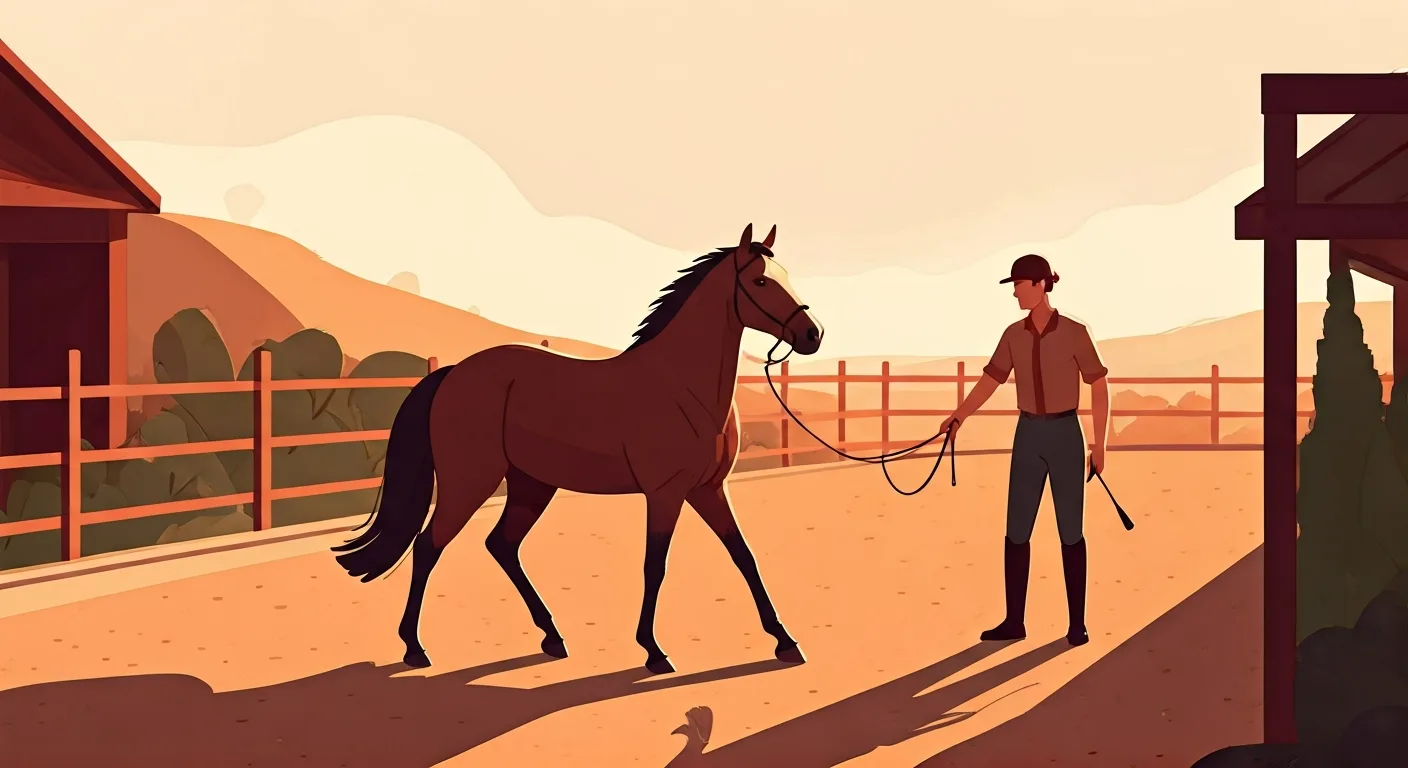
Prepares horses for various disciplines, including racing, show jumping, dressage, and general performance, through tailored daily exercise programs, nutritional management, and behavioral conditioning. Develops training plans, oversees horse care, and works closely with jockeys, veterinarians, farriers, and owners to optimize performance, health, and welfare. Focuses on building trust and communication with each horse to achieve specific athletic goals and manage temperament.
Ensures the optimal physical and mental conditioning of horses, enabling them to perform at their best in competition or other specific roles. Contributes to the welfare of animals and the success of equestrian sports.
On the job
- Develop and implement daily exercise and training routines for horses.
- Monitor horse health, diet, and behavior, coordinating with veterinary and farrier services.
- Teach horses specific cues, disciplines, and behaviors required for their intended purpose.
- Evaluate horse performance and adjust training strategies as needed.
- Communicate regularly with owners, jockeys, and other support staff regarding horse progress and care.
Tools & technology
Average salary
Job outlook
StableDemand is steady. This is an established role with consistent hiring across sectors.
Education & training
Completion of an apprenticeship, specialized training program, or an equine science degree is common, often alongside extensive practical experience.
AI impact outlook
Note — this is our current view. AI is moving fast, so we revisit these ratings.
Show how this was assessed Hide the detail
Note — this is our current view. AI is moving fast, so we revisit these ratings.
Show how this was assessed Hide the detailWhy this role received this rating
Core task exposure
low
How much of the role’s important work could AI perform?
AI can assist with performance data analysis, training schedule optimization, and diet planning, but the actual teaching and behavioral conditioning are not exposed.
End-to-end automation
low
Can AI complete the work without substantial human involvement?
The core of horse training, which involves building trust, reading subtle animal cues, and physical interaction, cannot be automated end-to-end by AI.
Adoption pressure
low
How likely are employers to introduce AI into this work?
Adoption pressure for AI is moderate for performance analytics and data tracking, but very low for direct training methods, reflecting the human-centric nature of the work.
Human dependence
strong
How much does success depend on human judgement, relationships and accountability?
Success is almost entirely dependent on the trainer's skill, intuition, patience, and ability to form a bond and communicate effectively with the animal, alongside client communication.
Protective — a higher rating lowers the overall score.
Role adaptability
strong
How easily can the role evolve as AI takes on more tasks?
Trainers can readily adopt data tools to enhance their existing methods and insights, but the core human skill of horsemanship remains the central and adaptable element.
Shown for context — not part of the score.
What AI may take on
These are the parts of the role most likely to be automated or significantly accelerated.
- Analysing horse performance data during exercise and competition
- Optimising daily training schedules and routines
- Recommending diet adjustments based on activity levels and health metrics
- Tracking health metrics for early anomaly detection
- Automating some stable management records and inventory
Where people remain essential
These parts continue to depend heavily on human judgement, relationships and accountability.
- Building rapport and trust with individual horses
- Physically teaching and conditioning animals through hands-on interaction
- Reading subtle behavioral cues and emotional states of horses
- Adapting training plans in real-time based on horse response
- Communicating progress and concerns effectively to owners and jockeys
How the role may evolve
From traditional methods to data-informed artistry.
The role will shift towards integrating performance data and analytics to refine training strategies, while the core artistry of horsemanship and animal interaction remains the trainer's domain.
Strengthen your future fit
- Mastering equine performance analysis tools and wearable tech
- Deepening knowledge of animal psychology, behavior, and welfare
- Enhancing communication skills with owners, veterinarians, and farriers
- Developing adaptability in training methodologies for diverse disciplines
- Cultivating exceptional observation and intuitive horsemanship skills
- Assessment horizon
- 3–7 years
- Confidence
- High
- Last reviewed
- August 2026
- Methodology
- v1.0
This assessment reflects current AI capabilities and expected adoption patterns. Actual impacts will vary by industry, employer and the way each role is performed.
Career pathways
WHERE YOU COULD GO
CURRENT ROLE
Horse Trainer
Agriculture & Food
ADJACENT MOVES
STARTING POINTS
Who thrives here
Interest profile
realistic · RSC
Individuals who enjoy hands-on work with animals, following established procedures, and interacting with clients and colleagues in a practical setting often thrive in this role.
Personality characteristics
Diligent
Meticulous in following training protocols and maintaining horse welfare standards.
Patient
Capable of working consistently with animals, understanding that progress takes time and repetition.
Observant
Attentive to subtle changes in horse behavior, health, and performance.
Resilient
Handles the physical demands, unpredictable nature of animals, and occasional setbacks without undue stress.
Communicative
Effectively conveys information and instructions to owners, veterinarians, and stable staff.
Best for
- People who are passionate about working with horses and improving their performance and welfare.
- Individuals who enjoy a blend of physical activity, animal care, and structured routines.
- Those who thrive in an outdoor, hands-on environment with clear objectives.
Watch out for
- Requires regular weekend work and can be physically demanding.
- Success is often dependent on the performance of animals, which can be unpredictable.
A week in the life
A representative working week for a Horse Trainer — where the deep work, meetings, and admin actually land.
Real people. Real results.
Thousands of people
can't be wrong.





Frequently asked questions about Horse Trainer roles
What does a Horse Trainer do?
A Horse Trainer prepares horses for various disciplines, including racing, show jumping, dressage, and general performance, through tailored daily exercise programs, nutritional management, and behavioral conditioning. Develops training plans, oversees horse care, and works closely with jockeys, veterinarians, farriers, and owners to optimize performance, health, and welfare. Focuses on building trust and communication with each horse to achieve specific athletic goals and manage temperament. Ensures the optimal physical and mental conditioning of horses, enabling them to perform at their best in competition or other specific roles. Contributes to the welfare of animals and the success of equestrian sports.
How much does a Horse Trainer earn?
A Horse Trainer earns a median of $55,000 per year in the US, typically ranging from $35,000 to $80,000.
What qualifications do you need to become a Horse Trainer?
To become a Horse Trainer, completion of an apprenticeship, specialized training program, or an equine science degree is common, often alongside extensive practical experience. Trainer's License (depending on jurisdiction and discipline).
What personality suits a Horse Trainer?
Horse Trainer roles tend to suit people who are highly conscientious — precise, organised and strong on follow-through (Conscientiousness 72/100) and steady under pressure — deadlines and setbacks do not rattle them easily (Emotional Stability 65/100). The traits that matter most in the role are Diligent, Patient, Observant and Resilient. Meticulous in following training protocols and maintaining horse welfare standards. On interests, Horse Trainer maps to a RSC Holland Code profile — individuals who enjoy hands-on work with animals, following established procedures, and interacting with clients and colleagues in a practical setting often thrive in this role.
Who does a Horse Trainer role suit?
A Horse Trainer role is usually a strong fit for these reasons. Strong Realistic (R) and Social (S) alignment, emphasizing hands-on work with animals and client interaction. A significant portion of the week involves direct horse training and care, offering a sense of accomplishment. The role requires methodical approaches and attention to detail, aligning with Conventional (C) interests.
What are the downsides of being a Horse Trainer?
Horse Trainer roles come with trade-offs worth weighing up. Requires regular weekend work and can be physically demanding. Success is often dependent on the performance of animals, which can be unpredictable.
What is the work environment like for a Horse Trainer?
Work as a Horse Trainer is mostly outdoors-based with onsite arrangements common, semi-structured — a mix of set processes and self-directed work, a moderate pace and high exposure to clients or stakeholders. Around 67% of the week is focused deep work.
What skills do you need to be a Horse Trainer?
Core skills for a Horse Trainer include Equine behavior analysis, Horse riding and handling, Training program design, Animal health and welfare, Communication and client relations and Physical conditioning of horses.
How do you become a Horse Trainer?
Common entry routes into Horse Trainer roles include Groom, Stable Hand and Apprentice Trainer.
What career progression is there for a Horse Trainer?
From a Horse Trainer role, common next steps include Head Trainer and Equestrian Program Director; lateral moves include Equine Nutritionist and Stable Manager.
What is the job outlook for Horse Trainer roles?
The outlook for Horse Trainer roles is currently rated stable. Demand is steady. This is an established role with consistent hiring across sectors.
Will AI replace Horse Trainer roles?
Traitstack rates automation risk for Horse Trainer roles at 26 out of 100, which is low. While AI could optimize training schedules and analyse performance data, the intimate process of building trust, teaching nuanced behaviors, and adapting to individual horses demands irreplaceable human skill and intuition. AI is most likely to take on analysing horse performance data during exercise and competition, optimising daily training schedules and routines and recommending diet adjustments based on activity levels and health metrics. Building rapport and trust with individual horses, physically teaching and conditioning animals through hands-on interaction and reading subtle behavioral cues and emotional states of horses stay with people. From traditional methods to data-informed artistry. That score measures how much of the work could change, not the likelihood the job disappears. It is Traitstack's current view, revisited as AI capability moves.