Horse Riding Coach or Instructor
SOC 27-2022.00 · ESCO 3423 · OSCA 462435
Role snapshot
Overview
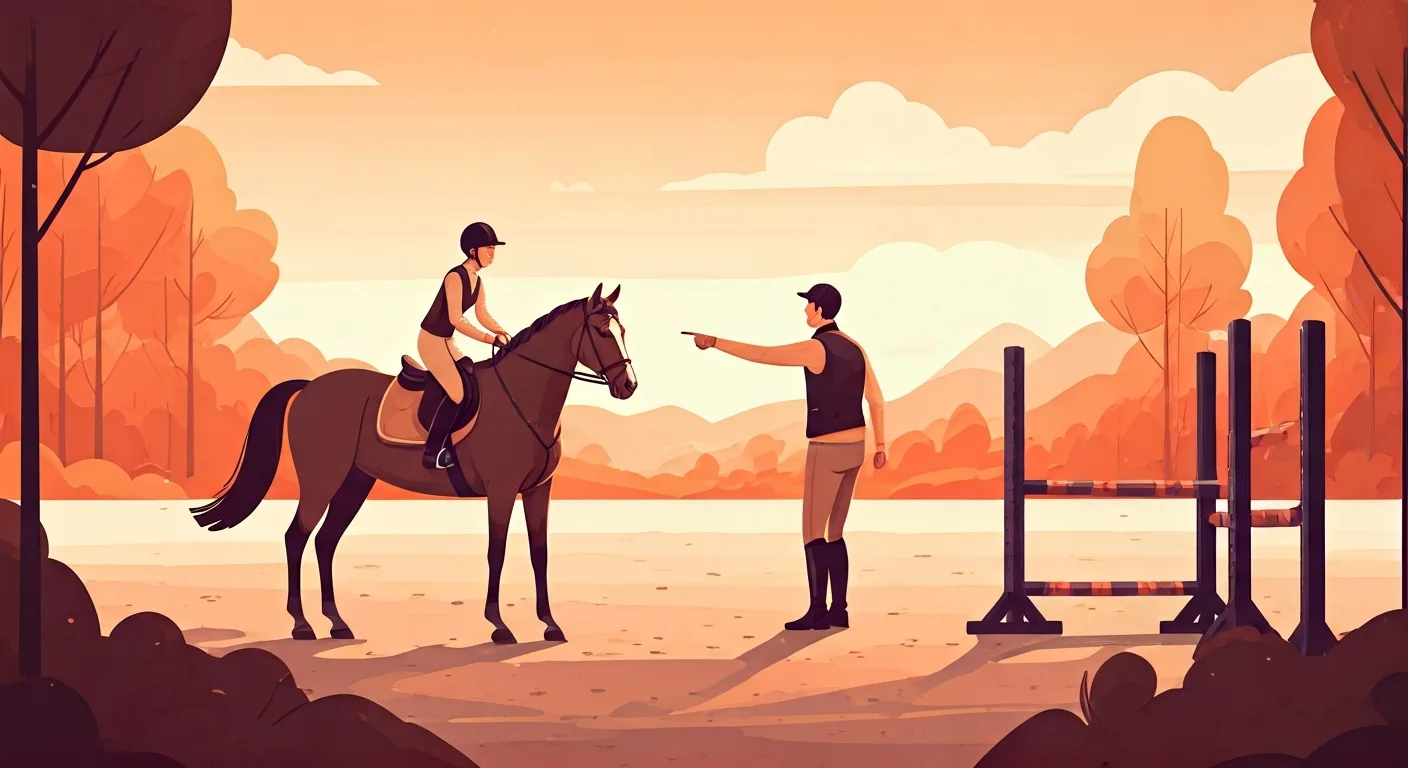
Teaches riders of all levels how to handle, groom, and ride horses safely, developing their balance, confidence, and understanding of equine behaviour. This role involves comprehensive instruction in horsemanship, equine care, and riding techniques, ensuring a safe and positive experience for both horse and rider.
Empowers individuals with riding skills, fosters a deep understanding of animal welfare, and promotes safety in equestrian sports. Contributes to physical fitness, confidence, and responsible animal interaction.
On the job
- Develop and deliver riding lessons tailored to individual student needs and skill levels
- Educate students on horse care, grooming, tacking, and stable management
- Ensure the safety of riders and horses during lessons and stable activities
- Assess student progress and provide constructive feedback to improve riding technique
- Maintain a safe and well-organized riding environment, including equipment and facilities
Tools & technology
Average salary
Job outlook
StableDemand is steady. This is an established role with consistent hiring across sectors.
Education & training
Formal certification from an equestrian organization or a degree in equine studies is often required or highly preferred. Extensive practical experience is paramount.
AI impact outlook
Note — this is our current view. AI is moving fast, so we revisit these ratings.
Show how this was assessed Hide the detail
Note — this is our current view. AI is moving fast, so we revisit these ratings.
Show how this was assessed Hide the detailWhy this role received this rating
Core task exposure
low
How much of the role’s important work could AI perform?
Lesson planning, progress tracking, and basic horsemanship theory have some exposure to AI assistance, but the core is real-time physical instruction.
End-to-end automation
low
Can AI complete the work without substantial human involvement?
Direct physical instruction, safety oversight with live animals, and building rider confidence make end-to-end automation impossible.
Adoption pressure
low
How likely are employers to introduce AI into this work?
High safety risks with animals and the personalized nature of instruction limit employer willingness to extensively automate this role.
Human dependence
strong
How much does success depend on human judgement, relationships and accountability?
Success fundamentally depends on the instructor's real-time judgment, ability to manage unpredictable animals, and build rapport and confidence in riders.
Protective — a higher rating lowers the overall score.
Role adaptability
strong
How easily can the role evolve as AI takes on more tasks?
The role can readily adapt by specializing in different riding disciplines, age groups, or by integrating technology for remote theory lessons or video analysis.
Shown for context — not part of the score.
What AI may take on
These are the parts of the role most likely to be automated or significantly accelerated.
- Develop customized lesson plans and curriculum outlines
- Analyze video recordings of riding technique for feedback points
- Manage scheduling and client communication efficiently
- Provide theoretical modules on horse care and stable management
Where people remain essential
These parts continue to depend heavily on human judgement, relationships and accountability.
- Delivering in-person physical demonstrations and corrections
- Ensuring the immediate safety of riders and horses during lessons
- Adapting instruction to real-time variables like horse behavior and rider confidence
- Building trust and rapport with students for effective learning
- Assessing and responding to unpredictable situations involving live animals
- Providing hands-on guidance for grooming and tacking
How the role may evolve
Coaching becomes less about routine delivery, more about dynamic, personalized guidance.
Instructors will spend less time on administrative tasks and basic lesson preparation, shifting focus to highly adaptive, real-time coaching and critical safety management.
Strengthen your future fit
- Mastering advanced riding and horsemanship techniques
- Developing strong interpersonal and motivational coaching skills
- Integrating video analysis tools for enhanced feedback
- Specializing in niche equestrian disciplines or therapeutic riding
- Continuously updating knowledge of equine behavior and welfare
- Assessment horizon
- 3–7 years
- Confidence
- Medium
- Last reviewed
- August 2026
- Methodology
- v1.0
This assessment reflects current AI capabilities and expected adoption patterns. Actual impacts will vary by industry, employer and the way each role is performed.
Career pathways
WHERE YOU COULD GO
CURRENT ROLE
Horse Riding Coach or Instructor
Teaching & Instruction
ADJACENT MOVES
STARTING POINTS
Who thrives here
Interest profile
social · SER
Individuals who enjoy teaching and guiding others, working hands-on with animals and in an outdoor environment, and can manage activities with a degree of independence, often find satisfaction in this role.
Personality characteristics
Conscientious
Demonstrates strong attention to safety protocols and consistent training methods for both riders and horses.
Patient Teacher
Exhibits patience and empathy when working with students of varying skill levels and temperaments, fostering a supportive learning environment.
Engaging Communicator
Effectively conveys complex riding concepts and safety instructions in a clear, encouraging, and motivating manner.
Calm Under Pressure
Maintains composure and provides clear direction during unexpected or challenging situations involving horses or riders.
Practical & Hands-On
Thrives in a physical, outdoor setting, directly engaging with horses and managing practical aspects of stable operations.
Best for
- Individuals passionate about horses and dedicated to teaching others safe horsemanship.
- People who thrive in an active, outdoor environment and enjoy direct interaction with animals and clients.
- Those who are patient, safety-conscious, and skilled at communicating technical instructions.
Watch out for
- Regular weekend work is common, requiring flexibility in personal schedule.
- The role is physically demanding and often requires working outdoors in various weather conditions.
A week in the life
A representative working week for a Horse Riding Coach or Instructor — where the deep work, meetings, and admin actually land.
Real people. Real results.
Thousands of people
can't be wrong.





Frequently asked questions about Horse Riding Coach or Instructor roles
What does a Horse Riding Coach or Instructor do?
A Horse Riding Coach or Instructor teaches riders of all levels how to handle, groom, and ride horses safely, developing their balance, confidence, and understanding of equine behaviour. This role involves comprehensive instruction in horsemanship, equine care, and riding techniques, ensuring a safe and positive experience for both horse and rider. Empowers individuals with riding skills, fosters a deep understanding of animal welfare, and promotes safety in equestrian sports. Contributes to physical fitness, confidence, and responsible animal interaction.
How much does a Horse Riding Coach or Instructor earn?
A Horse Riding Coach or Instructor earns a median of $55,000 per year in the US, typically ranging from $35,000 to $80,000.
What qualifications do you need to become a Horse Riding Coach or Instructor?
To become a Horse Riding Coach or Instructor, formal certification from an equestrian organization or a degree in equine studies is often required or highly preferred. Extensive practical experience is paramount. Equestrian coaching certification (e.g., from USEF, USHJA, Pony Club, or similar national bodies).
What personality suits a Horse Riding Coach or Instructor?
Horse Riding Coach or Instructor roles tend to suit people who are highly conscientious — precise, organised and strong on follow-through (Conscientiousness 72/100) and warm and cooperative — tuned in to the people around them (Agreeableness 72/100). The traits that matter most in the role are Conscientious, Patient Teacher, Engaging Communicator and Calm Under Pressure. Demonstrates strong attention to safety protocols and consistent training methods for both riders and horses. On interests, Horse Riding Coach or Instructor maps to a SER Holland Code profile — individuals who enjoy teaching and guiding others, working hands-on with animals and in an outdoor environment, and can manage activities with a degree of independence, often find satisfaction in this role.
Who does a Horse Riding Coach or Instructor role suit?
A Horse Riding Coach or Instructor role is usually a strong fit for these reasons. Strong Social (S) and Realistic (R) alignment, reflecting the joy of teaching and working hands-on with animals. The role rewards high conscientiousness (C) for maintaining safety and consistent training. High stakeholder exposure and team interaction suit individuals who enjoy engaging with people and building community.
What are the downsides of being a Horse Riding Coach or Instructor?
Horse Riding Coach or Instructor roles come with trade-offs worth weighing up. Regular weekend work is common, requiring flexibility in personal schedule. The role is physically demanding and often requires working outdoors in various weather conditions.
What is the work environment like for a Horse Riding Coach or Instructor?
Work as a Horse Riding Coach or Instructor is mostly outdoors-based with onsite arrangements common, semi-structured — a mix of set processes and self-directed work, a moderate pace and high exposure to clients or stakeholders. Around 6% of the week is focused deep work.
What skills do you need to be a Horse Riding Coach or Instructor?
Core skills for a Horse Riding Coach or Instructor include Horsemanship and equine care, Instructional and coaching techniques, Safety protocols and risk management, Communication and interpersonal skills and Lesson planning and curriculum development.
How do you become a Horse Riding Coach or Instructor?
Common entry routes into Horse Riding Coach or Instructor roles include Assistant Riding Instructor, Stable Hand and Equine Groom.
What career progression is there for a Horse Riding Coach or Instructor?
From a Horse Riding Coach or Instructor role, common next steps include Head Riding Instructor and Equestrian Program Director; lateral moves include Professional Horse Trainer.
What is the job outlook for Horse Riding Coach or Instructor roles?
The outlook for Horse Riding Coach or Instructor roles is currently rated stable. Demand is steady. This is an established role with consistent hiring across sectors.
Will AI replace Horse Riding Coach or Instructor roles?
Traitstack rates automation risk for Horse Riding Coach or Instructor roles at 27 out of 100, which is low. Real-time physical instruction, animal handling, and rider safety in dynamic environments stay human-led, even as AI supports lesson planning and technique analysis. AI is most likely to take on develop customized lesson plans and curriculum outlines, analyze video recordings of riding technique for feedback points and manage scheduling and client communication efficiently. Delivering in-person physical demonstrations and corrections, ensuring the immediate safety of riders and horses during lessons and adapting instruction to real-time variables like horse behavior and rider confidence stay with people. Coaching becomes less about routine delivery, more about dynamic, personalized guidance. That score measures how much of the work could change, not the likelihood the job disappears. It is Traitstack's current view, revisited as AI capability moves.