Food Scientist and Technologist
SOC 19-1012.00 · ESCO 2145 · OSCA 244232
Role snapshot
Overview
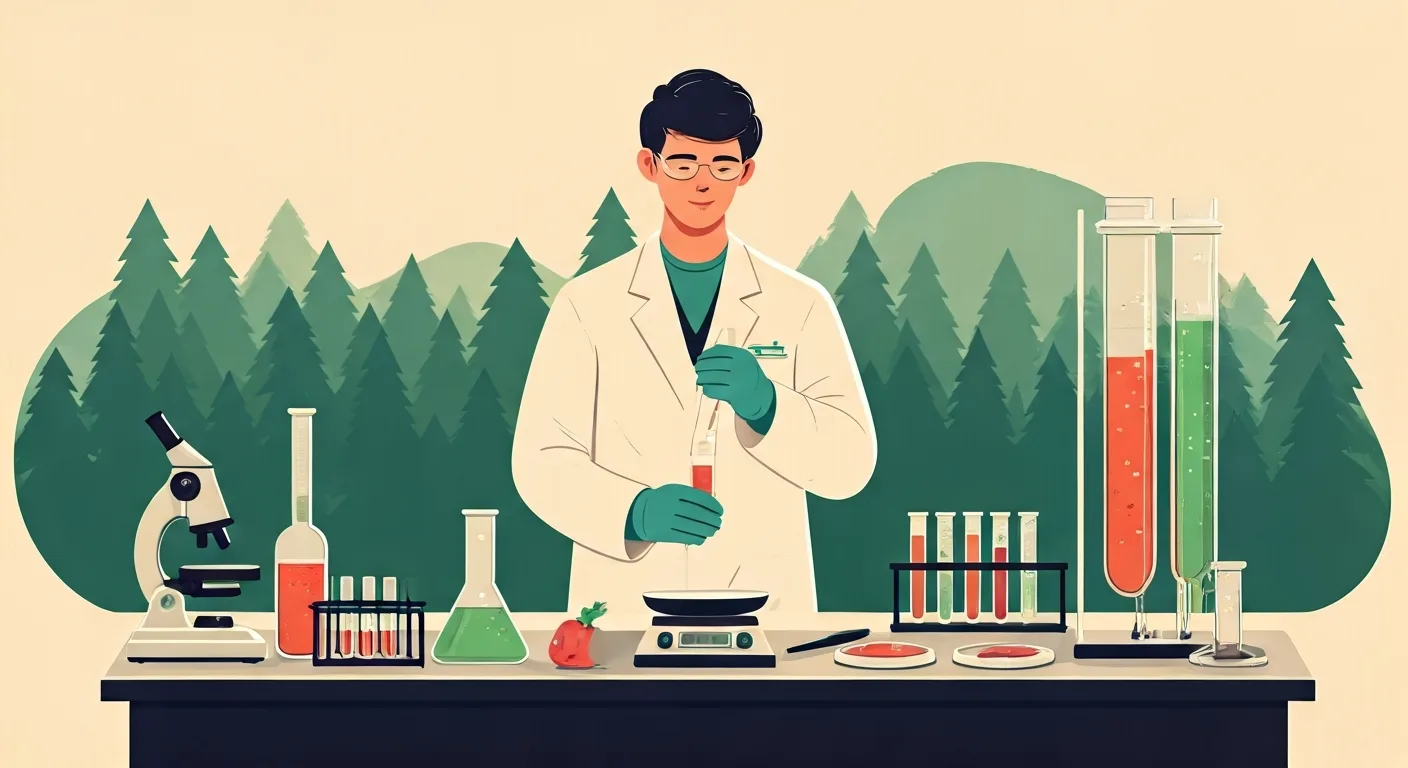
Researches and tests ingredients, preservation methods, and production processes to develop safe and appealing food products. Conducts laboratory analyses on nutrition, flavour, and shelf life, ensuring compliance with food safety regulations and consumer expectations. This role is critical in bringing innovative and high-quality food products to market.
Contributes to public health and consumer satisfaction by ensuring food products are safe, nutritious, and meet quality standards, while also driving innovation in the food industry.
On the job
- Develop new food products and improve existing ones, considering taste, texture, and nutritional content
- Conduct laboratory experiments to test food safety, quality, and stability under various conditions
- Analyze raw materials and ingredients for compliance with established specifications and regulations
- Design and implement food preservation and processing techniques to extend shelf life and maintain quality
- Ensure all food products and processes comply with local and international food safety and labeling regulations
Tools & technology
Average salary
Job outlook
GrowingJob growth is expected to be above average over the next five years.
Education & training
A bachelor's or master's degree in Food Science, Food Technology, Chemistry, or a related scientific field is typically required.
AI impact outlook
Note — this is our current view. AI is moving fast, so we revisit these ratings.
Show how this was assessed Hide the detail
Note — this is our current view. AI is moving fast, so we revisit these ratings.
Show how this was assessed Hide the detailWhy this role received this rating
Core task exposure
high
How much of the role’s important work could AI perform?
Many core tasks, such as laboratory analysis, data interpretation, formulation, and regulatory compliance checks, are highly susceptible to AI automation.
End-to-end automation
moderate
Can AI complete the work without substantial human involvement?
While AI can optimize many steps, the iterative nature of product development, nuanced sensory evaluation, and strategic problem-solving prevent full end-to-end automation.
Adoption pressure
high
How likely are employers to introduce AI into this work?
There is strong industry pressure to adopt AI for faster R&D cycles, cost reduction, and enhanced regulatory compliance in food product development.
Human dependence
moderate
How much does success depend on human judgement, relationships and accountability?
Success requires significant human judgment for taste profiles, understanding complex consumer preferences, and ensuring ultimate product safety and ethical development.
Protective — a higher rating lowers the overall score.
Role adaptability
strong
How easily can the role evolve as AI takes on more tasks?
The role can readily adapt by leveraging AI as a powerful tool for scientific analysis and focusing human effort on innovation, complex problem-solving, and strategic decision-making.
Shown for context — not part of the score.
What AI may take on
These are the parts of the role most likely to be automated or significantly accelerated.
- Analyzing experimental data from laboratory tests
- Generating ingredient formulations based on desired characteristics
- Predicting shelf-life stability under various conditions
- Flagging potential regulatory compliance issues in product specifications
- Suggesting initial product concepts based on market trends
Where people remain essential
These parts continue to depend heavily on human judgement, relationships and accountability.
- Conducting complex sensory evaluations and interpreting human feedback
- Making strategic decisions on product direction and brand alignment
- Troubleshooting unexpected scientific challenges and formulation failures
- Building supplier and consumer relationships to inform product development
- Ensuring ultimate product safety, ethical sourcing, and regulatory accountability
How the role may evolve
From lab bench to strategic innovation partner.
The role will shift from hands-on data generation and routine analysis towards interpreting complex AI outputs and driving high-level strategic product development and innovation.
Strengthen your future fit
- Mastering AI-powered data analysis and predictive modeling tools
- Developing advanced sensory evaluation and consumer insight skills
- Cultivating strategic thinking for product innovation and market positioning
- Enhancing interdisciplinary collaboration with AI specialists and marketing teams
- Deepening understanding of food safety regulations and ethical production
- Assessment horizon
- 3–7 years
- Confidence
- High
- Last reviewed
- August 2026
- Methodology
- v1.0
This assessment reflects current AI capabilities and expected adoption patterns. Actual impacts will vary by industry, employer and the way each role is performed.
Career pathways
WHERE YOU COULD GO
CURRENT ROLE
Food Scientist and Technologist
Agriculture & Food
ADJACENT MOVES
STARTING POINTS
Who thrives here
Interest profile
investigative · IRC
People who enjoy conducting systematic investigations, working with tangible scientific methods, and adhering to established procedures and quality standards often thrive as Food Scientists and Technologists.
Personality characteristics
Curious
Possesses a strong desire to understand the 'why' behind food properties and processes, constantly seeking new knowledge.
Meticulous
Approaches experiments and analysis with precision and attention to detail, ensuring accuracy and reliability in results.
Focused
Able to concentrate for long periods on complex scientific tasks, often preferring independent work in a lab setting.
Collaborative
Works effectively with R&D teams, production staff, and other departments to achieve shared project goals.
Resilient
Maintains composure and objectivity when experiments yield unexpected results or projects face challenges.
Best for
- Individuals who enjoy applying scientific principles to practical problems in the food industry.
- Those who are precise, analytical, and committed to ensuring food safety and quality.
- People who are motivated by developing innovative products that directly impact consumers.
Watch out for
- Requires high precision and attention to detail, with little room for error in scientific experiments.
- Can involve repetitive testing and analysis, which might not suit those who prefer constant novelty.
A week in the life
A representative working week for a Food Scientist and Technologist — where the deep work, meetings, and admin actually land.
Real people. Real results.
Thousands of people
can't be wrong.



Frequently asked questions about Food Scientist and Technologist roles
What does a Food Scientist and Technologist do?
A Food Scientist and Technologist researches and tests ingredients, preservation methods, and production processes to develop safe and appealing food products. Conducts laboratory analyses on nutrition, flavour, and shelf life, ensuring compliance with food safety regulations and consumer expectations. This role is critical in bringing innovative and high-quality food products to market. Contributes to public health and consumer satisfaction by ensuring food products are safe, nutritious, and meet quality standards, while also driving innovation in the food industry.
How much does a Food Scientist and Technologist earn?
A Food Scientist and Technologist earns a median of $85,000 per year in the US, typically ranging from $65,000 to $120,000.
What qualifications do you need to become a Food Scientist and Technologist?
To become a Food Scientist and Technologist, a bachelor's or master's degree in Food Science, Food Technology, Chemistry, or a related scientific field is typically required.
What personality suits a Food Scientist and Technologist?
Food Scientist and Technologist roles tend to suit people who are highly conscientious — precise, organised and strong on follow-through (Conscientiousness 80/100) and steady under pressure — deadlines and setbacks do not rattle them easily (Emotional Stability 72/100). The traits that matter most in the role are Curious, Meticulous, Focused and Collaborative. Possesses a strong desire to understand the 'why' behind food properties and processes, constantly seeking new knowledge. On interests, Food Scientist and Technologist maps to an IRC Holland Code profile — people who enjoy conducting systematic investigations, working with tangible scientific methods, and adhering to established procedures and quality standards often thrive as Food Scientists and Technologists.
Who does a Food Scientist and Technologist role suit?
A Food Scientist and Technologist role is usually a strong fit for these reasons. Strong Investigative and Realistic alignment: The role involves systematic research, practical application, and hands-on laboratory work. A significant portion of the week is dedicated to deep work, including laboratory analysis and product formulation. The role requires adherence to strict scientific protocols and regulatory standards, appealing to Conventional interests.
What are the downsides of being a Food Scientist and Technologist?
Food Scientist and Technologist roles come with trade-offs worth weighing up. Requires high precision and attention to detail, with little room for error in scientific experiments. Can involve repetitive testing and analysis, which might not suit those who prefer constant novelty.
What is the work environment like for a Food Scientist and Technologist?
Work as a Food Scientist and Technologist is mostly mixed-based with hybrid arrangements common, semi-structured — a mix of set processes and self-directed work, a moderate pace and medium exposure to clients or stakeholders. Around 65% of the week is focused deep work.
What skills do you need to be a Food Scientist and Technologist?
Core skills for a Food Scientist and Technologist include Food chemistry, Food microbiology, Product development, Quality control and assurance and Sensory evaluation.
How do you become a Food Scientist and Technologist?
Common entry routes into Food Scientist and Technologist roles include Junior Food Technician, Laboratory Assistant and Quality Control Technician.
What career progression is there for a Food Scientist and Technologist?
From a Food Scientist and Technologist role, common next steps include Senior Food Scientist and R&D Manager (Food); lateral moves include Quality Assurance Manager.
What is the job outlook for Food Scientist and Technologist roles?
The outlook for Food Scientist and Technologist roles is currently rated growing. Job growth is expected to be above average over the next five years.
Will AI replace Food Scientist and Technologist roles?
Traitstack rates automation risk for Food Scientist and Technologist roles at 65 out of 100, which is strong. AI can significantly streamline laboratory analysis and formulation, while human expertise remains critical for sensory evaluation, nuanced product innovation, and ensuring consumer appeal. AI is most likely to take on analyzing experimental data from laboratory tests, generating ingredient formulations based on desired characteristics and predicting shelf-life stability under various conditions. Conducting complex sensory evaluations and interpreting human feedback, making strategic decisions on product direction and brand alignment and troubleshooting unexpected scientific challenges and formulation failures stay with people. From lab bench to strategic innovation partner. That score measures how much of the work could change, not the likelihood the job disappears. It is Traitstack's current view, revisited as AI capability moves.