Florist
SOC 27-1023.00 · ESCO 7549 · OSCA 342331
Role snapshot
Overview
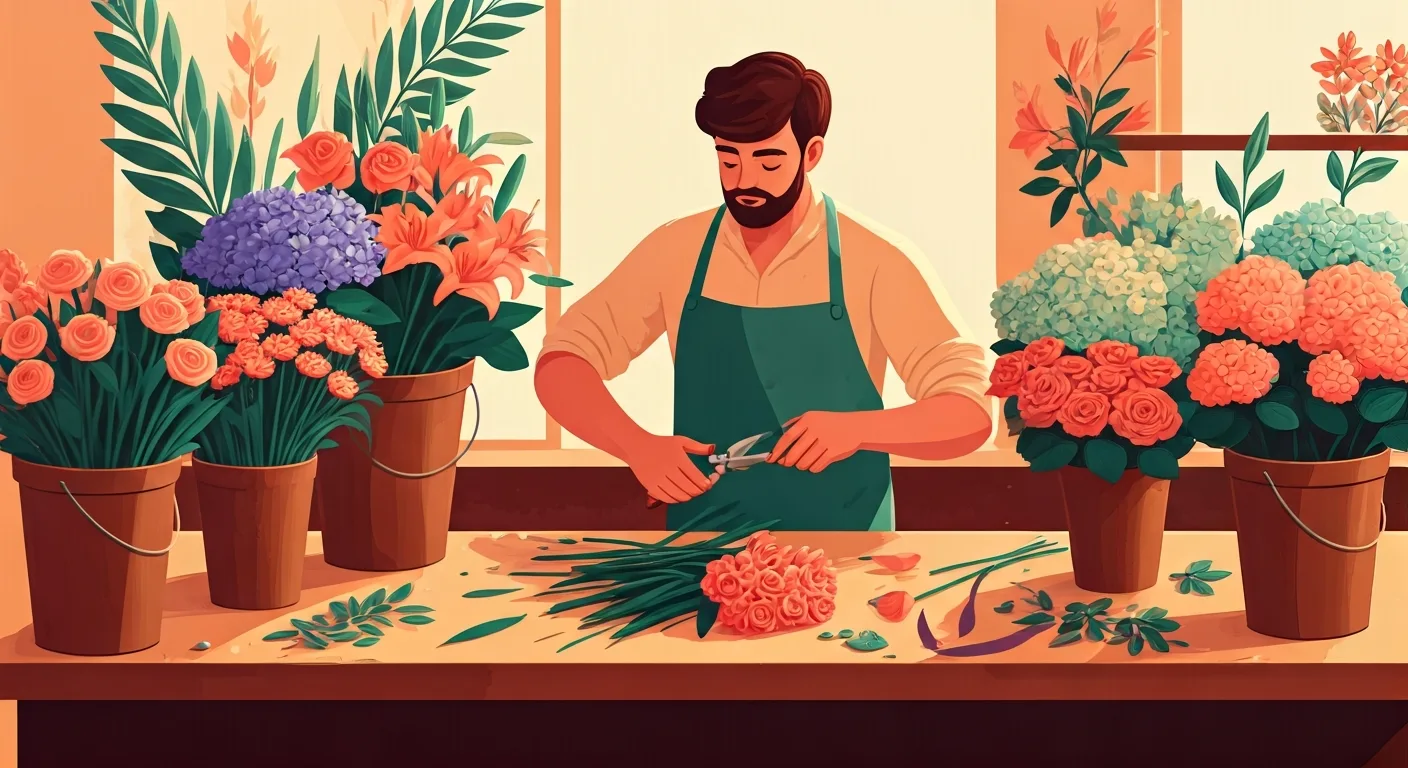
Creates floral arrangements and bouquets for events, gifts, and everyday sales. Selects and conditions flowers and foliage, advises customers on colour, style, and flower care, and manages stock to keep displays fresh and appealing. This role blends artistic creativity with practical customer service and retail operations.
Brings joy and comfort to customers by creating beautiful floral designs for celebrations, sympathetic gestures, and everyday décor, contributing to memorable moments and appealing retail spaces.
On the job
- Design and create bouquets, arrangements, and floral displays for various occasions such as weddings, funerals, and holidays.
- Consult with customers to understand their needs, preferences, and budget, providing expert advice on flower selection and arrangement styles.
- Select, cut, and prepare fresh flowers and foliage, ensuring optimal quality, freshness, and longevity.
- Manage inventory, including ordering, receiving, conditioning, and storing flowers and plants, and maintaining the cleanliness of the shop.
- Process orders, handle financial transactions, and coordinate deliveries or pickups for customer orders.
Tools & technology
Average salary
Job outlook
StableDemand is steady. This is an established role with consistent hiring across sectors.
Education & training
Certificate or diploma in floral design, horticulture, or extensive on-the-job training.
AI impact outlook
Note — this is our current view. AI is moving fast, so we revisit these ratings.
Show how this was assessed Hide the detail
Note — this is our current view. AI is moving fast, so we revisit these ratings.
Show how this was assessed Hide the detailWhy this role received this rating
Core task exposure
moderate
How much of the role’s important work could AI perform?
Inventory management, basic sales transactions, and delivery scheduling can be assisted by AI, but the core artistic design and physical arrangement are less exposed.
End-to-end automation
low
Can AI complete the work without substantial human involvement?
The physical manipulation of delicate materials, artistic judgment, and nuanced customer consultations for bespoke designs are not amenable to full automation.
Adoption pressure
low
How likely are employers to introduce AI into this work?
Smaller, artistic-focused businesses typically have lower capital investment in advanced tech, leading to slower adoption rates for core creative tasks.
Human dependence
strong
How much does success depend on human judgement, relationships and accountability?
Artistic judgment, sensory input, delicate physical manipulation, and empathetic customer consultation for significant life events are highly human-dependent.
Protective — a higher rating lowers the overall score.
Role adaptability
strong
How easily can the role evolve as AI takes on more tasks?
The role can adapt by using AI for administrative tasks, allowing florists to concentrate on unique artistic creations and high-value customer experiences.
Shown for context — not part of the score.
What AI may take on
These are the parts of the role most likely to be automated or significantly accelerated.
- Managing inventory, including ordering and tracking flower freshness
- Processing standard sales through a POS system
- Coordinating deliveries and pickups efficiently
- Generating initial design concepts based on customer input
- Maintaining cleanliness schedules and stock rotation
Where people remain essential
These parts continue to depend heavily on human judgement, relationships and accountability.
- Designing and creating unique, aesthetically pleasing floral arrangements
- Consulting with customers to understand subtle emotional needs and preferences
- Selecting and preparing fresh flowers and foliage with physical dexterity
- Providing expert advice on flower care, style, and longevity
- Adapting designs creatively in response to unexpected material availability
How the role may evolve
From routine sales to bespoke artistry and customer experience.
Florists will shift away from administrative and logistical burdens, focusing more deeply on crafting unique designs and cultivating strong, personalized relationships with their clientele.
Strengthen your future fit
- Refine artistic design skills and creative problem-solving
- Develop advanced customer consultation and empathy techniques
- Gain proficiency in floral inventory and supply chain management software
- Explore niche markets for high-end or specialized floral services
- Learn digital marketing and social media for showcasing artistic work
- Assessment horizon
- 3–7 years
- Confidence
- Medium
- Last reviewed
- August 2026
- Methodology
- v1.0
This assessment reflects current AI capabilities and expected adoption patterns. Actual impacts will vary by industry, employer and the way each role is performed.
Career pathways
WHERE YOU COULD GO
CURRENT ROLE
Florist
Retail & Customer Service
ADJACENT MOVES
STARTING POINTS
Who thrives here
Interest profile
artistic · RAC
People who enjoy hands-on creative work, designing with natural materials, and providing personalised service to customers tend to thrive in this role.
Personality characteristics
Creative
Enjoys expressing ideas through floral arrangements and visual design.
Detail-oriented
Ensures arrangements are perfect, from flower selection to final presentation.
Customer-focused
Genuinely enjoys helping people choose the right flowers for their needs and occasions.
Hands-on
Prefers practical work, directly handling flowers, tools, and materials to create tangible products.
Composed under pressure
Manages multiple orders and demanding customers, especially during peak seasons and holidays.
Best for
- Individuals with a passion for flowers, plants, and natural aesthetics who enjoy creating beauty.
- Those who enjoy combining artistic skill with practical, hands-on tasks in a retail or studio environment.
- People who find satisfaction in crafting products that bring joy, comfort, or meaning to others.
- Service-oriented individuals who thrive on direct customer interaction and consultation.
Watch out for
- Regular weekend work and long hours are common, especially during peak seasons like holidays.
- The role can be physically demanding, requiring standing for long periods, lifting, and repetitive tasks.
A week in the life
A representative working week for a Florist — where the deep work, meetings, and admin actually land.
Real people. Real results.
Thousands of people
can't be wrong.




Frequently asked questions about Florist roles
What does a Florist do?
A Florist creates floral arrangements and bouquets for events, gifts, and everyday sales. Selects and conditions flowers and foliage, advises customers on colour, style, and flower care, and manages stock to keep displays fresh and appealing. This role blends artistic creativity with practical customer service and retail operations. Brings joy and comfort to customers by creating beautiful floral designs for celebrations, sympathetic gestures, and everyday décor, contributing to memorable moments and appealing retail spaces.
How much does a Florist earn?
A Florist earns a median of $35,000 per year in the US, typically ranging from $28,000 to $45,000.
What qualifications do you need to become a Florist?
To become a Florist, certificate or diploma in floral design, horticulture, or extensive on-the-job training.
What personality suits a Florist?
Florist roles tend to suit people who are warm and cooperative — tuned in to the people around them (Agreeableness 75/100) and open and curious — drawn to variety, ideas and new approaches (Openness 68/100). The traits that matter most in the role are Creative, Detail-oriented, Customer-focused and Hands-on. Enjoys expressing ideas through floral arrangements and visual design. On interests, Florist maps to a RAC Holland Code profile — people who enjoy hands-on creative work, designing with natural materials, and providing personalised service to customers tend to thrive in this role.
Who does a Florist role suit?
A Florist role is usually a strong fit for these reasons. High artistic and realistic affinity, perfect for hands-on creative expression with natural materials. Significant deep work blocks for focused design and arrangement creation, appealing to those who enjoy craft. Regular customer interaction for individuals who thrive on social engagement and providing personalized service.
What are the downsides of being a Florist?
Florist roles come with trade-offs worth weighing up. Regular weekend work and long hours are common, especially during peak seasons like holidays. The role can be physically demanding, requiring standing for long periods, lifting, and repetitive tasks.
What is the work environment like for a Florist?
Work as a Florist is mostly retail-based with onsite arrangements common, semi-structured — a mix of set processes and self-directed work, a moderate pace and high exposure to clients or stakeholders. Around 57% of the week is focused deep work.
What skills do you need to be a Florist?
Core skills for a Florist include Floral design and arrangement, Customer service, Flower care and handling, Inventory management and Color theory and aesthetics.
How do you become a Florist?
Common entry routes into Florist roles include Floral Assistant, Retail Sales Associate and Horticulture Apprentice.
What career progression is there for a Florist?
From a Florist role, common next steps include Senior Florist, Floral Shop Manager and Event Floral Designer; lateral moves include Horticulturist and Retail Manager.
What is the job outlook for Florist roles?
The outlook for Florist roles is currently rated stable. Demand is steady. This is an established role with consistent hiring across sectors.
Will AI replace Florist roles?
Traitstack rates automation risk for Florist roles at 31 out of 100, which is low. Automated systems can handle inventory and basic transactions, allowing florists to dedicate more time to bespoke artistic creation and nuanced client consultation. AI is most likely to take on managing inventory, including ordering and tracking flower freshness, processing standard sales through a pos system and coordinating deliveries and pickups efficiently. Designing and creating unique, aesthetically pleasing floral arrangements, consulting with customers to understand subtle emotional needs and preferences and selecting and preparing fresh flowers and foliage with physical dexterity stay with people. From routine sales to bespoke artistry and customer experience. That score measures how much of the work could change, not the likelihood the job disappears. It is Traitstack's current view, revisited as AI capability moves.