Concierge
SOC 39-6012.00 · ESCO 4224
Role snapshot
Overview
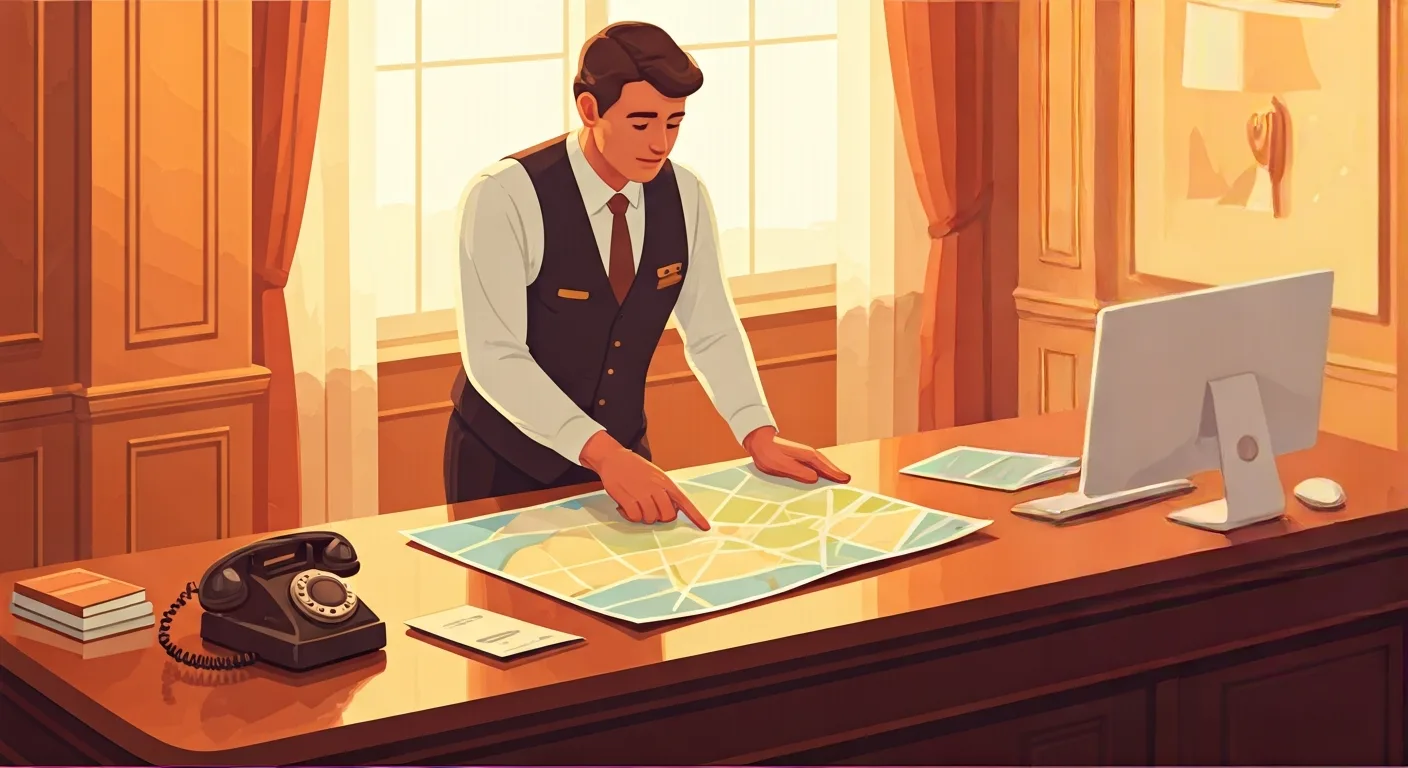
Concierges are the primary point of contact for guests, ensuring their stay is seamless and memorable. They greet visitors, manage reservations, arrange transportation, book tours, and fulfill diverse guest requests, often at short notice. This role requires extensive local knowledge, exceptional problem-solving skills, and the ability to maintain composure under pressure.
Significantly enhances the guest experience by providing personalised service, anticipating needs, and resolving issues efficiently, contributing directly to guest satisfaction and loyalty.
On the job
- Welcome guests and provide a personalised check-in/check-out experience
- Coordinate and book local activities, dining reservations, and transportation
- Provide expert recommendations on local attractions, events, and services
- Handle guest inquiries and resolve requests, ranging from routine to unusual
- Maintain an in-depth knowledge of hotel services, local amenities, and current events
Tools & technology
Average salary
Job outlook
StableDemand is steady. This is an established role with consistent hiring across sectors.
Education & training
High school diploma or equivalent, with a strong emphasis on customer service training or experience. Some roles may prefer an associate's degree in hospitality.
AI impact outlook
Note — this is our current view. AI is moving fast, so we revisit these ratings.
Show how this was assessed Hide the detail
Note — this is our current view. AI is moving fast, so we revisit these ratings.
Show how this was assessed Hide the detailWhy this role received this rating
Core task exposure
moderate
How much of the role’s important work could AI perform?
Information retrieval, standard booking requests, and routine check-in/check-out processes have some exposure to AI-driven automation.
End-to-end automation
low
Can AI complete the work without substantial human involvement?
The highly personalized nature of guest services, including complex problem-solving and bespoke arrangements, prevents full end-to-end automation.
Adoption pressure
moderate
How likely are employers to introduce AI into this work?
Hotels are investing in technology for efficiency but maintain a high value on human touchpoints for premium guest experiences.
Human dependence
strong
How much does success depend on human judgement, relationships and accountability?
Success is almost entirely dependent on human judgment, extensive local knowledge, emotional intelligence, and building genuine guest rapport.
Protective — a higher rating lowers the overall score.
Role adaptability
strong
How easily can the role evolve as AI takes on more tasks?
This role can adapt by integrating new digital tools for information access while elevating the personal touch and bespoke service offerings.
Shown for context — not part of the score.
What AI may take on
These are the parts of the role most likely to be automated or significantly accelerated.
- Provide automated answers to common guest inquiries
- Process routine booking requests for transportation or dining
- Curate basic local attraction recommendations based on guest profiles
- Manage guest check-in and check-out procedures
- Translate guest requests in multiple languages
Where people remain essential
These parts continue to depend heavily on human judgement, relationships and accountability.
- Offering personalized, empathetic service and anticipating guest needs
- Resolving complex or unusual guest requests with discretion
- Building strong relationships and local networks for exclusive access
- Exercising superior judgment in sensitive guest situations
- Providing expert, nuanced recommendations based on real-time context
How the role may evolve
Curating unique guest experiences, assisted by AI for information retrieval.
Concierges will evolve from information providers to highly skilled experience curators, using AI tools to enhance their capacity for personalized and proactive guest service.
Strengthen your future fit
- Deepening local knowledge and expertise
- Mastering emotional intelligence and communication skills
- Developing proactive problem-solving and improvisation abilities
- Cultivating a network of local contacts and exclusive access
- Assessment horizon
- 3–7 years
- Confidence
- High
- Last reviewed
- August 2026
- Methodology
- v1.0
This assessment reflects current AI capabilities and expected adoption patterns. Actual impacts will vary by industry, employer and the way each role is performed.
Career pathways
WHERE YOU COULD GO
CURRENT ROLE
Concierge
Hospitality & Food Service
ADJACENT MOVES
STARTING POINTS
Who thrives here
Interest profile
social · SEC
People who enjoy interacting with diverse individuals, providing service, organising information, and taking initiative to solve problems often find great satisfaction as a Concierge.
Personality characteristics
Knowledgeable
Stays updated on local attractions, events, and services to provide informed recommendations.
Organised
Manages multiple requests and reservations efficiently, ensuring no detail is overlooked.
Sociable
Enjoys engaging with a wide variety of guests and making them feel welcome.
Service-Oriented
Naturally inclined to assist others and ensure their comfort and satisfaction.
Composed
Maintains a calm and professional demeanor even when faced with demanding guests or unexpected challenges.
Problem Solver
Takes initiative to find creative solutions for guest requests and issues.
Best for
- Individuals who thrive on helping others and creating positive experiences.
- Those who enjoy being the 'go-to' person for information and solutions.
- People who are calm under pressure and can juggle multiple priorities with a smile.
Watch out for
- Can be fast-paced and demanding, requiring constant problem-solving under pressure.
- Requires working irregular hours, including evenings, weekends, and holidays, common in hospitality.
- Dealing with difficult or unreasonable guests requires patience and emotional resilience.
A week in the life
A representative working week for a Concierge — where the deep work, meetings, and admin actually land.
Real people. Real results.
Thousands of people
can't be wrong.





Frequently asked questions about Concierge roles
What does a Concierge do?
A Concierge concierges are the primary point of contact for guests, ensuring their stay is seamless and memorable. They greet visitors, manage reservations, arrange transportation, book tours, and fulfill diverse guest requests, often at short notice. This role requires extensive local knowledge, exceptional problem-solving skills, and the ability to maintain composure under pressure. Significantly enhances the guest experience by providing personalised service, anticipating needs, and resolving issues efficiently, contributing directly to guest satisfaction and loyalty.
How much does a Concierge earn?
A Concierge earns a median of $45,000 per year in the US, typically ranging from $30,000 to $60,000.
What qualifications do you need to become a Concierge?
To become a Concierge, high school diploma or equivalent, with a strong emphasis on customer service training or experience. Some roles may prefer an associate's degree in hospitality.
What personality suits a Concierge?
Concierge roles tend to suit people who are outgoing — energised by people, visibility and quick social contact (Extraversion 85/100) and warm and cooperative — tuned in to the people around them (Agreeableness 80/100). The traits that matter most in the role are Knowledgeable, Organised, Sociable and Service-Oriented. Stays updated on local attractions, events, and services to provide informed recommendations. On interests, Concierge maps to a SEC Holland Code profile — people who enjoy interacting with diverse individuals, providing service, organising information, and taking initiative to solve problems often find great satisfaction as a Concierge.
Who does a Concierge role suit?
A Concierge role is usually a strong fit for these reasons. High social interaction allows you to connect with diverse individuals and provide direct assistance. The role demands initiative and resourcefulness, aligning with an enterprising nature to solve guest challenges. Requires strong organisational skills and attention to detail for managing reservations and information, appealing to conventional interests.
What are the downsides of being a Concierge?
Concierge roles come with trade-offs worth weighing up. Can be fast-paced and demanding, requiring constant problem-solving under pressure. Requires working irregular hours, including evenings, weekends, and holidays, common in hospitality. Dealing with difficult or unreasonable guests requires patience and emotional resilience.
What is the work environment like for a Concierge?
Work as a Concierge is mostly hospitality-based with onsite arrangements common, semi-structured — a mix of set processes and self-directed work and high exposure to clients or stakeholders.
What skills do you need to be a Concierge?
Core skills for a Concierge include Customer Service, Local Knowledge, Problem-Solving, Communication, Multitasking and Organisation.
How do you become a Concierge?
Common entry routes into Concierge roles include Customer Service Representative, Front Desk Agent and Bellhop.
What career progression is there for a Concierge?
From a Concierge role, common next steps include Front Office Manager, Guest Relations Manager and Hotel Manager; lateral moves include Event Coordinator.
What is the job outlook for Concierge roles?
The outlook for Concierge roles is currently rated stable. Demand is steady. This is an established role with consistent hiring across sectors.
Will AI replace Concierge roles?
Traitstack rates automation risk for Concierge roles at 31 out of 100, which is low. While AI can provide information and booking assistance, the nuanced art of personalized recommendations and resolving unique guest needs remains a deeply human expertise. AI is most likely to take on provide automated answers to common guest inquiries, process routine booking requests for transportation or dining and curate basic local attraction recommendations based on guest profiles. Offering personalized, empathetic service and anticipating guest needs, resolving complex or unusual guest requests with discretion and building strong relationships and local networks for exclusive access stay with people. Curating unique guest experiences, assisted by AI for information retrieval. That score measures how much of the work could change, not the likelihood the job disappears. It is Traitstack's current view, revisited as AI capability moves.