Agricultural and Horticultural Mobile Plant Operator
SOC 45-2091.00 · ESCO 8341 · OSCA 741131
Role snapshot
Overview
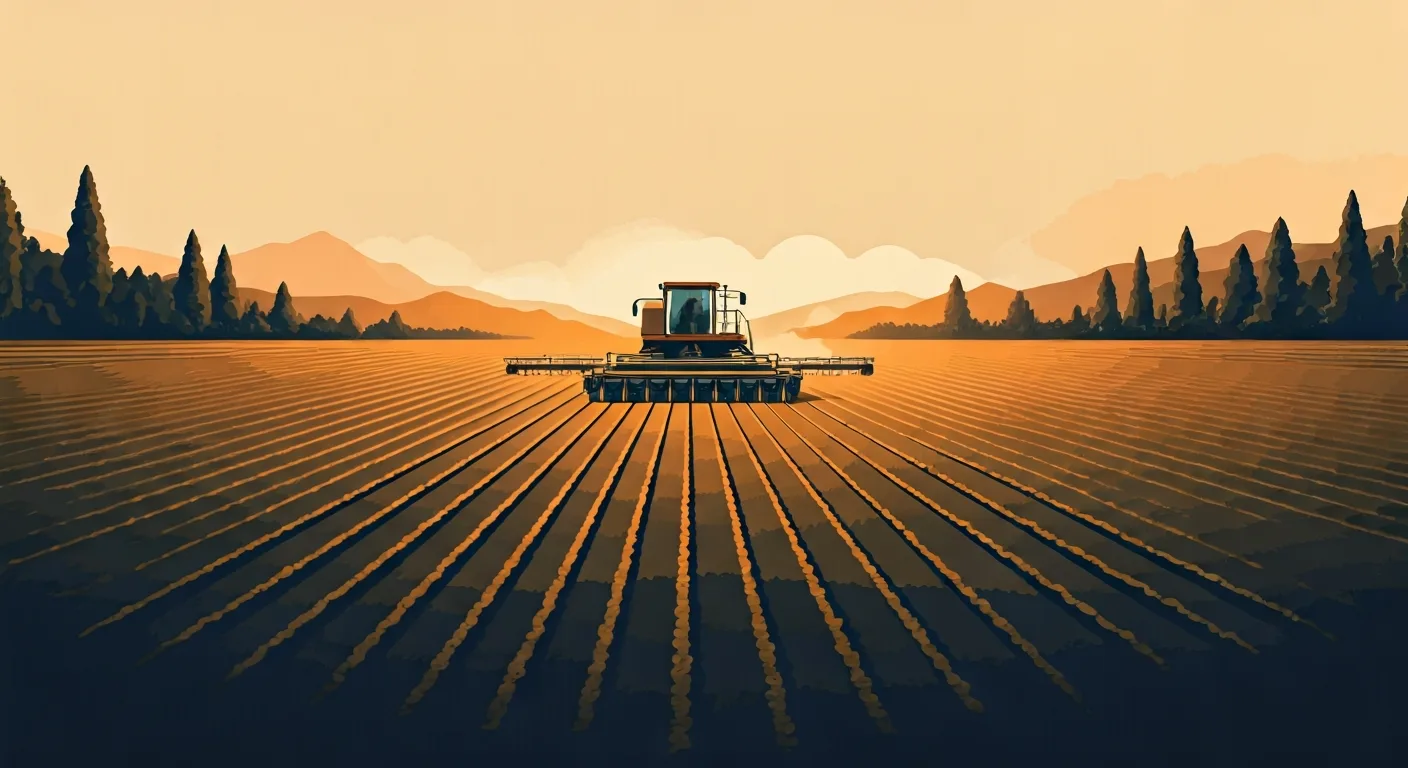
Operates and maintains a variety of mobile plant and equipment, including tractors, harvesters, sprayers, and cultivation machinery, across agricultural and horticultural properties. Responsibilities include preparing soil, planting and cultivating crops, applying fertilisers and pesticides, and harvesting produce according to seasonal demands and operational plans. Ensures equipment is safely operated and maintained for optimal performance and efficiency.
Contributes directly to food production and land management by skillfully operating essential machinery, ensuring timely and efficient execution of farming tasks from planting to harvest, and maintaining soil health and crop quality.
On the job
- Operate and navigate tractors and other mobile plant for tilling, planting, and harvesting tasks.
- Perform routine maintenance checks, lubrication, and minor repairs on agricultural machinery.
- Monitor and adjust equipment settings for optimal application of seeds, fertilisers, or pesticides.
- Inspect fields for crop health, pest issues, and soil conditions to inform operational decisions.
- Maintain accurate records of work performed, fuel consumption, and crop data for reporting.
Tools & technology
Average salary
Job outlook
StableDemand is steady. This is an established role with consistent hiring across sectors.
Education & training
Vocational training or certificate in agriculture, horticulture, or heavy equipment operation. Many essential skills are learned on the job.
AI impact outlook
Note — this is our current view. AI is moving fast, so we revisit these ratings.
Show how this was assessed Hide the detail
Note — this is our current view. AI is moving fast, so we revisit these ratings.
Show how this was assessed Hide the detailWhy this role received this rating
Core task exposure
low
How much of the role’s important work could AI perform?
AI can optimize routes and adjust settings based on precision agriculture data, but the physical operation and supervision of heavy machinery are not AI tasks.
End-to-end automation
low
Can AI complete the work without substantial human involvement?
While autonomous machines exist, human supervision, complex troubleshooting, and adaptation to unpredictable field conditions prevent end-to-end AI control.
Adoption pressure
moderate
How likely are employers to introduce AI into this work?
Adoption of fully autonomous machinery is primarily gated by capital investment and replacement cycles, not by AI software readiness.
Human dependence
strong
How much does success depend on human judgement, relationships and accountability?
Success depends on an operator's ability to troubleshoot complex mechanical systems, make real-time decisions in varied conditions, and perform physical maintenance.
Protective — a higher rating lowers the overall score.
Role adaptability
moderate
How easily can the role evolve as AI takes on more tasks?
The role will shift towards supervising automated fleets, performing advanced diagnostics, and managing the overall operational workflow rather than direct physical operation.
Shown for context — not part of the score.
What AI may take on
These are the parts of the role most likely to be automated or significantly accelerated.
- Optimizing planting and harvesting routes for efficiency
- Automating adjustment of sprayer/seeder settings based on field maps
- Predictive analytics for equipment maintenance scheduling
- Real-time monitoring of crop health via sensor data analysis
- Automated record-keeping of operational data and fuel consumption
Where people remain essential
These parts continue to depend heavily on human judgement, relationships and accountability.
- Performing complex maintenance and repairs on agricultural machinery
- Troubleshooting unexpected mechanical failures or system errors
- Adapting operations to unforeseen field conditions like mud or obstacles
- Manually operating equipment for delicate tasks or irregular areas
- Supervising autonomous machinery for safety and performance
- Making judgment calls on crop health or pesticide application in critical situations
How the role may evolve
Less operating, more supervising and maintaining smart machines.
Operators will spend less time on direct control and more time overseeing autonomous machinery, performing diagnostics, and ensuring optimal performance and safety.
Strengthen your future fit
- Advanced diagnostics and troubleshooting for complex machinery
- Proficiency in precision agriculture software and data interpretation
- Understanding of autonomous system operation and safety protocols
- Mechanical and electrical maintenance expertise
- Adaptive problem-solving for dynamic field environments
- Assessment horizon
- 3–7 years
- Confidence
- High
- Last reviewed
- August 2026
- Methodology
- v1.0
This assessment reflects current AI capabilities and expected adoption patterns. Actual impacts will vary by industry, employer and the way each role is performed.
Career pathways
WHERE YOU COULD GO
CURRENT ROLE
Agricultural and Horticultural Mobile Plant Operator
Agriculture & Food
ADJACENT MOVES
STARTING POINTS
Who thrives here
Interest profile
realistic · RCI
Individuals who enjoy hands-on work with machinery, working outdoors, and following established procedures while also engaging in practical problem-solving will find this role fulfilling.
Personality characteristics
Methodical
Approaches tasks with precision and care, ensuring equipment is operated correctly and maintained meticulously.
Practical
Prefers hands-on work and finds satisfaction in operating machinery and seeing tangible results.
Reliable
Can be counted on to perform duties consistently, especially during critical seasonal periods.
Calm under pressure
Maintains composure when facing equipment malfunctions or tight deadlines during harvest season.
Cooperative
Works effectively with farm managers and other team members to achieve agricultural goals.
Best for
- Individuals who enjoy operating complex machinery and prefer an outdoor, practical work environment.
- People who value routine, attention to detail, and contributing directly to essential industries.
Watch out for
- Demanding physical work and long hours during peak seasons, often including weekends.
- Exposure to varying weather conditions and potential for isolation during long shifts in the field.
A week in the life
A representative working week for an Agricultural and Horticultural Mobile Plant Operator — where the deep work, meetings, and admin actually land.
Real people. Real results.
Thousands of people
can't be wrong.


Frequently asked questions about Agricultural and Horticultural Mobile Plant Operator roles
What does an Agricultural and Horticultural Mobile Plant Operator do?
An Agricultural and Horticultural Mobile Plant Operator operates and maintains a variety of mobile plant and equipment, including tractors, harvesters, sprayers, and cultivation machinery, across agricultural and horticultural properties. Responsibilities include preparing soil, planting and cultivating crops, applying fertilisers and pesticides, and harvesting produce according to seasonal demands and operational plans. Ensures equipment is safely operated and maintained for optimal performance and efficiency. Contributes directly to food production and land management by skillfully operating essential machinery, ensuring timely and efficient execution of farming tasks from planting to harvest, and maintaining soil health and crop quality.
How much does an Agricultural and Horticultural Mobile Plant Operator earn?
An Agricultural and Horticultural Mobile Plant Operator earns a median of $48,000 per year in the US, typically ranging from $35,000 to $65,000.
What qualifications do you need to become an Agricultural and Horticultural Mobile Plant Operator?
To become an Agricultural and Horticultural Mobile Plant Operator, vocational training or certificate in agriculture, horticulture, or heavy equipment operation. Many essential skills are learned on the job. Relevant heavy machinery operator certifications.
What personality suits an Agricultural and Horticultural Mobile Plant Operator?
Agricultural and Horticultural Mobile Plant Operator roles tend to suit people who are highly conscientious — precise, organised and strong on follow-through (Conscientiousness 75/100) and steady under pressure — deadlines and setbacks do not rattle them easily (Emotional Stability 72/100). The traits that matter most in the role are Methodical, Practical, Reliable and Calm under pressure. Approaches tasks with precision and care, ensuring equipment is operated correctly and maintained meticulously. On interests, Agricultural and Horticultural Mobile Plant Operator maps to a RCI Holland Code profile — individuals who enjoy hands-on work with machinery, working outdoors, and following established procedures while also engaging in practical problem-solving will find this role fulfilling.
Who does an Agricultural and Horticultural Mobile Plant Operator role suit?
An Agricultural and Horticultural Mobile Plant Operator role is usually a strong fit for these reasons. Strong Realistic (R) alignment: involves extensive hands-on operation of heavy machinery and working outdoors. High Conventional (C) demands for meticulous equipment maintenance and adherence to operational procedures. Offers a direct connection to nature and the satisfaction of contributing to essential food production.
What are the downsides of being an Agricultural and Horticultural Mobile Plant Operator?
Agricultural and Horticultural Mobile Plant Operator roles come with trade-offs worth weighing up. Demanding physical work and long hours during peak seasons, often including weekends. Exposure to varying weather conditions and potential for isolation during long shifts in the field.
What is the work environment like for an Agricultural and Horticultural Mobile Plant Operator?
Work as an Agricultural and Horticultural Mobile Plant Operator is mostly outdoors-based with onsite arrangements common, semi-structured — a mix of set processes and self-directed work and low exposure to clients or stakeholders. Around 53% of the week is focused deep work.
What skills do you need to be an Agricultural and Horticultural Mobile Plant Operator?
Core skills for an Agricultural and Horticultural Mobile Plant Operator include Mobile plant operation, Equipment maintenance, Precision agriculture technology, Crop management and Problem-solving (mechanical).
How do you become an Agricultural and Horticultural Mobile Plant Operator?
Common entry routes into Agricultural and Horticultural Mobile Plant Operator roles include Farm Hand, General Labourer Agriculture and Apprentice Agricultural Mechanic.
What career progression is there for an Agricultural and Horticultural Mobile Plant Operator?
From an Agricultural and Horticultural Mobile Plant Operator role, common next steps include Farm Manager and Agricultural Supervisor; lateral moves include Heavy Equipment Operator (Construction) and Agricultural Mechanic.
What is the job outlook for Agricultural and Horticultural Mobile Plant Operator roles?
The outlook for Agricultural and Horticultural Mobile Plant Operator roles is currently rated stable. Demand is steady. This is an established role with consistent hiring across sectors.
Will AI replace Agricultural and Horticultural Mobile Plant Operator roles?
Traitstack rates automation risk for Agricultural and Horticultural Mobile Plant Operator roles at 25 out of 100, which is low. The precision guidance and operational data for mobile plant are becoming AI-driven; however, physical operation, maintenance, and adapting to unpredictable field conditions will still require a human operator. AI is most likely to take on optimizing planting and harvesting routes for efficiency, automating adjustment of sprayer/seeder settings based on field maps and predictive analytics for equipment maintenance scheduling. Performing complex maintenance and repairs on agricultural machinery, troubleshooting unexpected mechanical failures or system errors and adapting operations to unforeseen field conditions like mud or obstacles stay with people. Less operating, more supervising and maintaining smart machines. That score measures how much of the work could change, not the likelihood the job disappears. It is Traitstack's current view, revisited as AI capability moves.