Winemaker
SOC 19-1012.00 · ESCO 2145 · OSCA 244233
Role snapshot
Overview
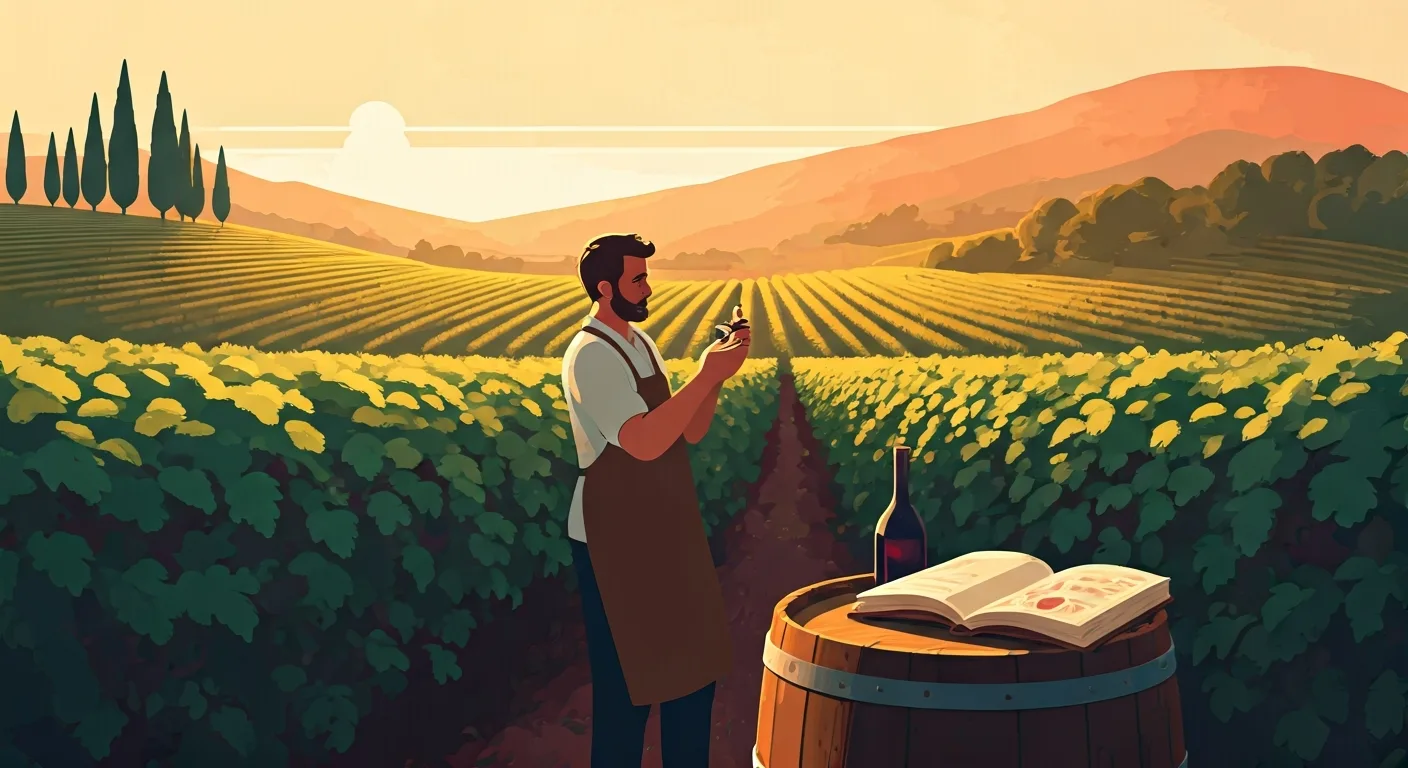
Manages every stage of wine production from grape selection and crushing through fermentation, blending, and bottling. Monitors chemical levels, tastes developing wines, and makes critical decisions that shape the final flavour profile and overall quality of the wine. This role combines scientific knowledge with sensory evaluation and creative artistry.
Responsible for crafting high-quality wines that reflect the vineyard's terroir and vision, influencing consumer experience, brand reputation, and economic success of the winery.
On the job
- Oversee grape harvesting, crushing, and pressing operations
- Monitor fermentation processes, including yeast management, temperature control, and nutrient additions
- Conduct laboratory analysis of wine samples for chemical composition, stability, and quality control
- Blend different wine lots to achieve desired flavour profiles and consistency
- Manage wine aging, fining, filtration, and bottling procedures
Tools & technology
Average salary
Job outlook
StableDemand is steady. This is an established role with consistent hiring across sectors.
Education & training
Typically requires a bachelor's or master's degree in Oenology, Viticulture, Food Science, or Chemistry, often with specialized certifications.
AI impact outlook
Note — this is our current view. AI is moving fast, so we revisit these ratings.
Show how this was assessed Hide the detail
Note — this is our current view. AI is moving fast, so we revisit these ratings.
Show how this was assessed Hide the detailWhy this role received this rating
Core task exposure
moderate
How much of the role’s important work could AI perform?
AI can assist with fermentation monitoring and chemical analysis, but the critical sensory evaluation and artistic blending decisions remain firmly human.
End-to-end automation
low
Can AI complete the work without substantial human involvement?
The winemaking process is too reliant on nuanced human judgment, sensory input, and creative blending for complete end-to-end automation.
Adoption pressure
moderate
How likely are employers to introduce AI into this work?
AI adoption is likely for data-driven monitoring and analysis to improve efficiency and consistency, but cultural and traditional factors may slow full integration.
Human dependence
strong
How much does success depend on human judgement, relationships and accountability?
The success of a wine depends almost entirely on the winemaker's sensory expertise, artistic vision, and experienced judgment in complex biological processes.
Protective — a higher rating lowers the overall score.
Role adaptability
strong
How easily can the role evolve as AI takes on more tasks?
Winemakers can readily adapt by integrating AI tools for data analysis while enhancing their focus on the artistic, sensory, and strategic aspects of wine creation.
Shown for context — not part of the score.
What AI may take on
These are the parts of the role most likely to be automated or significantly accelerated.
- Monitoring fermentation parameters (temperature, sugar levels) and alerting anomalies.
- Analyzing chemical composition of wine samples for quality control.
- Predicting grape ripeness and optimal harvest times based on vineyard data.
- Suggesting potential blending ratios based on desired flavor profiles and chemical data.
Where people remain essential
These parts continue to depend heavily on human judgement, relationships and accountability.
- Conducting sensory evaluations and tasting wine at various stages.
- Making creative decisions on blending to achieve desired flavour profiles.
- Troubleshooting complex biological issues during fermentation and aging.
- Managing vineyard operations and grape selection based on qualitative factors.
- Ensuring quality control and adherence to regulatory standards.
- Guiding the overall artistic vision and brand identity of the wine.
How the role may evolve
From data collection to data-driven artistry and sensory mastery.
Winemakers will leverage AI for analytical support, freeing them to deepen their expertise in sensory evaluation, creative blending, and the strategic direction of their wines.
Strengthen your future fit
- Advanced sensory evaluation and tasting expertise.
- Data interpretation and analytical skills for AI-driven insights.
- Deep understanding of oenology, viticulture, and wine chemistry.
- Creative blending and product development.
- Team leadership and project management.
- Assessment horizon
- 3–7 years
- Confidence
- High
- Last reviewed
- August 2026
- Methodology
- v1.0
This assessment reflects current AI capabilities and expected adoption patterns. Actual impacts will vary by industry, employer and the way each role is performed.
Career pathways
WHERE YOU COULD GO
CURRENT ROLE
Winemaker
Manufacturing & Production
ADJACENT MOVES
STARTING POINTS
Who thrives here
Interest profile
investigative · IRC
People who enjoy scientific investigation, hands-on practical work, and systematic processes to achieve a high-quality product tend to thrive as a Winemaker.
Personality characteristics
Curious
Explores new techniques, varietals, and blends to continuously improve wine quality and innovate.
Meticulous
Pays close attention to detail in scientific measurements, sanitation, and record-keeping, essential for consistent wine production.
Analytical
Enjoys investigating problems, performing lab tests, and interpreting data to make informed decisions about the wine.
Practical
Likes working with hands-on processes in the cellar and vineyard, operating equipment, and managing physical tasks.
Stable
Remains calm and composed when faced with unexpected challenges during harvest or fermentation, making rational decisions under pressure.
Cooperative
Works effectively with cellar teams, vineyard managers, and other staff to coordinate efforts and achieve shared goals.
Best for
- Individuals who enjoy applying scientific principles to a creative, craft-based industry.
- Those who appreciate tangible results from their work and have a passion for food and beverage production.
- People who are detail-oriented, patient, and able to work independently or as part of a small team.
Watch out for
- The work can be highly seasonal, with intense periods during harvest that demand long, irregular hours including weekends.
- Requires constant vigilance and problem-solving for biological and chemical processes that can be unpredictable.
A week in the life
A representative working week for a Winemaker — where the deep work, meetings, and admin actually land.
Real people. Real results.
Thousands of people
can't be wrong.

Frequently asked questions about Winemaker roles
What does a Winemaker do?
A Winemaker manages every stage of wine production from grape selection and crushing through fermentation, blending, and bottling. Monitors chemical levels, tastes developing wines, and makes critical decisions that shape the final flavour profile and overall quality of the wine. This role combines scientific knowledge with sensory evaluation and creative artistry. Responsible for crafting high-quality wines that reflect the vineyard's terroir and vision, influencing consumer experience, brand reputation, and economic success of the winery.
How much does a Winemaker earn?
A Winemaker earns a median of $95,000 per year in the US, typically ranging from $70,000 to $140,000.
What qualifications do you need to become a Winemaker?
To become a Winemaker, typically requires a bachelor's or master's degree in Oenology, Viticulture, Food Science, or Chemistry, often with specialized certifications.
What personality suits a Winemaker?
Winemaker roles tend to suit people who are highly conscientious — precise, organised and strong on follow-through (Conscientiousness 78/100) and open and curious — drawn to variety, ideas and new approaches (Openness 75/100). The traits that matter most in the role are Curious, Meticulous, Analytical and Practical. Explores new techniques, varietals, and blends to continuously improve wine quality and innovate. On interests, Winemaker maps to an IRC Holland Code profile — people who enjoy scientific investigation, hands-on practical work, and systematic processes to achieve a high-quality product tend to thrive as a Winemaker.
Who does a Winemaker role suit?
A Winemaker role is usually a strong fit for these reasons. A strong affinity for Investigative and Realistic activities, combining scientific rigor with hands-on production. Requires high Conscientiousness for meticulous process control and quality assurance. Opportunity for Openness to Experience through experimenting with new blends and techniques.
What are the downsides of being a Winemaker?
Winemaker roles come with trade-offs worth weighing up. The work can be highly seasonal, with intense periods during harvest that demand long, irregular hours including weekends. Requires constant vigilance and problem-solving for biological and chemical processes that can be unpredictable.
What is the work environment like for a Winemaker?
Work as a Winemaker is mostly mixed-based with onsite arrangements common, semi-structured — a mix of set processes and self-directed work, a moderate pace and medium exposure to clients or stakeholders. Around 47% of the week is focused deep work.
What skills do you need to be a Winemaker?
Core skills for a Winemaker include Sensory evaluation, Fermentation science, Chemistry principles, Quality control and Cellar management.
How do you become a Winemaker?
Common entry routes into Winemaker roles include Assistant Winemaker, Cellar Hand and Enology Intern.
What career progression is there for a Winemaker?
From a Winemaker role, common next steps include Head Winemaker and Director of Winemaking; lateral moves include Viticulturist.
What is the job outlook for Winemaker roles?
The outlook for Winemaker roles is currently rated stable. Demand is steady. This is an established role with consistent hiring across sectors.
Will AI replace Winemaker roles?
Traitstack rates automation risk for Winemaker roles at 33 out of 100, which is low. AI can optimize fermentation monitoring and chemical analysis, yet the critical sensory evaluation, artistic blending, and final taste decisions are uniquely human. AI is most likely to take on monitoring fermentation parameters (temperature, sugar levels) and alerting anomalies., analyzing chemical composition of wine samples for quality control. and predicting grape ripeness and optimal harvest times based on vineyard data.. Conducting sensory evaluations and tasting wine at various stages., making creative decisions on blending to achieve desired flavour profiles. and troubleshooting complex biological issues during fermentation and aging. stay with people. From data collection to data-driven artistry and sensory mastery. That score measures how much of the work could change, not the likelihood the job disappears. It is Traitstack's current view, revisited as AI capability moves.