Rail Guard or Conductor
SOC 53-4031.00 · ESCO 5112 · OSCA 899531
Role snapshot
Overview
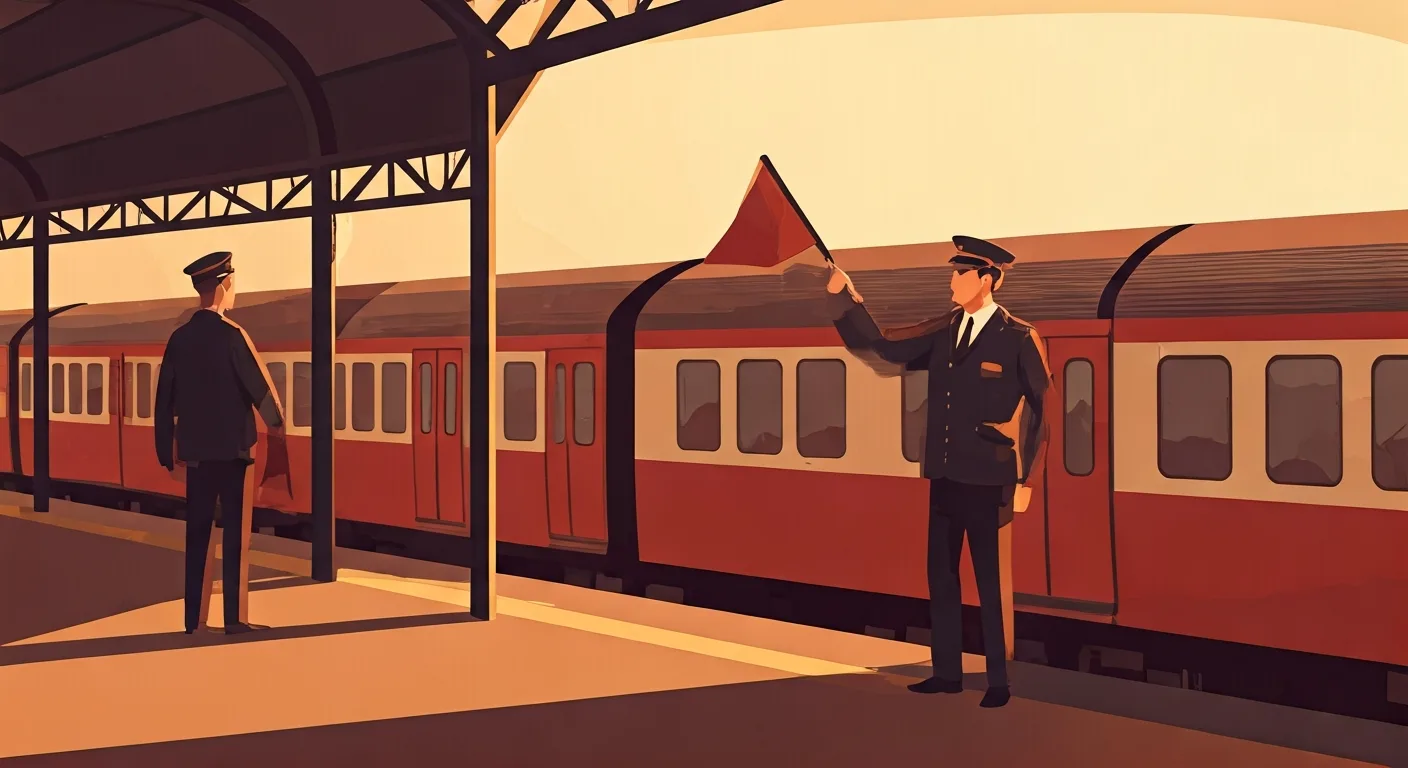
Ensures the safe and efficient operation of passenger trains by performing essential duties such as checking tickets, assisting passengers, opening and closing doors, making onboard announcements, and coordinating closely with the train driver regarding departure, stopping, and any operational issues. This role is critical for passenger safety and service delivery.
Crucial for maintaining safety standards, ensuring smooth passenger journeys, and facilitating reliable public transportation services. Contributes to the overall efficiency and reputation of rail networks and directly impacts passenger experience.
On the job
- Verify passenger tickets, provide assistance with luggage, and guide passengers to their seats.
- Operate train doors safely, ensuring clear platforms and secure closures before departure.
- Communicate departure signals and operational instructions clearly to the train driver via radio or hand signals.
- Make clear and timely announcements regarding station stops, schedule changes, safety procedures, and onboard services.
- Respond to passenger inquiries, resolve minor issues, and ensure compliance with all safety and operational regulations.
Tools & technology
Average salary
Job outlook
StableDemand is steady. This is an established role with consistent hiring across sectors.
Education & training
High school diploma or equivalent, followed by specific vocational training or a certificate in rail operations. Often requires on-the-job training and certification from a railway company.
AI impact outlook
Note — this is our current view. AI is moving fast, so we revisit these ratings.
Show how this was assessed Hide the detail
Note — this is our current view. AI is moving fast, so we revisit these ratings.
Show how this was assessed Hide the detailWhy this role received this rating
Core task exposure
high
How much of the role’s important work could AI perform?
Routine tasks such as ticket verification, door operations, and making standard announcements are highly exposed to automation and AI.
End-to-end automation
low
Can AI complete the work without substantial human involvement?
While many routine tasks can be automated, the need for direct passenger interaction, incident response, and critical safety oversight prevents full end-to-end automation.
Adoption pressure
high
How likely are employers to introduce AI into this work?
There is a strong drive for automation in rail to improve efficiency and safety, making adoption likely for many routine, rule-based tasks.
Human dependence
moderate
How much does success depend on human judgement, relationships and accountability?
Success requires human judgment for managing passenger flow, resolving conflicts, ensuring safety during incidents, and providing empathetic customer service.
Protective — a higher rating lowers the overall score.
Role adaptability
moderate
How easily can the role evolve as AI takes on more tasks?
The role can adapt by shifting focus from routine tasks to enhanced passenger service, safety management, and complex problem-solving during disruptions.
Shown for context — not part of the score.
What AI may take on
These are the parts of the role most likely to be automated or significantly accelerated.
- Verifying passenger tickets via automated scanners or gates
- Operating train doors safely using automated systems
- Making routine announcements about stations and schedules
- Monitoring passenger numbers and flow for capacity management
- Communicating operational data to the driver and control center
Where people remain essential
These parts continue to depend heavily on human judgement, relationships and accountability.
- Providing personalized assistance to passengers with special needs or inquiries
- Resolving conflicts and managing difficult passenger behavior
- Ensuring passenger safety during boarding, alighting, and emergencies
- Coordinating with the driver and station staff during incidents or disruptions
- Administering basic first aid or emergency support
- Maintaining a visible and reassuring presence for passengers
How the role may evolve
From routine tasks to proactive service and safety management.
The role will shift from primarily performing routine operational tasks to a greater emphasis on proactive passenger service, ensuring safety compliance, and expert management of non-routine situations.
Strengthen your future fit
- Proficiency in operating automated train systems and passenger information displays
- Enhanced customer service and de-escalation communication skills
- Strong understanding of safety protocols and emergency response procedures
- Ability to coordinate effectively with drivers and control staff during incidents
- Maintaining a calm and authoritative presence in high-pressure situations
- Assessment horizon
- 3–7 years
- Confidence
- Medium
- Last reviewed
- August 2026
- Methodology
- v1.0
This assessment reflects current AI capabilities and expected adoption patterns. Actual impacts will vary by industry, employer and the way each role is performed.
Career pathways
WHERE YOU COULD GO
CURRENT ROLE
Rail Guard or Conductor
Transport & Aviation
ADJACENT MOVES
STARTING POINTS
Who thrives here
Interest profile
realistic · RCE
Individuals who thrive on practical, hands-on work in a structured environment, with a strong focus on safety and following procedures. They also enjoy interacting with the public and taking charge in various situations.
Personality characteristics
Conscientious
Adheres strictly to safety protocols and operational procedures, ensuring all tasks are completed accurately and responsibly.
Agreeable
Patient and helpful in assisting passengers, resolving issues, and maintaining a positive onboard environment.
Practical
Prefers concrete tasks and established methods over abstract theories, focusing on the immediate operational needs.
Calm under pressure
Manages unexpected situations and emergencies with a steady demeanor, ensuring passenger safety and operational continuity.
Communicative
Effectively conveys information and instructions to passengers, the driver, and station staff, often taking charge in public-facing roles.
Best for
- People who thrive in structured, rule-bound environments where safety is paramount.
- Individuals who enjoy providing a direct public service and interacting with diverse passengers.
- Those who prefer hands-on operational work over desk-bound tasks and are comfortable with regular travel.
Watch out for
- The role demands strict adherence to schedules and procedures, with little room for improvisation.
- It involves irregular hours, including weekends, holidays, and varying shifts, which can impact personal life.
- High responsibility for passenger safety can be stressful, especially during emergencies.
A week in the life
A representative working week for a Rail Guard or Conductor — where the deep work, meetings, and admin actually land.
Real people. Real results.
Thousands of people
can't be wrong.





Frequently asked questions about Rail Guard or Conductor roles
What does a Rail Guard or Conductor do?
A Rail Guard or Conductor ensures the safe and efficient operation of passenger trains by performing essential duties such as checking tickets, assisting passengers, opening and closing doors, making onboard announcements, and coordinating closely with the train driver regarding departure, stopping, and any operational issues. This role is critical for passenger safety and service delivery. Crucial for maintaining safety standards, ensuring smooth passenger journeys, and facilitating reliable public transportation services. Contributes to the overall efficiency and reputation of rail networks and directly impacts passenger experience.
How much does a Rail Guard or Conductor earn?
A Rail Guard or Conductor earns a median of $68,000 per year in the US, typically ranging from $55,000 to $85,000.
What qualifications do you need to become a Rail Guard or Conductor?
To become a Rail Guard or Conductor, high school diploma or equivalent, followed by specific vocational training or a certificate in rail operations. Often requires on-the-job training and certification from a railway company. Federal Railroad Administration (FRA) Conductor Certification (US).
What personality suits a Rail Guard or Conductor?
Rail Guard or Conductor roles tend to suit people who are highly conscientious — precise, organised and strong on follow-through (Conscientiousness 80/100) and steady under pressure — deadlines and setbacks do not rattle them easily (Emotional Stability 70/100). The traits that matter most in the role are Conscientious, Agreeable, Practical and Calm under pressure. Adheres strictly to safety protocols and operational procedures, ensuring all tasks are completed accurately and responsibly. On interests, Rail Guard or Conductor maps to a RCE Holland Code profile — individuals who thrive on practical, hands-on work in a structured environment, with a strong focus on safety and following procedures. They also enjoy interacting with the public and taking charge in various situations.
Who does a Rail Guard or Conductor role suit?
A Rail Guard or Conductor role is usually a strong fit for these reasons. A high Realistic (R) score indicates a strong fit for hands-on, practical, and safety-focused tasks inherent to rail operations. A high Conventional (C) score aligns with the necessity of following strict protocols, procedures, and maintaining order. The role involves significant interaction with the public and team members, suiting those with moderate Enterprising (E) and Social (S) interests.
What are the downsides of being a Rail Guard or Conductor?
Rail Guard or Conductor roles come with trade-offs worth weighing up. The role demands strict adherence to schedules and procedures, with little room for improvisation. It involves irregular hours, including weekends, holidays, and varying shifts, which can impact personal life. High responsibility for passenger safety can be stressful, especially during emergencies.
What is the work environment like for a Rail Guard or Conductor?
Work as a Rail Guard or Conductor is mostly mixed-based with onsite arrangements common, highly structured, with set processes and deadlines, a moderate pace and high exposure to clients or stakeholders. Around 16% of the week is focused deep work.
What skills do you need to be a Rail Guard or Conductor?
Core skills for a Rail Guard or Conductor include Safety protocol adherence, Customer service and assistance, Emergency response procedures, Verbal and radio communication and Operational awareness and coordination.
How do you become a Rail Guard or Conductor?
Common entry routes into Rail Guard or Conductor roles include Rail Operations Apprentice, Customer Service Representative Rail and Entry Level Rail Worker.
What career progression is there for a Rail Guard or Conductor?
From a Rail Guard or Conductor role, common next steps include Senior Rail Guard and Train Driver; lateral moves include Station Manager.
What is the job outlook for Rail Guard or Conductor roles?
The outlook for Rail Guard or Conductor roles is currently rated stable. Demand is steady. This is an established role with consistent hiring across sectors.
Will AI replace Rail Guard or Conductor roles?
Traitstack rates automation risk for Rail Guard or Conductor roles at 56 out of 100, which is moderate. AI can automate routine tasks like ticket checks and announcements, but the essential human role in passenger assistance, safety oversight, and incident response remains paramount. AI is most likely to take on verifying passenger tickets via automated scanners or gates, operating train doors safely using automated systems and making routine announcements about stations and schedules. Providing personalized assistance to passengers with special needs or inquiries, resolving conflicts and managing difficult passenger behavior and ensuring passenger safety during boarding, alighting, and emergencies stay with people. From routine tasks to proactive service and safety management. That score measures how much of the work could change, not the likelihood the job disappears. It is Traitstack's current view, revisited as AI capability moves.