Nanotechnology Engineer
SOC 17-2199.03 · ESCO 2149 · OSCA 243999
Role snapshot
Overview
Designs and develops materials, devices, and systems at the nanoscale for applications in medicine, electronics, and energy. Works at the intersection of physics, chemistry, and engineering to manipulate structures at the atomic level, contributing to groundbreaking advancements in various industries.
Drives innovation in fields like advanced medicine, sustainable energy, and high-performance electronics by creating novel materials and devices with unique properties and functionalities.
On the job
- Research and develop novel nanomaterials, nanodevices, and nanosystems.
- Design and conduct experiments to synthesize, characterize, and test nanoscale structures and properties.
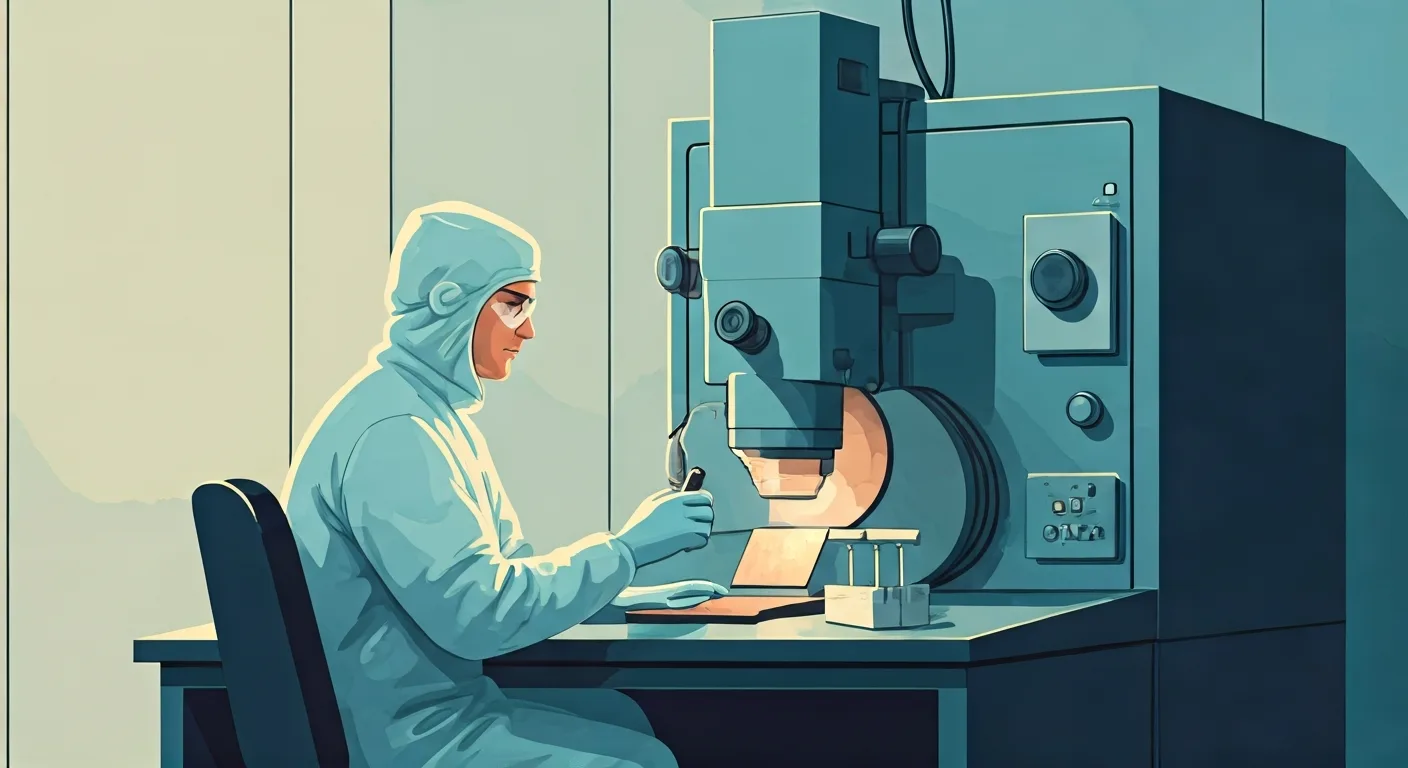
- Utilize advanced microscopy, spectroscopy, and simulation tools for analysis and modeling.
- Collaborate with interdisciplinary teams, including chemists, physicists, and biologists, on project development.
- Prepare technical reports, scientific papers, and present findings to colleagues and stakeholders.
Tools & technology
Average salary
Job outlook
GrowingJob growth is expected to be above average over the next five years.
Education & training
Bachelor's, Master's, or Ph.D. in Nanotechnology, Materials Science, Chemical Engineering, Electrical Engineering, or Physics.
AI impact outlook
Note — this is our current view. AI is moving fast, so we revisit these ratings.
Show how this was assessed Hide the detail
Note — this is our current view. AI is moving fast, so we revisit these ratings.
Show how this was assessed Hide the detailWhy this role received this rating
Core task exposure
high
How much of the role’s important work could AI perform?
Research, design, experiment design, characterisation, simulation, and data analysis are highly computational and data-intensive, making them prime for AI augmentation.
End-to-end automation
low
Can AI complete the work without substantial human involvement?
This highly R&D-focused field involves groundbreaking research and novel device development, requiring significant human creativity, intuition, and problem-solving beyond current end-to-end automation.
Adoption pressure
high
How likely are employers to introduce AI into this work?
Extremely high, as rapid iteration, discovery, and scientific advancement are critical in this cutting-edge field, driving significant investment in AI tools.
Human dependence
strong
How much does success depend on human judgement, relationships and accountability?
The work involves highly complex, often groundbreaking research, requiring deep theoretical understanding, creative problem-solving, and critical interpretation of novel nanoscale data.
Protective — a higher rating lowers the overall score.
Role adaptability
strong
How easily can the role evolve as AI takes on more tasks?
The field is defined by constant innovation, new discoveries, and evolving techniques, requiring an extremely high level of continuous learning and adaptation.
Shown for context — not part of the score.
What AI may take on
These are the parts of the role most likely to be automated or significantly accelerated.
- Accelerated design and simulation of nanomaterials.
- Automated analysis of microscopy and spectroscopy data.
- Optimisation of nanoscale synthesis parameters.
- Predictive modeling of nanodevice performance.
- Generating hypotheses for new material properties.
Where people remain essential
These parts continue to depend heavily on human judgement, relationships and accountability.
- Conceptualising truly novel nanodevices and systems.
- Interpreting complex, often unexpected, experimental results.
- Designing intricate experiments to validate nanoscale phenomena.
- Leading interdisciplinary collaborations across science and engineering.
- Developing ethical guidelines for nanotechnology applications.
- Translating fundamental research into practical applications.
How the role may evolve
Visionary concept development, augmented by AI.
The role will shift from extensive hands-on experimentation to leveraging AI for rapid research iterations, allowing engineers to focus on groundbreaking innovation and strategic direction in a complex interdisciplinary field.
Strengthen your future fit
- Mastering AI/ML tools for nanoscale material discovery.
- Developing advanced experimental design and data interpretation skills.
- Cultivating strong interdisciplinary collaboration and communication.
- Understanding ethical implications of nanotechnology.
- Translating fundamental research into commercial applications.
- Assessment horizon
- 3–7 years
- Confidence
- Medium
- Last reviewed
- August 2026
- Methodology
- v1.0
This assessment reflects current AI capabilities and expected adoption patterns. Actual impacts will vary by industry, employer and the way each role is performed.
Career pathways
WHERE YOU COULD GO
CURRENT ROLE
Nanotechnology Engineer
Chemical & Process Engineering
ADJACENT MOVES
STARTING POINTS
Who thrives here
Interest profile
investigative · RIC
People who are curious, analytical, precise, and enjoy hands-on experimental work in a scientific and technological setting tend to thrive in this role.
Personality characteristics
Curious Innovator
Driven by a deep desire to understand fundamental principles and explore novel solutions at the nanoscale.
Meticulous & Precise
Requires extreme attention to detail and adherence to rigorous experimental protocols for reliable and reproducible results.
Independent Thinker
Often prefers focused, individual work on complex scientific problems, but also collaborates effectively in teams.
Objective Collaborator
Works effectively in interdisciplinary teams, valuing data and scientific consensus over personal feelings.
Resilient & Calm
Handles experimental failures, technical challenges, and iterative processes with composure and persistence.
Best for
- People who are passionate about fundamental science and its application to advanced technologies.
- Engineers and scientists who thrive on hands-on experimentation, data analysis, and problem-solving at the atomic scale.
- Individuals who value precision, accuracy, and continuous learning in a rapidly evolving scientific field.
Watch out for
- The role requires a high tolerance for experimental failures and iterative development cycles.
- Limited direct social interaction compared to roles focused on client management or large team leadership.
- Occasional weekend work or extended hours may be necessary for critical experiments or project deadlines.
A week in the life
A representative working week for a Nanotechnology Engineer — where the deep work, meetings, and admin actually land.
Real people. Real results.
Thousands of people
can't be wrong.



Frequently asked questions about Nanotechnology Engineer roles
What does a Nanotechnology Engineer do?
A Nanotechnology Engineer designs and develops materials, devices, and systems at the nanoscale for applications in medicine, electronics, and energy. Works at the intersection of physics, chemistry, and engineering to manipulate structures at the atomic level, contributing to groundbreaking advancements in various industries. Drives innovation in fields like advanced medicine, sustainable energy, and high-performance electronics by creating novel materials and devices with unique properties and functionalities.
How much does a Nanotechnology Engineer earn?
A Nanotechnology Engineer earns a median of $105,000 per year in the US, typically ranging from $75,000 to $140,000.
What qualifications do you need to become a Nanotechnology Engineer?
To become a Nanotechnology Engineer, bachelor's, Master's, or Ph.D. in Nanotechnology, Materials Science, Chemical Engineering, Electrical Engineering, or Physics.
What personality suits a Nanotechnology Engineer?
Nanotechnology Engineer roles tend to suit people who are open and curious — drawn to variety, ideas and new approaches (Openness 85/100) and highly conscientious — precise, organised and strong on follow-through (Conscientiousness 82/100). The traits that matter most in the role are Curious Innovator, Meticulous & Precise, Independent Thinker and Objective Collaborator. Driven by a deep desire to understand fundamental principles and explore novel solutions at the nanoscale. On interests, Nanotechnology Engineer maps to a RIC Holland Code profile — people who are curious, analytical, precise, and enjoy hands-on experimental work in a scientific and technological setting tend to thrive in this role.
Who does a Nanotechnology Engineer role suit?
A Nanotechnology Engineer role is usually a strong fit for these reasons. Strong Investigative and Conventional alignment: the role demands deep scientific inquiry, analytical thinking, and adherence to precise methodologies. High Conscientiousness and Openness to Experience: success requires meticulous execution, systematic problem-solving, and a drive for continuous innovation. Significant portion of the week dedicated to deep work, experimentation, and data analysis, appealing to those who enjoy focused scientific tasks.
What are the downsides of being a Nanotechnology Engineer?
Nanotechnology Engineer roles come with trade-offs worth weighing up. The role requires a high tolerance for experimental failures and iterative development cycles. Limited direct social interaction compared to roles focused on client management or large team leadership. Occasional weekend work or extended hours may be necessary for critical experiments or project deadlines.
What is the work environment like for a Nanotechnology Engineer?
Work as a Nanotechnology Engineer is mostly lab-based with hybrid arrangements common, semi-structured — a mix of set processes and self-directed work, a moderate pace and medium exposure to clients or stakeholders. Around 69% of the week is focused deep work.
What skills do you need to be a Nanotechnology Engineer?
Core skills for a Nanotechnology Engineer include Nanomaterials synthesis, Nanoscale characterization techniques, Quantum mechanics, Cleanroom procedures, Computational modeling and Scientific writing.
How do you become a Nanotechnology Engineer?
Common entry routes into Nanotechnology Engineer roles include Research Assistant, Laboratory Technician and Junior Engineer.
What career progression is there for a Nanotechnology Engineer?
From a Nanotechnology Engineer role, common next steps include Senior Nanotechnology Engineer and Research Scientist (Nanotechnology); lateral moves include Materials Scientist and Process Engineer.
What is the job outlook for Nanotechnology Engineer roles?
The outlook for Nanotechnology Engineer roles is currently rated growing. Job growth is expected to be above average over the next five years.
Will AI replace Nanotechnology Engineer roles?
Traitstack rates automation risk for Nanotechnology Engineer roles at 59 out of 100, which is moderate. While AI will dramatically accelerate nanomaterial design and experimental analysis, the engineer’s core role in conceptualising novel devices and interpreting complex nanoscale phenomena remains distinctly human. AI is most likely to take on accelerated design and simulation of nanomaterials., automated analysis of microscopy and spectroscopy data. and optimisation of nanoscale synthesis parameters.. Conceptualising truly novel nanodevices and systems., interpreting complex, often unexpected, experimental results. and designing intricate experiments to validate nanoscale phenomena. stay with people. Visionary concept development, augmented by AI. That score measures how much of the work could change, not the likelihood the job disappears. It is Traitstack's current view, revisited as AI capability moves.