Lifestyle Coordinator
SOC 29-1125.00 · ESCO 3259 · OSCA 411332
Role snapshot
Overview
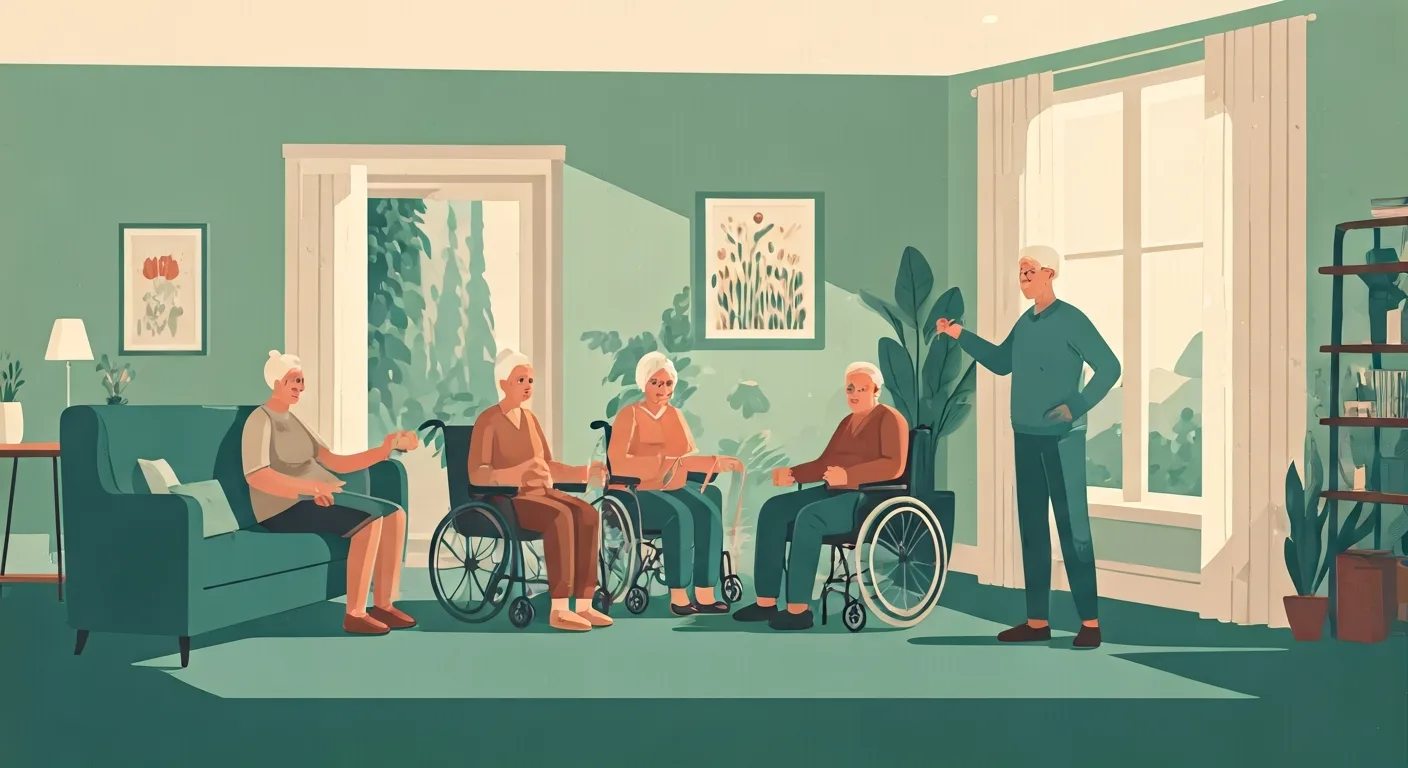
Designs and organises daily activity programs for residents in aged care or supported living facilities, tailoring events to individual interests and abilities to enhance engagement, well-being, and social connection. This role involves planning, implementing, and evaluating a diverse range of recreational, social, and therapeutic activities.
Significantly improves the quality of life for residents by fostering a stimulating and supportive environment, promoting physical activity, cognitive function, emotional well-being, and social interaction.
On the job
- Assess residents' interests, abilities, and needs to develop personalised activity plans
- Plan, schedule, and lead a variety of group and individual activities (e.g., arts and crafts, games, music, exercise, outings)
- Coordinate with care staff, volunteers, and external providers to deliver programs
- Maintain records of resident participation, progress, and program effectiveness
- Manage activity budgets, resources, and ensure a safe environment for all participants
Tools & technology
Average salary
Job outlook
StableDemand is steady. This is an established role with consistent hiring across sectors.
Education & training
Certificate or diploma in Leisure and Health, Community Services, or Individual Support (Ageing). A bachelor's degree in a related field like gerontology or social work may also be beneficial.
AI impact outlook
Note — this is our current view. AI is moving fast, so we revisit these ratings.
Show how this was assessed Hide the detail
Note — this is our current view. AI is moving fast, so we revisit these ratings.
Show how this was assessed Hide the detailWhy this role received this rating
Core task exposure
moderate
How much of the role’s important work could AI perform?
Generating activity ideas, scheduling, budget management, and record-keeping are highly exposed, while leading activities and real-time resident interaction are less so.
End-to-end automation
low
Can AI complete the work without substantial human involvement?
While planning can be automated, the core of the role involves direct human interaction, leading activities, adapting to resident responses, and ensuring safety, preventing full automation.
Adoption pressure
moderate
How likely are employers to introduce AI into this work?
Moderate, as aged care facilities seek efficiencies for planning and documentation, but direct human care and engagement remain paramount for resident well-being.
Human dependence
strong
How much does success depend on human judgement, relationships and accountability?
Success is critically dependent on empathy, creativity in leading activities, building rapport with residents, and adapting in real-time to individual needs and group dynamics.
Protective — a higher rating lowers the overall score.
Role adaptability
strong
How easily can the role evolve as AI takes on more tasks?
The role constantly adapts to changing resident demographics, health needs, and new therapeutic approaches, making it highly receptive to integrating AI tools for planning and resource management.
Shown for context — not part of the score.
What AI may take on
These are the parts of the role most likely to be automated or significantly accelerated.
- Generating activity ideas tailored to resident interests and abilities
- Automating the scheduling and coordination of group and individual activities
- Managing activity budgets and tracking resource allocation
- Maintaining records of resident participation and program effectiveness
- Identifying suitable external providers or volunteers for specific programs
Where people remain essential
These parts continue to depend heavily on human judgement, relationships and accountability.
- Leading and facilitating engaging group and individual activities
- Assessing residents' nuanced interests, abilities, and emotional states
- Fostering social connection and emotional well-being among residents
- Adapting activities in real-time based on resident responses and needs
- Coordinating with care staff and external providers for seamless program delivery
- Ensuring a safe and stimulating environment during all activities
How the role may evolve
AI for planning, human for connection and engagement.
Coordinators will leverage AI for routine planning and administrative tasks, allowing them to focus more intensely on direct resident engagement, creative program delivery, and fostering community.
Strengthen your future fit
- Enhanced creativity and facilitation skills for diverse activities
- Deep understanding of gerontology and person-centered care approaches
- Strong observational skills for resident needs and responses
- Effective volunteer management and external stakeholder coordination
- Integrating digital tools to enhance activity engagement
- Assessment horizon
- 3–7 years
- Confidence
- High
- Last reviewed
- August 2026
- Methodology
- v1.0
This assessment reflects current AI capabilities and expected adoption patterns. Actual impacts will vary by industry, employer and the way each role is performed.
Career pathways
WHERE YOU COULD GO
CURRENT ROLE
Lifestyle Coordinator
Social Services
ADJACENT MOVES
STARTING POINTS
Who thrives here
Interest profile
social · SIR
People who enjoy helping and interacting with others, are curious and analytical in understanding individual needs, and appreciate hands-on, practical work tend to thrive in this role.
Personality characteristics
Empathetic
Deeply understands and responds to the emotional and physical needs of residents, building rapport and trust.
Creative
Develops innovative and engaging activities tailored to diverse interests and abilities, often with limited resources.
Organised
Manages multiple programs, schedules, and resources effectively to ensure smooth operation of activities.
Sociable
Enjoys interacting with a wide range of people, including residents, families, and staff, fostering a lively atmosphere.
Resilient
Remains calm and positive when faced with challenges or difficult situations involving residents or program delivery.
Best for
- Individuals passionate about improving the quality of life for older adults through engaging activities.
- Those who enjoy a mix of planning, creative development, and hands-on interaction.
- People who are patient, compassionate, and possess strong organisational skills.
Watch out for
- The role requires strong empathy and emotional resilience when working with vulnerable populations.
- Occasional weekend work may be required to cover special events or activities.
A week in the life
A representative working week for a Lifestyle Coordinator — where the deep work, meetings, and admin actually land.
Real people. Real results.
Thousands of people
can't be wrong.





Frequently asked questions about Lifestyle Coordinator roles
What does a Lifestyle Coordinator do?
A Lifestyle Coordinator designs and organises daily activity programs for residents in aged care or supported living facilities, tailoring events to individual interests and abilities to enhance engagement, well-being, and social connection. This role involves planning, implementing, and evaluating a diverse range of recreational, social, and therapeutic activities. Significantly improves the quality of life for residents by fostering a stimulating and supportive environment, promoting physical activity, cognitive function, emotional well-being, and social interaction.
How much does a Lifestyle Coordinator earn?
A Lifestyle Coordinator earns a median of $52,000 per year in the US, typically ranging from $38,000 to $68,000.
What qualifications do you need to become a Lifestyle Coordinator?
To become a Lifestyle Coordinator, certificate or diploma in Leisure and Health, Community Services, or Individual Support (Ageing). A bachelor's degree in a related field like gerontology or social work may also be beneficial.
What personality suits a Lifestyle Coordinator?
Lifestyle Coordinator roles tend to suit people who are warm and cooperative — tuned in to the people around them (Agreeableness 78/100) and highly conscientious — precise, organised and strong on follow-through (Conscientiousness 68/100). The traits that matter most in the role are Empathetic, Creative, Organised and Sociable. Deeply understands and responds to the emotional and physical needs of residents, building rapport and trust. On interests, Lifestyle Coordinator maps to a SIR Holland Code profile — people who enjoy helping and interacting with others, are curious and analytical in understanding individual needs, and appreciate hands-on, practical work tend to thrive in this role.
Who does a Lifestyle Coordinator role suit?
A Lifestyle Coordinator role is usually a strong fit for these reasons. High Social (S) affinity means you'll thrive in roles focused on helping and interacting with people. The role's emphasis on designing and facilitating engaging activities aligns with creative and practical interests. A significant portion of the week involves direct resident interaction and program delivery, offering immediate impact.
What are the downsides of being a Lifestyle Coordinator?
Lifestyle Coordinator roles come with trade-offs worth weighing up. The role requires strong empathy and emotional resilience when working with vulnerable populations. Occasional weekend work may be required to cover special events or activities.
What is the work environment like for a Lifestyle Coordinator?
Work as a Lifestyle Coordinator is mostly clinical-based with onsite arrangements common, semi-structured — a mix of set processes and self-directed work, a moderate pace and high exposure to clients or stakeholders. Around 29% of the week is focused deep work.
What skills do you need to be a Lifestyle Coordinator?
Core skills for a Lifestyle Coordinator include Program development and facilitation, Interpersonal communication, Empathy and active listening, Organisational and time management and Creative problem-solving.
How do you become a Lifestyle Coordinator?
Common entry routes into Lifestyle Coordinator roles include Care Assistant, Activities Assistant, Volunteer Coordinator and Community Support Worker.
What career progression is there for a Lifestyle Coordinator?
From a Lifestyle Coordinator role, common next steps include Senior Lifestyle Coordinator, Recreational Therapist and Community Programs Manager; lateral moves include Aged Care Facility Manager.
What is the job outlook for Lifestyle Coordinator roles?
The outlook for Lifestyle Coordinator roles is currently rated stable. Demand is steady. This is an established role with consistent hiring across sectors.
Will AI replace Lifestyle Coordinator roles?
Traitstack rates automation risk for Lifestyle Coordinator roles at 47 out of 100, which is moderate. AI can help generate activity ideas and manage schedules; however, the crucial work of leading engaging sessions, fostering social connection, and adapting to resident needs depends on human creativity. AI is most likely to take on generating activity ideas tailored to resident interests and abilities, automating the scheduling and coordination of group and individual activities and managing activity budgets and tracking resource allocation. Leading and facilitating engaging group and individual activities, assessing residents' nuanced interests, abilities, and emotional states and fostering social connection and emotional well-being among residents stay with people. AI for planning, human for connection and engagement. That score measures how much of the work could change, not the likelihood the job disappears. It is Traitstack's current view, revisited as AI capability moves.