Industrial Engineer
SOC 17-2112.00 · ESCO 2141 · OSCA 243531
Role snapshot
Overview
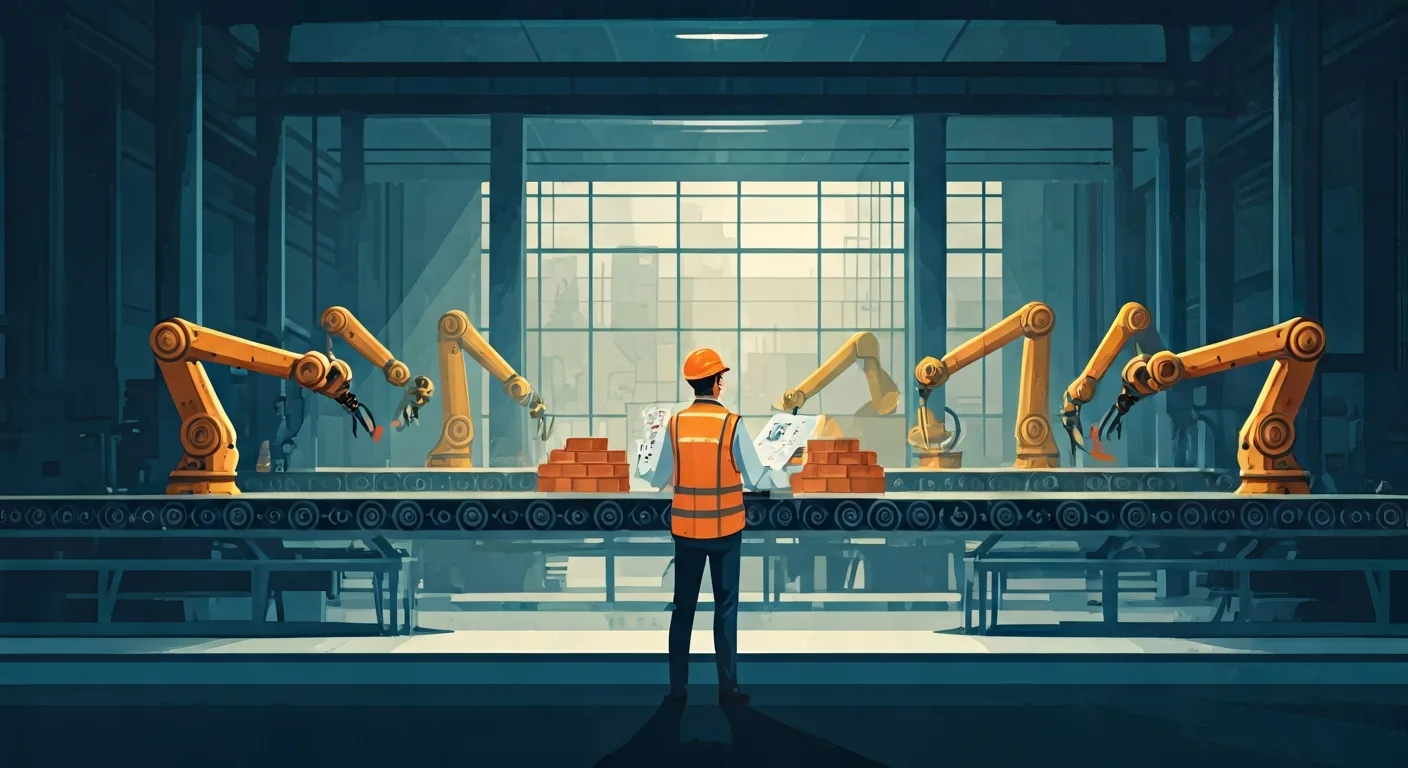
Optimises manufacturing processes, workflows, and supply chains by analysing data, timing operations, and eliminating waste. Designs efficient plant layouts and quality control systems to boost productivity, reduce costs, and improve overall operational efficiency.
Enhances operational efficiency, reduces waste, and improves productivity across various industries, leading to significant cost savings, increased profitability, and better resource utilisation for businesses.
On the job
- Conduct time and motion studies and process analyses to identify inefficiencies and bottlenecks.
- Design and implement new production layouts, workflows, and material handling systems.
- Develop and apply quality control procedures and statistical process control methods.
- Utilise simulation and modelling tools to predict and test the impact of process improvements.
- Collaborate with cross-functional teams to integrate new systems and train staff on optimised processes.
Tools & technology
Average salary
Job outlook
GrowingJob growth is expected to be above average over the next five years.
Education & training
A bachelor's degree in Industrial Engineering or a closely related engineering field is typically required.
AI impact outlook
Note — this is our current view. AI is moving fast, so we revisit these ratings.
Show how this was assessed Hide the detail
Note — this is our current view. AI is moving fast, so we revisit these ratings.
Show how this was assessed Hide the detailWhy this role received this rating
Core task exposure
moderate
How much of the role’s important work could AI perform?
AI can significantly assist with data analysis, simulation, and identifying inefficiencies in manufacturing processes.
End-to-end automation
low
Can AI complete the work without substantial human involvement?
AI can generate optimal solutions and designs, but the implementation, human integration, and strategic decision-making require a person in the loop.
Adoption pressure
high
How likely are employers to introduce AI into this work?
Manufacturing's constant drive for efficiency and cost reduction creates high pressure to adopt AI tools for process optimization and design.
Human dependence
strong
How much does success depend on human judgement, relationships and accountability?
Success depends heavily on strategic judgment, influencing stakeholders, leading cross-functional teams, and integrating complex technical solutions into human workflows.
Protective — a higher rating lowers the overall score.
Role adaptability
strong
How easily can the role evolve as AI takes on more tasks?
The role is highly adaptable, evolving to leverage AI tools for deeper insights while focusing on strategic application, change management, and human-system optimization.
Shown for context — not part of the score.
What AI may take on
These are the parts of the role most likely to be automated or significantly accelerated.
- Analyzing production data to identify inefficiencies and bottlenecks
- Utilizing simulation and modeling tools to predict process improvements
- Generating optimal plant layouts and material handling system designs
- Developing and applying statistical process control methods
- Conducting virtual time and motion studies
Where people remain essential
These parts continue to depend heavily on human judgement, relationships and accountability.
- Collaborating with cross-functional teams to integrate new systems
- Training staff on optimized processes and new technologies
- Making strategic decisions about which improvements to implement
- Negotiating with vendors and internal stakeholders
- Absorbing accountability for process failures and successes
- Understanding the human element and cultural impact of process changes
How the role may evolve
Elevating human-system integration in optimized production.
Engineers will shift from manual data analysis to interpreting AI-driven insights, focusing on the strategic design of human-machine systems and leading organizational change.
Strengthen your future fit
- Proficiency in AI-driven analytics and simulation tools
- Strong leadership and change management abilities
- Advanced system thinking and problem-solving
- Effective communication and stakeholder management
- Deep understanding of human factors in industrial design
- Assessment horizon
- 3–7 years
- Confidence
- High
- Last reviewed
- August 2026
- Methodology
- v1.0
This assessment reflects current AI capabilities and expected adoption patterns. Actual impacts will vary by industry, employer and the way each role is performed.
Career pathways
WHERE YOU COULD GO
CURRENT ROLE
Industrial Engineer
Manufacturing & Production
ADJACENT MOVES
STARTING POINTS
Who thrives here
Interest profile
investigative · ICR
Individuals who thrive on analytical problem-solving, systematic process improvement, and hands-on application of engineering principles will find this role rewarding. It combines a strong investigative drive with conventional, structured execution and realistic, practical outcomes.
Personality characteristics
Analytical Thinker
Genuinely interested in breaking down complex systems and data to identify root causes and develop logical solutions.
Meticulous Planner
Highly organized and systematic in approach, ensuring processes are efficient, documented, and errors are minimised.
Practical Problem-Solver
Driven to find implementable, real-world solutions to operational challenges, focusing on tangible improvements.
Collaborative Implementer
Works effectively with diverse teams and stakeholders to gain buy-in and successfully implement new systems and processes.
Data-Driven
Relies on evidence, statistical analysis, and objective metrics to make informed decisions and measure the success of initiatives.
Best for
- People who enjoy optimising systems, eliminating waste, and improving efficiency using data-driven methods.
- Engineers who seek to apply their analytical skills in a practical, hands-on industrial or operational setting.
Watch out for
- Requires strong analytical skills and comfort with quantitative data, which might not suit those preferring purely qualitative work.
- The role often involves navigating resistance to change from existing teams when implementing new processes.
A week in the life
A representative working week for an Industrial Engineer — where the deep work, meetings, and admin actually land.
Real people. Real results.
Thousands of people
can't be wrong.



Frequently asked questions about Industrial Engineer roles
What does an Industrial Engineer do?
An Industrial Engineer optimises manufacturing processes, workflows, and supply chains by analysing data, timing operations, and eliminating waste. Designs efficient plant layouts and quality control systems to boost productivity, reduce costs, and improve overall operational efficiency. Enhances operational efficiency, reduces waste, and improves productivity across various industries, leading to significant cost savings, increased profitability, and better resource utilisation for businesses.
How much does an Industrial Engineer earn?
An Industrial Engineer earns a median of $95,000 per year in the US, typically ranging from $75,000 to $130,000.
What qualifications do you need to become an Industrial Engineer?
To become an Industrial Engineer, a bachelor's degree in Industrial Engineering or a closely related engineering field is typically required.
What personality suits an Industrial Engineer?
Industrial Engineer roles tend to suit people who are highly conscientious — precise, organised and strong on follow-through (Conscientiousness 85/100) and steady under pressure — deadlines and setbacks do not rattle them easily (Emotional Stability 72/100). The traits that matter most in the role are Analytical Thinker, Meticulous Planner, Practical Problem-Solver and Collaborative Implementer. Genuinely interested in breaking down complex systems and data to identify root causes and develop logical solutions. On interests, Industrial Engineer maps to an ICR Holland Code profile — individuals who thrive on analytical problem-solving, systematic process improvement, and hands-on application of engineering principles will find this role rewarding. It combines a strong investigative drive with conventional, structured execution and realistic, practical outcomes.
Who does an Industrial Engineer role suit?
An Industrial Engineer role is usually a strong fit for these reasons. Strong Investigative and Conventional affinity: the role is centered on data analysis, systematic problem-solving, and process optimisation. High Conscientiousness: success is driven by meticulous planning, attention to detail, and a methodical approach to work. Opportunity to see tangible results from implemented improvements, appealing to a Realistic interest in practical outcomes.
What are the downsides of being an Industrial Engineer?
Industrial Engineer roles come with trade-offs worth weighing up. Requires strong analytical skills and comfort with quantitative data, which might not suit those preferring purely qualitative work. The role often involves navigating resistance to change from existing teams when implementing new processes.
What is the work environment like for an Industrial Engineer?
Work as an Industrial Engineer is mostly mixed-based with hybrid arrangements common, semi-structured — a mix of set processes and self-directed work, a moderate pace and high exposure to clients or stakeholders. Around 55% of the week is focused deep work.
What skills do you need to be an Industrial Engineer?
Core skills for an Industrial Engineer include Process optimisation, Lean manufacturing principles, Statistical analysis, Project management and Data modelling and simulation.
How do you become an Industrial Engineer?
Common entry routes into Industrial Engineer roles include Junior Industrial Engineer, Process Analyst and Manufacturing Technician.
What career progression is there for an Industrial Engineer?
From an Industrial Engineer role, common next steps include Senior Industrial Engineer and Operations Manager; lateral moves include Supply Chain Manager.
What is the job outlook for Industrial Engineer roles?
The outlook for Industrial Engineer roles is currently rated growing. Job growth is expected to be above average over the next five years.
Will AI replace Industrial Engineer roles?
Traitstack rates automation risk for Industrial Engineer roles at 53 out of 100, which is moderate. AI is poised to augment data analysis and simulation for process optimization, freeing engineers to focus on strategic implementation, collaboration, and human-centric problem-solving. AI is most likely to take on analyzing production data to identify inefficiencies and bottlenecks, utilizing simulation and modeling tools to predict process improvements and generating optimal plant layouts and material handling system designs. Collaborating with cross-functional teams to integrate new systems, training staff on optimized processes and new technologies and making strategic decisions about which improvements to implement stay with people. Elevating human-system integration in optimized production. That score measures how much of the work could change, not the likelihood the job disappears. It is Traitstack's current view, revisited as AI capability moves.