Graphic Pre-press Operator
SOC 51-5112.00 · ESCO 7321 · OSCA 391431
Role snapshot
Overview
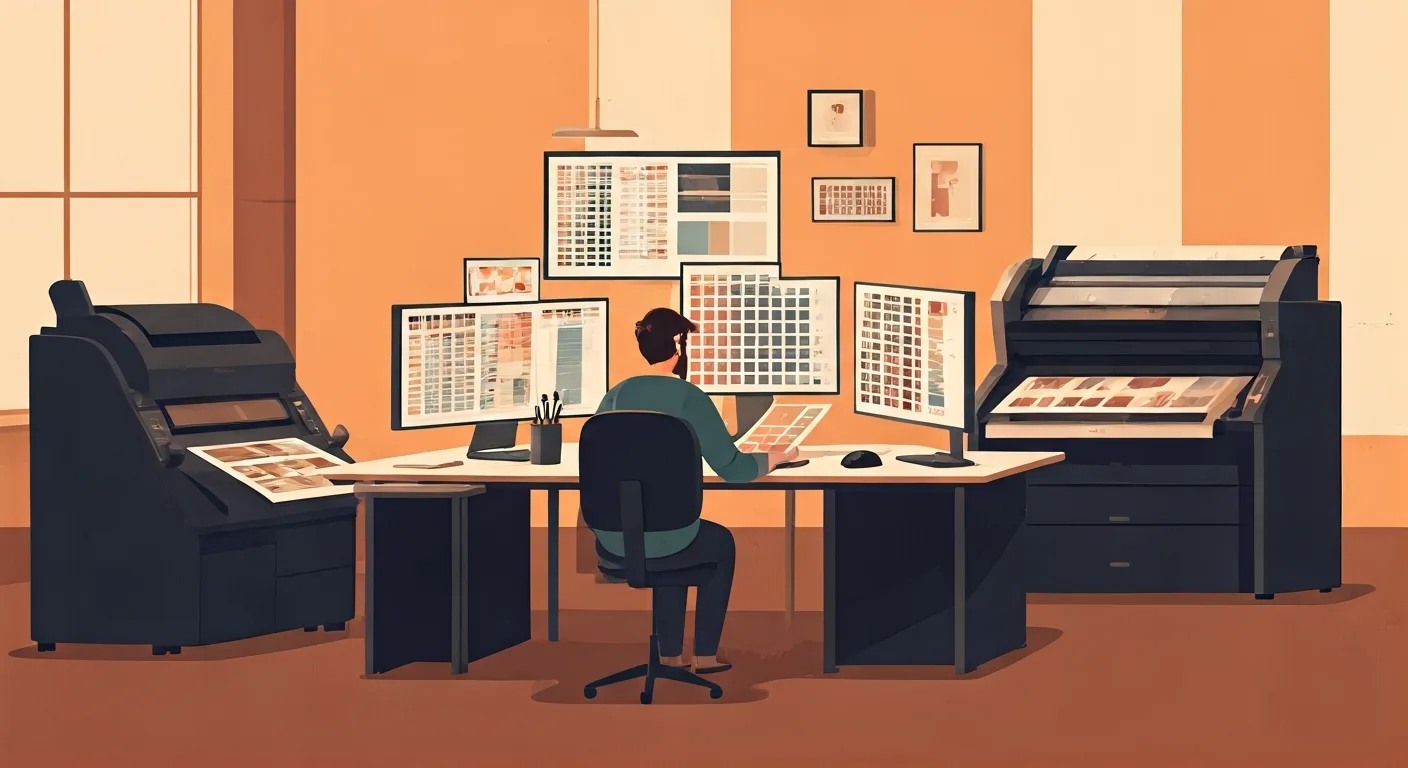
Prepares digital artwork files for commercial printing, checking colour profiles, adjusting layouts, and creating printing plates or proofs to ensure accurate reproduction on press. This role is crucial for ensuring the quality and consistency of printed materials, bridging the gap between graphic design and the physical printing process.
Ensures high-quality, accurate, and consistent reproduction of designs in print, directly affecting client satisfaction and the final product's visual integrity.
On the job
- Receive and review digital artwork files for printability, checking resolution, fonts, and image quality
- Perform color correction, colour space conversion, and proofing to match client specifications and printing standards
- Adjust layouts, impose pages, and create trapping for optimal press production
- Operate Computer-to-Plate (CTP) systems to produce printing plates
- Troubleshoot technical issues with files, software, or equipment to resolve production problems
Tools & technology
Average salary
Job outlook
StableDemand is steady. This is an established role with consistent hiring across sectors.
Education & training
Typically requires a certificate or associate's degree in graphic communications, print production, or a related field. On-the-job training is also common.
AI impact outlook
Note — this is our current view. AI is moving fast, so we revisit these ratings.
Show how this was assessed Hide the detail
Note — this is our current view. AI is moving fast, so we revisit these ratings.
Show how this was assessed Hide the detailWhy this role received this rating
Core task exposure
high
How much of the role’s important work could AI perform?
Much of the digital artwork review, color correction, layout adjustment, and plate creation can be significantly automated by AI.
End-to-end automation
moderate
Can AI complete the work without substantial human involvement?
AI can manage entire pre-press workflows from file intake to plate output, though final human review and complex troubleshooting remain.
Adoption pressure
high
How likely are employers to introduce AI into this work?
The competitive printing industry drives high adoption pressure for AI tools that improve efficiency, reduce errors, and cut costs in pre-press.
Human dependence
low
How much does success depend on human judgement, relationships and accountability?
Success still depends on human judgment for nuanced color matching, creative layout decisions, client communication, and troubleshooting complex, non-standard issues.
Protective — a higher rating lowers the overall score.
Role adaptability
strong
How easily can the role evolve as AI takes on more tasks?
The role can adapt by shifting from manual tasks to managing AI-powered systems, overseeing quality, and handling client-specific challenges.
Shown for context — not part of the score.
What AI may take on
These are the parts of the role most likely to be automated or significantly accelerated.
- Automated review of digital artwork files for printability (resolution, fonts, image quality)
- Performing color correction and color space conversion
- Adjusting layouts and imposing pages for optimal press production
- Troubleshooting technical issues with files or software
- Generating printing plates via CTP systems
Where people remain essential
These parts continue to depend heavily on human judgement, relationships and accountability.
- Interpreting complex client specifications and brand guidelines
- Making subjective aesthetic judgments on color and layout
- Communicating with graphic designers and clients regarding file issues
- Developing new workflows for novel printing techniques
- Handling highly unusual or corrupted files that defy automated solutions
- Ensuring regulatory compliance for specific printed materials
How the role may evolve
From manual file preparation to overseeing automated print workflows.
Operators will become supervisors of intelligent pre-press systems, focusing on strategic oversight, advanced quality control, and client-facing problem-solving rather than rote file manipulation.
Strengthen your future fit
- Expertise in pre-press workflow automation software and AI tools
- Advanced color management and quality assurance skills
- Strong communication abilities for client and designer collaboration
- Troubleshooting complex digital and mechanical issues
- Continuous learning in printing technology and graphic software
- Assessment horizon
- 3–7 years
- Confidence
- High
- Last reviewed
- August 2026
- Methodology
- v1.0
This assessment reflects current AI capabilities and expected adoption patterns. Actual impacts will vary by industry, employer and the way each role is performed.
Career pathways
WHERE YOU COULD GO
CURRENT ROLE
Graphic Pre-press Operator
Manufacturing & Production
ADJACENT MOVES
STARTING POINTS
Who thrives here
Interest profile
conventional · CRE
Individuals who enjoy structured, detail-oriented tasks, working with technical equipment, and ensuring precise, tangible outcomes in a production environment tend to thrive in this role.
Personality characteristics
Detail-oriented
Possesses a keen eye for minute discrepancies in digital files and print proofs, ensuring flawless output.
Methodical
Follows precise procedures and workflows consistently to achieve accurate and repeatable results.
Calm under pressure
Maintains composure when facing tight deadlines or technical challenges in a production environment.
Practical
Focuses on the tangible aspects of production, ensuring designs are physically reproducible.
Adaptable learner
Open to learning new software, equipment, and evolving printing technologies.
Best for
- Individuals who enjoy working with specialized technology and ensuring technical precision
- Those who are meticulous, patient, and committed to producing high-quality physical products
- People who thrive in structured environments with clear procedures and defined outcomes
Watch out for
- Requires high attention to detail and can be repetitive, which might not suit those preferring highly varied tasks
- The work environment is typically a production facility, often requiring standing or operating machinery
A week in the life
A representative working week for a Graphic Pre-press Operator — where the deep work, meetings, and admin actually land.
Real people. Real results.
Thousands of people
can't be wrong.



Frequently asked questions about Graphic Pre-press Operator roles
What does a Graphic Pre-press Operator do?
A Graphic Pre-press Operator prepares digital artwork files for commercial printing, checking colour profiles, adjusting layouts, and creating printing plates or proofs to ensure accurate reproduction on press. This role is crucial for ensuring the quality and consistency of printed materials, bridging the gap between graphic design and the physical printing process. Ensures high-quality, accurate, and consistent reproduction of designs in print, directly affecting client satisfaction and the final product's visual integrity.
How much does a Graphic Pre-press Operator earn?
A Graphic Pre-press Operator earns a median of $55,000 per year in the US, typically ranging from $38,000 to $72,000.
What qualifications do you need to become a Graphic Pre-press Operator?
To become a Graphic Pre-press Operator, typically requires a certificate or associate's degree in graphic communications, print production, or a related field. On-the-job training is also common.
What personality suits a Graphic Pre-press Operator?
Graphic Pre-press Operator roles tend to suit people who are highly conscientious — precise, organised and strong on follow-through (Conscientiousness 82/100) and steady under pressure — deadlines and setbacks do not rattle them easily (Emotional Stability 75/100). The traits that matter most in the role are Detail-oriented, Methodical, Calm under pressure and Practical. Possesses a keen eye for minute discrepancies in digital files and print proofs, ensuring flawless output. On interests, Graphic Pre-press Operator maps to a CRE Holland Code profile — individuals who enjoy structured, detail-oriented tasks, working with technical equipment, and ensuring precise, tangible outcomes in a production environment tend to thrive in this role.
Who does a Graphic Pre-press Operator role suit?
A Graphic Pre-press Operator role is usually a strong fit for these reasons. Strong Conventional and Realistic alignment: the role requires precision, technical skill, and adherence to standards. A significant portion of the week involves focused deep work on file preparation and machine operation. The role is crucial for ensuring quality and consistency, appealing to those who value tangible, accurate outcomes.
What are the downsides of being a Graphic Pre-press Operator?
Graphic Pre-press Operator roles come with trade-offs worth weighing up. Requires high attention to detail and can be repetitive, which might not suit those preferring highly varied tasks. The work environment is typically a production facility, often requiring standing or operating machinery.
What is the work environment like for a Graphic Pre-press Operator?
Work as a Graphic Pre-press Operator is mostly workshop-based with onsite arrangements common, highly structured, with set processes and deadlines, a moderate pace and low exposure to clients or stakeholders. Around 65% of the week is focused deep work.
What skills do you need to be a Graphic Pre-press Operator?
Core skills for a Graphic Pre-press Operator include Color management, Print production techniques, File preparation for print, Layout and imposition and Attention to detail.
How do you become a Graphic Pre-press Operator?
Common entry routes into Graphic Pre-press Operator roles include Print Production Assistant, Junior Graphic Designer and Digital Imaging Technician.
What career progression is there for a Graphic Pre-press Operator?
From a Graphic Pre-press Operator role, common next steps include Senior Pre-press Operator and Print Production Manager; lateral moves include Color Management Specialist.
What is the job outlook for Graphic Pre-press Operator roles?
The outlook for Graphic Pre-press Operator roles is currently rated stable. Demand is steady. This is an established role with consistent hiring across sectors.
Will AI replace Graphic Pre-press Operator roles?
Traitstack rates automation risk for Graphic Pre-press Operator roles at 71 out of 100, which is strong. Much of the digital file preparation and plate creation can be automated by AI, yet human judgment is still vital for final quality assurance and client-specific adjustments. AI is most likely to take on automated review of digital artwork files for printability (resolution, fonts, image quality), performing color correction and color space conversion and adjusting layouts and imposing pages for optimal press production. Interpreting complex client specifications and brand guidelines, making subjective aesthetic judgments on color and layout and communicating with graphic designers and clients regarding file issues stay with people. From manual file preparation to overseeing automated print workflows. That score measures how much of the work could change, not the likelihood the job disappears. It is Traitstack's current view, revisited as AI capability moves.