Fruit Grower
SOC 11-9013.00 · ESCO 1311 · OSCA 151232
Role snapshot
Overview
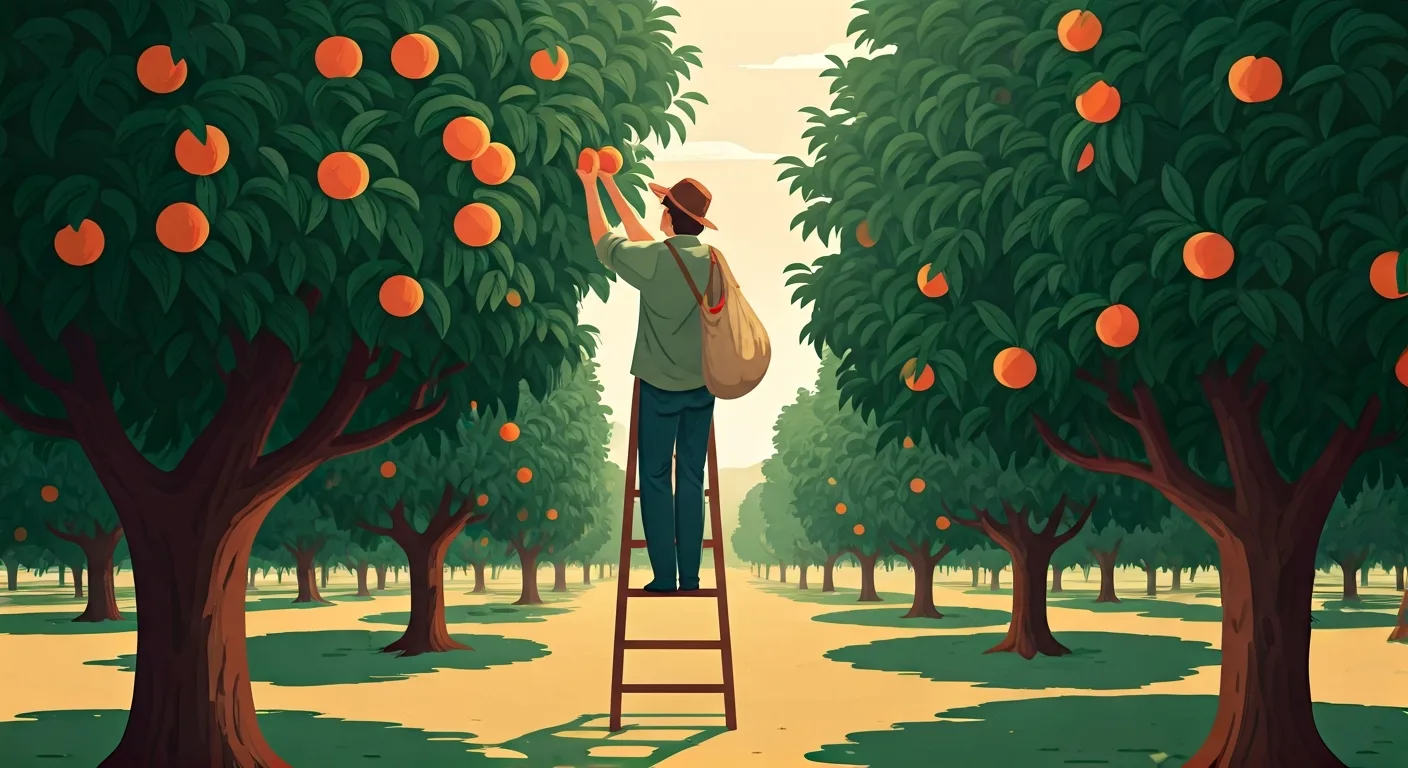
Manages orchards from pruning and pollination through to harvest and packing, monitoring tree health, irrigation, and pest pressure to produce consistent, market-ready fruit each season. This role requires a deep understanding of plant biology, soil science, and agricultural practices, combined with business acumen to manage operations, staff, and market demands.
Contributes to food security and local economies by producing high-quality, nutritious fruit, ensuring sustainable land use, and managing natural resources responsibly.
On the job
- Develop and implement pruning and training strategies for optimal tree health and fruit yield.
- Monitor soil conditions, nutrient levels, and irrigation systems to ensure efficient water and fertilizer use.
- Identify and manage pests, diseases, and weeds using integrated pest management (IPM) techniques.
- Plan and oversee fruit harvesting, grading, and packing operations to meet market standards.
- Analyze market trends and sales data to inform crop planning and pricing strategies.
Tools & technology
Average salary
Job outlook
StableDemand is steady. This is an established role with consistent hiring across sectors.
Education & training
Many fruit growers gain experience through on-the-job training, but formal education such as a certificate, diploma, or bachelor's degree in horticulture, agronomy, or agricultural science can be beneficial.
AI impact outlook
Note — this is our current view. AI is moving fast, so we revisit these ratings.
Show how this was assessed Hide the detail
Note — this is our current view. AI is moving fast, so we revisit these ratings.
Show how this was assessed Hide the detailWhy this role received this rating
Core task exposure
moderate
How much of the role’s important work could AI perform?
Monitoring soil conditions, irrigation, pest pressure, and market analysis are exposed, but pruning strategy and hands-on IPM are less so.
End-to-end automation
low
Can AI complete the work without substantial human involvement?
While AI can optimize many processes, the biological variability of fruit, the need for nuanced human judgment, and physical oversight of harvesting prevent full automation.
Adoption pressure
moderate
How likely are employers to introduce AI into this work?
Moderate pressure to adopt AI for yield optimization, resource efficiency, and early pest detection, driven by economic and environmental concerns.
Human dependence
strong
How much does success depend on human judgement, relationships and accountability?
Success relies heavily on deep biological expertise, intuitive judgment of plant health, adaptable decision-making in variable conditions, and business acumen.
Protective — a higher rating lowers the overall score.
Role adaptability
strong
How easily can the role evolve as AI takes on more tasks?
The role can adapt by integrating advanced agritech, focusing on data interpretation, and specializing in high-value fruit varieties or sustainable practices.
Shown for context — not part of the score.
What AI may take on
These are the parts of the role most likely to be automated or significantly accelerated.
- Monitoring soil moisture, nutrient levels, and predicting irrigation needs
- Identifying pests and diseases in orchards through visual analysis and predictive models
- Forecasting fruit yields and optimal harvest windows based on growth data
- Analyzing market trends and sales data to inform crop planning and pricing strategies
- Recommending optimal pruning strategies based on tree growth patterns
- Automating climate control in enclosed growing environments
Where people remain essential
These parts continue to depend heavily on human judgement, relationships and accountability.
- Developing and adapting pruning and training strategies for optimal tree health
- Implementing integrated pest management (IPM) techniques requiring field judgment
- Overseeing fruit harvesting, grading, and packing operations to maintain quality
- Making critical decisions based on nuanced understanding of plant biology and weather
- Managing staff and operational logistics across the farm
- Cultivating relationships with buyers and adapting to market demands
How the role may evolve
Less routine monitoring, more focus on advanced cultivation and market insight.
Fruit growers will move away from manual data collection and reactive adjustments, using AI to inform strategic decisions in cultivation, quality control, and business management.
Strengthen your future fit
- Proficiency in precision agriculture technologies and data analytics platforms
- Deepening expertise in plant physiology, entomology, and soil science
- Developing advanced skills in integrated pest management and sustainable practices
- Enhancing business management, marketing, and sales capabilities
- Cultivating adaptability and problem-solving for dynamic agricultural challenges
- Assessment horizon
- 3–7 years
- Confidence
- Medium
- Last reviewed
- August 2026
- Methodology
- v1.0
This assessment reflects current AI capabilities and expected adoption patterns. Actual impacts will vary by industry, employer and the way each role is performed.
Career pathways
WHERE YOU COULD GO
CURRENT ROLE
Fruit Grower
Agriculture & Food
ADJACENT MOVES
STARTING POINTS
Who thrives here
Interest profile
enterprising · ERC
Individuals who enjoy leading and managing agricultural operations, working with their hands, and applying systematic methods to crop production often thrive in this role.
Personality characteristics
Conscientious
Highly organized and disciplined in managing crop cycles, resources, and staff to ensure consistent production.
Practical
Enjoys hands-on work and solving tangible problems related to plant health, soil, and farm equipment.
Resilient
Able to handle the unpredictable challenges of weather, pests, and market fluctuations without excessive stress.
Enterprising
Motivated by managing a productive enterprise, making decisions, and overseeing all aspects of orchard operations.
Observant
Attentive to details of plant health, soil conditions, and environmental changes that impact crop quality and yield.
Best for
- Individuals who enjoy working independently outdoors and managing complex biological systems.
- Those who thrive on practical problem-solving and seeing the direct results of their efforts.
- People with a strong work ethic and a desire to contribute to food production.
Watch out for
- The work is highly seasonal and weather-dependent, requiring flexibility and long hours during peak periods.
- Requires constant problem-solving for unexpected issues like pests, diseases, or equipment failures.
- Can involve significant physical labor and exposure to outdoor elements.
A week in the life
A representative working week for a Fruit Grower — where the deep work, meetings, and admin actually land.
Real people. Real results.
Thousands of people
can't be wrong.


Frequently asked questions about Fruit Grower roles
What does a Fruit Grower do?
A Fruit Grower manages orchards from pruning and pollination through to harvest and packing, monitoring tree health, irrigation, and pest pressure to produce consistent, market-ready fruit each season. This role requires a deep understanding of plant biology, soil science, and agricultural practices, combined with business acumen to manage operations, staff, and market demands. Contributes to food security and local economies by producing high-quality, nutritious fruit, ensuring sustainable land use, and managing natural resources responsibly.
How much does a Fruit Grower earn?
A Fruit Grower earns a median of $65,000 per year in the US, typically ranging from $45,000 to $90,000.
What qualifications do you need to become a Fruit Grower?
To become a Fruit Grower, many fruit growers gain experience through on-the-job training, but formal education such as a certificate, diploma, or bachelor's degree in horticulture, agronomy, or agricultural science can be beneficial.
What personality suits a Fruit Grower?
Fruit Grower roles tend to suit people who are highly conscientious — precise, organised and strong on follow-through (Conscientiousness 78/100) and steady under pressure — deadlines and setbacks do not rattle them easily (Emotional Stability 72/100). The traits that matter most in the role are Conscientious, Practical, Resilient and Enterprising. Highly organized and disciplined in managing crop cycles, resources, and staff to ensure consistent production. On interests, Fruit Grower maps to an ERC Holland Code profile — individuals who enjoy leading and managing agricultural operations, working with their hands, and applying systematic methods to crop production often thrive in this role.
Who does a Fruit Grower role suit?
A Fruit Grower role is usually a strong fit for these reasons. Strong Enterprising (E) affinity, as the role involves significant management and decision-making over an agricultural enterprise. High Realistic (R) component, requiring hands-on work, equipment operation, and direct engagement with the physical environment. Emphasis on Conscientiousness (C), essential for meticulous planning, monitoring, and execution of farming tasks.
What are the downsides of being a Fruit Grower?
Fruit Grower roles come with trade-offs worth weighing up. The work is highly seasonal and weather-dependent, requiring flexibility and long hours during peak periods. Requires constant problem-solving for unexpected issues like pests, diseases, or equipment failures. Can involve significant physical labor and exposure to outdoor elements.
What is the work environment like for a Fruit Grower?
Work as a Fruit Grower is mostly outdoors-based with onsite arrangements common, semi-structured — a mix of set processes and self-directed work, a moderate pace and medium exposure to clients or stakeholders. Around 35% of the week is focused deep work.
What skills do you need to be a Fruit Grower?
Core skills for a Fruit Grower include Horticultural knowledge, Pest and disease management, Irrigation management, Crop planning and Team supervision.
How do you become a Fruit Grower?
Common entry routes into Fruit Grower roles include Farm Hand, Horticultural Technician and Apprentice Grower.
What career progression is there for a Fruit Grower?
From a Fruit Grower role, common next steps include Senior Orchard Manager and Agricultural Consultant; lateral moves include Viticulturist and Vegetable Farmer.
What is the job outlook for Fruit Grower roles?
The outlook for Fruit Grower roles is currently rated stable. Demand is steady. This is an established role with consistent hiring across sectors.
Will AI replace Fruit Grower roles?
Traitstack rates automation risk for Fruit Grower roles at 41 out of 100, which is moderate. Optimizing orchard conditions and predicting yields are tasks AI readily supports, freeing growers to focus on advanced horticulture, quality control, and market strategy. AI is most likely to take on monitoring soil moisture, nutrient levels, and predicting irrigation needs, identifying pests and diseases in orchards through visual analysis and predictive models and forecasting fruit yields and optimal harvest windows based on growth data. Developing and adapting pruning and training strategies for optimal tree health, implementing integrated pest management (ipm) techniques requiring field judgment and overseeing fruit harvesting, grading, and packing operations to maintain quality stay with people. Less routine monitoring, more focus on advanced cultivation and market insight. That score measures how much of the work could change, not the likelihood the job disappears. It is Traitstack's current view, revisited as AI capability moves.