Flower Grower
SOC 11-9013.00 · ESCO 1311 · OSCA 151231
Role snapshot
Overview
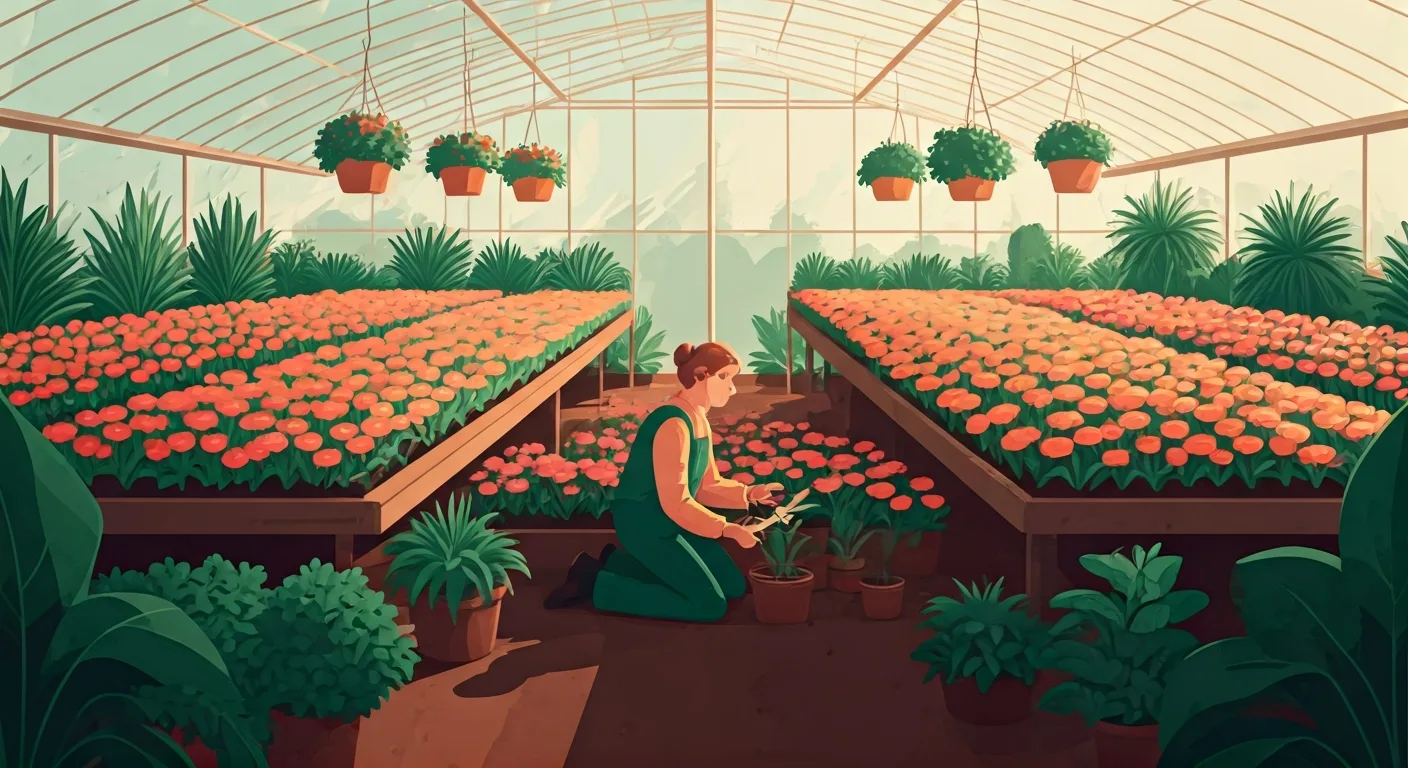
Cultivates ornamental flowers in greenhouses or open fields, managing propagation, climate controls, pest treatments, and harvest timing to supply markets with fresh, high-quality blooms. This role involves hands-on plant care, environmental management, and ensuring product quality for commercial sale.
Provides fresh, high-quality flowers for florists, events, and consumers, contributing to the aesthetics of various occasions and supporting the agricultural economy.
On the job
- Propagate flowers from seeds, cuttings, or bulbs, ensuring healthy starts.
- Monitor and adjust environmental conditions in greenhouses, such as temperature, humidity, and light levels.
- Apply fertilisers, pesticides, and fungicides as needed, adhering to safety protocols and environmental regulations.
- Harvest, grade, and prepare flowers for market, focusing on quality, freshness, and presentation.
- Maintain irrigation systems, manage water usage, and ensure optimal soil health for crops.
Tools & technology
Average salary
Job outlook
StableDemand is steady. This is an established role with consistent hiring across sectors.
Education & training
Certificate or associate's degree in horticulture, floriculture, or agriculture is often preferred, but extensive practical experience can substitute.
AI impact outlook
Note — this is our current view. AI is moving fast, so we revisit these ratings.
Show how this was assessed Hide the detail
Note — this is our current view. AI is moving fast, so we revisit these ratings.
Show how this was assessed Hide the detailWhy this role received this rating
Core task exposure
moderate
How much of the role’s important work could AI perform?
Environmental monitoring and basic pest identification are exposed, but hands-on propagation, cultivation, and delicate harvesting require human judgment.
End-to-end automation
low
Can AI complete the work without substantial human involvement?
While certain processes can be optimized by AI, the holistic care of living plants and the physical act of harvesting prevent full workflow automation.
Adoption pressure
moderate
How likely are employers to introduce AI into this work?
There is moderate pressure to adopt AI for efficiency in greenhouse controls and yield prediction, driven by cost and quality demands.
Human dependence
strong
How much does success depend on human judgement, relationships and accountability?
Success highly depends on the grower's horticultural expertise, intuition for plant health, and the physical dexterity required for cultivation and harvesting.
Protective — a higher rating lowers the overall score.
Role adaptability
moderate
How easily can the role evolve as AI takes on more tasks?
The role can adapt by integrating advanced horticultural technologies and focusing on specialized cultivation or market niches.
Shown for context — not part of the score.
What AI may take on
These are the parts of the role most likely to be automated or significantly accelerated.
- Optimizing greenhouse temperature, humidity, and light based on real-time data and plant needs
- Predicting optimal harvest times and yields using growth models and sensor data
- Identifying early signs of disease or pest infestations through visual analysis of plant imagery
- Automating irrigation schedules and nutrient delivery based on soil moisture and plant uptake
Where people remain essential
These parts continue to depend heavily on human judgement, relationships and accountability.
- Propagating flowers from seeds or cuttings, requiring careful handling and biological understanding
- Performing hands-on pruning, training, and specialized plant care
- Harvesting delicate blooms without damage, requiring fine motor skills and judgment
- Grading flowers for market based on nuanced quality, freshness, and aesthetic appeal
- Developing new flower varieties and adapting cultivation strategies to market trends
- Managing unexpected plant health issues and implementing complex pest treatment plans
How the role may evolve
From reactive adjustments to strategic horticultural mastery.
Growers will spend less time on routine monitoring and manual climate adjustments, shifting focus towards advanced horticultural techniques, specialized plant breeding, and market strategy.
Strengthen your future fit
- Deepening expertise in plant pathology and advanced cultivation techniques
- Learning to interpret and leverage data from climate control and plant monitoring systems
- Developing specialized skills in niche flower varieties or organic cultivation
- Enhancing business acumen for direct-to-consumer sales and market diversification
- Mastering delicate physical handling and quality assessment of high-value blooms
- Assessment horizon
- 3–7 years
- Confidence
- Medium
- Last reviewed
- August 2026
- Methodology
- v1.0
This assessment reflects current AI capabilities and expected adoption patterns. Actual impacts will vary by industry, employer and the way each role is performed.
Career pathways
WHERE YOU COULD GO
CURRENT ROLE
Flower Grower
Agriculture & Food
ADJACENT MOVES
STARTING POINTS
Who thrives here
Interest profile
enterprising · ERC
Individuals who enjoy practical, hands-on work with plants, managing systems, and some level of entrepreneurial or commercial focus tend to thrive in this role.
Personality characteristics
Observant
Keenly notices subtle changes in plant health or environmental conditions, crucial for early problem detection.
Diligent
Consistently follows established procedures for planting, feeding, and pest management to ensure optimal growth.
Practical
Enjoys hands-on tasks and is skilled at operating and maintaining horticultural equipment.
Cooperative
Works well with a team on larger tasks like planting or harvesting, and communicates effectively with supervisors.
Steady
Maintains composure and focus when dealing with unexpected challenges like crop diseases or equipment failures.
Resourceful
Actively seeks solutions to growing challenges, from troubleshooting irrigation to researching new cultivation methods.
Best for
- Individuals passionate about plant life and sustainable growing practices.
- Those who enjoy a blend of scientific application, practical skills, and environmental management.
- People who thrive in an environment where their direct efforts lead to tangible, beautiful results.
Watch out for
- The work can be physically demanding and often involves working outdoors in various weather conditions.
- Requires constant vigilance for plant health issues and quick problem-solving.
- Weekend or early morning work may be necessary to care for plants, especially during peak seasons.
A week in the life
A representative working week for a Flower Grower — where the deep work, meetings, and admin actually land.
Real people. Real results.
Thousands of people
can't be wrong.

Frequently asked questions about Flower Grower roles
What does a Flower Grower do?
A Flower Grower cultivates ornamental flowers in greenhouses or open fields, managing propagation, climate controls, pest treatments, and harvest timing to supply markets with fresh, high-quality blooms. This role involves hands-on plant care, environmental management, and ensuring product quality for commercial sale. Provides fresh, high-quality flowers for florists, events, and consumers, contributing to the aesthetics of various occasions and supporting the agricultural economy.
How much does a Flower Grower earn?
A Flower Grower earns a median of $48,000 per year in the US, typically ranging from $35,000 to $65,000.
What qualifications do you need to become a Flower Grower?
To become a Flower Grower, certificate or associate's degree in horticulture, floriculture, or agriculture is often preferred, but extensive practical experience can substitute.
What personality suits a Flower Grower?
Flower Grower roles tend to suit people who are highly conscientious — precise, organised and strong on follow-through (Conscientiousness 75/100) and steady under pressure — deadlines and setbacks do not rattle them easily (Emotional Stability 70/100). The traits that matter most in the role are Observant, Diligent, Practical and Cooperative. Keenly notices subtle changes in plant health or environmental conditions, crucial for early problem detection. On interests, Flower Grower maps to an ERC Holland Code profile — individuals who enjoy practical, hands-on work with plants, managing systems, and some level of entrepreneurial or commercial focus tend to thrive in this role.
Who does a Flower Grower role suit?
A Flower Grower role is usually a strong fit for these reasons. Strong Realistic and Conventional alignment: the role is hands-on, involves systematic processes and managing plant systems. The work largely involves direct interaction with plants and the environment, appealing to those who prefer physical and practical tasks. Requires attention to detail and consistent application of horticultural knowledge, which aligns with conscientious individuals.
What are the downsides of being a Flower Grower?
Flower Grower roles come with trade-offs worth weighing up. The work can be physically demanding and often involves working outdoors in various weather conditions. Requires constant vigilance for plant health issues and quick problem-solving. Weekend or early morning work may be necessary to care for plants, especially during peak seasons.
What is the work environment like for a Flower Grower?
Work as a Flower Grower is mostly mixed-based with onsite arrangements common, semi-structured — a mix of set processes and self-directed work, a moderate pace and low exposure to clients or stakeholders. Around 80% of the week is focused deep work.
What skills do you need to be a Flower Grower?
Core skills for a Flower Grower include Plant propagation, Pest and disease management, Horticultural techniques, Environmental control and Harvesting and post-harvest care.
How do you become a Flower Grower?
Common entry routes into Flower Grower roles include Nursery Worker, Farm Hand and Horticulture Apprentice.
What career progression is there for a Flower Grower?
From a Flower Grower role, common next steps include Nursery Manager and Horticulture Consultant; lateral moves include Agricultural Technician.
What is the job outlook for Flower Grower roles?
The outlook for Flower Grower roles is currently rated stable. Demand is steady. This is an established role with consistent hiring across sectors.
Will AI replace Flower Grower roles?
Traitstack rates automation risk for Flower Grower roles at 37 out of 100, which is low. AI is simplifying environmental controls and pest detection, but the nuanced care of plants and delicate harvesting remain deeply human tasks. AI is most likely to take on optimizing greenhouse temperature, humidity, and light based on real-time data and plant needs, predicting optimal harvest times and yields using growth models and sensor data and identifying early signs of disease or pest infestations through visual analysis of plant imagery. Propagating flowers from seeds or cuttings, requiring careful handling and biological understanding, performing hands-on pruning, training, and specialized plant care and harvesting delicate blooms without damage, requiring fine motor skills and judgment stay with people. From reactive adjustments to strategic horticultural mastery. That score measures how much of the work could change, not the likelihood the job disappears. It is Traitstack's current view, revisited as AI capability moves.