Dental Prosthetist
SOC 29-2091.00 · ESCO 3214 · OSCA 269132
Role snapshot
Overview
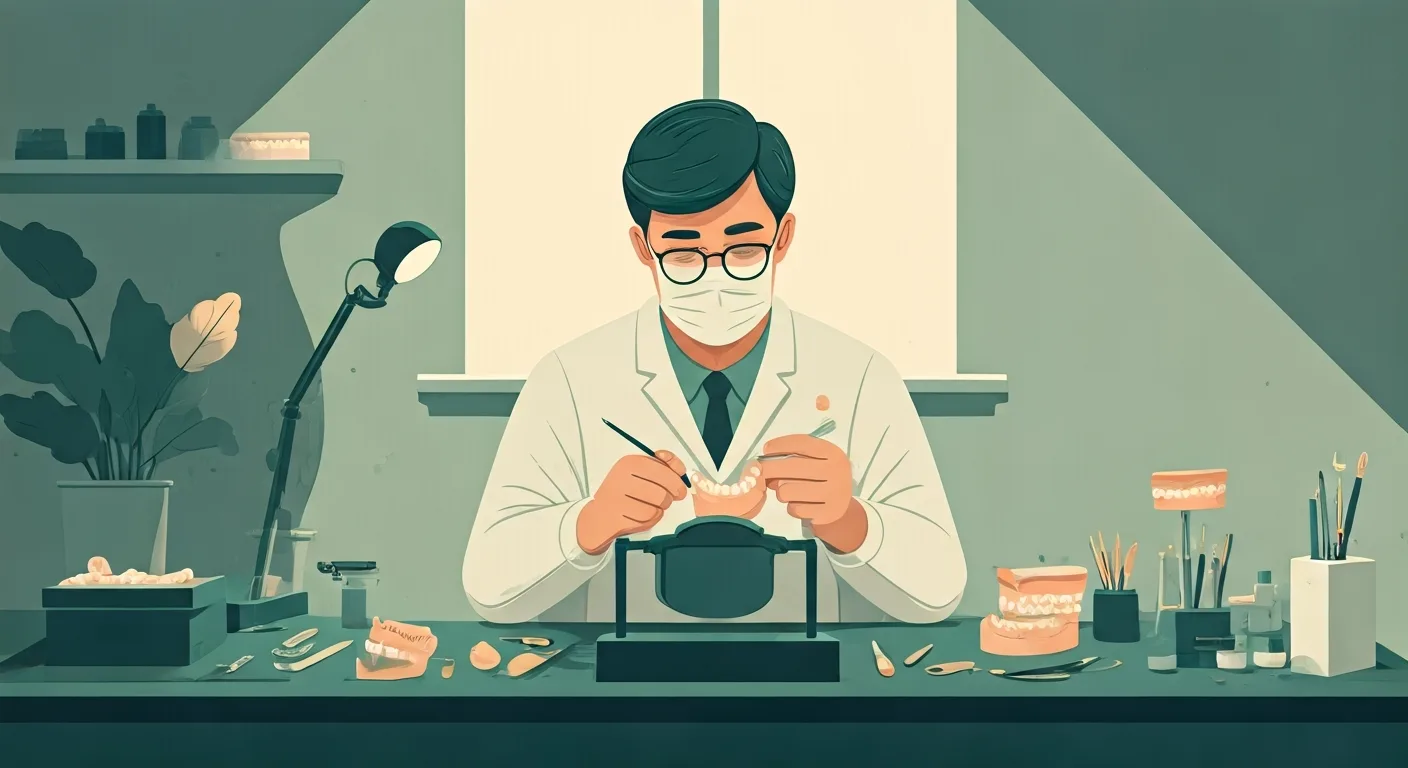
Designs, fabricates, and fits removable dental prostheses such as dentures, partial dentures, and mouthguards directly for patients. This involves taking precise impressions, selecting appropriate materials, and meticulously adjusting appliances to ensure optimal comfort, function, and aesthetics for each individual.
Restores patients' oral function, appearance, and confidence, significantly improving their quality of life and overall health.
On the job
- Conduct patient consultations and oral examinations to assess prosthetic needs and discuss treatment options.
- Take accurate impressions of patients' mouths and create plaster models for prosthesis design.
- Design and custom-fabricate various dental prostheses using a range of materials and laboratory techniques.
- Fit, adjust, and repair dentures, partial dentures, and other oral appliances directly with patients.
- Educate patients on proper care, maintenance, and hygiene for their new prostheses.
Tools & technology
Average salary
Job outlook
StableDemand is steady. This is an established role with consistent hiring across sectors.
Education & training
Specialized diploma, advanced certificate, or bachelor's degree in dental prosthetics or dental technology.
AI impact outlook
Note — this is our current view. AI is moving fast, so we revisit these ratings.
Show how this was assessed Hide the detail
Note — this is our current view. AI is moving fast, so we revisit these ratings.
Show how this was assessed Hide the detailWhy this role received this rating
Core task exposure
low
How much of the role’s important work could AI perform?
AI can assist with scan analysis for prosthesis design and material optimization, but patient interaction and physical adjustments are significant parts of the work.
End-to-end automation
low
Can AI complete the work without substantial human involvement?
Patient consultations, impression taking, and final fitting adjustments are manual and highly personalized, preventing full workflow automation.
Adoption pressure
moderate
How likely are employers to introduce AI into this work?
While hardware automation for fabrication is high, AI's role in the diagnostic and design phases is still developing for direct patient care.
Human dependence
strong
How much does success depend on human judgement, relationships and accountability?
Success hinges on ensuring patient comfort, aesthetic satisfaction, and precise physical adjustments, all requiring human judgment and interaction.
Protective — a higher rating lowers the overall score.
Role adaptability
moderate
How easily can the role evolve as AI takes on more tasks?
The role can adapt by integrating digital design tools and focusing on advanced patient-specific customization and material science.
Shown for context — not part of the score.
What AI may take on
These are the parts of the role most likely to be automated or significantly accelerated.
- AI-assisted design optimization from 3D oral scans
- Suggesting optimal materials based on patient needs and biomechanics
- Predictive analysis for prosthesis longevity and fit
- Automated quality control checks for design specifications
Where people remain essential
These parts continue to depend heavily on human judgement, relationships and accountability.
- Conducting in-depth patient consultations and oral examinations
- Taking accurate physical impressions of the mouth
- Performing meticulous physical adjustments for comfort and function
- Applying aesthetic judgment for natural-looking prostheses
- Educating patients on prosthesis care and oral hygiene
- Managing complex cases requiring bespoke solutions
How the role may evolve
From manual design and fabrication to human-led, AI-enhanced customization and patient care.
The role will shift from extensive manual design work to leveraging AI for efficiency in the digital design phase, allowing more focus on patient-specific needs and precise physical artistry.
Strengthen your future fit
- Proficiency in advanced CAD/CAM software and digital impression techniques
- Expertise in material science and biomimetic design principles
- Enhanced communication and patient education skills
- Ability to troubleshoot complex prosthetic issues
- Collaboration with dental specialists for integrated care
- Assessment horizon
- 3–7 years
- Confidence
- Medium
- Last reviewed
- August 2026
- Methodology
- v1.0
This assessment reflects current AI capabilities and expected adoption patterns. Actual impacts will vary by industry, employer and the way each role is performed.
Career pathways
WHERE YOU COULD GO
CURRENT ROLE
Dental Prosthetist
Allied Health
ADJACENT MOVES
STARTING POINTS
Who thrives here
Interest profile
realistic · RIS
Individuals who enjoy working with their hands to create tangible products, applying scientific knowledge to solve practical problems, and interacting directly with people to provide care, often thrive in this role.
Personality characteristics
Meticulous
Requires high attention to detail and precision in crafting and fitting dental prostheses.
Patient listener
Needs to listen carefully to patient concerns and adapt solutions to their individual needs.
Problem-solver
Applies scientific and technical knowledge to diagnose issues and design effective prosthetic solutions.
Comfortable with patients
Engages directly with patients, explaining procedures and ensuring their comfort.
Calm under pressure
Handles delicate procedures and patient anxieties with a steady and composed demeanor.
Best for
- Individuals who enjoy combining artistic craft with scientific and technical application.
- Those who are motivated by directly improving people's health and confidence.
- People who thrive in a structured clinical and laboratory environment with a focus on detailed work.
Watch out for
- The work requires significant manual dexterity and precision, which can be physically demanding.
- Patient interactions can sometimes involve managing discomfort or anxiety, requiring empathy and patience.
A week in the life
A representative working week for a Dental Prosthetist — where the deep work, meetings, and admin actually land.
Real people. Real results.
Thousands of people
can't be wrong.




Frequently asked questions about Dental Prosthetist roles
What does a Dental Prosthetist do?
A Dental Prosthetist designs, fabricates, and fits removable dental prostheses such as dentures, partial dentures, and mouthguards directly for patients. This involves taking precise impressions, selecting appropriate materials, and meticulously adjusting appliances to ensure optimal comfort, function, and aesthetics for each individual. Restores patients' oral function, appearance, and confidence, significantly improving their quality of life and overall health.
How much does a Dental Prosthetist earn?
A Dental Prosthetist earns a median of $85,000 per year in the US, typically ranging from $60,000 to $110,000.
What qualifications do you need to become a Dental Prosthetist?
To become a Dental Prosthetist, specialized diploma, advanced certificate, or bachelor's degree in dental prosthetics or dental technology. State licensure or registration as a Dental Prosthetist or Dental Technologist, often requiring supervised practice and examinations.
What personality suits a Dental Prosthetist?
Dental Prosthetist roles tend to suit people who are highly conscientious — precise, organised and strong on follow-through (Conscientiousness 80/100) and warm and cooperative — tuned in to the people around them (Agreeableness 72/100). The traits that matter most in the role are Meticulous, Patient listener, Problem-solver and Comfortable with patients. Requires high attention to detail and precision in crafting and fitting dental prostheses. On interests, Dental Prosthetist maps to a RIS Holland Code profile — individuals who enjoy working with their hands to create tangible products, applying scientific knowledge to solve practical problems, and interacting directly with people to provide care, often thrive in this role.
Who does a Dental Prosthetist role suit?
A Dental Prosthetist role is usually a strong fit for these reasons. A significant portion of the work involves hands-on fabrication and technical tasks, aligning with Realistic interests. Requires investigative skills for problem-solving in diagnosis, design, and material selection. Direct patient interaction and providing care align well with Social interests.
What are the downsides of being a Dental Prosthetist?
Dental Prosthetist roles come with trade-offs worth weighing up. The work requires significant manual dexterity and precision, which can be physically demanding. Patient interactions can sometimes involve managing discomfort or anxiety, requiring empathy and patience.
What is the work environment like for a Dental Prosthetist?
Work as a Dental Prosthetist is mostly clinical-based with onsite arrangements common, semi-structured — a mix of set processes and self-directed work, a moderate pace and high exposure to clients or stakeholders. Around 52% of the week is focused deep work.
What skills do you need to be a Dental Prosthetist?
Core skills for a Dental Prosthetist include Dental impression taking, Prosthesis design and fabrication, Dental material science, Precision fitting and adjustment and Patient communication and education.
How do you become a Dental Prosthetist?
Common entry routes into Dental Prosthetist roles include Dental Laboratory Technician and Dental Assistant With Specialization.
What career progression is there for a Dental Prosthetist?
From a Dental Prosthetist role, common next steps include Senior Dental Prosthetist and Dental Prosthetics Clinic Director; lateral moves include Dental Hygienist and Dental Technician (Specialist).
What is the job outlook for Dental Prosthetist roles?
The outlook for Dental Prosthetist roles is currently rated stable. Demand is steady. This is an established role with consistent hiring across sectors.
Will AI replace Dental Prosthetist roles?
Traitstack rates automation risk for Dental Prosthetist roles at 33 out of 100, which is low. AI tools may optimize prosthesis design from patient scans, but the essential human tasks of patient consultation, impression taking, and precise physical fitting remain crucial. AI is most likely to take on ai-assisted design optimization from 3d oral scans, suggesting optimal materials based on patient needs and biomechanics and predictive analysis for prosthesis longevity and fit. Conducting in-depth patient consultations and oral examinations, taking accurate physical impressions of the mouth and performing meticulous physical adjustments for comfort and function stay with people. From manual design and fabrication to human-led, AI-enhanced customization and patient care. That score measures how much of the work could change, not the likelihood the job disappears. It is Traitstack's current view, revisited as AI capability moves.