Customer Experience Designer
SOC 13-1161.00 · ESCO 2431 · OSCA 221539
Role snapshot
Overview
Maps out every touchpoint a customer has with a business and redesigns those interactions to be smoother and more satisfying. Combines service design thinking with data analysis to eliminate friction and build loyalty, ultimately improving customer satisfaction and business outcomes.
Drives customer satisfaction and loyalty by crafting intuitive and delightful experiences, leading to increased retention, positive brand perception, and improved business metrics.
On the job
- Conduct user research, interviews, and surveys to understand customer needs and pain points
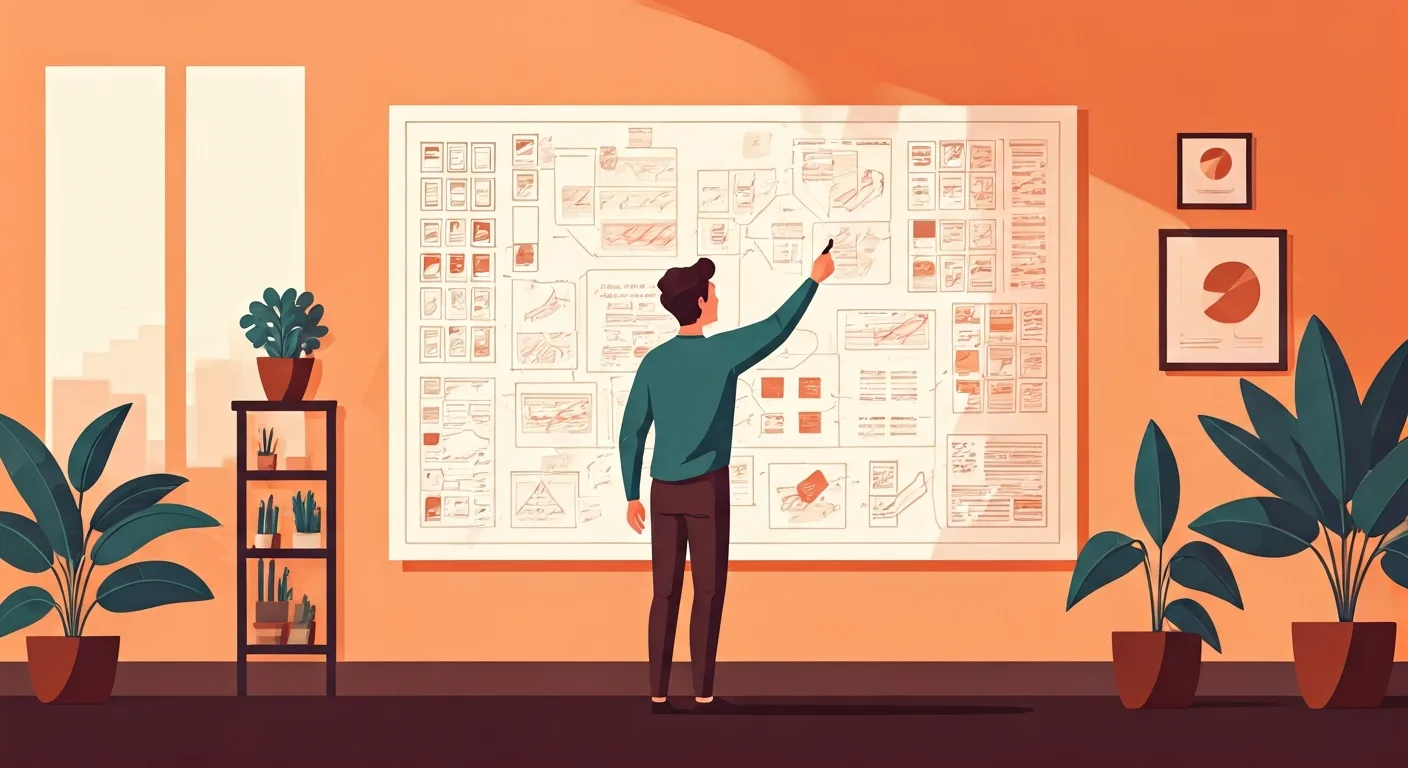
- Map customer journeys, creating diagrams and flows to visualize current and future states
- Design and prototype solutions for digital and physical touchpoints, ensuring consistency and usability
- Collaborate with product managers, developers, and marketing teams to implement experience improvements
- Analyze customer data and feedback to measure the impact of design changes and identify new opportunities
Tools & technology
Average salary
Job outlook
GrowingJob growth is expected to be above average over the next five years.
Education & training
Bachelor's degree in design, psychology, human-computer interaction, or a related field. A strong portfolio demonstrating design thinking and problem-solving is often more critical than specific credentials.
AI impact outlook
Note — this is our current view. AI is moving fast, so we revisit these ratings.
Show how this was assessed Hide the detail
Note — this is our current view. AI is moving fast, so we revisit these ratings.
Show how this was assessed Hide the detailWhy this role received this rating
Core task exposure
moderate
How much of the role’s important work could AI perform?
AI can assist in analyzing research data, generating journey map visualizations, and suggesting design patterns for prototypes.
End-to-end automation
moderate
Can AI complete the work without substantial human involvement?
While AI can suggest improvements and generate basic prototypes, driving organizational change based on complex human factors is not automatable.
Adoption pressure
high
How likely are employers to introduce AI into this work?
High demand for CX improvement and efficiency drives strong employer interest in AI tools for research and design acceleration.
Human dependence
strong
How much does success depend on human judgement, relationships and accountability?
Success requires deep empathy, understanding complex human needs, and driving strategic change through collaboration and influence.
Protective — a higher rating lowers the overall score.
Role adaptability
strong
How easily can the role evolve as AI takes on more tasks?
CX is a dynamic field that requires continuous adaptation to new technologies, research methods, and business strategies.
Shown for context — not part of the score.
What AI may take on
These are the parts of the role most likely to be automated or significantly accelerated.
- Analyze quantitative survey data for insights
- Generate initial customer journey map visualizations
- Suggest common design patterns for digital touchpoints
- Automate basic prototype generation from specifications
- Synthesize common themes from qualitative feedback at scale
Where people remain essential
These parts continue to depend heavily on human judgement, relationships and accountability.
- Conducting empathetic user interviews to uncover deep pain points
- Strategically redesigning complex, multi-touchpoint customer interactions
- Prototyping nuanced solutions requiring creative problem-solving
- Collaborating with diverse teams to implement experience improvements
- Analyzing customer data to understand the 'why' behind trends
- Advocating for customer needs and influencing business strategy
How the role may evolve
Deeper insights from AI-assisted research. More time shaping complex journeys.
Designers will spend less time on manual data aggregation and initial prototyping, and more time on high-level strategic thinking, empathetic problem-solving, and influencing cross-functional teams to build superior customer experiences.
Strengthen your future fit
- Master advanced qualitative research and synthesis
- Develop strong storytelling and influence skills
- Gain expertise in service design thinking for complex systems
- Understand AI's capabilities for data analysis and content generation
- Lead cross-functional initiatives for experience transformation
- Assessment horizon
- 3–7 years
- Confidence
- High
- Last reviewed
- August 2026
- Methodology
- v1.0
This assessment reflects current AI capabilities and expected adoption patterns. Actual impacts will vary by industry, employer and the way each role is performed.
Career pathways
WHERE YOU COULD GO
CURRENT ROLE
Customer Experience Designer
Product & UX
ADJACENT MOVES
STARTING POINTS
Who thrives here
Interest profile
enterprising · ECI
Individuals who enjoy leading initiatives, organizing information, and conducting research to improve systems and processes, often thrive in this role.
Personality characteristics
Curious
Genuinely interested in exploring customer behaviors, new technologies, and innovative solutions to problems.
Organized
Systematically approaches complex problems, organizing data, research, and design artifacts for clarity and impact.
Collaborative
Works effectively with diverse teams and stakeholders, valuing input and building consensus to achieve shared goals.
Proactive
Takes initiative to identify customer pain points, propose solutions, and drive projects forward.
Resilient
Handles constructive criticism, adapts to changing requirements, and navigates project challenges without becoming overwhelmed.
Best for
- People who enjoy dissecting complex systems and redesigning them for optimal human interaction.
- Designers who are passionate about user advocacy and improving tangible customer outcomes.
- Individuals who thrive in a collaborative environment, bridging the gap between business, technology, and customers.
Watch out for
- Requires strong resilience to feedback and iterative design processes, as solutions often evolve.
- Balancing creative problem-solving with data-driven decision making can be challenging.
- Managing expectations and aligning diverse stakeholders demands strong communication and negotiation skills.
A week in the life
A representative working week for a Customer Experience Designer — where the deep work, meetings, and admin actually land.
Real people. Real results.
Thousands of people
can't be wrong.





Frequently asked questions about Customer Experience Designer roles
What does a Customer Experience Designer do?
A Customer Experience Designer maps out every touchpoint a customer has with a business and redesigns those interactions to be smoother and more satisfying. Combines service design thinking with data analysis to eliminate friction and build loyalty, ultimately improving customer satisfaction and business outcomes. Drives customer satisfaction and loyalty by crafting intuitive and delightful experiences, leading to increased retention, positive brand perception, and improved business metrics.
How much does a Customer Experience Designer earn?
A Customer Experience Designer earns a median of $95,000 per year in the US, typically ranging from $70,000 to $130,000.
What qualifications do you need to become a Customer Experience Designer?
To become a Customer Experience Designer, bachelor's degree in design, psychology, human-computer interaction, or a related field. A strong portfolio demonstrating design thinking and problem-solving is often more critical than specific credentials.
What personality suits a Customer Experience Designer?
Customer Experience Designer roles tend to suit people who are open and curious — drawn to variety, ideas and new approaches (Openness 78/100) and warm and cooperative — tuned in to the people around them (Agreeableness 75/100). The traits that matter most in the role are Curious, Organized, Collaborative and Proactive. Genuinely interested in exploring customer behaviors, new technologies, and innovative solutions to problems. On interests, Customer Experience Designer maps to an ECI Holland Code profile — individuals who enjoy leading initiatives, organizing information, and conducting research to improve systems and processes, often thrive in this role.
Who does a Customer Experience Designer role suit?
A Customer Experience Designer role is usually a strong fit for these reasons. High scores in Enterprising and Conventional RIASEC domains align with leading initiatives and structured problem-solving. A significant portion of the week involves deep work focused on analytical tasks like journey mapping and data analysis. The role demands high stakeholder exposure, suiting those who enjoy presenting and collaborating to drive change.
What are the downsides of being a Customer Experience Designer?
Customer Experience Designer roles come with trade-offs worth weighing up. Requires strong resilience to feedback and iterative design processes, as solutions often evolve. Balancing creative problem-solving with data-driven decision making can be challenging. Managing expectations and aligning diverse stakeholders demands strong communication and negotiation skills.
What is the work environment like for a Customer Experience Designer?
Work as a Customer Experience Designer is mostly office-based with hybrid arrangements common, semi-structured — a mix of set processes and self-directed work, a moderate pace and high exposure to clients or stakeholders. Around 55% of the week is focused deep work.
What skills do you need to be a Customer Experience Designer?
Core skills for a Customer Experience Designer include Customer journey mapping, User research, Prototyping, Service design, Data analysis and Stakeholder management.
How do you become a Customer Experience Designer?
Common entry routes into Customer Experience Designer roles include UX Researcher, Junior Ux Designer and Customer Service Analyst.
What career progression is there for a Customer Experience Designer?
From a Customer Experience Designer role, common next steps include Senior Customer Experience Designer and Head of Customer Experience; lateral moves include Product Manager.
What is the job outlook for Customer Experience Designer roles?
The outlook for Customer Experience Designer roles is currently rated growing. Job growth is expected to be above average over the next five years.
Will AI replace Customer Experience Designer roles?
Traitstack rates automation risk for Customer Experience Designer roles at 55 out of 100, which is moderate. While AI assists with research synthesis and prototyping, the empathetic understanding of customer needs and the strategic redesign of complex interactions remain human-led. AI is most likely to take on analyze quantitative survey data for insights, generate initial customer journey map visualizations and suggest common design patterns for digital touchpoints. Conducting empathetic user interviews to uncover deep pain points, strategically redesigning complex, multi-touchpoint customer interactions and prototyping nuanced solutions requiring creative problem-solving stay with people. Deeper insights from AI-assisted research. More time shaping complex journeys. That score measures how much of the work could change, not the likelihood the job disappears. It is Traitstack's current view, revisited as AI capability moves.