Crossing Supervisor
SOC 33-9091.00 · ESCO 5419 · OSCA 899932
Role snapshot
Overview
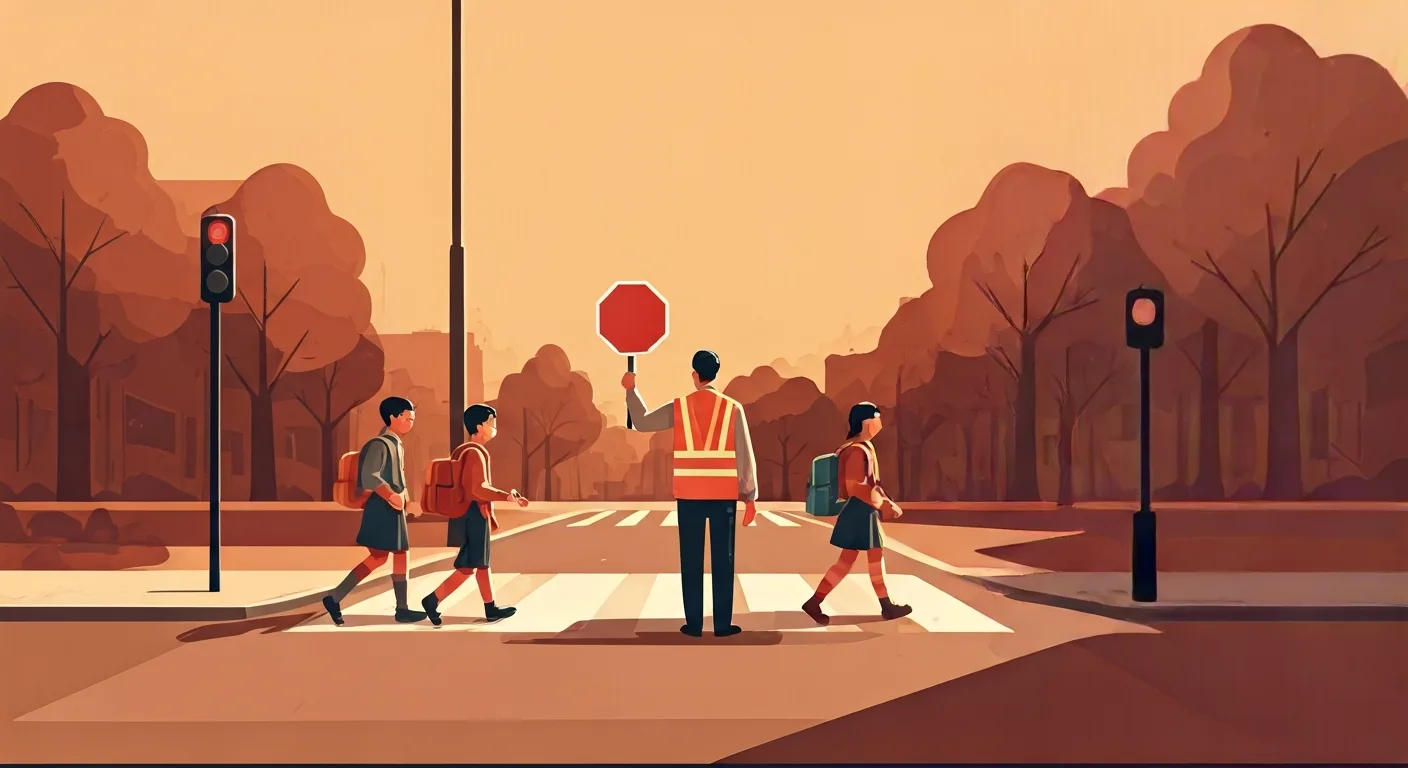
Crossing Supervisors are responsible for managing pedestrian safety at designated school crossings or busy intersections. They stop vehicular traffic and guide children and adults safely across the road, primarily during peak school arrival and dismissal times. This role requires vigilance, clear communication, and adherence to safety protocols to ensure the well-being of pedestrians.
Ensures the safety of children and pedestrians, particularly near schools, reducing the risk of accidents and promoting safe community environments.
On the job
- Stop traffic using hand signals and stop signs to create safe crossing opportunities for pedestrians
- Guide children and adults across streets, ensuring they follow safety rules
- Monitor traffic flow and pedestrian activity to identify potential hazards
- Educate pedestrians, especially children, on safe crossing practices
- Report unusual or dangerous situations to appropriate authorities
Tools & technology
Average salary
Job outlook
StableDemand is steady. This is an established role with consistent hiring across sectors.
Education & training
High school diploma or equivalent, often with specific on-the-job training and background checks.
AI impact outlook
Note — this is our current view. AI is moving fast, so we revisit these ratings.
Show how this was assessed Hide the detail
Note — this is our current view. AI is moving fast, so we revisit these ratings.
Show how this was assessed Hide the detailWhy this role received this rating
Core task exposure
low
How much of the role’s important work could AI perform?
Monitoring traffic can be assisted, but the core task of direct human intervention to stop traffic and guide vulnerable pedestrians is largely unexposed.
End-to-end automation
low
Can AI complete the work without substantial human involvement?
AI cannot replicate the direct human authority, judgment, and interaction required to safely manage pedestrians and traffic in unpredictable, real-time environments.
Adoption pressure
low
How likely are employers to introduce AI into this work?
Adoption pressure for automation is very low due to extremely high risk aversion concerning public safety, especially involving children, and the relatively low cost of human supervisors.
Human dependence
strong
How much does success depend on human judgement, relationships and accountability?
Success depends entirely on human presence, judgment, communication with drivers and children, and the ability to react instantly to unpredictable situations and hazards.
Protective — a higher rating lowers the overall score.
Role adaptability
low
How easily can the role evolve as AI takes on more tasks?
The role can integrate communication technologies and advanced monitoring systems, but the fundamental human function of direct pedestrian safety management remains unchanged.
Shown for context — not part of the score.
What AI may take on
These are the parts of the role most likely to be automated or significantly accelerated.
- Monitoring traffic flow and pedestrian volume via sensor data
- Predicting peak crossing times based on historical data
- Providing real-time alerts for unusual traffic patterns
- Automated reporting of observed incidents to authorities
- Managing scheduling and shift assignments
Where people remain essential
These parts continue to depend heavily on human judgement, relationships and accountability.
- Directly stopping vehicular traffic using hand signals and stop signs
- Guiding children and adults safely across streets with personal authority
- Making instant judgments in response to unpredictable driver or pedestrian behavior
- Educating pedestrians, especially children, on safe crossing practices
- Intervening in potentially dangerous situations to ensure safety
- Communicating clearly and assertively with drivers and pedestrians
How the role may evolve
Enhanced awareness, unchanging human responsibility.
The role will integrate advanced monitoring technologies to provide enhanced situational awareness of traffic and pedestrian activity. However, the core responsibility for direct human intervention, judgment, and ensuring the safety of vulnerable pedestrians will remain exclusively with the supervisor.
Strengthen your future fit
- Enhanced situational awareness and rapid decision-making
- Strong assertive communication and conflict prevention skills
- Proficiency in using digital communication and reporting tools
- Knowledge of evolving traffic safety regulations and best practices
- Community engagement and safety education abilities
- Assessment horizon
- 3–7 years
- Confidence
- High
- Last reviewed
- August 2026
- Methodology
- v1.0
This assessment reflects current AI capabilities and expected adoption patterns. Actual impacts will vary by industry, employer and the way each role is performed.
Career pathways
WHERE YOU COULD GO
CURRENT ROLE
Crossing Supervisor
Personal & Professional Services
ADJACENT MOVES
STARTING POINTS
Who thrives here
Interest profile
realistic · RCS
Individuals who enjoy following clear procedures, working outdoors, and directly assisting the community in a structured environment often find satisfaction in this role.
Personality characteristics
Methodical
Thrives on following established safety protocols and procedures precisely to ensure public safety.
Community-minded
Enjoys helping and protecting members of the community, especially children.
Vigilant
Maintains constant awareness of surroundings, traffic, and pedestrian movements to prevent accidents.
Calm under pressure
Remains composed and focused even in busy or potentially stressful traffic situations.
Communicator
Clearly signals and interacts with drivers and pedestrians to direct safe passage.
Best for
- People who are dedicated to public safety and enjoy direct community interaction.
- Individuals who prefer structured tasks and working independently in an outdoor environment.
Watch out for
- The work schedule is often split shifts, requiring availability during peak morning and afternoon hours.
- The role is primarily outdoors, exposed to various weather conditions.
A week in the life
A representative working week for a Crossing Supervisor — where the deep work, meetings, and admin actually land.
Real people. Real results.
Thousands of people
can't be wrong.




Frequently asked questions about Crossing Supervisor roles
What does a Crossing Supervisor do?
A Crossing Supervisor crossing Supervisors are responsible for managing pedestrian safety at designated school crossings or busy intersections. They stop vehicular traffic and guide children and adults safely across the road, primarily during peak school arrival and dismissal times. This role requires vigilance, clear communication, and adherence to safety protocols to ensure the well-being of pedestrians. Ensures the safety of children and pedestrians, particularly near schools, reducing the risk of accidents and promoting safe community environments.
How much does a Crossing Supervisor earn?
A Crossing Supervisor earns a median of $22,000 per year in the US, typically ranging from $15,000 to $30,000.
What qualifications do you need to become a Crossing Supervisor?
To become a Crossing Supervisor, high school diploma or equivalent, often with specific on-the-job training and background checks.
What personality suits a Crossing Supervisor?
Crossing Supervisor roles tend to suit people who are highly conscientious — precise, organised and strong on follow-through (Conscientiousness 78/100) and warm and cooperative — tuned in to the people around them (Agreeableness 75/100). The traits that matter most in the role are Methodical, Community-minded, Vigilant and Calm under pressure. Thrives on following established safety protocols and procedures precisely to ensure public safety. On interests, Crossing Supervisor maps to a RCS Holland Code profile — individuals who enjoy following clear procedures, working outdoors, and directly assisting the community in a structured environment often find satisfaction in this role.
Who does a Crossing Supervisor role suit?
A Crossing Supervisor role is usually a strong fit for these reasons. Strong Realistic (R) and Conventional (C) alignment: the role is structured, involves working outdoors, and follows clear rules. High Agreeableness (A): ideal for individuals who enjoy helping and protecting others, especially children. Low Neuroticism (N) and high Conscientiousness (C): supports remaining calm and responsible in critical safety situations.
What are the downsides of being a Crossing Supervisor?
Crossing Supervisor roles come with trade-offs worth weighing up. The work schedule is often split shifts, requiring availability during peak morning and afternoon hours. The role is primarily outdoors, exposed to various weather conditions.
What is the work environment like for a Crossing Supervisor?
Work as a Crossing Supervisor is mostly outdoors-based with onsite arrangements common, highly structured, with set processes and deadlines, a moderate pace and high exposure to clients or stakeholders.
What skills do you need to be a Crossing Supervisor?
Core skills for a Crossing Supervisor include Traffic control, Pedestrian safety, Communication, Observation and Rule adherence.
How do you become a Crossing Supervisor?
Common entry routes into Crossing Supervisor roles include Volunteer Crossing Guard and Community Volunteer.
What career progression is there for a Crossing Supervisor?
From a Crossing Supervisor role, common next steps include School Safety Officer; lateral moves include Traffic Controller and Community Safety Aide.
What is the job outlook for Crossing Supervisor roles?
The outlook for Crossing Supervisor roles is currently rated stable. Demand is steady. This is an established role with consistent hiring across sectors.
Will AI replace Crossing Supervisor roles?
Traitstack rates automation risk for Crossing Supervisor roles at 18 out of 100, which is low. Although traffic flow monitoring could be enhanced by AI, the direct human judgment, authority, and interaction required for child safety remain paramount. AI is most likely to take on monitoring traffic flow and pedestrian volume via sensor data, predicting peak crossing times based on historical data and providing real-time alerts for unusual traffic patterns. Directly stopping vehicular traffic using hand signals and stop signs, guiding children and adults safely across streets with personal authority and making instant judgments in response to unpredictable driver or pedestrian behavior stay with people. Enhanced awareness, unchanging human responsibility. That score measures how much of the work could change, not the likelihood the job disappears. It is Traitstack's current view, revisited as AI capability moves.